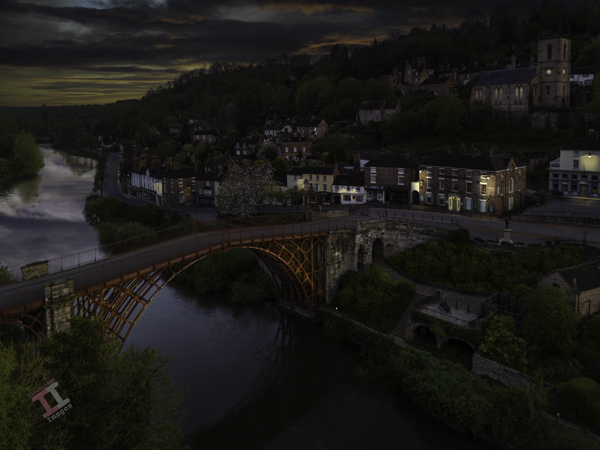
This is my largest day-to-night conversion to-date and took a fair amount of time and many, many masks to create. It was all great fun though and I’m quite pleased with the result.

Command attention. Capture perfection.
Photographs from in-and-around the authors home county of Shropshire in England.
This is my largest day-to-night conversion to-date and took a fair amount of time and many, many masks to create. It was all great fun though and I’m quite pleased with the result.
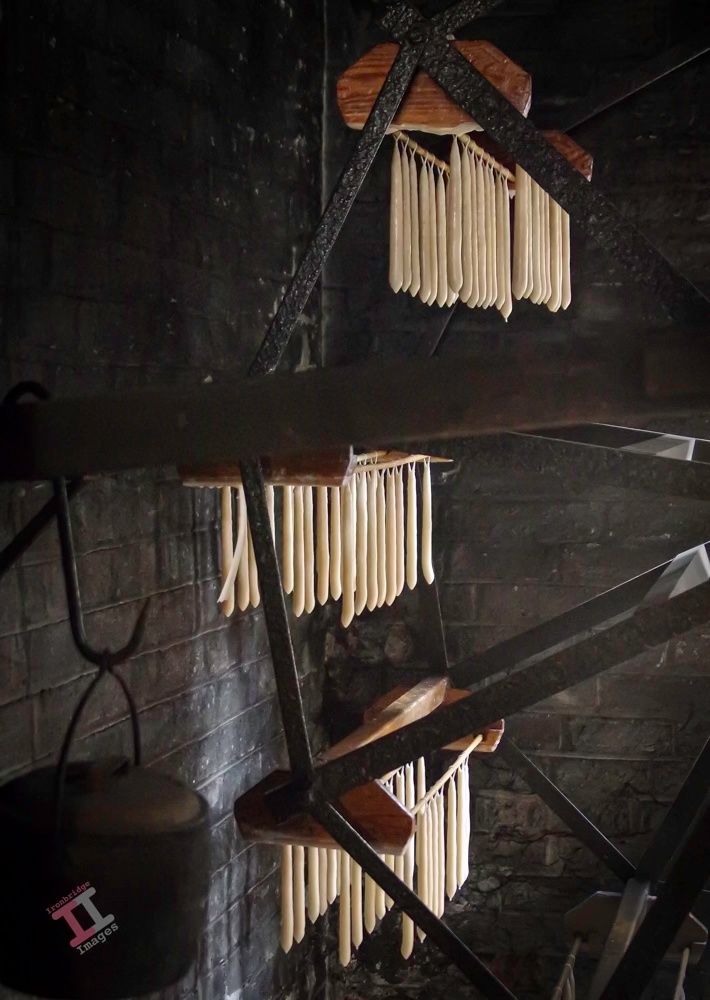
Here is a shot from a visit to the nearby Victorian Town museum a few years ago – wax candles being manufactured and hung to dry. Basically lengths of wick are hung onto a wooden frame and then dipped into a bath of molten wax. The frame is then hung onto the rotating carousel to allow them to dry and another frame is dipped. This dipping cycle continues until enough wax has deposited onto the wick to form a usable candle – which could be up to 100 times. This would have been a prosperous cottage industry in the Victorian times when the majority of indoor lighting would have been provided by candle but the invention of the electric light bulb in 1879 started the decline.
This was a hand-held shot at 1/80 second. Even with the lens opened up to f/2 the ISO was still 8000 – but fortunately there is little noise in the image.
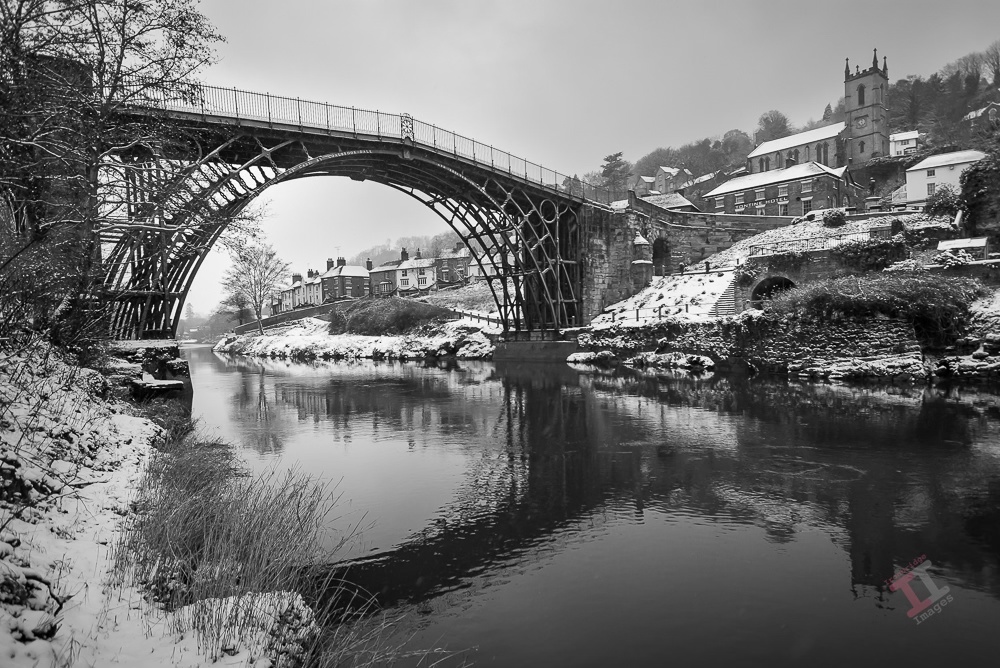
This was taken back in 2010, long before the bridge was painted red. I’m not going to add to the debate of whether or not this ‘rusty’ red colour was the intended top-coat hue, or just the red-lead primer used as a base coat, but what I can say is that the act of painting the bridge relegated thousands of photographs, from photographers worldwide, into their archive folder, as they were now judged to be out-of-date. There is one way around this, though, and that is to convert the image into monochrome, which fortunately works particularly well with snow scenes, such as this.

In this Secret Ironbridge blog post, we’ll venture down on to the River Severn.
The river Severn is the longest river in Britain, and it has flowed down the Ironbridge Gorge since it was formed during the last ice age. Within the Ironbridge Gorge is a stretch of river, well-known and popular with kayakers: Jackfield Rapids.
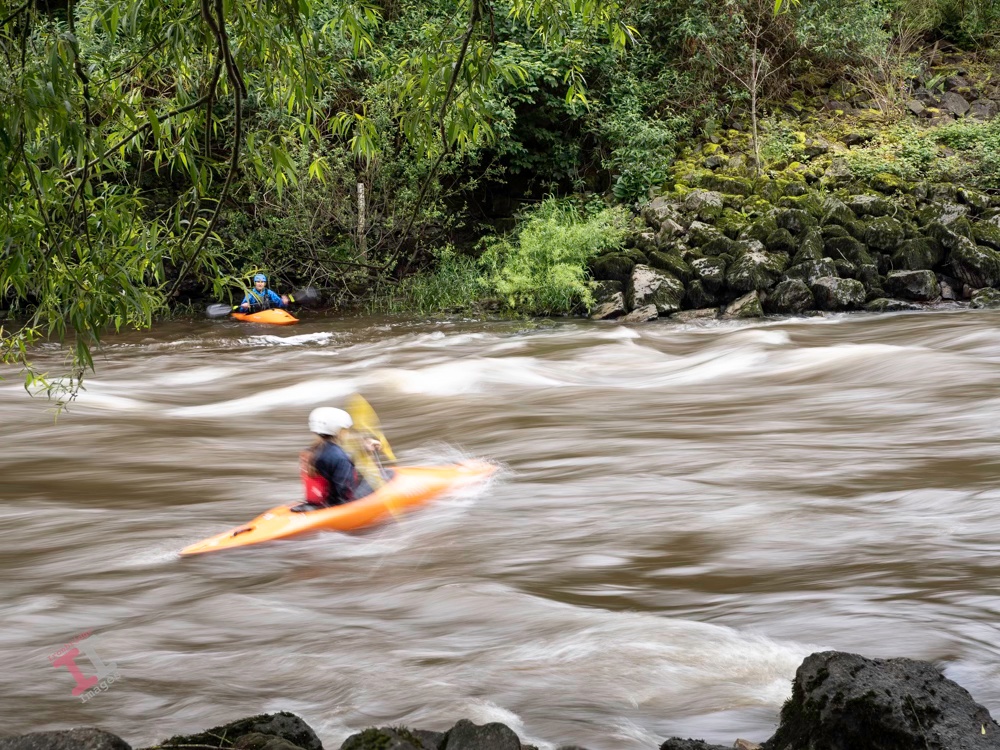
The rapids are reported to have eroded over the years and are not as severe as they were. The difficulty changes depending on the river level, with it getting harder at higher levels (presumably because the flow of water is greater).
Although these rapids are a natural phenomenon due to ground movement, there is anecdotal evidence that they have been enhanced over the years to make them more challenging to canoeists and kayakers.
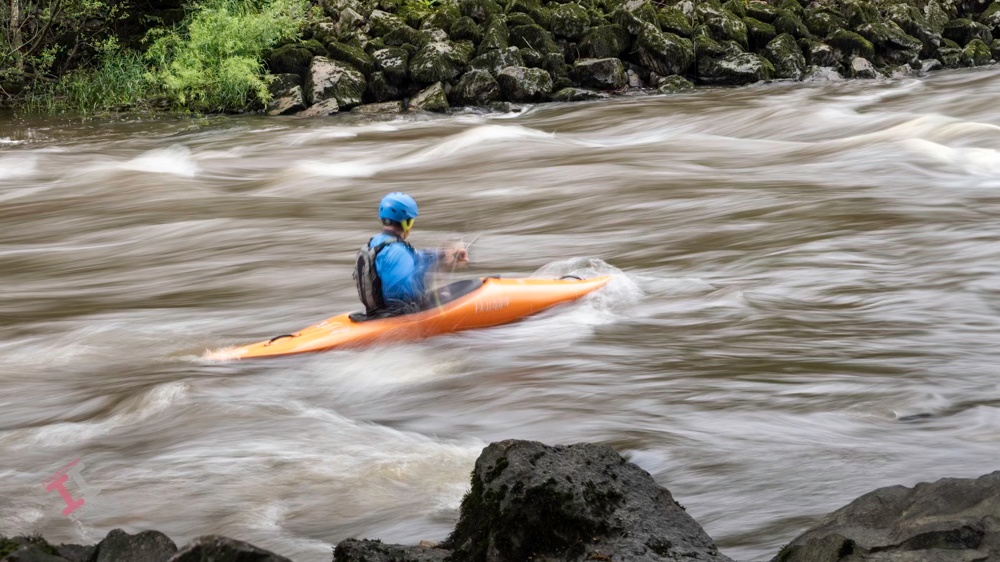
Which leads to a question; at what point did the term ‘kayak’ replace ‘canoe’ in the UK? When I was a mere lad, these small, usually one-man, self-powered boats were always called ‘canoes’. Apparently, there is a difference: a ‘canoe’ usually has an open deck, can be used seated or kneeling, and has a single-ended paddle. A ‘kayak’ has a closed deck, a seated position and a two-ended paddle. Now I know!
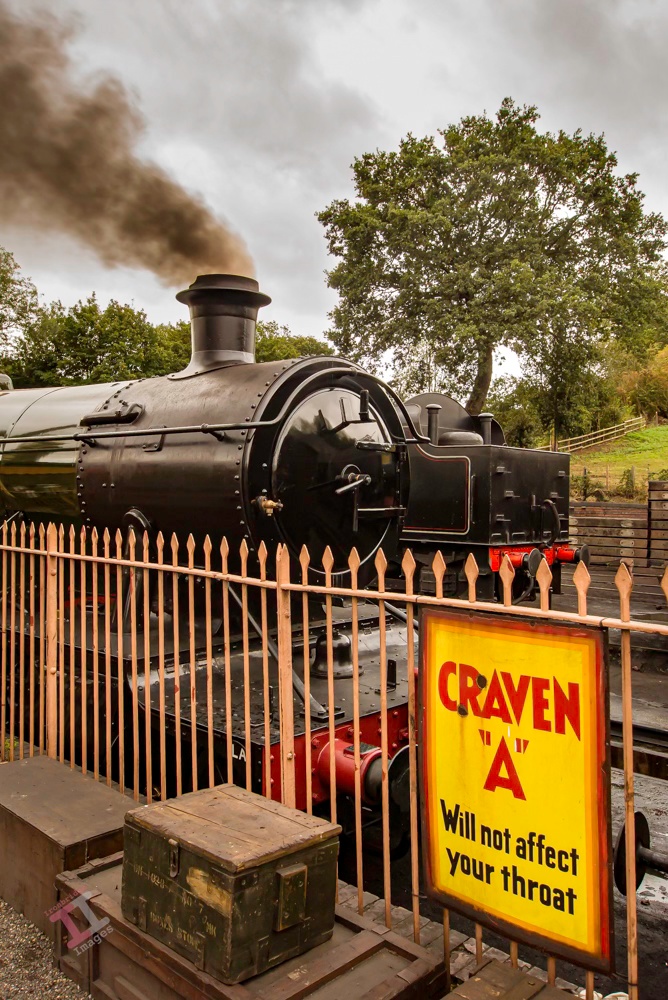
This photograph was taken 13 years ago during a visit to the Severn Valley Railway (SVR) station at Bridgnorth in Shropshire. It is a fascinating place, and an ideal venue for a photoshoot if you want a nostalgic theme.
I’m not certain that I appreciated the irony of this shot at the time, with the enamel sign advertising the benefits of the cigarettes contrasting with the dirty smoke emitted from the chimney of the steam train. It takes you back to a time when smoking was popular, accepted everywhere, and seen to be a little ‘cool’. And when advertisers could bend the truth a little more than they can do now.
Craven ‘A’ was named after the third Earl of Craven because this particular blend of tobacco was created especially for him in the 1860s, and it is still produced to this day by British American Tobacco. It was the first cigarette to be mass-produced with a cork tip, hence the tagline “Will not affect your throat”.
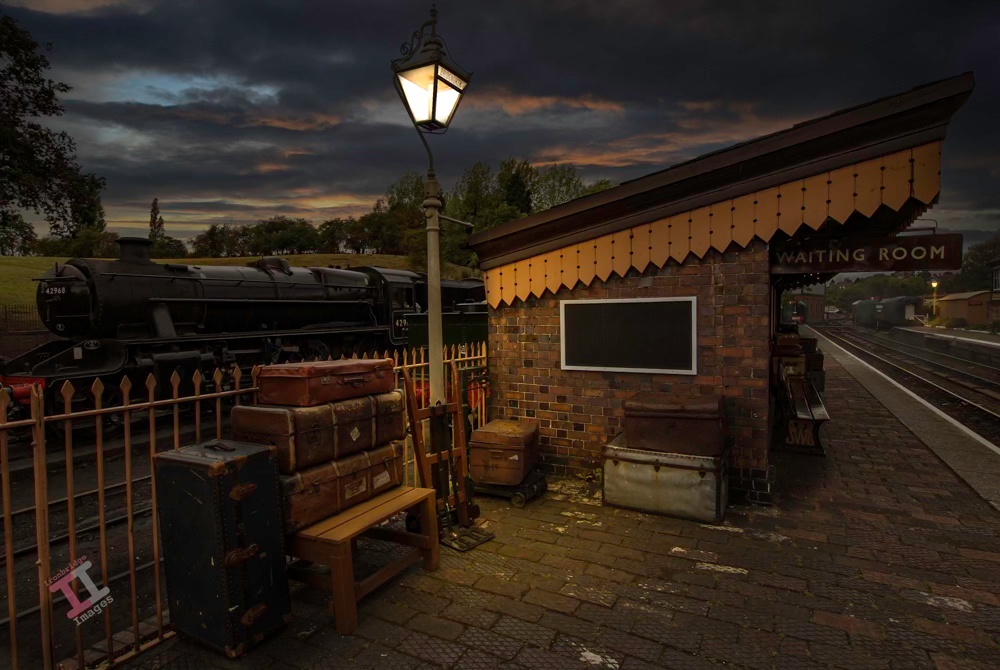
This is one of those photographs were I can’t decide whether I like it or not. I think that the problem is that there are too many leading lines and diagonals and the eye just doesn’t know where to settle. The angle of the waiting room roof, and the railway tracks on the right, lead your eye into the distance, whilst the luggage is vying for attention in the foreground. Meanwhile, the steam train to the left is pointing in the opposite direction trying to lead your eye out of the shot. I find it altogether quite unsettling. And that’s from the person who took the shot!
The lantern makes it a good subject for a day-to-night conversion though – I just wish I’d spent a bit more time on the composition when I pressed the shutter.
This Victorian tunnel runs under the Ironbridge Gorge in Shropshire and was used to extract naturally occurring tar from deep underground. It is in a village called Coalport, handy, because that is where I live. When I took this photograph, the tunnel was open daily as part of the local museum experience, and it was manned full-time. It was less well-known and less popular than the other attractions, and so it was possible to be there without anyone else getting into the shot. It is (obviously) quite dark inside so I needed to use a tripod to take a long exposure, which was another good reason not to have too many other people around in the confined space.
It clearly proved not to be cost-effective to have the tunnel manned, so now there are guided tours commencing from the nearby china museum and, unfortunately, you can’t walk down the tunnel any more. This will make it far more difficult to get a shot such as this in the future.

I have recently discovered another photograph that I took the same day and this is shown below. It has never been published before.

My blog posts have been a bit sparse over the last few weeks, namely because I have been busy post-processing images to upload to my Photo4Me gallery. I had set myself the task of displaying in excess of 200 images (which I have now managed) for no other reason than I wanted to, but I have also had a few sales from the site recently, which has spurred me on even more.
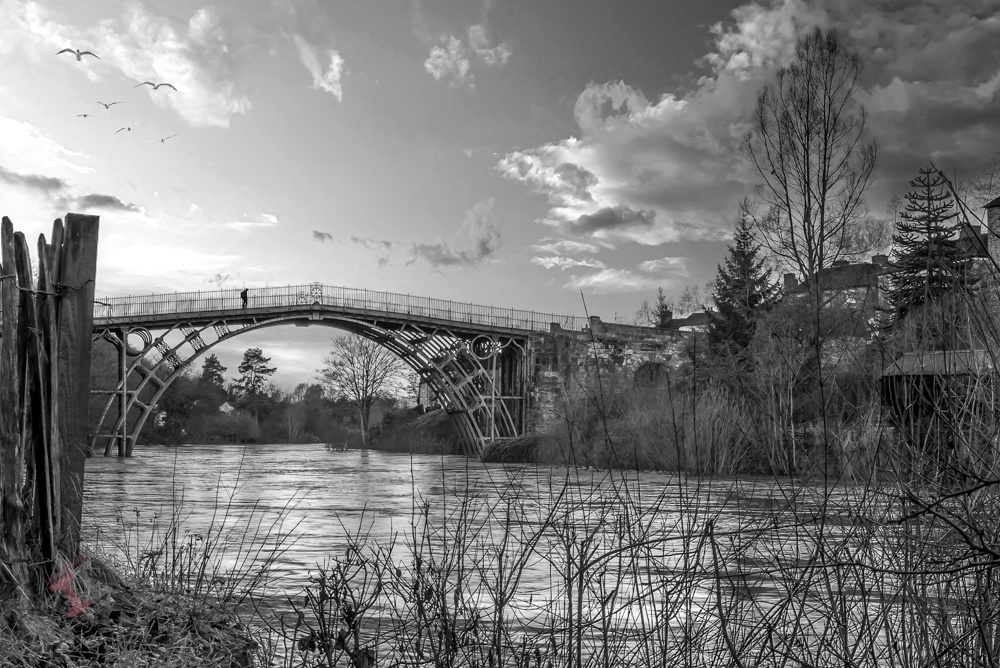
Some images lend themselves well to a monochrome conversion – it’s as if the colour just gets in the way and diverts your attention away from the ‘story’ that the image is trying to tell. Conversely, taking the colour away from others leaves a flat, meaningless picture that begs for more information. However, the decision ‘colour or not’ isn’t (excuse the pun) black and white, and often you need to try both before you know which works best. Some photographers never convert to monochrome, and others use that medium exclusively. Personally I use whatever I think works best for the image I’m working on at the time, much in the same way that I alter the image ratio depending on the composition.
I’ve also been busy creating some advertisements for the gallery site (I’ve already posted a couple over the past week or so) and have a number of others to post as we lead up to the Christmas period. It’s all with the aim of drumming up a few more sales – let’s see if all the effort pays off!

The Swan is an 18th century malthouse on the Wharfage at Ironbridge in Shropshire. At that time the River Severn was busy with many flat-bottomed boats (called Trows) plying their trade carrying goods from the industrial midlands down to the sea port at Bristol. For the boatmen, it was a hard life, with long hours and little comfort, and so to stay overnight at a town such as Ironbridge would have been a rare treat, with its numerous pubs and brothels, and the opportunity to meet up with fellow river navigators to share tales over an ale (or two).
This is another day-to-night conversion, helped by the plethora of lanterns that adorn the outside of the building and the rope lights over the outside seating area.
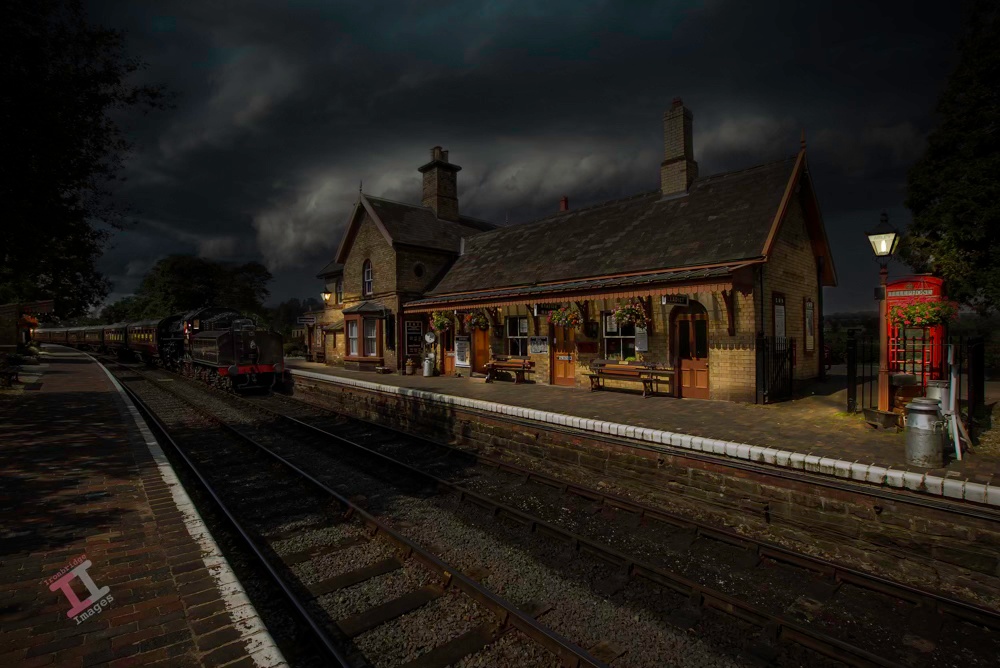
Arley station, built in 1862, lies on the Severn Valley Railway, 8 miles south of Bridgnorth, and its original look and features has meant that it has starred in many films and television productions. It closed as a passenger line in the 1960’s and the buildings became overgrown, but in the 1970’s restoration works started and it is now maintained by a group of volunteers.
Here, the LMS IVATT CLASS 4, 43106, built in 1951, pulls passenger carriages into the station ‘tender-first’, in other words; the locomotive is running in reverse.
This image was taken in the daytime, and then converted into a twilight scene using the power of post-processing, utilising both Adobe Lightroom and Photoshop.
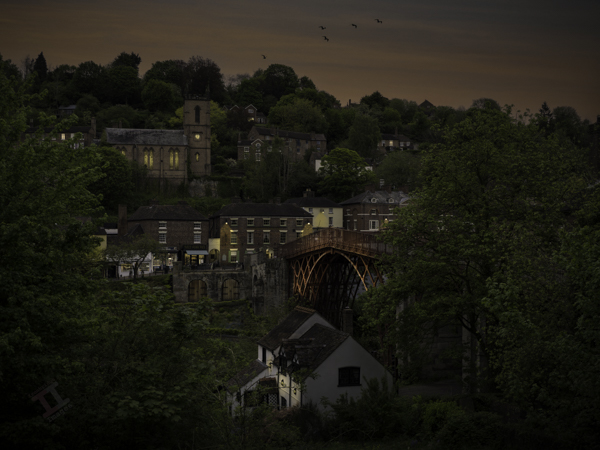
A ‘murder’ is the name given for a group of crows, and here, a number of them are leaving their nesting spot on the top of St Lukes church tower, which stands proudly over Ironbridge town and its famous bridge. The church was built in 1837 on a tight budget, which is why it is relatively plain. Unusually, the tower is the the east and the chancel to the west, probably due to the bedrock on which it is built.
Day-to-night images are, by definition, dark, and some people find it difficult to distinguish the details within them. It is important to check the brightness and contrast of your monitor in order to maximise your viewing enjoyment. You should be able to see 26 distinct bars on the contrast scale below. If not, check your settings and adjust accordingly.

As I mentioned in my blog Secret Ironbridge: London & North Western Railway, three railways existed in the Ironbridge Gorge.
We have already seen the London & North Western Railway running into Coalport (East) station and the Great Western Railway running through Coalport (West) station to Ironbridge and Broseley Station.
Here, we come across the Severn Valley Railway, which formed part of the line between Wellington and Craven Arms and was built (in stages) between 1857 and 1863. It had to cross the River Severn and did so via the Albert Edward bridge.
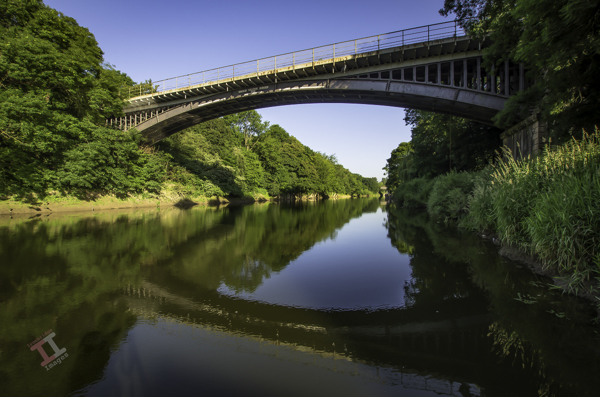
The bridge is named after Queen Victoria’s eldest son (who later became Edward VII). It was designed by Sir John Fowler and cast at the Coalbrookdale Foundries in 1863. It is considered one of the last major cast iron railway bridges built. Unlike the other two railway lines in the Gorge, this one continued to operate until 2015 – carrying coal wagons to the Ironbridge Power Station.
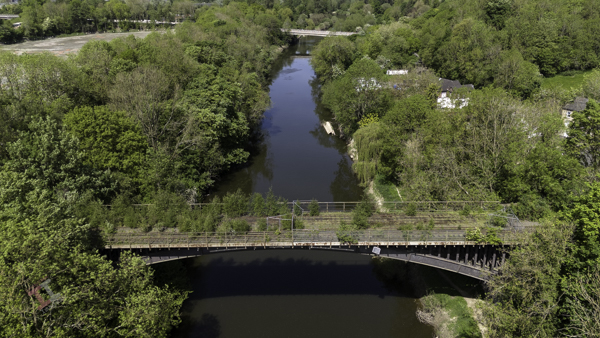
The centre of the span of the bridge denotes the boundary between Telford & Wrekin Council and Shropshire Council, and it is designated a Grade II Listed building, each Council claiming half.
Building bridges:
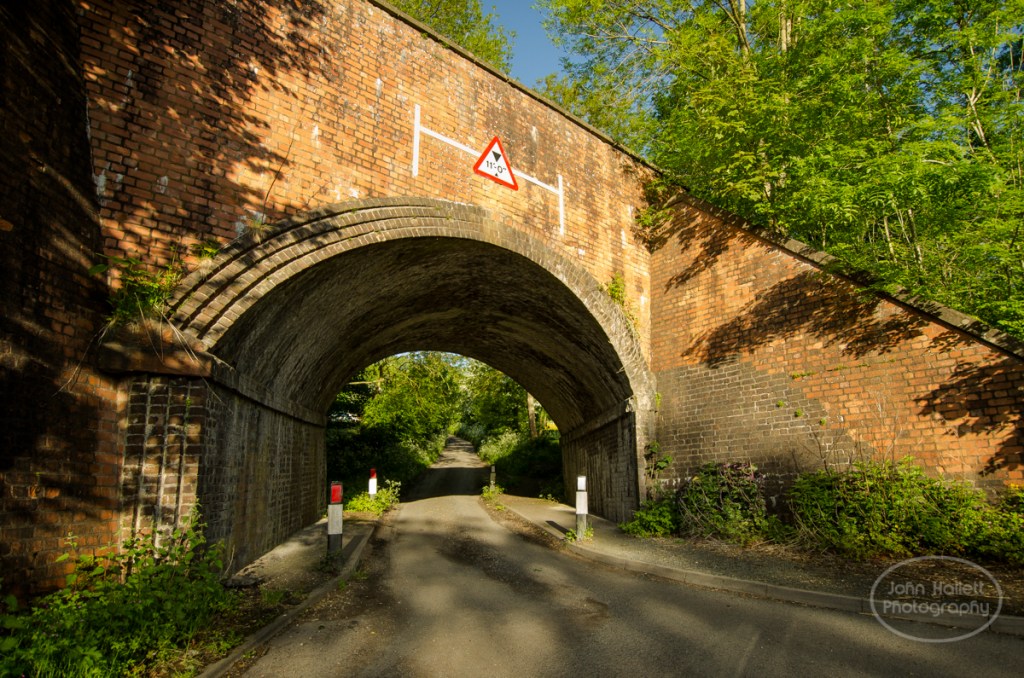
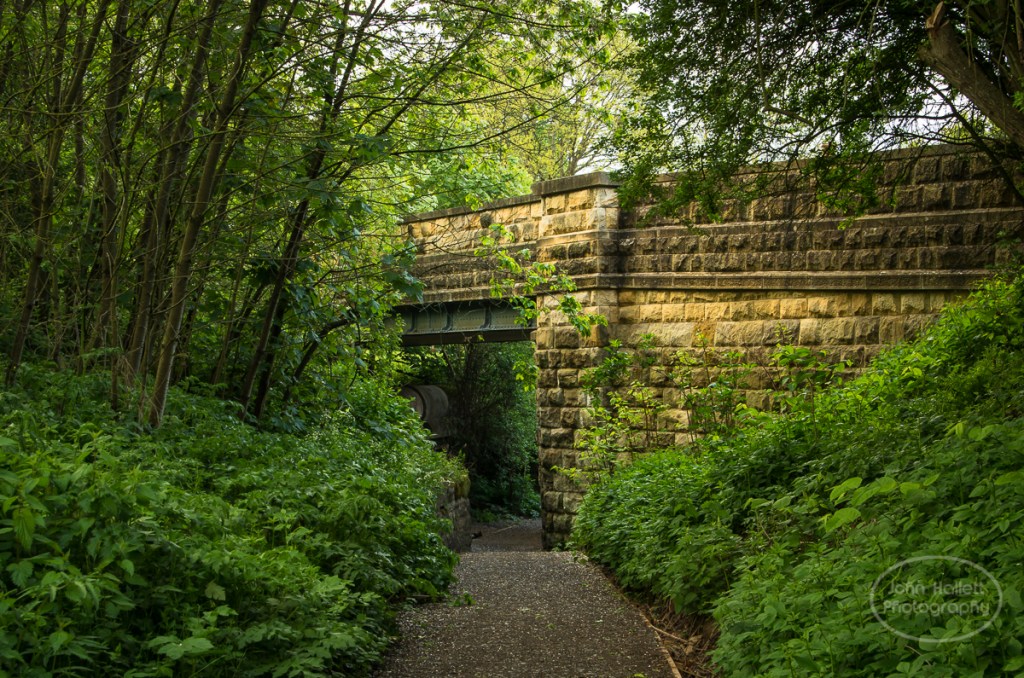
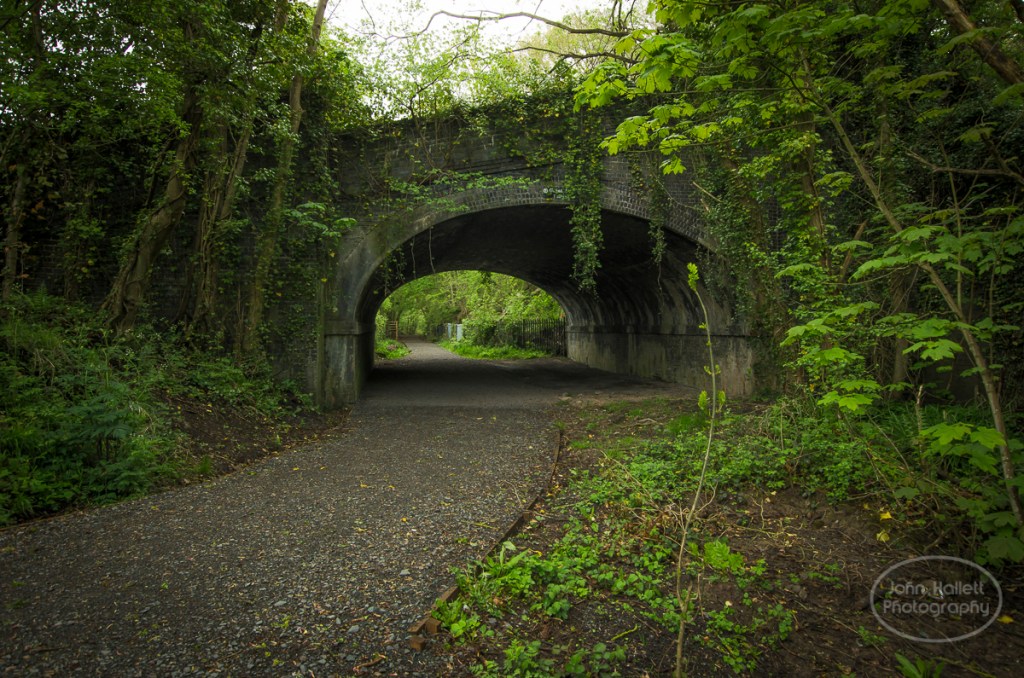
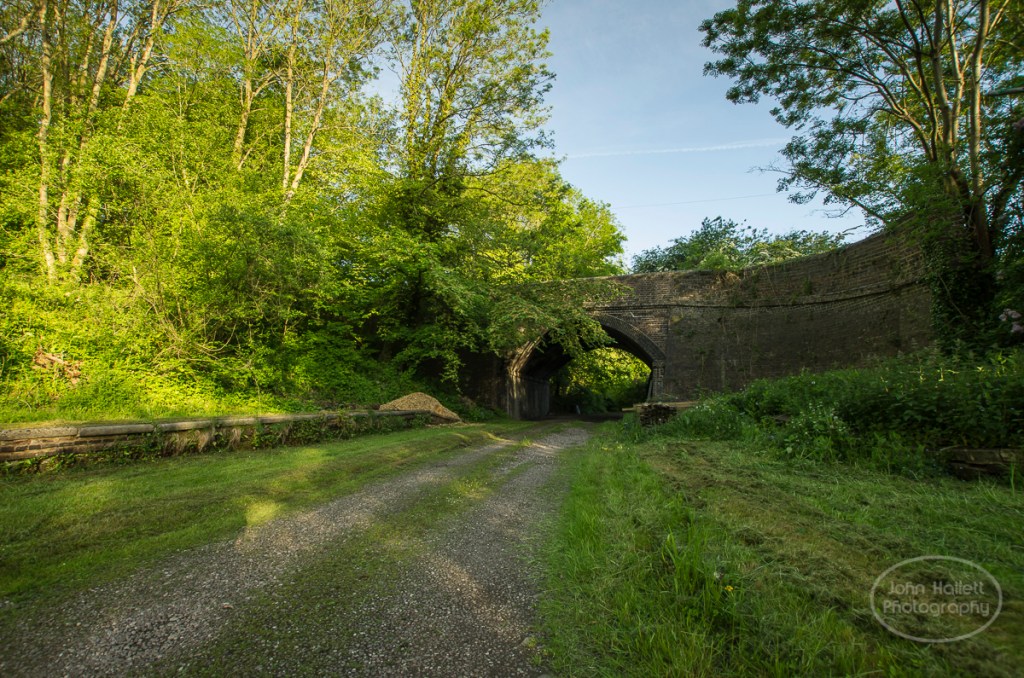
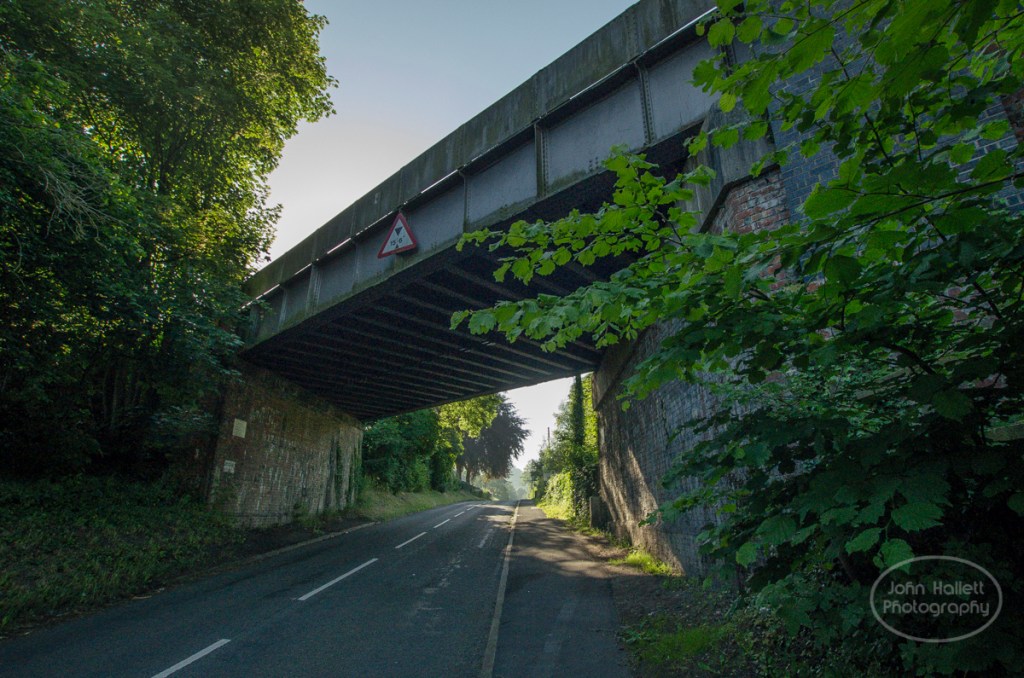
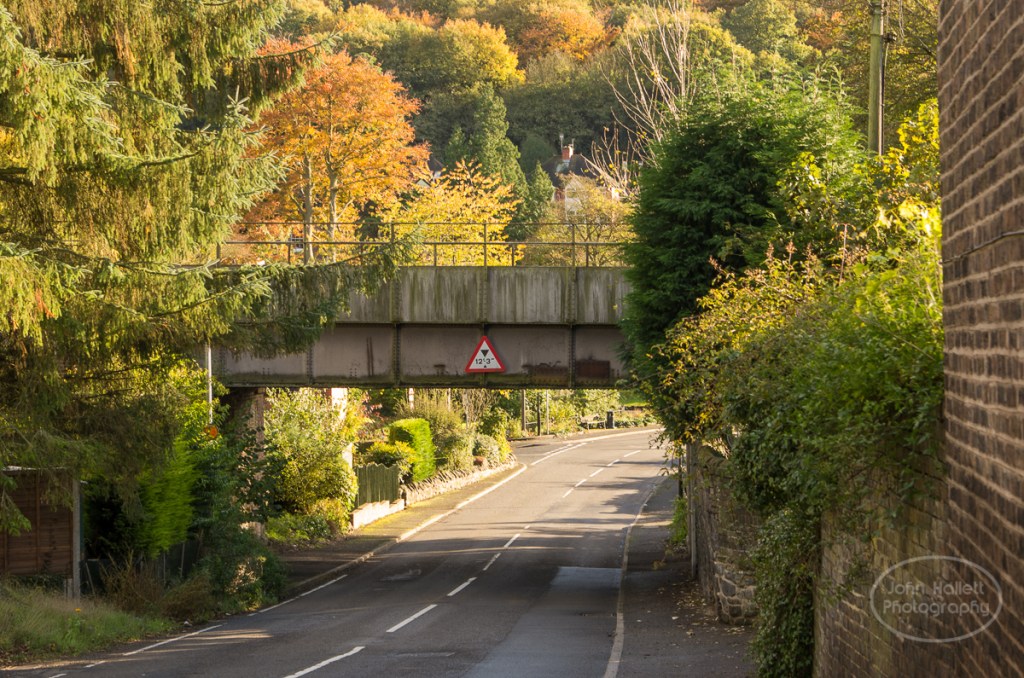
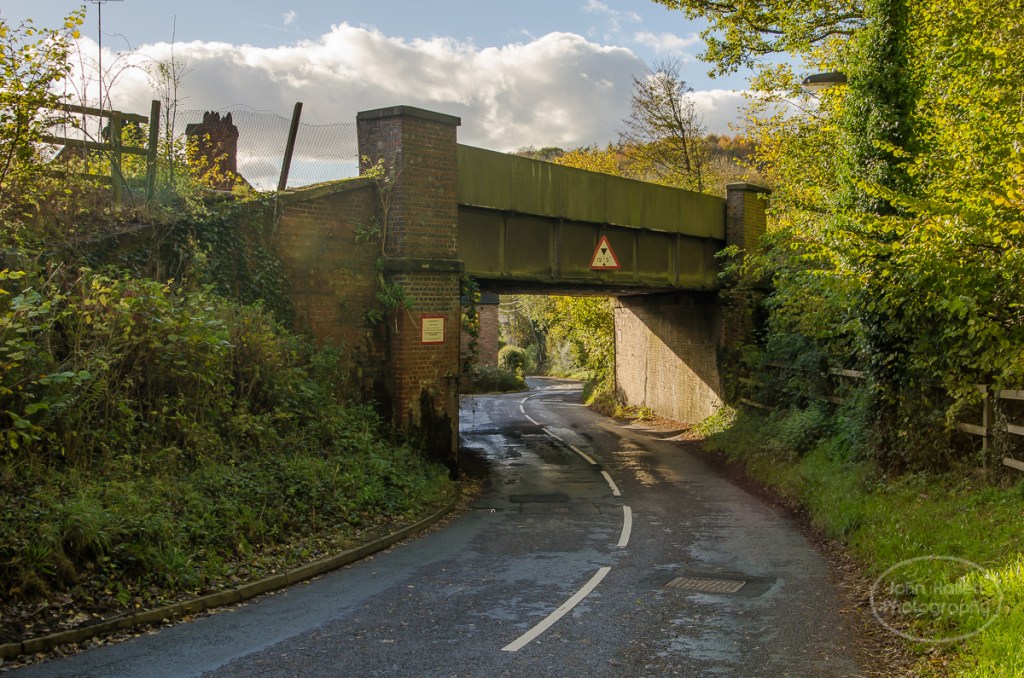
You may ask why the railway bridges in the south and east of the Ironbridge Gorge were built out of attractive brick and stone, whilst the railway bridges in the west are generally utilitarian metal girders. The answer is quite simple: building the section of the railway line between Horsehay and Coalbrookdale was a costly exercise, and metal bridges were cheaper and better advertisements for the Coalbrookdale Company than masonry ones.
In the South and East
In the West
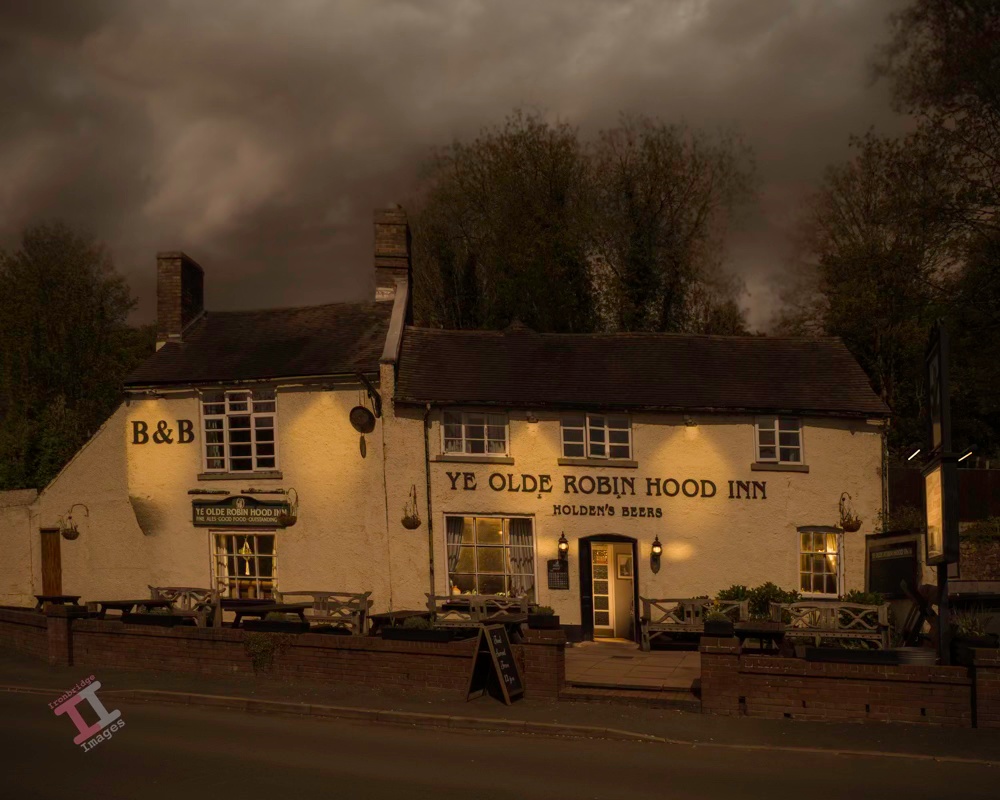
This public house is located between Ironbridge town and an area called The Lloyds; immediately adjacent to the Free Bridge, which crosses the River Severn. Although it is a detached building now, it was once part of a long terrace and was then just ‘The Robin Hood’. I’m not sure exactly when it was built, but it is marked as a public house in the Ordnance Survey map of the area created in 1883.
What seems to be unsure is whether it has always been called this name, because there is no obvious reason why it should. Robin Hood, the folk hero, was first mentioned in written ballads in the 1300s, but was then just depicted as a violent criminal who lived with his gang in Sherwood Forest. It wasn’t until much later that Maid Marion and Friar Tuck entered the legend and Robin Hood became a rebel, fighting injustice from the infamous Sheriff of Nottingham. I can’t recall any connection to Ironbridge or the pub trade.
At some point in the early 1970s the Robin Hood ceased being a licensed premises and became an antiques shop, but later in the same decade it reverted back to being a hostelry.
Visibility was limited when I opened the blinds in the kitchen window this morning – a thick blanket of mist had descended into the valley. I took the opportunity to fly the drone above the cloud to capture this image over the Severn Valley.
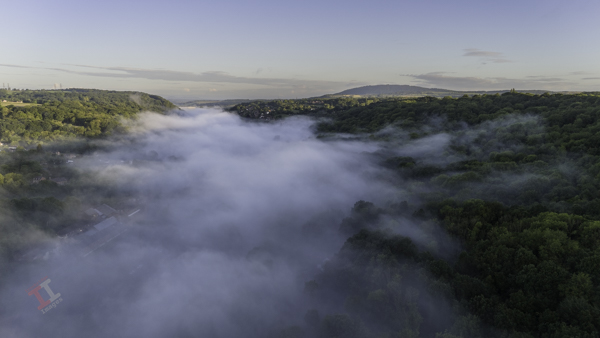
Within 30 minutes the mist had cleared and we were ready for another day of summer sun rain.
This type of phenomena is called a ‘cloud inversion’ and is caused when temperatures near the ground are lower than those higher up in the air. It is more common during Autumn and Winter, typically just after sunrise.
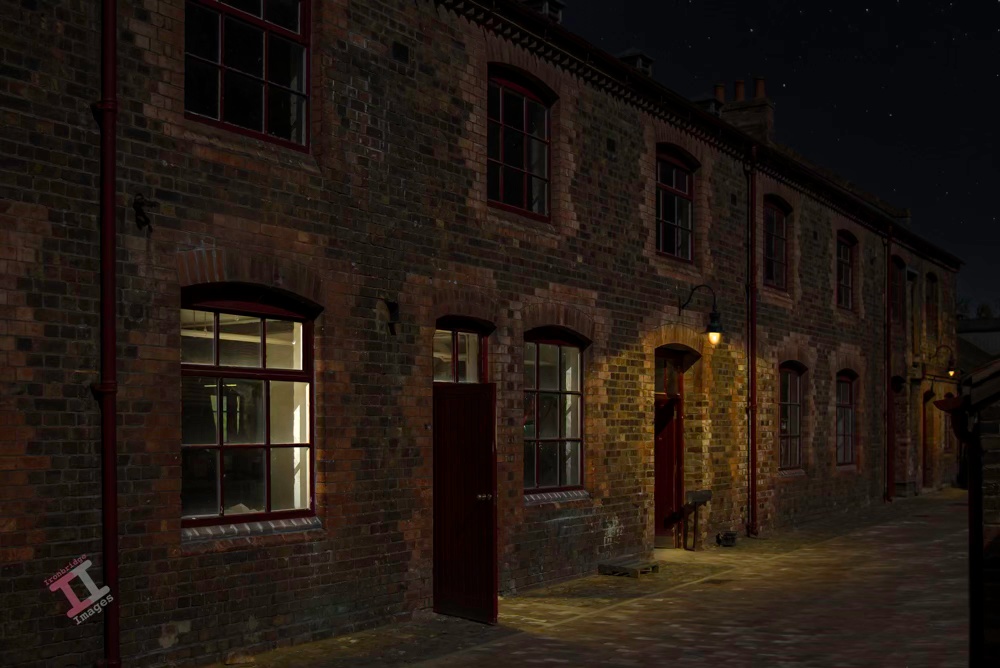
At first glance, this may appear to be a row of terraced houses, but it is actually a set of Victorian offices inside the Craven Dunnill encaustic tile works in Jackfield, Shropshire.
This was originally taken on a sunny day in May 2009 (remember when we had sunny days in May?), but it was more of a record shot and not particularly inspiring. Therefore, I decided to convert it into a night-time shot using post-processing.

Firstly, I adjusted the converging verticals. These are usually noticeable in architectural shots because the camera lens is a lot lower than the top of the building, and it gives the appearance that the building is leaning back and/or inwards. Photographers who take a lot of architecture often invest in a ’tilt shift’ lens, which adjusts the perspective in-camera, but post-processing software such as Adobe Lightroom can do it quite easily.
I then needed to remove the very hard shadow created by the building in the bottom-right of the image because this shadow would be out of place in the final image. Whilst I was doing that, I also removed the annoying safety signs on the doors and the dangling electrical cables.
Finally, before carrying out the day-to-night conversion, I replaced the bright blue sky with a more suitable night-time one.
I reduced the exposure of the entire image to give a night-time effect whilst leaving enough light to retain some of the features. I added light to the two lanterns and gave them a slight yellow tint to suggest tungsten light. I also added light to the inside of the nearest room but gave that a slightly bluer tint to differentiate the type of lighting indoors.
Finally, I added incidental light from the open door and windows. This is the most important part of a day-to-night conversion; getting the angles of the light spill and the shadows correct for it to look realistic.
 Ironbridge Images