Featured Image: Candle-dipping carousel

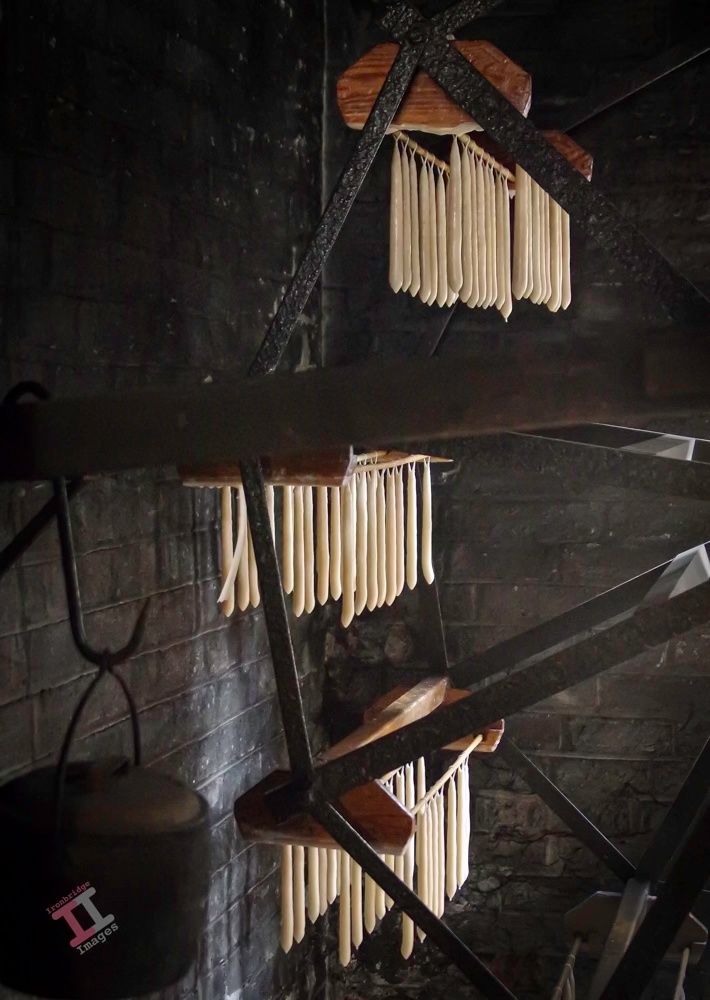
Here is a shot from a visit to the nearby Victorian Town museum a few years ago – wax candles being manufactured and hung to dry. Basically lengths of wick are hung onto a wooden frame and then dipped into a bath of molten wax. The frame is then hung onto the rotating carousel to allow them to dry and another frame is dipped. This dipping cycle continues until enough wax has deposited onto the wick to form a usable candle – which could be up to 100 times. This would have been a prosperous cottage industry in the Victorian times when the majority of indoor lighting would have been provided by candle but the invention of the electric light bulb in 1879 started the decline.

This was a hand-held shot at 1/80 second. Even with the lens opened up to f/2 the ISO was still 8000 – but fortunately there is little noise in the image.

Candle-dipping carousel

Featured Image: Craven “A”

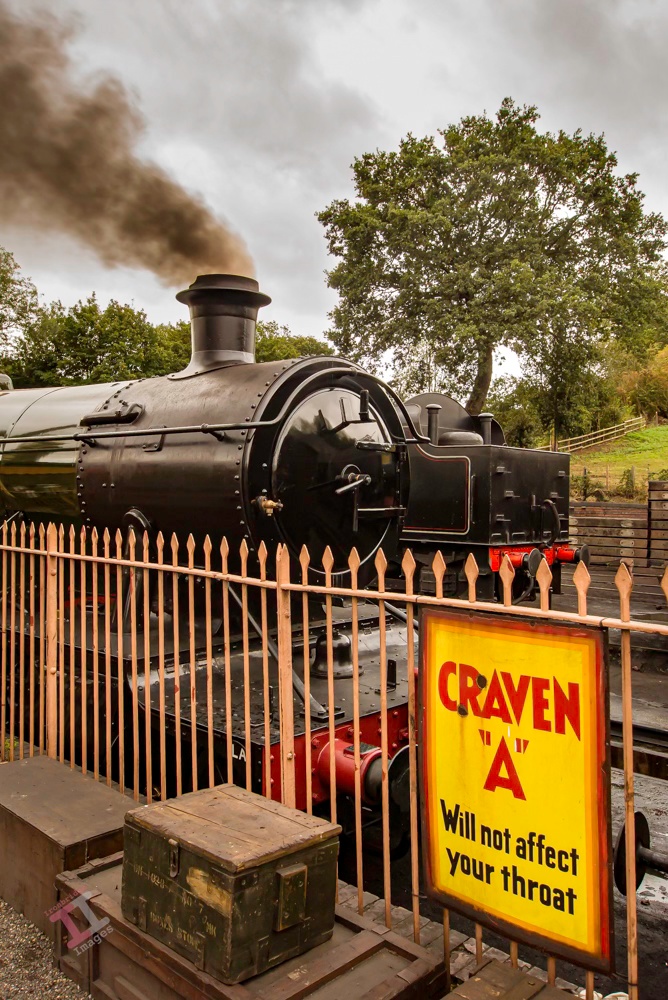
This photograph was taken 13 years ago during a visit to the Severn Valley Railway (SVR) station at Bridgnorth in Shropshire. It is a fascinating place, and an ideal venue for a photoshoot if you want a nostalgic theme.

I’m not certain that I appreciated the irony of this shot at the time, with the enamel sign advertising the benefits of the cigarettes contrasting with the dirty smoke emitted from the chimney of the steam train. It takes you back to a time when smoking was popular, accepted everywhere, and seen to be a little ‘cool’. And when advertisers could bend the truth a little more than they can do now.

Craven ‘A’ was named after the third Earl of Craven because this particular blend of tobacco was created especially for him in the 1860s, and it is still produced to this day by British American Tobacco. It was the first cigarette to be mass-produced with a cork tip, hence the tagline “Will not affect your throat”.

Craven “A”

Featured Image: Tern returns

Tern Returns

During one of our trips to Northumberland, I took a boat trip with my brother-in-law, Maurice, to the Farne Islands, the purpose of which was to get some shots of the puffins. It was a fantastic trip, and well worth it if you are ever in the area.

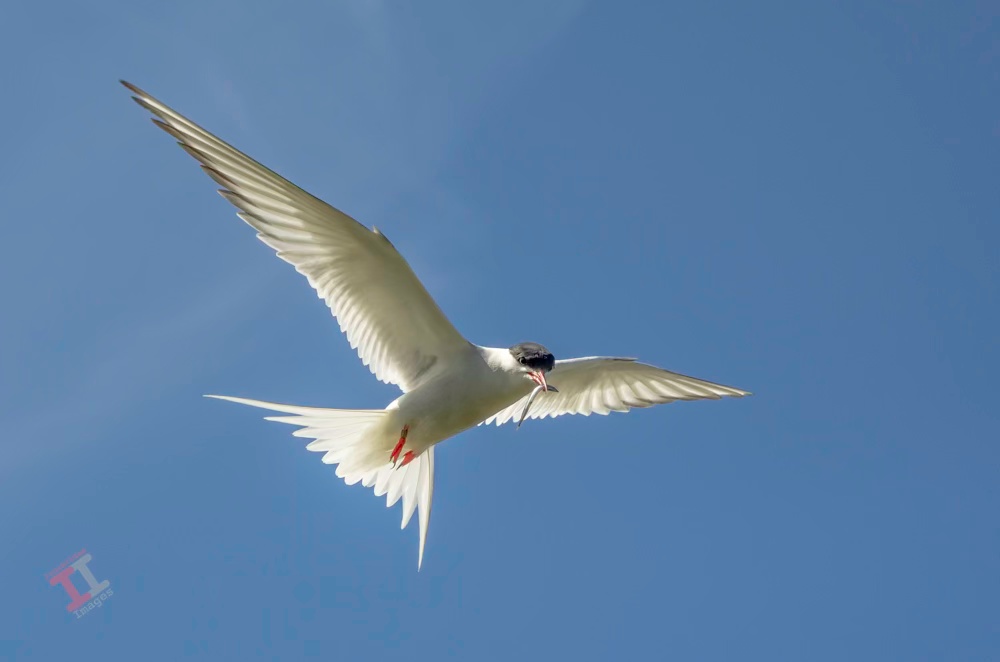
Although I took many, many, pictures of puffins, my favourite shot of the day was of an Arctic Tern returning from the sea with a small sprat, presumably to feed its chicks.

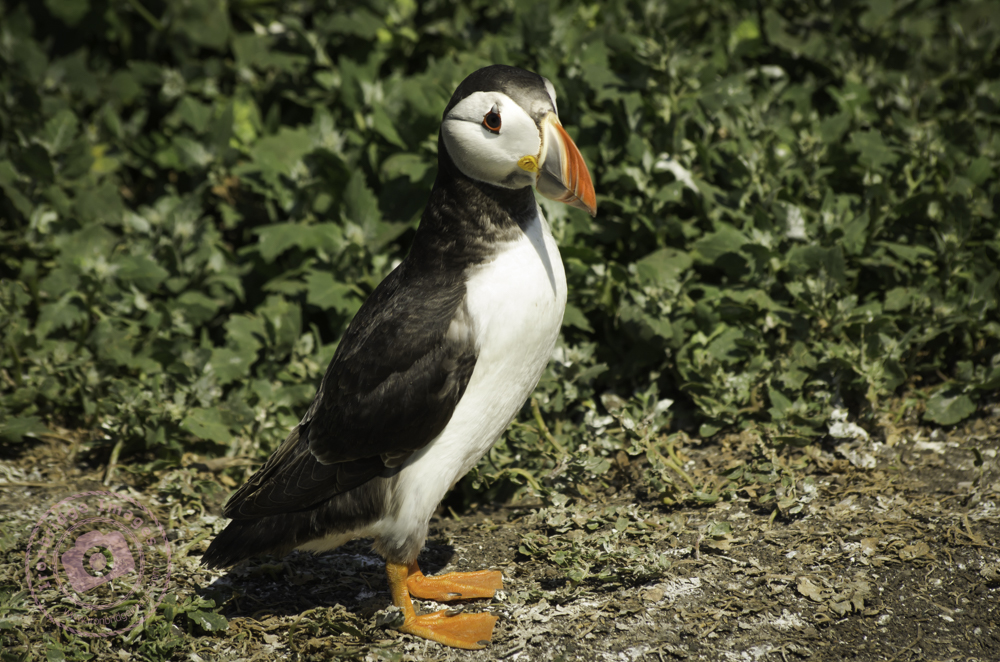
Here is also one of my puffin shots:

Featured Image: Four candles

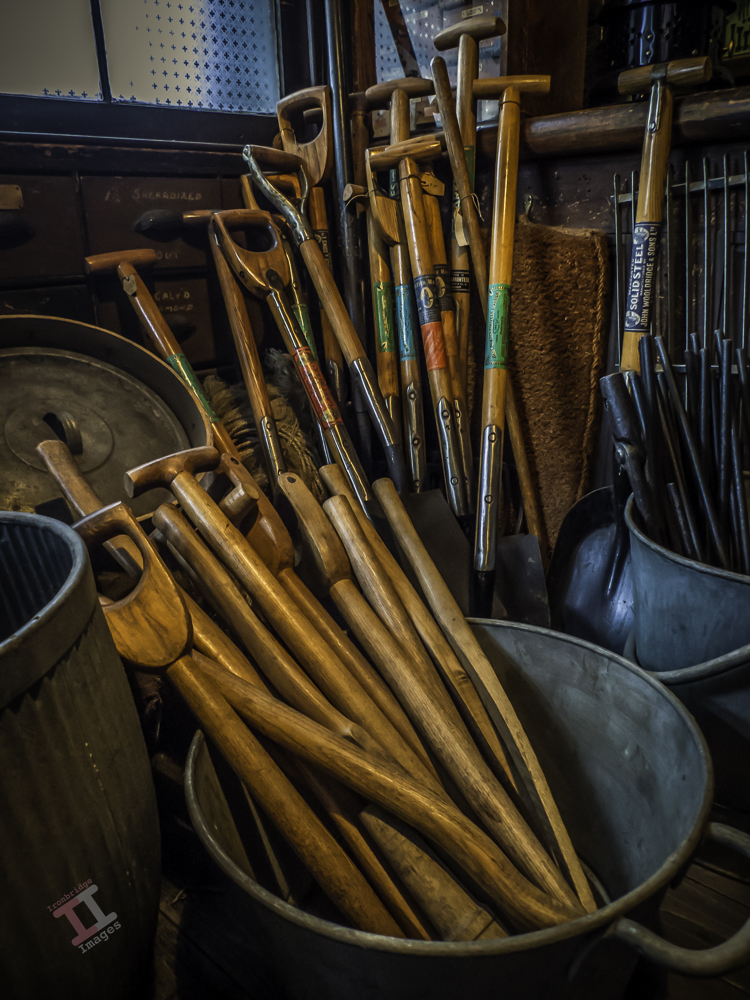
This image was taken in homage to a classic ‘Two Ronnies’ sketch on their TV show in the 1970’s. The show, by Ronnie Barker and Ronnie Corbett, was a series of comedy sketches during a time before satellite and cable television, and the ‘Four Candles’ sketch was first aired in 1976, when there were just three television channels to choose from; BBC1, BBC 2 and ITV.

Such was the popularity of the show (and the absence of much competition) that the whole family would sit around the television to watch and laugh together. This particular sketch was all the funnier to our family because my parents had a shop, and so did my uncle; which happened to be an ironmongers. I won’t detail the sketch’s premise, but if you haven’t seen it, you can find it on YouTube here.

It obviously created a lasting memory because, some 30+ years later, as I was visiting the Black Country Living Museum, I came across this collection of garden fork handles in a corner and just had to capture them on camera. The bonus was that they were quite photogenic, with their polished handles shining in the golden light from the morning sun.

Four candles

Featured Image: Coalport China Works

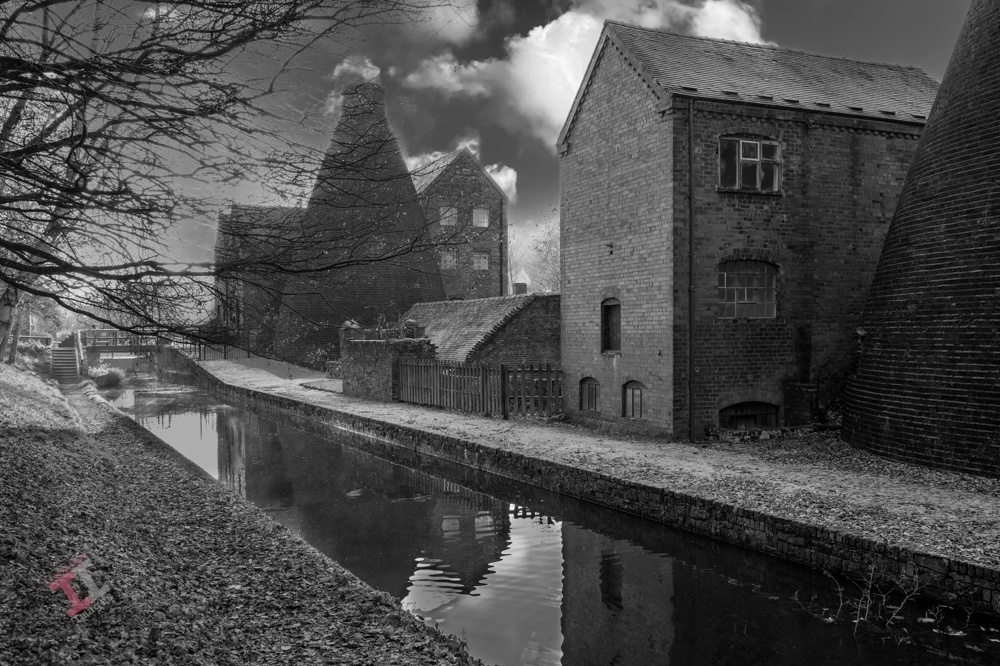
This is a shot of Coalport China Works, just a short walk from my house. It was taken at the end of a particularly damp November, and the towpath was covered in a luminous green moss, which was quite distracting. By removing the colour, that distracting green moss becomes a leading line to take the eye through the image.

Coalport China Works

If you have read my blog post; Secret Ironbridge: Transhipment interchange, you will know that Coalport was a ‘new town’ built in the 1790s to service a wharfage between the Shropshire Canal and the River Severn. At about the same time, entrepreneur John Rose had a china factory built on the same site to take advantage of the distribution opportunities that the new canal and river provided.

The remains of the factory (now a museum) are easily recognisable by the two bottle kilns (the name refers to their shape) used to ‘fire’ the pottery. Their distinct profile created an updraught that accelerated the heat from fires at their base. Bottle kilns were very inefficient, but continued to be used throughout the UK until well into the mid-1900s.

Bottle kilns were a common site in the Ironbridge Gorge; the Coalport site originally had six, but there were many more over the river at the Maws and Craven Dunnill tile works.

Featured Image: St Chads church

I firmly believe that the best black-and-white photographs are those that are taken specifically for that genre. However, there is also a common saying:

“If the colour ain’t right, go black & white”

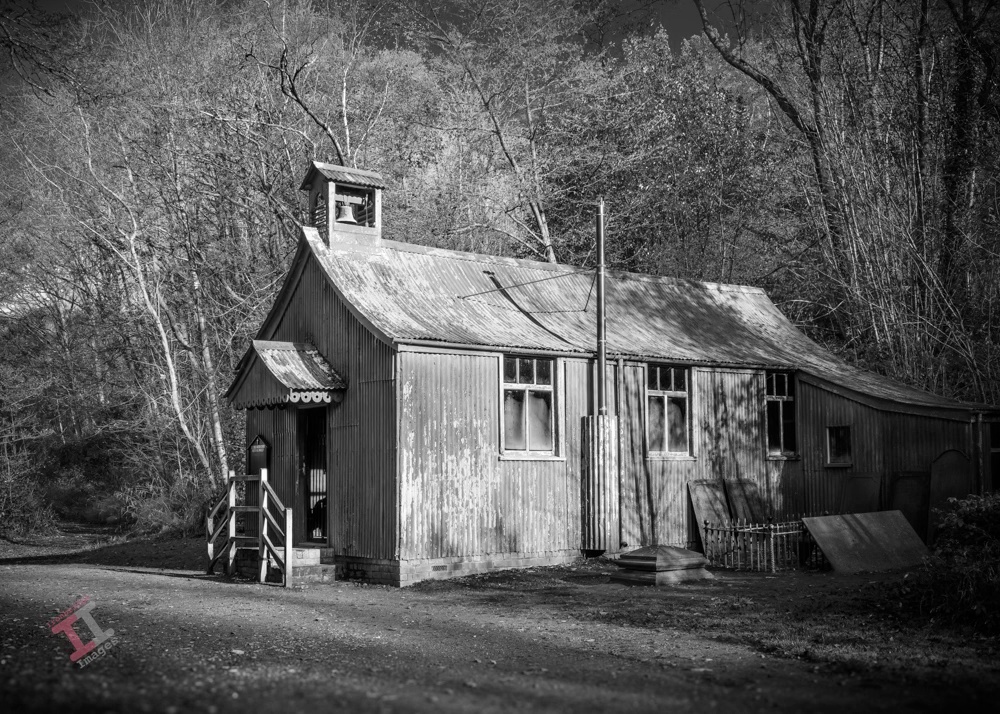
Actually, I’m not sure that it is a common saying, but the image here is a case in point. It has been lying on my hard drive for a couple of years; there was something about it I liked, but the colours just didn’t work. The subject is St Chads Mission Church, a prefabricated corrugated-iron building dating from 1888, originally built at Granville Colliery in Shropshire but now moved into an open-air museum complex. It has been painted, at some time, with a red paint (presumably red-lead, to prevent corrosion) which is a bit garish in a photograph, which I why I never used it.

St Chads Church

However, by removing colour entirely, it produces a much more satisfying image. Of course, this doesn’t just mean desaturating the image of colour, it needs careful post-processing (in much the same way as a colour image) in order to achieve the best tonal values. I use Adobe Lightroom and Photoshop for the task, although many favour a program called Nik Silver Efex.

There is a common error made confusing the terms ‘black-and-white‘ with ‘monochrome‘. A monochrome image is one made up of shades of only one colour (plus white), so this term obviously includes a ‘black and white’ image, as well as a sepia image and a cyanotype. Therefore a ‘black-and-white’ image is a monochrome, but a monochrome isn’t necessarily ‘black-and-white’.