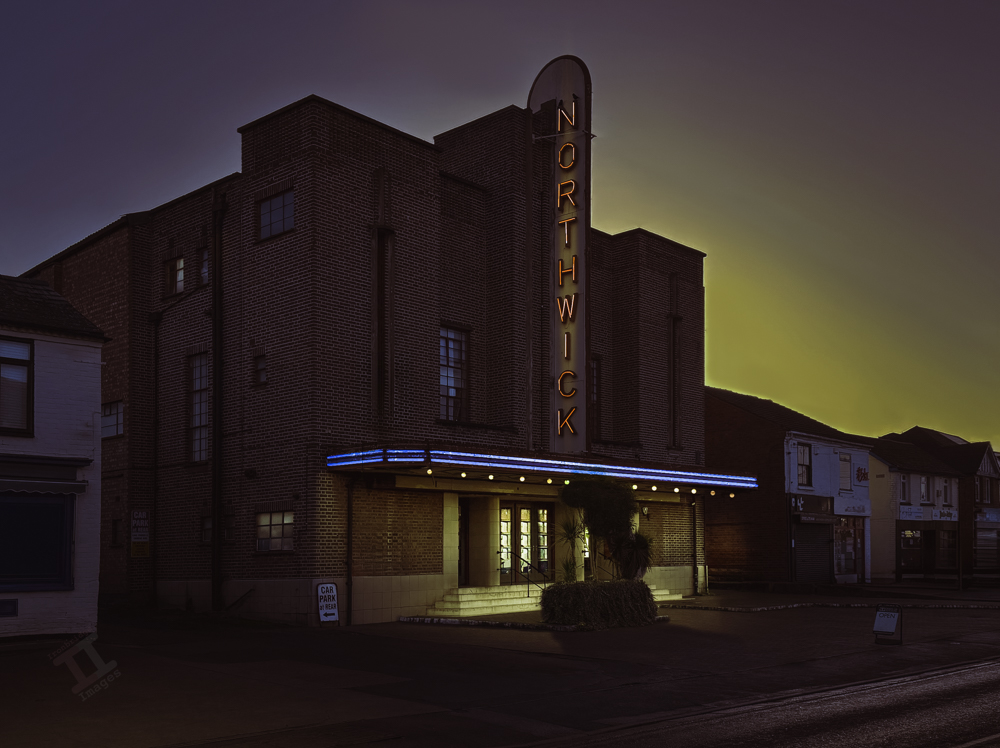
The Northwick cinema in Worcester was opened in 1938. A privately-owned cinema, it had 800 seats in the stalls and a further 300 in the upper circle, and it has classic art-deco styling throughout.
Sadly it closed as a cinema in 1966 and, like many others, became bingo hall until 1982. It had a brief resurgence as a live music venue, and is now an antique furniture shop, although its future is uncertain as they are currently trying to find smaller premises. It is on sale for a cool £1.3 million.
This is another of my day-to-night projects. Unfortunately, online image reproduction routinely ruins the overall contrast in these type of images and so they never look as good as they do on my monitor.
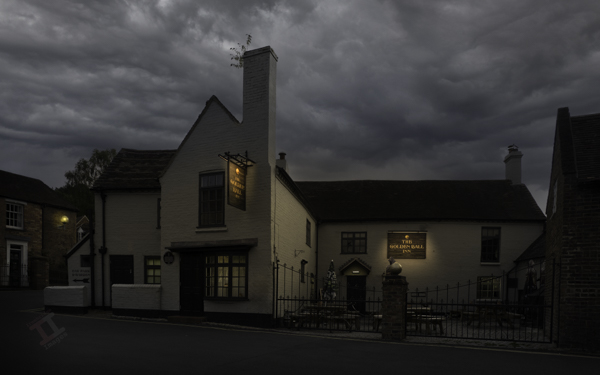
Situated right opposite my best friends house, I spent many teenage evenings in this hostelry. Banks’ mild was 70p a pint and a beef burger in a bun was 50p – so you could have a decent night out for less than a fiver! As you can guess, this was a fair few years ago.
I haven’t set foot inside for decades now, but the outside looks much the same as I remember it. I had been past a few times to get the shot but there had always been a delivery van or car parked in front, however on this occasion I was pleasantly surprised to find it it was clear and quiet.
This is my largest day-to-night conversion to-date and took a fair amount of time and many, many masks to create. It was all great fun though and I’m quite pleased with the result.
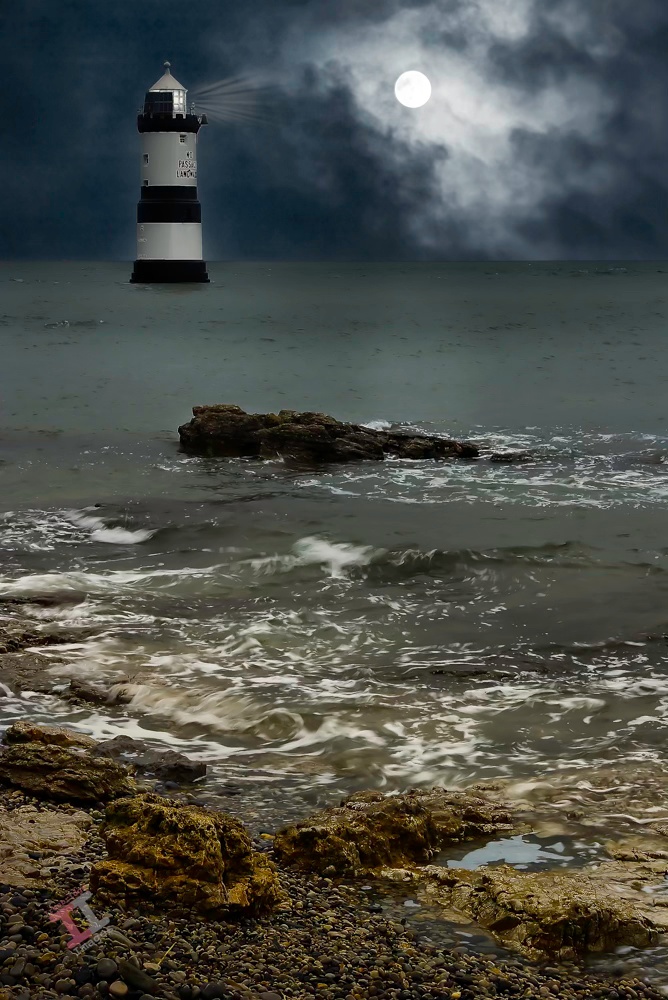
The Trwyn Du Lighthouse is located just off Penmon Point on the north-east coast of Anglesey, and marks the safe passage between it and Puffin Island. It was built in 1838 following a disaster when the Rothsay Castle steamer ran aground at the cost of 130 lives.
This shot was taken in 2010 on an overcast, but bright, July day, which led to a rather flat, uninspiring image. I decided, therefore, to replace the sky and to convert it to a night scene, using a combination of Lightroom and Photoshop.
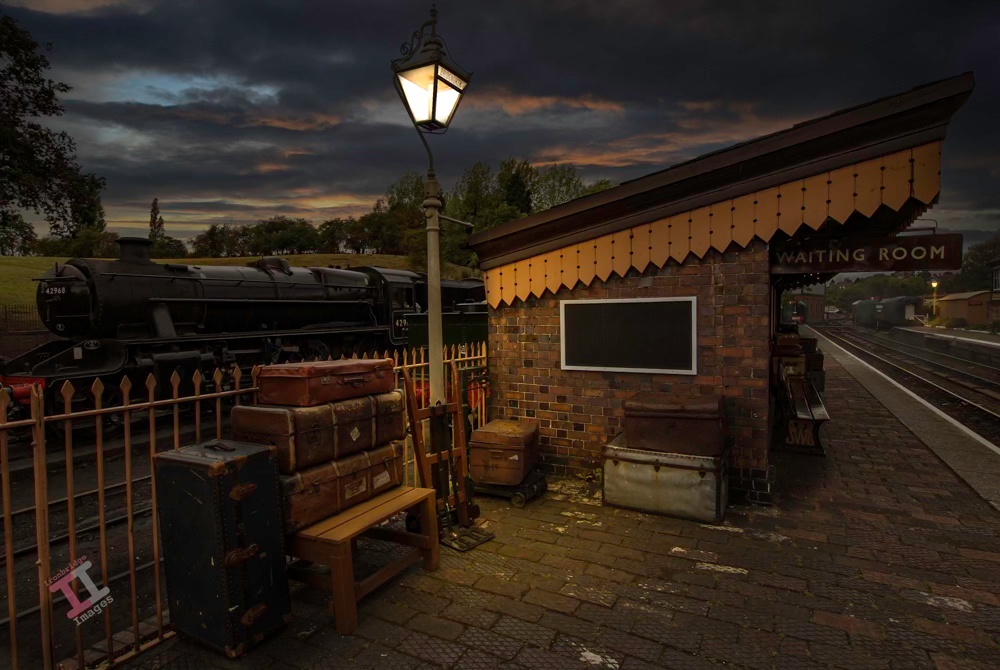
A waiting room on a platform at Bridgnorth station on the Severn Valley Railway.
This is one of those photographs were I can’t decide whether I like it or not. I think that the problem is that there are too many leading lines and diagonals and the eye just doesn’t know where to settle. The angle of the waiting room roof, and the railway tracks on the right, lead your eye into the distance, whilst the luggage is vying for attention in the foreground. Meanwhile, the steam train to the left is pointing in the opposite direction trying to lead your eye out of the shot. I find it altogether quite unsettling. And that’s from the person who took the shot!
The lantern makes it a good subject for a day-to-night conversion though – I just wish I’d spent a bit more time on the composition when I pressed the shutter.
The Swan is an 18th century malthouse on the Wharfage at Ironbridge in Shropshire. At that time the River Severn was busy with many flat-bottomed boats (called Trows) plying their trade carrying goods from the industrial midlands down to the sea port at Bristol. For the boatmen, it was a hard life, with long hours and little comfort, and so to stay overnight at a town such as Ironbridge would have been a rare treat, with its numerous pubs and brothels, and the opportunity to meet up with fellow river navigators to share tales over an ale (or two).
This is another day-to-night conversion, helped by the plethora of lanterns that adorn the outside of the building and the rope lights over the outside seating area.
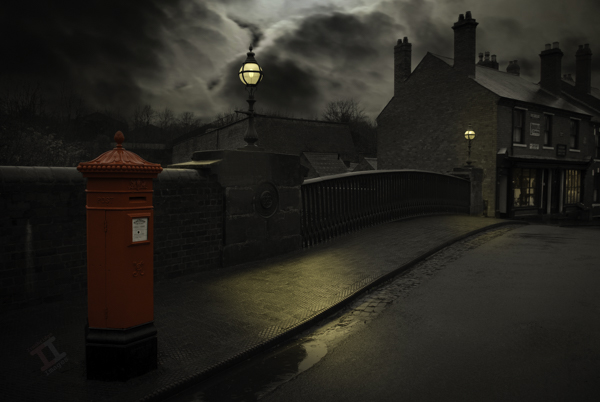
I still use the term ‘postbox’, even though many now use the more Americanised ‘mailbox’ (and very few use the older term ‘pillar box’). This particular type of postbox dates from 1866 and is called the ‘Penfold’ design, named after its designed, John Penfold (if you are a fan of cartoons, Dangermouse’s sidekick, Penfold, was named after this type of postbox). It was very expensive to produce and they were phased out in 1879.
To highlight the postbox in this shot, I’ve slightly desaturated the rest of the image, before darkening it and adding illumination to the lights and shops.
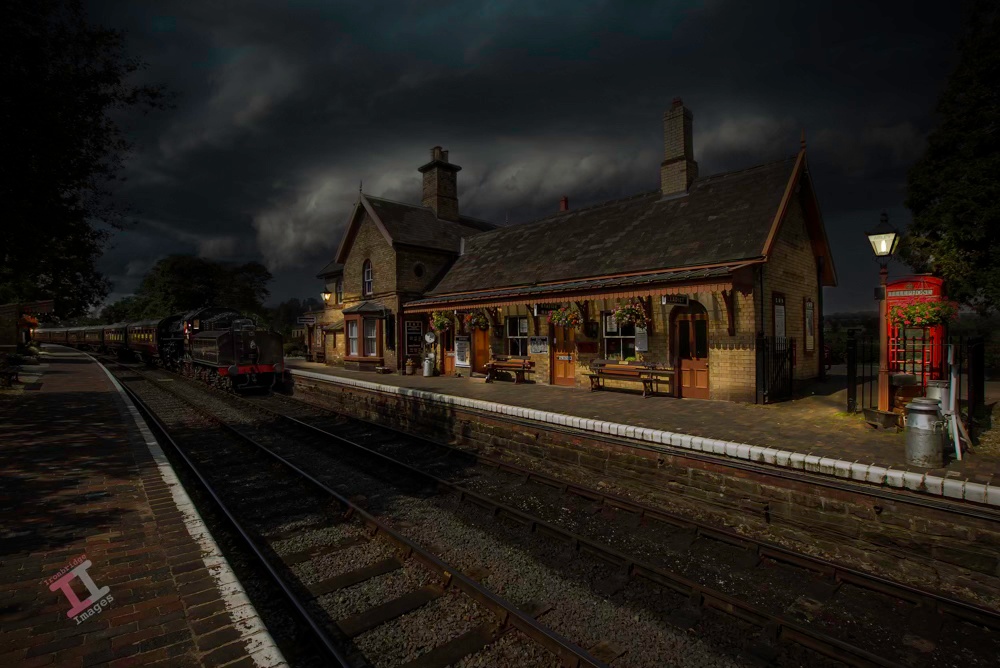
Arley station, built in 1862, lies on the Severn Valley Railway, 8 miles south of Bridgnorth, and its original look and features has meant that it has starred in many films and television productions. It closed as a passenger line in the 1960’s and the buildings became overgrown, but in the 1970’s restoration works started and it is now maintained by a group of volunteers.
Here, the LMS IVATT CLASS 4, 43106, built in 1951, pulls passenger carriages into the station ‘tender-first’, in other words; the locomotive is running in reverse.
This image was taken in the daytime, and then converted into a twilight scene using the power of post-processing, utilising both Adobe Lightroom and Photoshop.
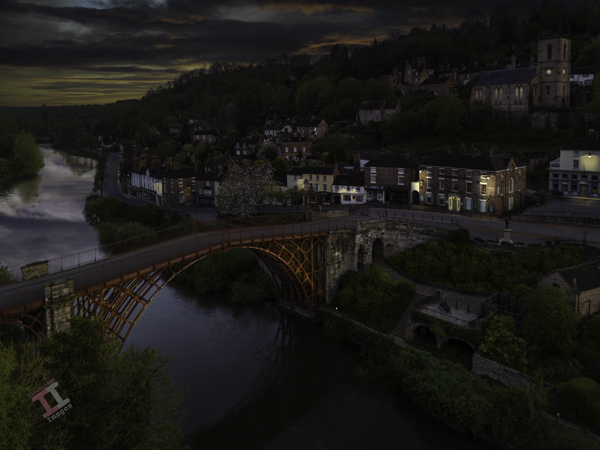
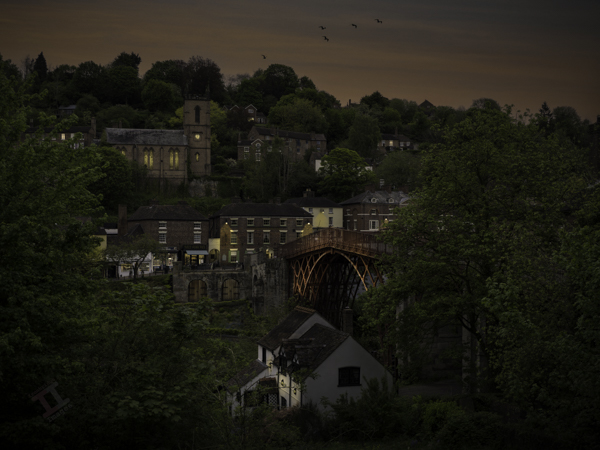
A ‘murder’ is the name given for a group of crows, and here, a number of them are leaving their nesting spot on the top of St Lukes church tower, which stands proudly over Ironbridge town and its famous bridge. The church was built in 1837 on a tight budget, which is why it is relatively plain. Unusually, the tower is the the east and the chancel to the west, probably due to the bedrock on which it is built.
Day-to-night images are, by definition, dark, and some people find it difficult to distinguish the details within them. It is important to check the brightness and contrast of your monitor in order to maximise your viewing enjoyment. You should be able to see 26 distinct bars on the contrast scale below. If not, check your settings and adjust accordingly.
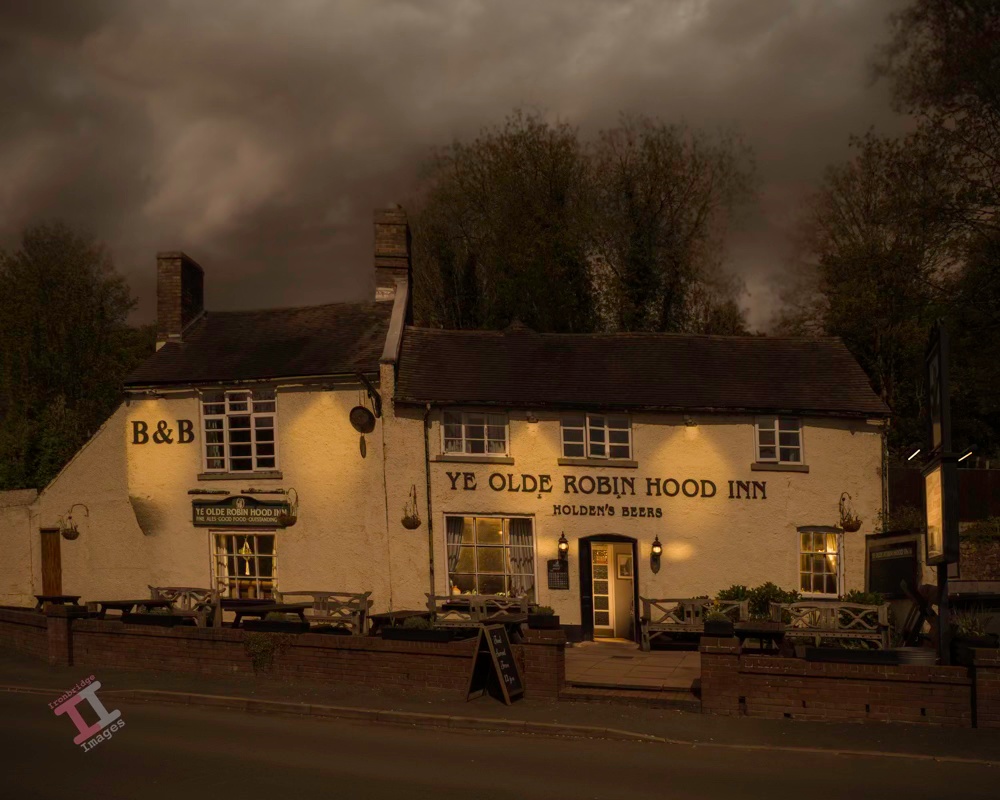
This public house is located between Ironbridge town and an area called The Lloyds; immediately adjacent to the Free Bridge, which crosses the River Severn. Although it is a detached building now, it was once part of a long terrace and was then just ‘The Robin Hood’. I’m not sure exactly when it was built, but it is marked as a public house in the Ordnance Survey map of the area created in 1883.
What seems to be unsure is whether it has always been called this name, because there is no obvious reason why it should. Robin Hood, the folk hero, was first mentioned in written ballads in the 1300s, but was then just depicted as a violent criminal who lived with his gang in Sherwood Forest. It wasn’t until much later that Maid Marion and Friar Tuck entered the legend and Robin Hood became a rebel, fighting injustice from the infamous Sheriff of Nottingham.I can’t recall any connection to Ironbridge or the pub trade.
At some point in the early 1970s the Robin Hood ceased being a licensed premises and became an antiques shop, but later in the same decade it reverted back to being a hostelry.
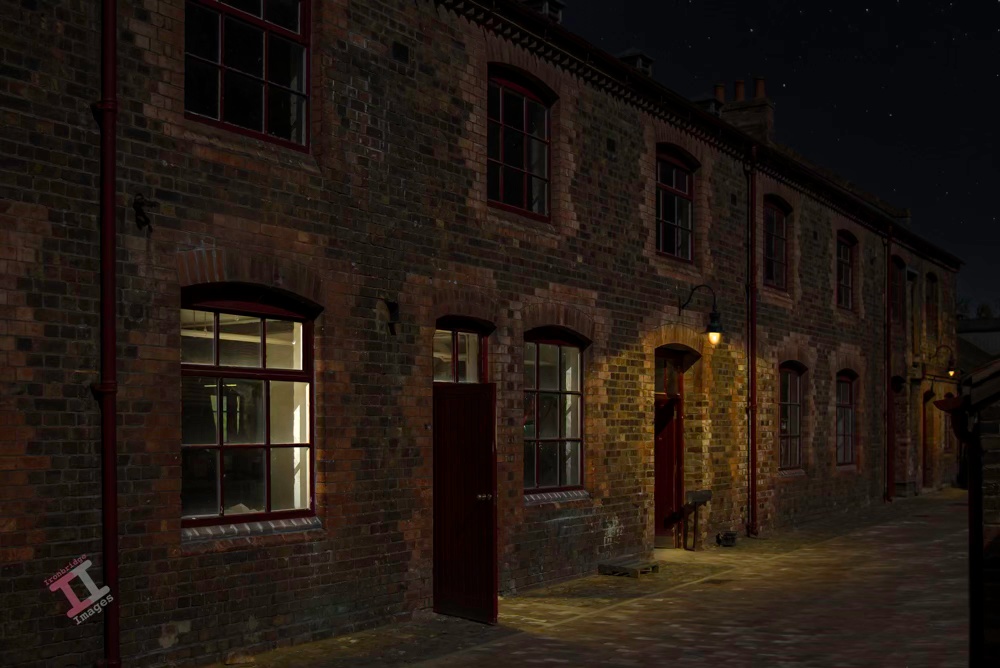
At first glance, this may appear to be a row of terraced houses, but it is actually a set of Victorian offices inside the Craven Dunnill encaustic tile works in Jackfield, Shropshire.
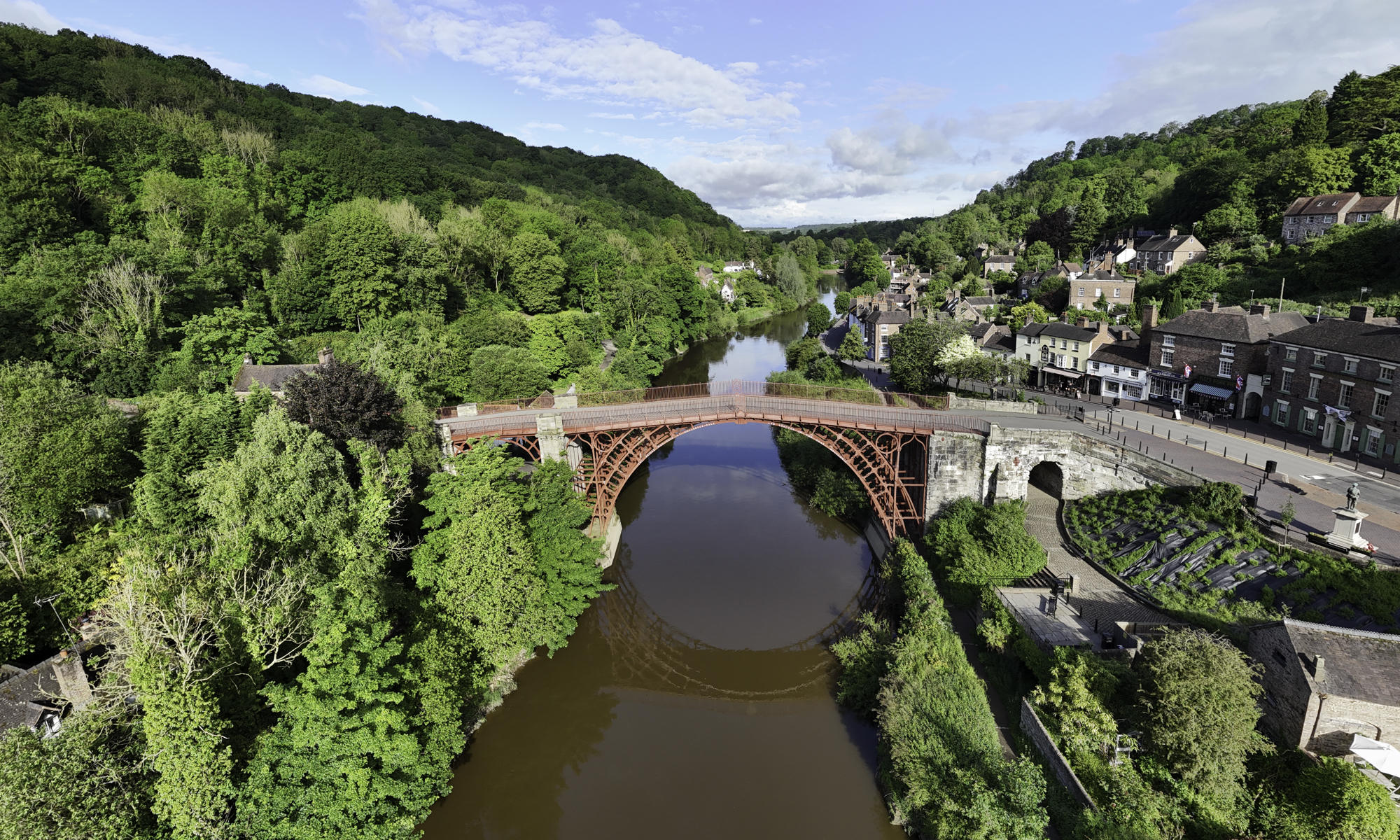
This was originally taken on a sunny day in May 2009 (remember when we had sunny days in May?), but it was more of a record shot and not particularly inspiring. Therefore, I decided to convert it into a night-time shot using post-processing.
The original shot before the conversion
Firstly, I adjusted the converging verticals. These are usually noticeable in architectural shots because the camera lens is a lot lower than the top of the building, and it gives the appearance that the building is leaning back and/or inwards. Photographers who take a lot of architecture often invest in a ’tilt shift’ lens, which adjusts the perspective in-camera, but post-processing software such as Adobe Lightroom can do it quite easily.
I then needed to remove the very hard shadow created by the building in the bottom-right of the image because this shadow would be out of place in the final image. Whilst I was doing that, I also removed the annoying safety signs on the doors and the dangling electrical cables.
Finally, before carrying out the day-to-night conversion, I replaced the bright blue sky with a more suitable night-time one.
I reduced the exposure of the entire image to give a night-time effect whilst leaving enough light to retain some of the features. I added light to the two lanterns and gave them a slight yellow tint to suggest tungsten light. I also added light to the inside of the nearest room but gave that a slightly bluer tint to differentiate the type of lighting indoors.
Finally, I added incidental light from the open door and windows. This is the most important part of a day-to-night conversion; getting the angles of the light spill and the shadows correct for it to look realistic.
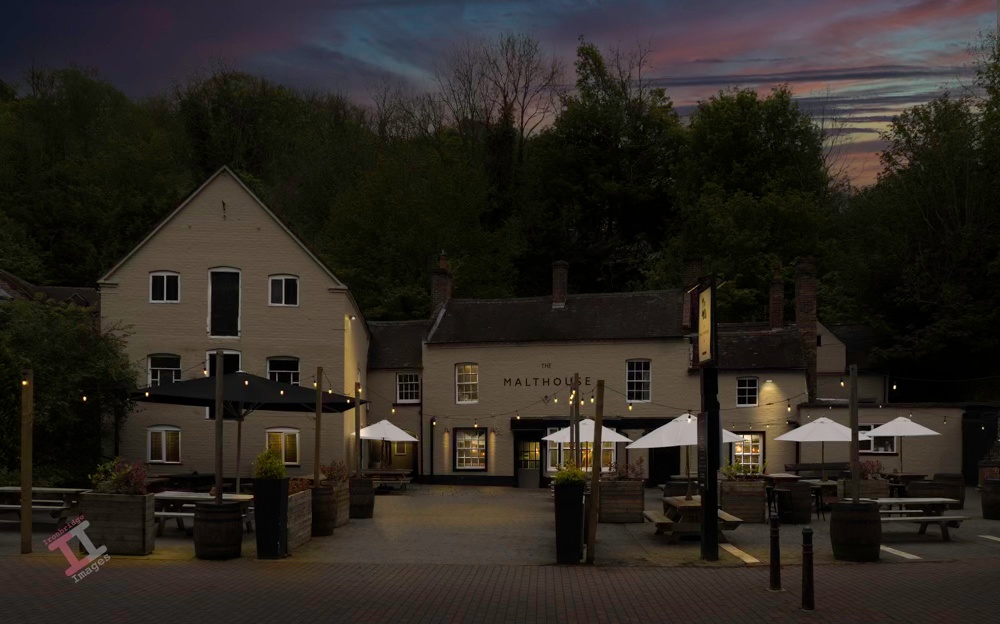
In my late teenage years, this was definitely “the place to be” on a Friday and Saturday night for those of us living in the Ironbridge Gorge, probably due to its late-night disco in the upstairs function room.
It was built in 1854, and the large warehouse-type building to the left was indeed, probably a malt house, although the inn was originally called The Talbot (it was still identified as such on the 1925 Ordinance Survey map).
There was a bit of a scare in July 2023 when a freak fire, caused by water leaking into a fusebox, looked as if it may engulf the building. Fortunately the blaze was extinguished before it damaged the structure of the building, but smoke damage meant that it had to shut down for a period. It is now open again.
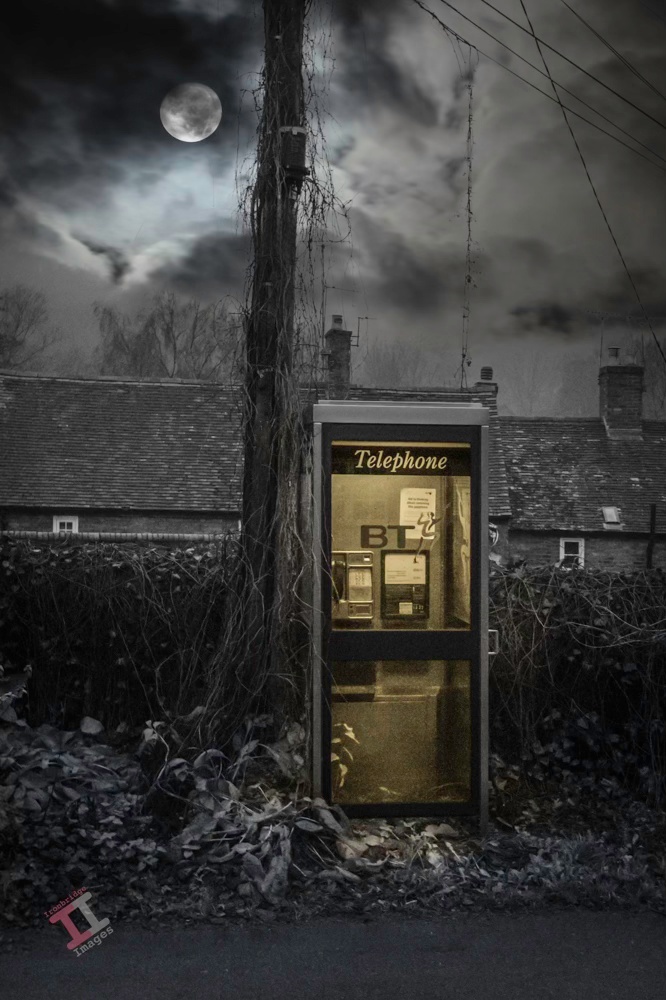
The public telephone box in Coalport, in the Ironbridge Gorge, shortly before it was removed in 2020. This ‘modern’ version had previously replaced a traditional red telephone box, one in which I made many calls before my parents had a telephone line installed (yes, there was life before mobile phones). I can even remember the original public telephone that used pre-decimal coins, and had an ‘A’ and ‘B’ button that determined if you were going to connect to the call (and let the box have your money) or terminate the call (and have your money back). It was a stressful time when you were down to your last penny coin!
I’m going to hazard a guess that, after the famous bridge itself, this is the most photographed area of Ironbridge; Darlingtons shop and Severn Bank alley. It still has an ‘olde world’ look about it and is probably closer to what Ironbridge was really like in Victorian times than the local museum can ever try to replicate.
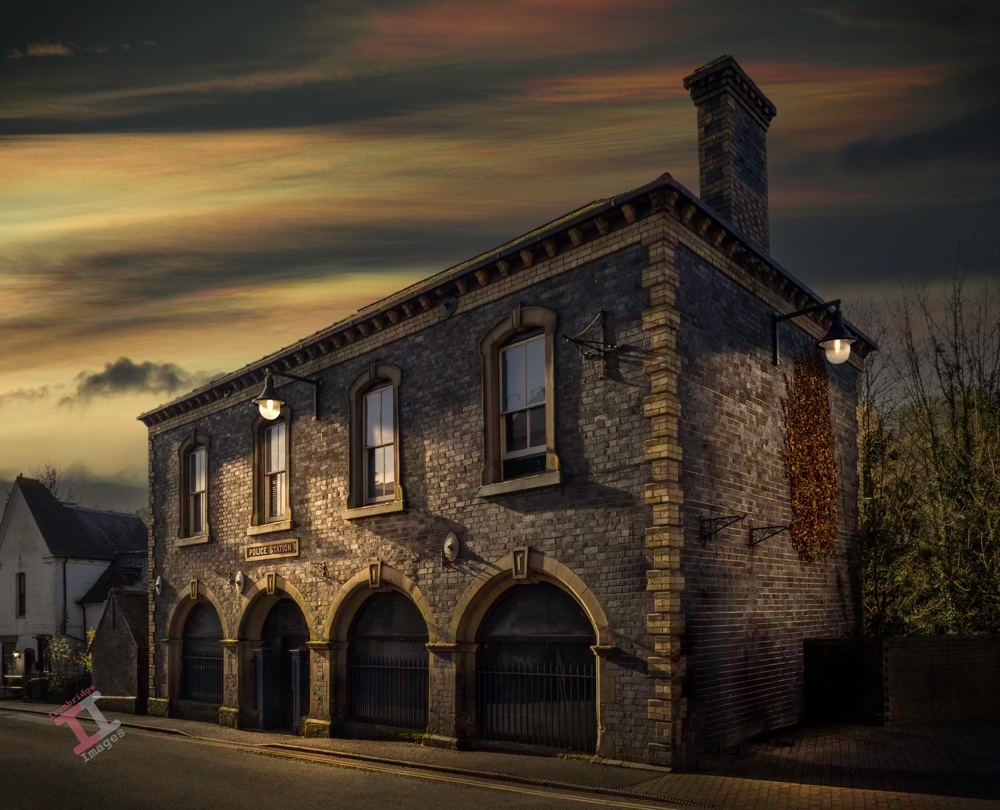
This is the old police station and court house on Waterloo Street in Ironbridge, Shropshire. It was built in 1862 in an Italianate style, with blue bricks and white brick and stone dressings, by a local builder and architect, Samuel Nevett. Similar buildings were built by him in the Ironbridge Gorge with a similar style. Until recently, it was a very fine Indian restaurant called Pondecherry, but unfortunately the economic downturn meant that is was unsustainable and it has closed. The building is currently empty. The image is another from my day-to-night project, processed in Adobe Lightroom and Photoshop.





 Ironbridge Images