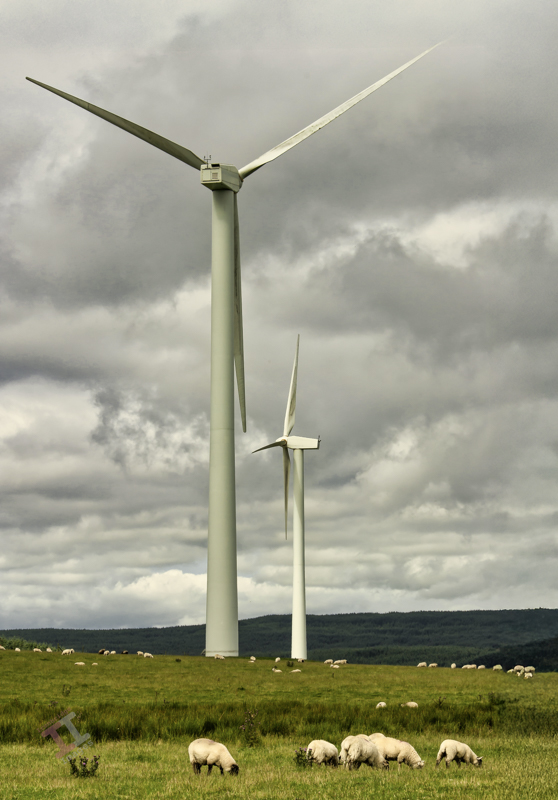
The year was 2010 and I was in North Wales on a short photoshoot break. On the way to a location, we passed these large wind turbines with a flock of sheep grazing below, apparently unaware of the giant structure above. We stopped and I took a number of shots, originally intended as stock photographs, although they never got much further than my hard drive!
It’s not for me to debate whether or not the manufacture and erection of these giant metal structures is more, or less, environmentally friendly than traditional methods of electricity generation, or whether the blot on the landscape is more or less intrusive than rows of electricity pylons strung together with miles of cables. Either way, the sheep seem to have got used to them.
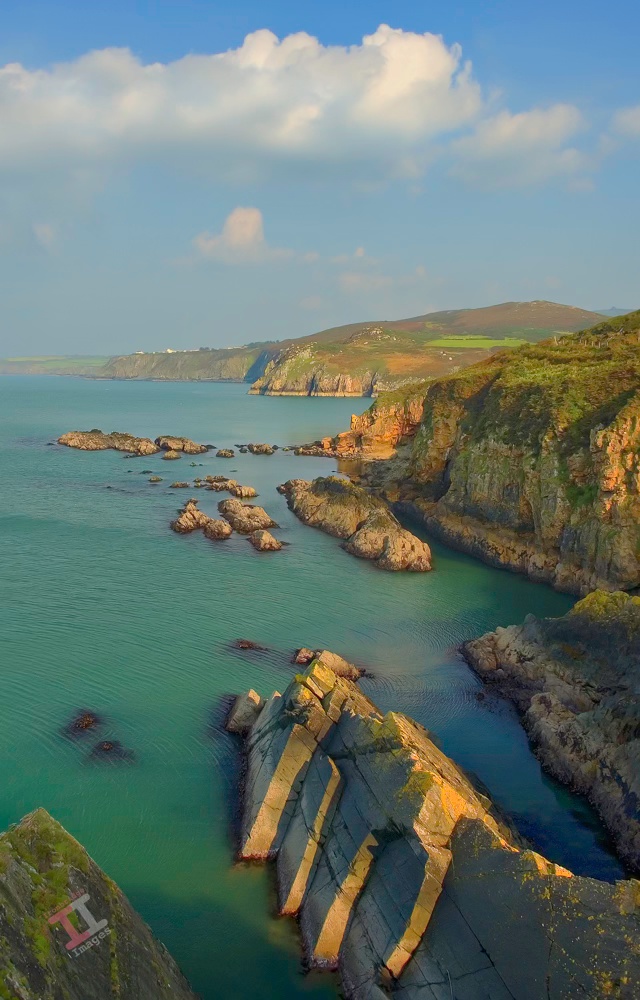
I’m not sure of the exact date that this was taken, but I can see from my archives that it featured in a gallery on my website in 2008, so it must have been over 16 years ago. I can recall that we were leaving Fishguard on the last day of a holiday and we stopped at the top of the steep hill from Lower Fishguard at a spot called Fishguard Fort.
The fort was built in 1781, following an attempt by an American pirate ship ‘Black Prince’ to demand a ransom from the town of Fishguard (which, at the time, was a prosperous sea port). A few years later it saw its only action when it repelled a French invasion force, who retreated and landed further down the coast, saving the town.
The morning sun was rising and just catching the rocks beneath me. I set my tripod up next to a wire fence and took a few shots before heading back to the car – and home.
This Victorian tunnel runs under the Ironbridge Gorge in Shropshire and was used to extract naturally occurring tar from deep underground. It is in a village called Coalport, handy, because that is where I live. When I took this photograph, the tunnel was open daily as part of the local museum experience, and it was manned full-time. It was less well-known and less popular than the other attractions, and so it was possible to be there without anyone else getting into the shot. It is (obviously) quite dark inside so I needed to use a tripod to take a long exposure, which was another good reason not to have too many other people around in the confined space.
It clearly proved not to be cost-effective to have the tunnel manned, so now there are guided tours commencing from the nearby china museum and, unfortunately, you can’t walk down the tunnel any more. This will make it far more difficult to get a shot such as this in the future.
Tar Tunnel Vision
I have recently discovered another photograph that I took the same day and this is shown below. It has never been published before.
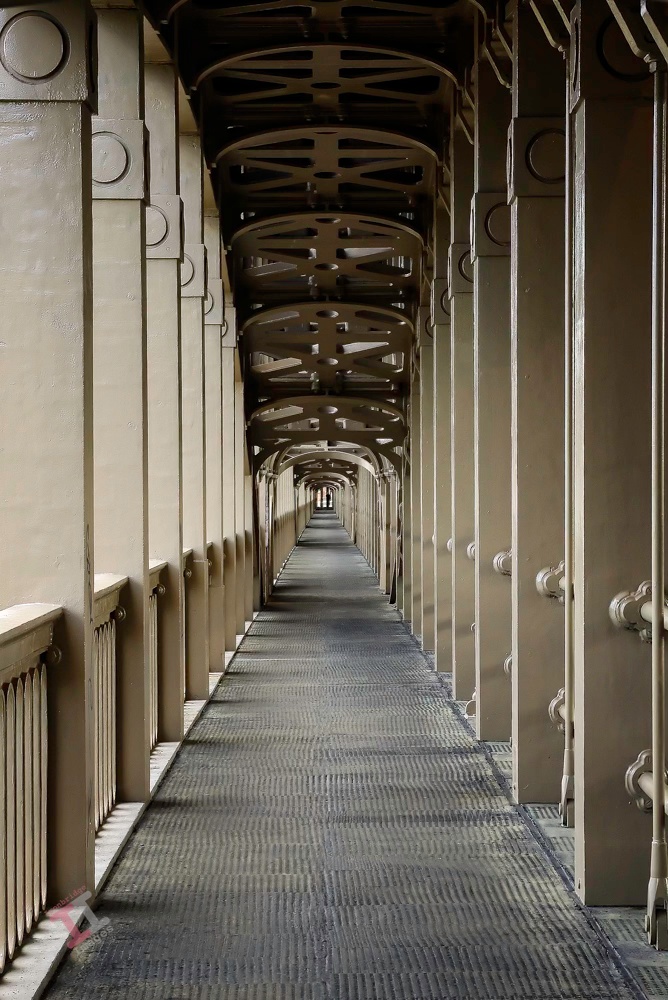
The High Level Bridge over the river Tyne at Newcastle taken during our honeymoon week back in 2008. It was our first visit to the city and my brother-in-law took us for a whistle-stop tour, which included crossing the river on this iconic bridge. I happened to look back and took this shot which highlights the perspective, with the repeating arches and columns receding down the passageway. I can’t remember now whether the lone figure at the end was a lucky coincidence or the result of patience and timing.
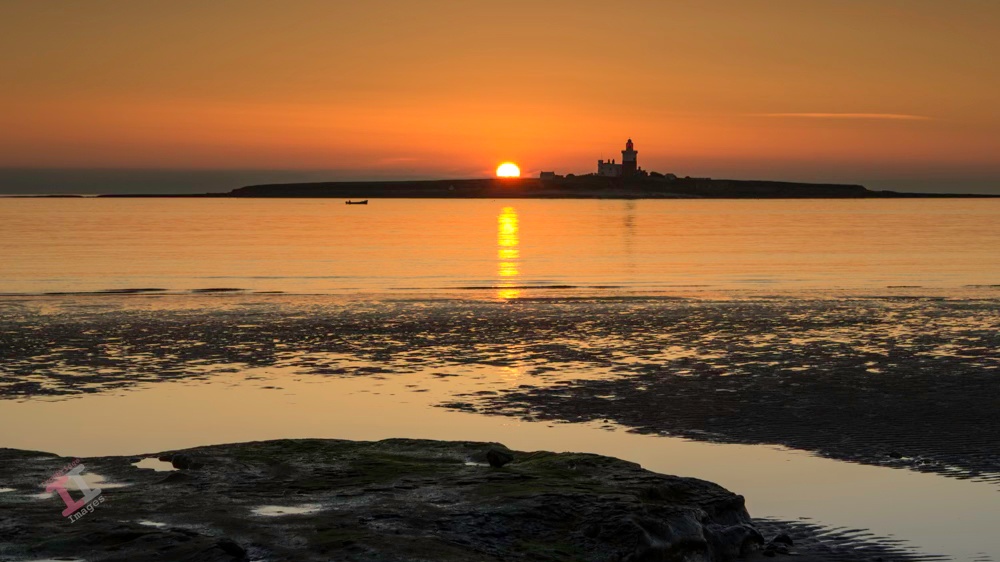
Another memory from our time in Northumberland; we had rented a small cottage near the town of Amble, and it was just a short walk through the back gate and down a field onto the beach. Just out to sea was Coquet Island, a small, uninhabited island that is a Royal Society for the Protection of Birds (RSPB) nature reserve and a safe haven for puffins, terns and seals. The lighthouse was built in 1841 but was automated in 1990.
We started out early to get to the beach before sunrise. I set my tripod up on the sand and waited. As the sun started to peek above the horizon, I could hear the distant sound of a small fishing boat, and when it came into view, I could see that it would pass in front of the island. All I could hope for was it would make the distance before the sun had fully risen and started blowing the highlights.
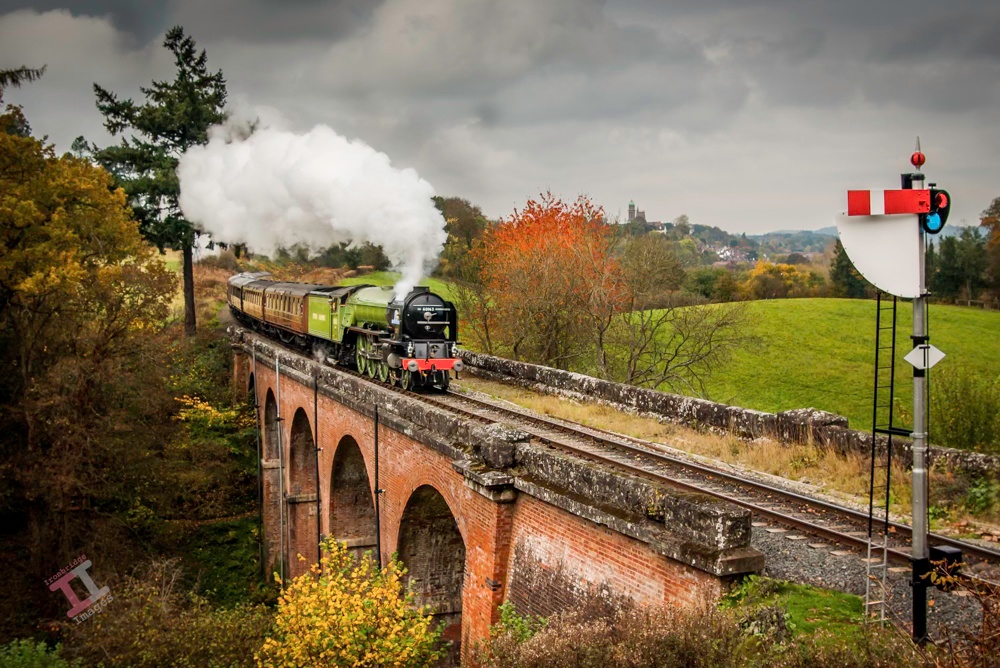
The ‘Tornado’ (No 60163) is a London & North Eastern Railway (LNER) 4-6-2 Peppercorn Class A1 steam locomotive built in 2008 to an original design by Arthur Peppercorn.
Tornado hits Shropshire – as captured in 2018
It was the first newly-built British mainline steam locomotive since 1960 and the only Peppercorn Class A1 in existence after the original batch were scrapped. To commemorate this fact, it embarked on a tour of the UK in 2018, including the Severn Valley Railway between Kidderminster and Bridgnorth.
I decided to capture the event and, after consulting a map, decided on a spot just outside Bridgnorth at Oldbury, overlooking an arched viaduct. When I arrived, I found a number of others already assembled, most of whom seemed to be train enthusiasts rather than photographers. However, when the train finally made an appearance it was facing ‘the wrong way’ and was pulling the carriages in reverse – hardly an inspiring photograph.
There was much muttering amongst the assembled throng, and it became apparent from those ‘in the know’ that the engine would change ends at Bridgnorth station and would return ‘the right way around’. The problem was that the view would be rather poor at the current vantage point because we would now be looking at it in the opposite direction away from the viaduct.
Fortunately, some of the enthusiasts had the necessary authority to allow them to walk on the track and cross over the viaduct – and they kindly allowed me to join them. So I ended up in, what turned out to be, a better spot, with a signal post in the foreground and the viaduct beneath. It was a good hour wait before the train returned but, as predicted, it was in the correct orientation and emitting copious amounts of steam into the sky as it built up speed for the return journey.
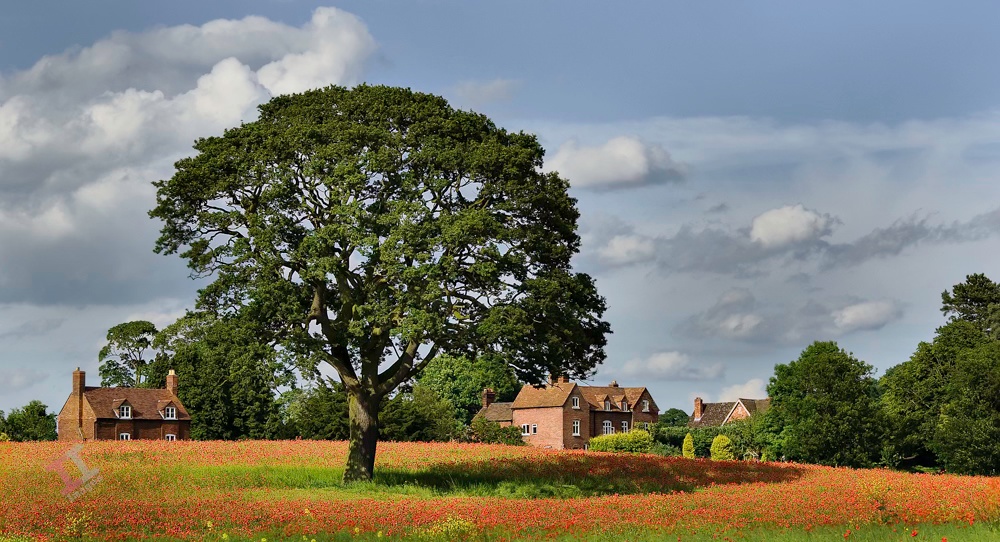
This was taken back in 2009 at a small village called Donnington, near Wroxeter, between Telford and Shrewsbury (and not to be confused with the much larger town of the same name in Telford itself). I can’t remember now whether I knew that this poppy field existed beforehand, or if I came across it by accident, but I can remember trudging around the perimeter of the field with my tripod, trying to find the best composition.
I actually thought at the time that this had naturally occurred, but over the years since, I have never seen another poppy in this field, and so I assume that they had been grown commercially. This explains the poppy-free circle around the tree – presumably they didn’t sow any seeds near the tree because it would take all the nutrients and water from the soil?
Anyway, the red, green and blue are strong primary colours, and so for this reason the photograph stays in my long-term gallery.
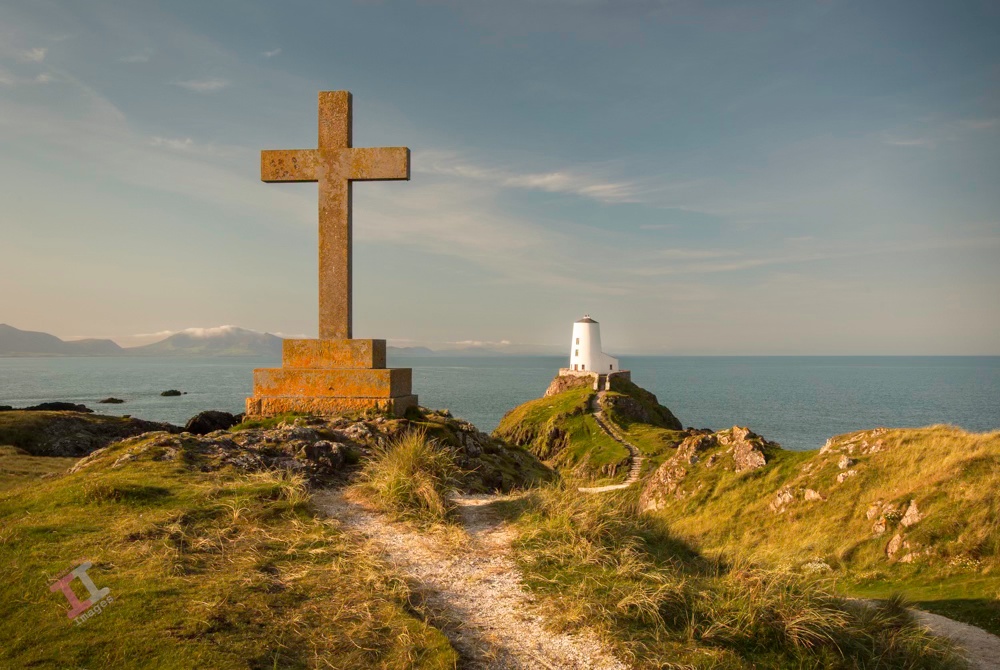
This shot was taken during a 2012 photoshoot tour of Anglesey, in Wales, with good friend & fellow photographer Adrian Evans. We had crossed the Menai suspension bridge and started a clockwise tour of the coastline, and Llanddwyn island (although technically not an island because it is attached to the mainland) is not far, just past Newborough. Access to the ‘island’ is tidal but we had timed our arrival to be able to walk straight across, and we spent a good hour making the most of the light from the early morning sun.
This image above is a bit of a cliche shot, and has been done many times by other photographers – but it remains one of my favourites.
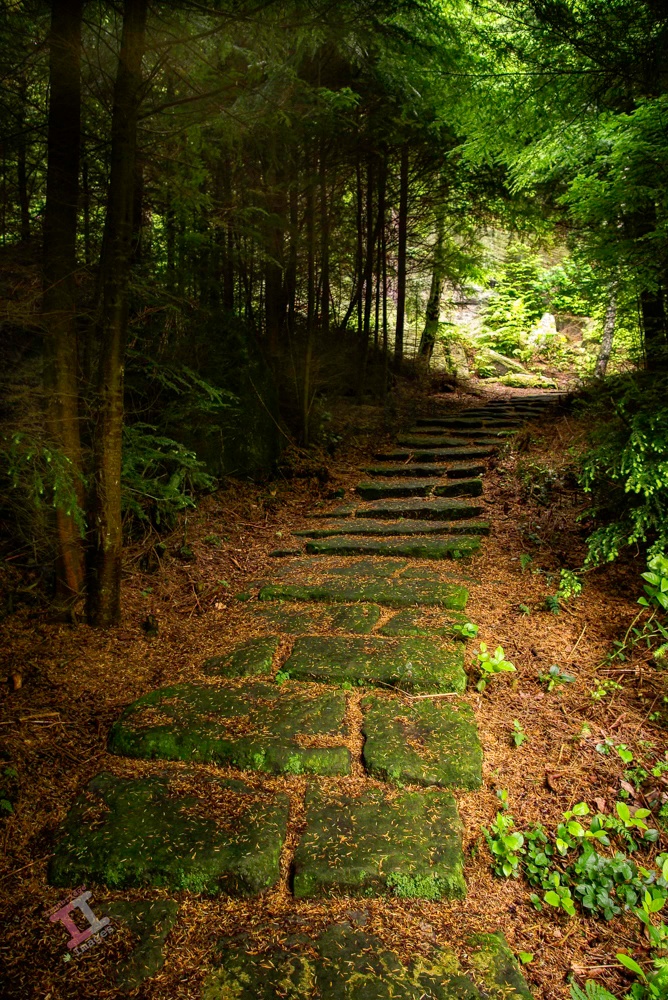
This shot was taken during our Honeymoon in Northumberland back in 2008. After the ‘big day’ we retired to a rented cottage near Amble – our first time in this beautiful county – and I planned photoshoot days with a new camera (a Pentax K200D) that Mrs H had bought me as a wedding gift.
One such shoot was at at Cragside (National Trust) located at Rothbury, near Morpeth – the house and gardens of which were created by an inventor, Lord Armstrong. Within the estate is a Pinetum, a collection of the tallest pine trees in the country, and as we walked down a paved path between the trees, I happened to look back to see the image that I captured below – which looked rather like a tunnel, with sunlight showing in the distance.



 Ironbridge Images