Yesterday we spent the morning in the city of Worcester and I made a considered effort to take some photographs with my phone camera, on the basis that my mission for the New Year is to (a) use it more often, and (b) learn how to use its various functions.
There is clearly much to be done. Apart from the fact that I was clumsily touching the screen and randomly turning the camera off whilst I was trying to use it, I was also struggling to come to grips with the new ‘camera control’ button, that I didn’t have on my previous iPhone, which, apart from activating the shutter, also has various functions that I didn’t know about and (again) my stubby fingers were changing settings without me realising.
Back at home, I also found that the default HEIC image format isn’t fully compatible with Photoshop and so that has now been changed so that I can easily choose between JPEG and RAW. I have also downloaded a book onto Kindle called “iPhone 17 User Guide” which I will now actually read so that I don’t get so frustrated the next time.
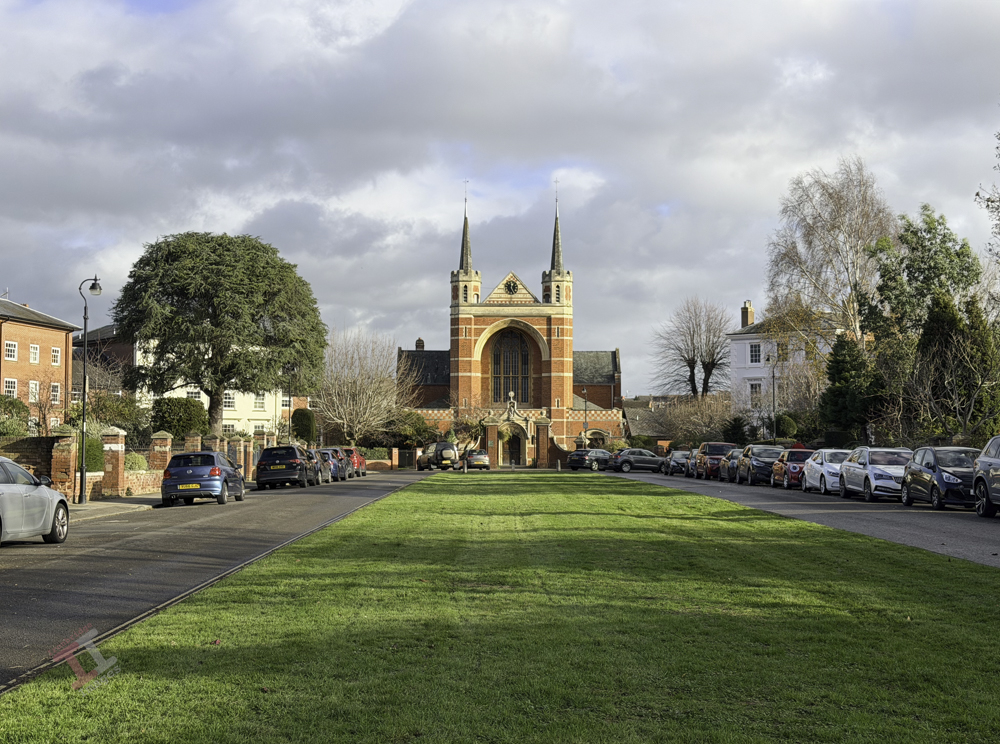
Anyway, here is a shot of St Georges Square, Worcester, with St Georges Church in the background – which was built in an Arts and Crafts style in 1895. I may convert this into a day-to-night image later on.
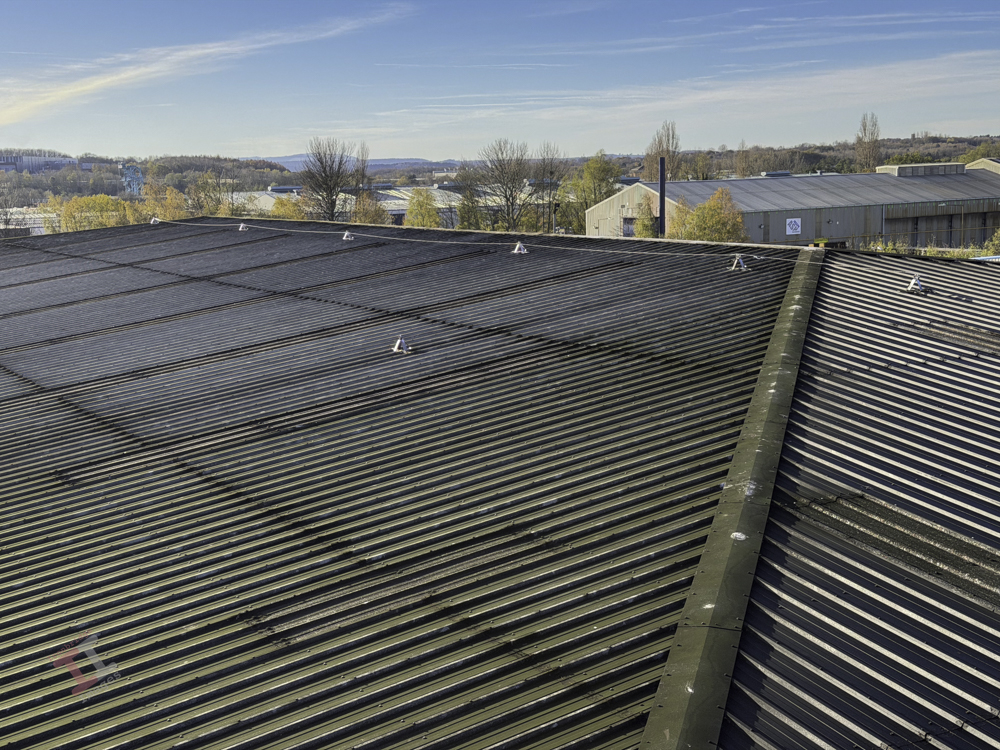
Yesterday I was viewing the factory roof at TCL Packaging from a rather large scissor-lift, some 15 metres in the air, whilst contractors explained some work they are going to be doing next week. I took some record shots with my iPhone 17 Pro Max and, when viewing them later, couldn’t help noticing the superb image quality, particularly of the distant Shropshire countryside.
It makes me think that I really should use my phone camera more often (since it is nearly always with me) now that the results are arguably as good as from a dedicated camera.
Of course, you have to deal with camera snobbery; “a phone camera isn’t as good as a dedicated camera”, “a micro four-thirds isn’t as good as an APS-C”, “an APS-C isn’t as good as a full-frame”, “a full-frame isn’t as good as a medium format”, etc, etc. I have been lucky enough to have had most of these types of camera (albeit I leap-frogged from APS-C to medium format and never owned a full-frame) and can honestly say that it never made any appreciable difference to the quality of my images (or course, I haven’t printed out any billboard-sized ones recently!).
So, my intention is to take more photographs with ‘the camera in my pocket’ – although I seem to remember saying the same thing the last time I upgraded my phone!
After a 5 month respite whilst I concentrated on some non-photography projects, I’m back & ready to dust the cobwebs off my camera and to update this blog on a more regular basis. So what’s happened in the photography world whilst I’ve been away?
Cameras: There have been numerous new, or face-lifted, cameras launched, but only one that really intrigued me; the Sigma BF – a superbly minimalistic camera, so unusual that at first I thought that it was an April Fools joke. But no, it’s a full-frame, mirrorless, 24.6mp camera that takes interchangeable lenses. Is it any good? I’ve got no idea , but it looks….. different.
Digital birthday: The digital camera had its 50th birthday (the prototype launched in 1975). Some thought that it was a fad that would never take on. How wrong they were, there is now only a handful of film cameras that you can buy new.
Software: Adobe increased the monthly subscription of their Photography Plan by a whopping 50%, although by paying annually in a lump sum, you can retain the old price….. for now.
Magazines: Yet another photography magazine bit the dust: Digital Photographer’s last issue saw the end of 23 years of publishing. There are only a few photography magazines left now, but how long will they last? And how do young up-and-coming photographers hone their skill – can they really get factual, unbiased information from social media and YouTube?
AI: Artificial intelligence (AI) is getting more and more sophisticated, rendering the creative production of photographic scenes largely redundant; why spend hours painstakingly positioning props and lights when you can just conjure the scene up in seconds using AI programs such as DaVinci (even if most of them still look fake)? I can only hope that the AI bubble will burst and ‘real’ photography will reign once again, sometime soon.
What do you think about changes in the photography world over the past 5 months?
Ironbridge Images is having a break. Other projects in my life are taking priority, and so, for the time being, photography is taking a back seat. I have plans, though, and later in the year, I hope that you will join me on a new photography journey.
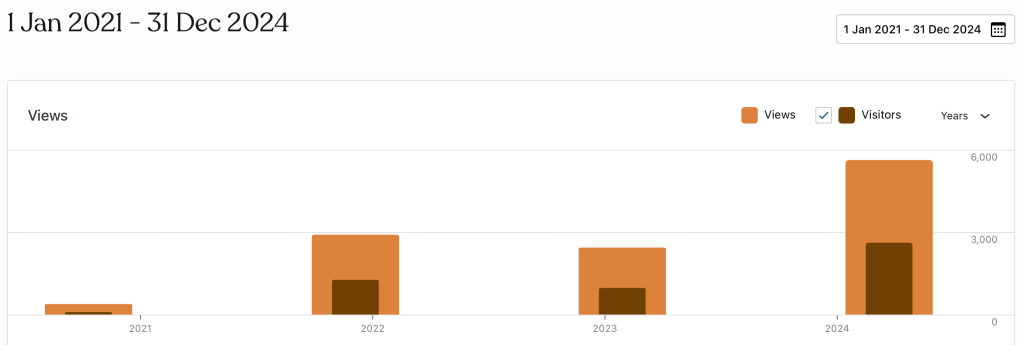
I have looked at the statistics for my blog for 2024 to see what I can learn from them and how I can improve in 2025. Here are my findings:
Summary:
In 2024, I wrote 84 blog posts, totalling 20,000 words. This resulted in 2,600 visitors (up 170% from the previous year) and 5,600 page views (up 131%).
The yearly statistics are interesting for me, in that I ‘retired’ from motorsport photography at the end of 2022, and yet visitors and views now seem to be on the increase, contrary to what I was expecting when taking into account the sheer quantity of motorsport images that I used to take. I suppose it proves the old adage that “quality is better than quantity”.
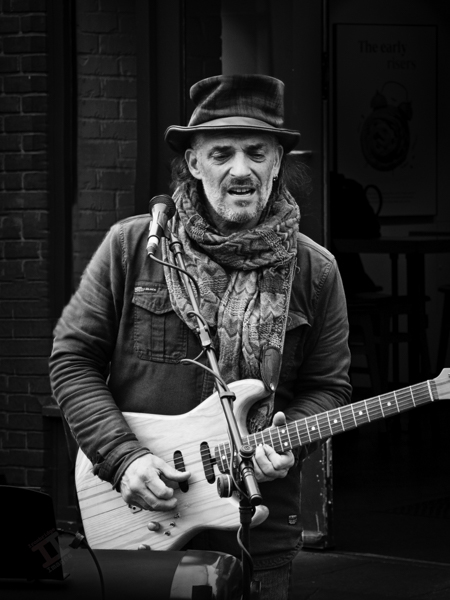
A few weeks ago we paid a visit to the Stratford-upon-Avon Christmas market. I can’t remember the last time that I saw so many people in the same place, and entertaining the crowd was this one-man-band (and very good he was too). Taking this type of street photography put me very much outside of my comfort zone, but I persevered and managed to get a shot before a throng of people obliterated the view. I converted the shot into monochrome which I think suits the ‘grungy’ look.
Ironbridge Images has now updated its logo for something a little more modern and more easily recognisable.
As Ironbridge Images moves forward with this new logo, it aims to continue its mission of preserving and promoting the history of the Iron Bridge and its surroundings. The logo is a step towards a future where the past is honored and the present is celebrated, ensuring that the legacy of the Iron Bridge lives on for generations to come.
The new Ironbridge Images logo is a perfect blend of tradition and modernity. It stands as a testament to the enduring legacy of the Iron Bridge and the vibrant community it represents. Whether you’re a local resident or a visitor, this logo is a reminder of the remarkable history and bright future of Ironbridge.
Hopefully you can see that it is made up of two capital letter I’s, the colours of each signifying the new, and old, colour of the bridge. I had two choices; one ‘square-on’ and this one at a jaunty angle. The marketing department (a.k.a. Mrs. H) decided that the angled one was best!
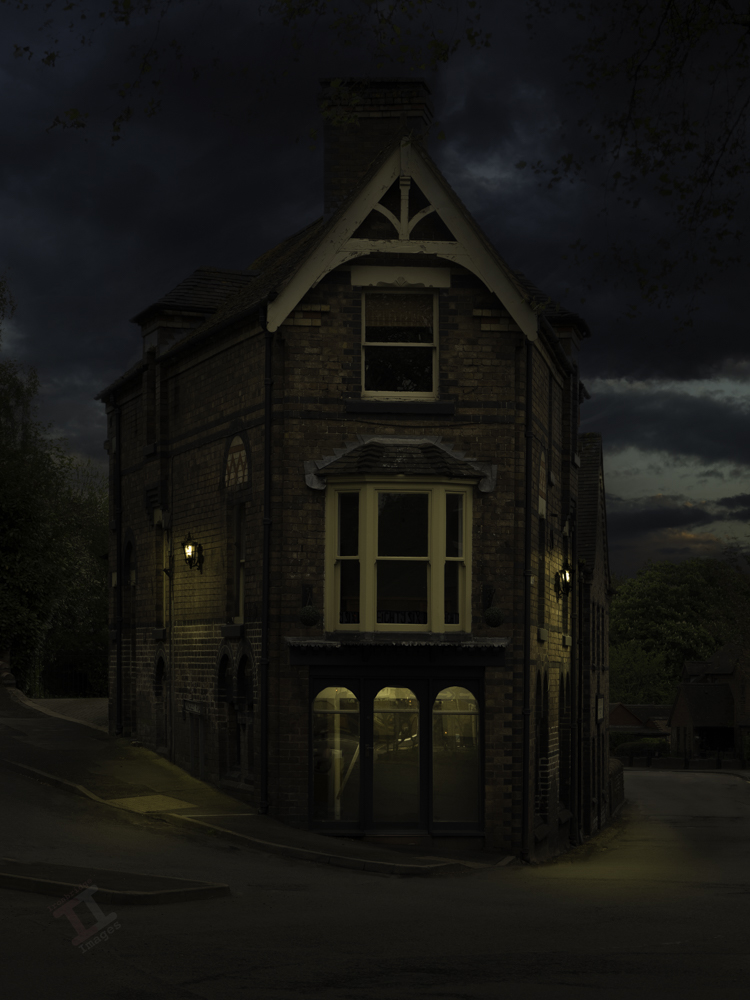
This Victorian building stands at the junction of Waterloo Street with Madeley Bank in Ironbridge Town in Shropshire. It is interesting in that it has been built specifically for the shape of the plot of land; narrow at the front and wide at the rear.
No.1 Waterloo Street, Ironbridge
The little shop at the front has hosted a number of businesses over the years, from a double-glazing company to a bridal shop. The latest, I seem to remember, was a hairdressers. Sadly, none of them seem to stay for very long. Although it is in an ideal location to be seen (right by a traffic island) the access to it means that you sometimes have to take your life in your hands because it is difficult to predict which way the traffic is going to go – which also limits any passing footfall.
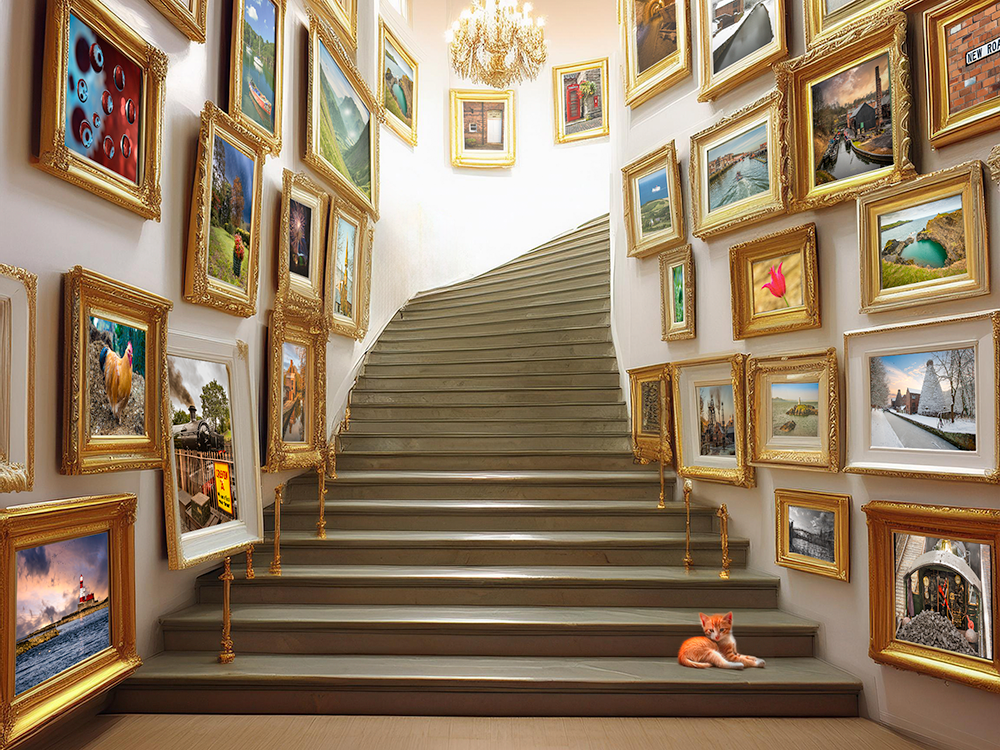
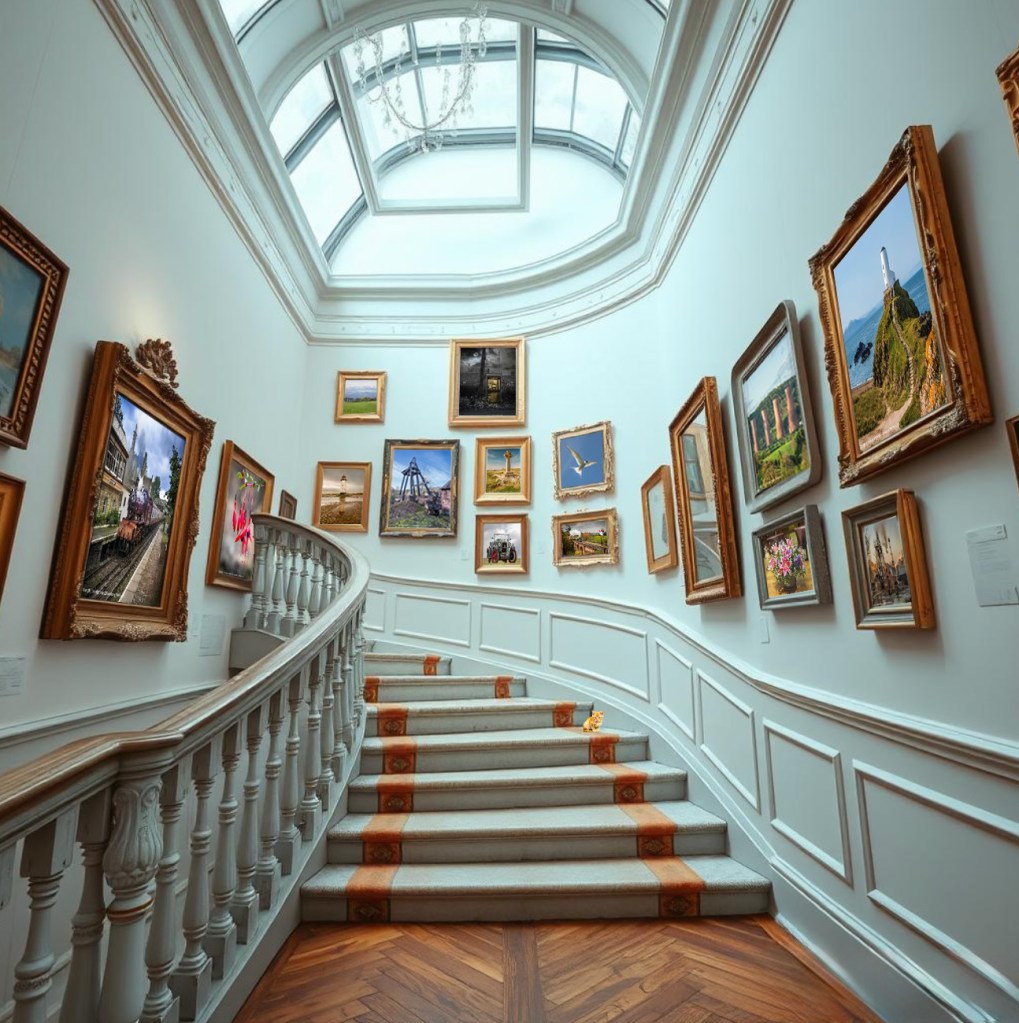
I was asked recently how I created my advertising scenes. The ‘scenes’, such as the stairway in Playing to the gallery, were created in an online Artificial Intelligence (AI) generator app called Gencraft, and then each photo frame was filled using Photoshop and its Transform tool.
However, I have now installed the Beta version of Photoshop v26, which uses Firefly Image 3 Model to create generative images using the ‘Generate Image’ function. This function isn’t new, but it has been updated, and so I thought that I would give it a try to see how it compared to using Gencraft.
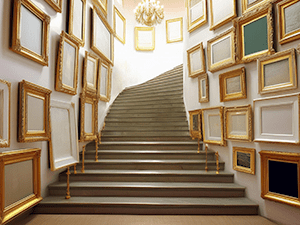
I typed in the prompt “Stairway with empty picture frames“, and then in ‘Effects’ I chose the ‘Beautiful’ style.
It gave me three options, and I chose this one, mainly because of the multiple frames it had generated for me to populate.
However, all of the choices were pretty good, and certainly comparable with Gencraft.
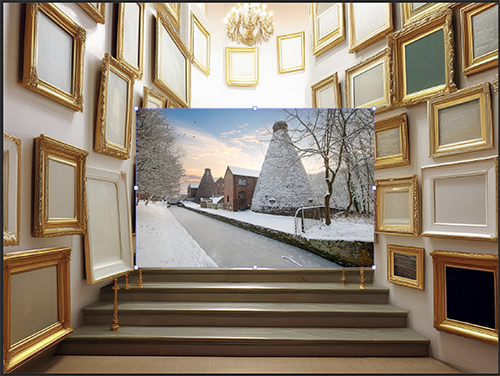
Now came the painstakingly laborious task of filling each empty frame with a canvas. First I had to open a chosen image, chose ‘select all’ and then ‘copy’. I then went back to the stairway image and pressed ‘paste’. This placed the photo image onto the stairway image, on a separate layer, in the centre.
I then used the ‘Distort’ option in the ‘Transform’ tool to grab each corner of the image and drag it into the corresponding corner of the chosen picture frame. It pays to be quite accurate at this stage to make sure that the perspective remains correct.
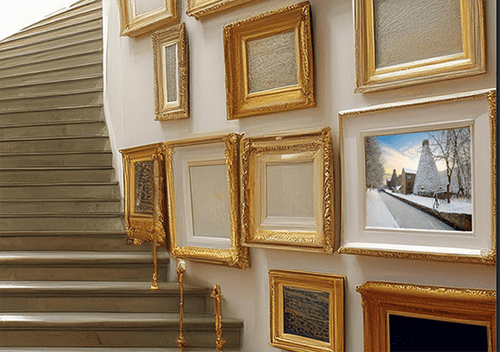
So far, so good, but I now had to repeat the exercise 27 times!
It was important to reduce the opacity of those towards the rear of the image so that the colours didn’t appear too saturated, and therefore to give depth to the scene.
In summary, the artificial intelligence in this beta version of Photoshop gave a very good foundation for the image, and I’ll be using it in future in preference over Gencraft, if only because it contains my post-processing to a minimum of different programmes (I always think that transferring from one post-processing programme to another must create some degradation to the file).
Some of these images are, as-yet, unpublished on Photo4me. See if you can find which ones they are.
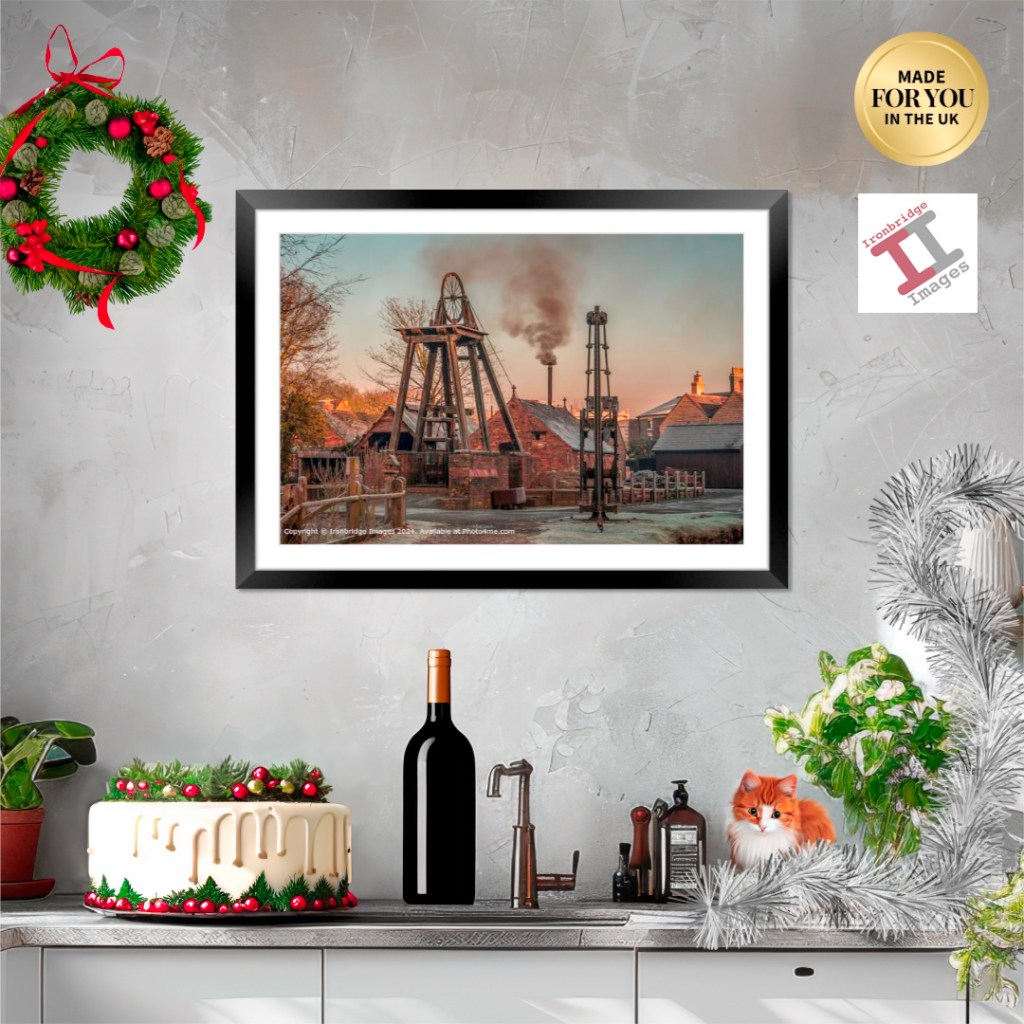
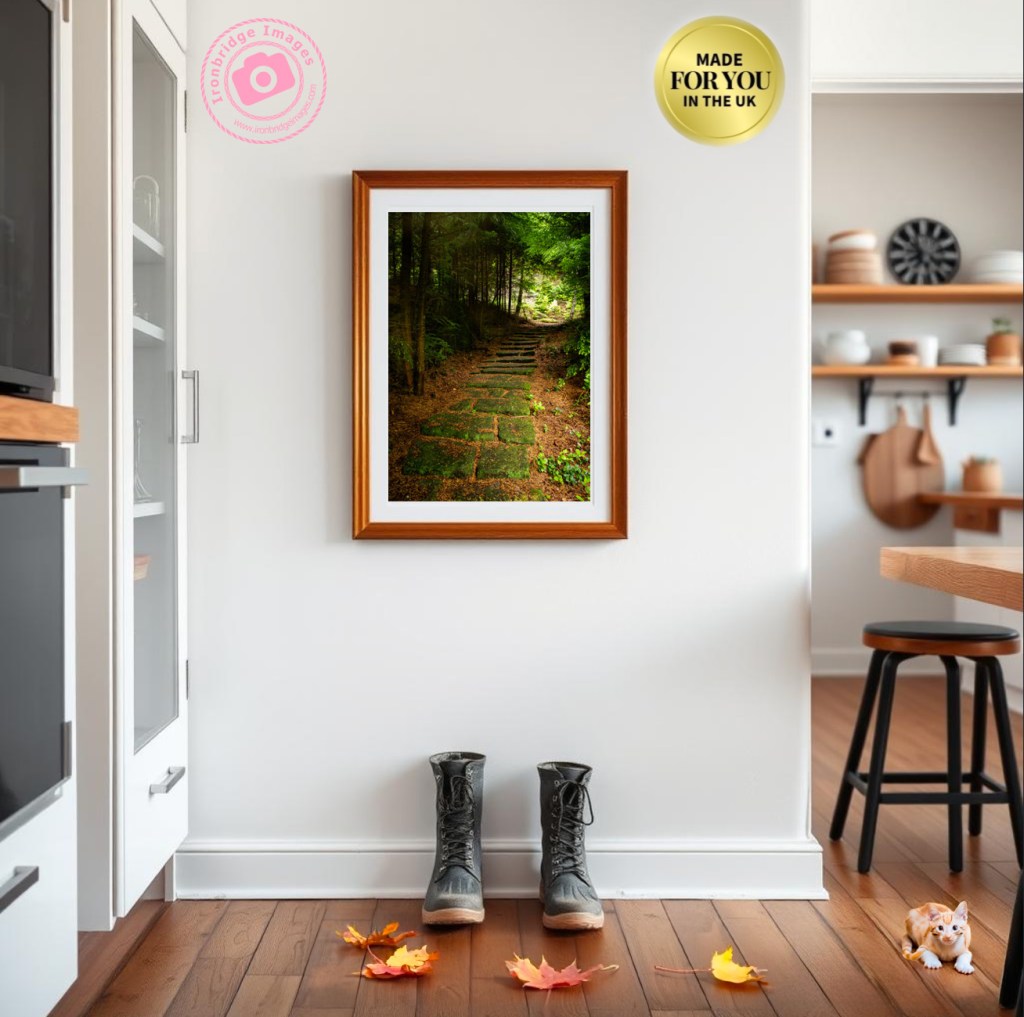
The temperature is dropping, the nights are drawing in, and the leaves are falling. It is a sure sign that Summer is over (what little we had of one) and Autumn is with us. What better time to inject a bit of life into a drab corner by adding a piece of photographic art.
This image “Footpath through the trees” can be found in my online store:
Here in the UK, property and land is sold through professionals called ‘Estate Agents’, which dates back to when large swathes of land (an estate) were owned by individual families (the landed gentry), usually living in a grand hall in the centre. They employed an agent to manage the rent from the paupers who lived on the land, and the buying and selling of land to improve the estate portfolio.
Over in America, these professionals are called ‘Real Estate’ Agents (or Brokers). The term ‘real’ derives from Latin, meaning actual or genuine, and it simply refers to the actual, physical land and property that belongs to an estate.
If you want to rent out or sell your property (or estate), then you need to market it to get the best reward, and this usually requires the use of high-quality photographs to present the property in the best possible way. This involves ‘property photographers’ or, in the USA, the slightly more glamorous-sounding ‘real estate photographers’ (of course, to save costs, estate agents often just take the photographs themselves using a camera phone, but, like everything, you get what you pay for).
There are several reasons that you may wish to use a professional photographer rather than taking your own (or allowing the estate agent to):
The camera:
Actually, it’s not the camera that matters most; it’s the lens. The standard lens on most cameras and phones is in the focal range of 35-55mm because this most accurately represents the field of vision of the human eye. Unfortunately, this is often not wide enough to encompass an entire room and can also make a room look long and narrow. You really need a wide-angle lens, closer to a focal length of 10mm, to capture everything in one shot. People need to see this to get a good representation of a room.
A wide angle lens also has an effect that estate agents love; it makes a room look much larger than it actually is!
The software:
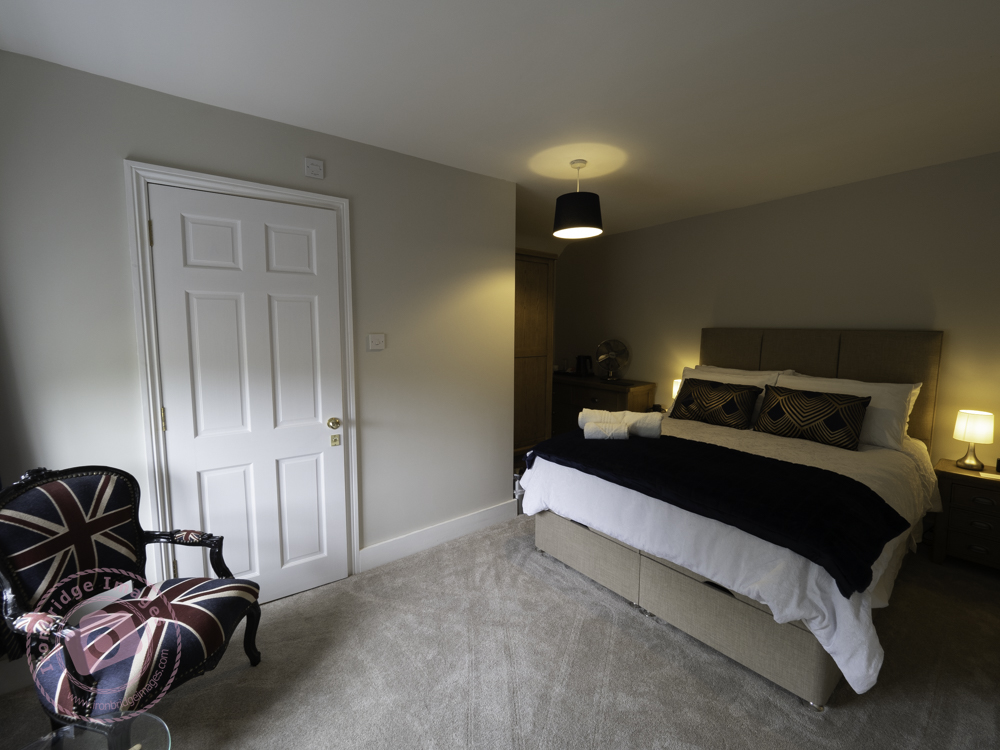
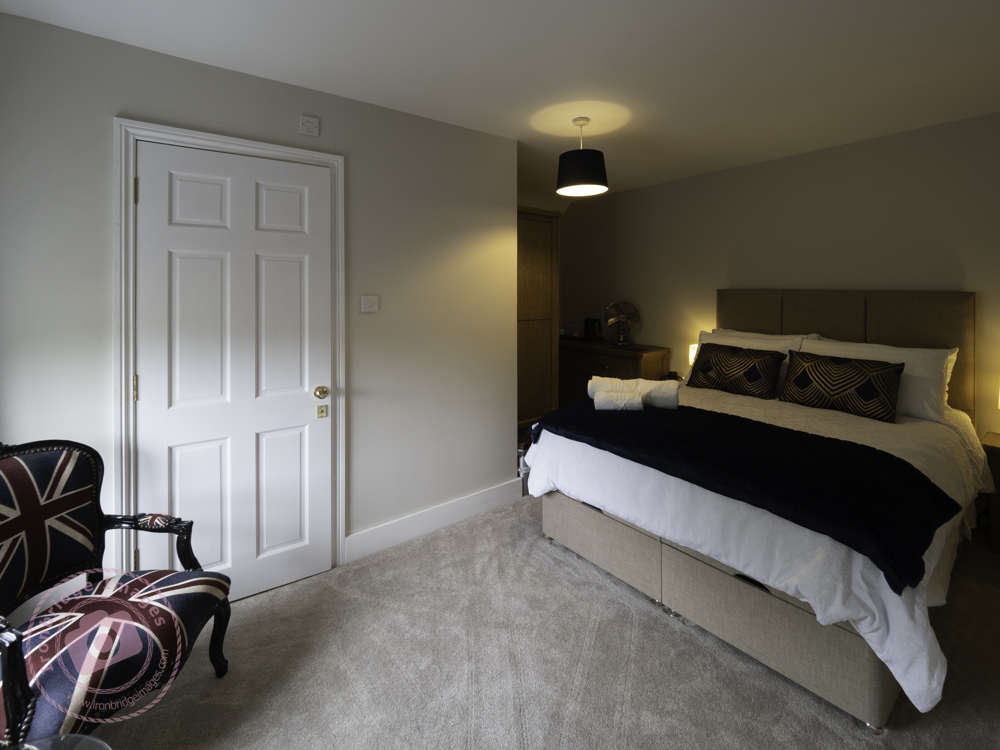
The drawback of using a wide-angle lens when you are close to a subject (as you are in a room) is that the sides of the image adopt strange angles due to the nature of the lens. Tall pieces of furniture, or doorways, can then appear as if they are leaning backwards. It’s a term known in photography as ‘barrel distortion’. Good post-processing software can straighten out the sides of the image to give a far more natural look.
Before
After
Taking the image as a RAW (unprocessed) file, and then processing it in post-processing software can also bring out details in the shadows and preserve detail in the highlights (see ‘The light‘, below).
The ‘eye’:
Professional photographers have something called “the photographer’s eye“. What that means is the ability to be able to scan the image, usually before actually pressing the shutter, to see things that are out-of-place or that capture the attention unnecessarily (I’m sure that you have seen humorous photographs on social media of people’s bedrooms with ‘personal items’ left unintentionally on the side!). Moving a coffee cup, magazine or family photograph, for example, can have a huge impact on making a room look more attractive. It is important to take as much personality out of a room as possible (without making it too sterile) because the seller’s style may not match the purchaser’s desire.
The light:
When you photograph outdoors, you get directional light from the sun, which creates shadows. However, these shadows are then ‘diluted’ by the brightness of the rest of the sky, which acts like a giant diffuser. When you take a photograph indoors using ambient light, the light from the windows gives directional light, but there is no light from any other source. This can create deep, hard, shadows and, at the same time, the windows look completely white, as all of the highlights get blown out. Some photographers choose to use flash lighting instead, but this is quite harsh, and the windows then become very dark, almost as if it were taken at night.
There is a method called ‘flambient light‘, which entails taking shots of a scene with flash and shots taken of the same scene in ambient light and then merging them together in post-processing. Care has to be taken; otherwise, the scenes can look false. There is also the added problem of matching the different colour temperatures of the two types of light.
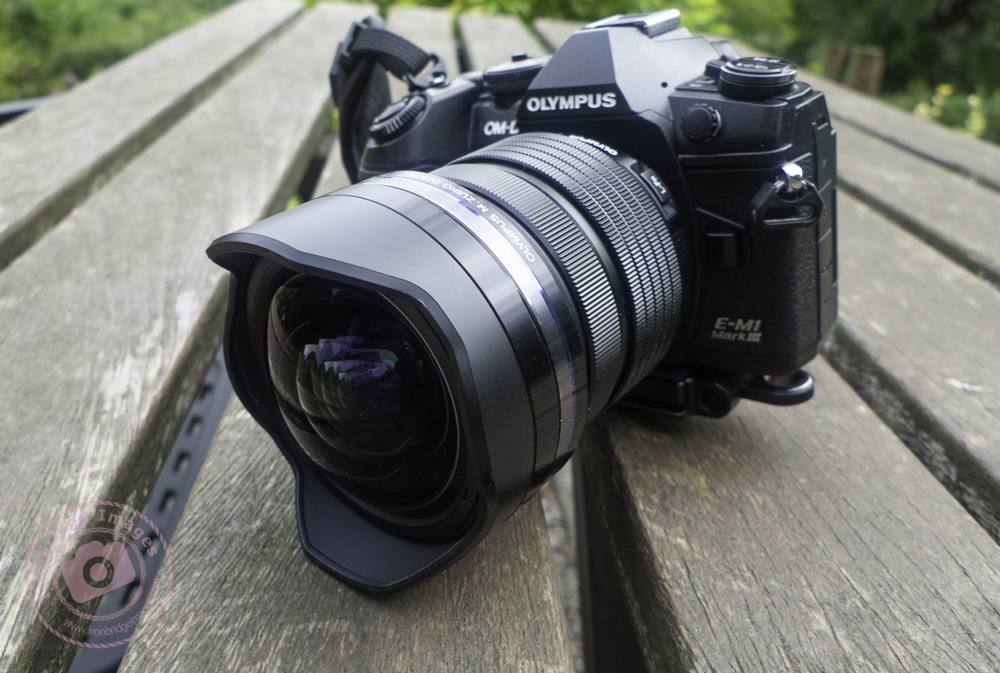
Another method (and the one I prefer) is to use High Dynamic Range (HDR), which involves taking multiple (3 or more) shots of the scene in ambient light at different exposure levels and then merging them together, retaining detail from the shadows and highlights. Some cameras (such as my Olympus OM-D E-M1 Mark III) can do this automatically in-camera. To minimise noise in the shot, a low ISO is required, but this then creates longer exposure times. There is also the need to keep the camera in exactly the same position – so mounting the camera on a tripod is necessary.
The temperature:
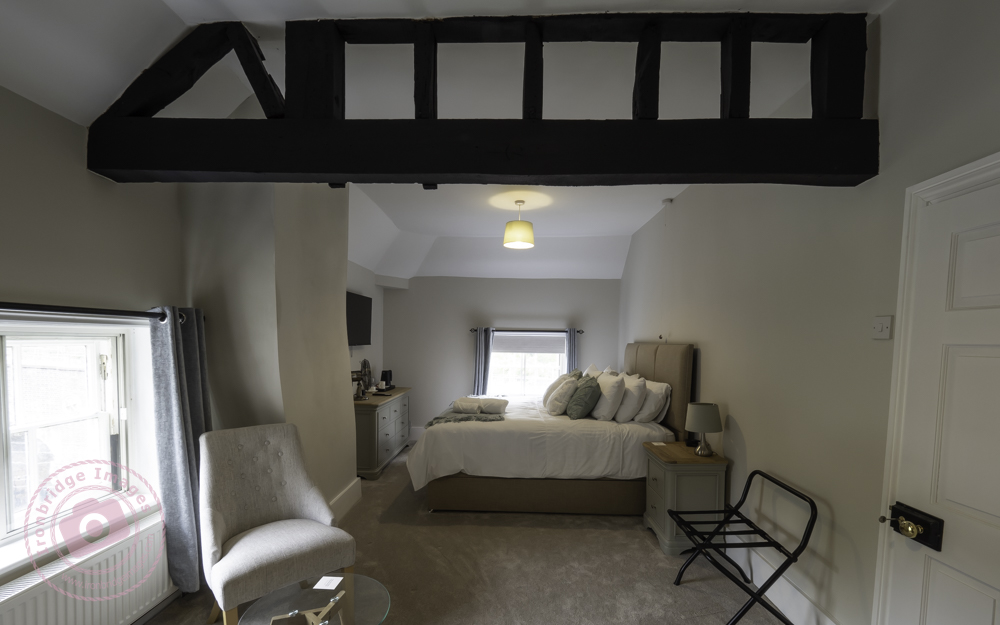
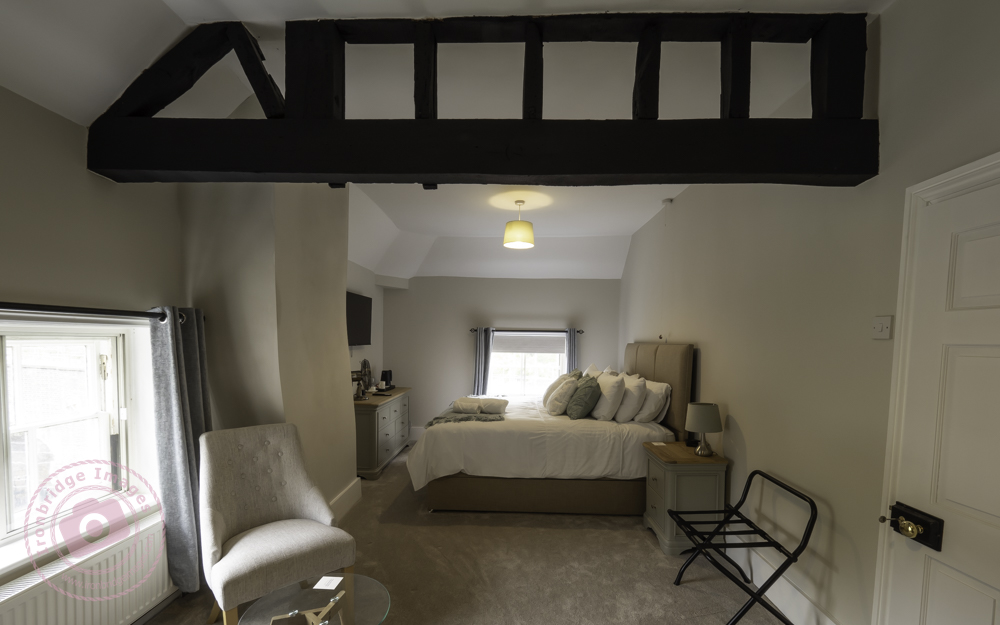
We are not talking about the room temperature here, but rather about the temperature of the light (also know, in photography terms, as white balance). This can have a huge impact on the perceived ambience of a room; a bedroom needs to look warm and inviting, whilst a bathroom needs to look cool, clinical and clean.
Slightly cool and uninviting (white balance 5200K)
Warmer and cosier (white balance 5800K)
The aspect:
The ‘aspect’ of the photograph concerns the height and angle that the photograph is taken. It is important not to take the photograph from too low down, or too high. This may change dependant on the size of the room, and the type of room. The direction that you point the lens can also have a big effect, as can the position that you take the photograph from.
In most cases you will want to take the main shot from the doorway, so that you see the room as you would when you entered it. However, for some feature shots, you may want to take the photograph ‘head-on’.
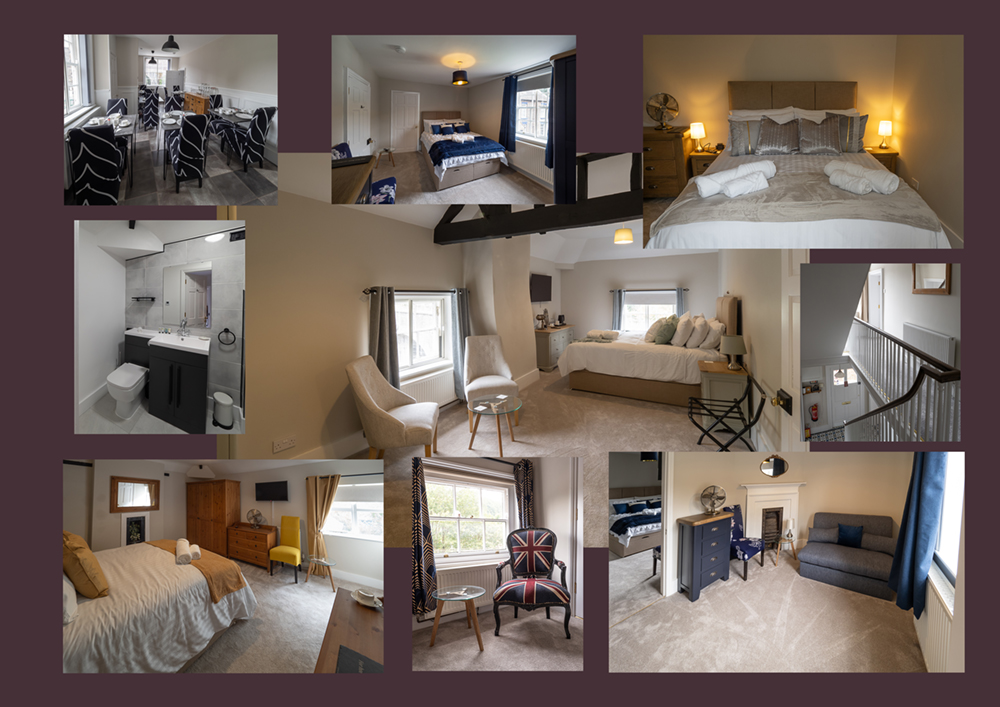
After that rather long preamble, we now come to the subject of this blog post:- that I have been taking some photographs of the interior of a property that will shortly be used for bed-and-breakfast accommodation. After a brief tour I was pretty-much left to my own devices (always the best option) and, over 2 hours, took 80+ images. These were then whittled down during post-processing to 40, and were supplied as both full-size images (preferred by publishers and printers) and also as smaller, lower-resolution versions (for website and social media use).
Hi John, Thank you so much for these, they look great. Really appreciate it
viaduct guesthouse
The Viaduct Guesthouse, Coalbrookdale, in the Ironbridge Gorge, will be opening in Autumn 2024. Best of luck to Kay & Paul on their new venture.








 Ironbridge Images
Leave a comment