Landscape and seascape photographs taken within the British Isles. Often centered around the home town of the author; Ironbridge in Shropshire, England.
Yesterday I managed to complete another task off my to-do list; and took a photograph in order to create new headers for my website and Facebook page. The dimensions for both are quite specific (and different to each other) and it required a wide-angle shot so that it could be cropped quite heavily to suit the size and aspect.
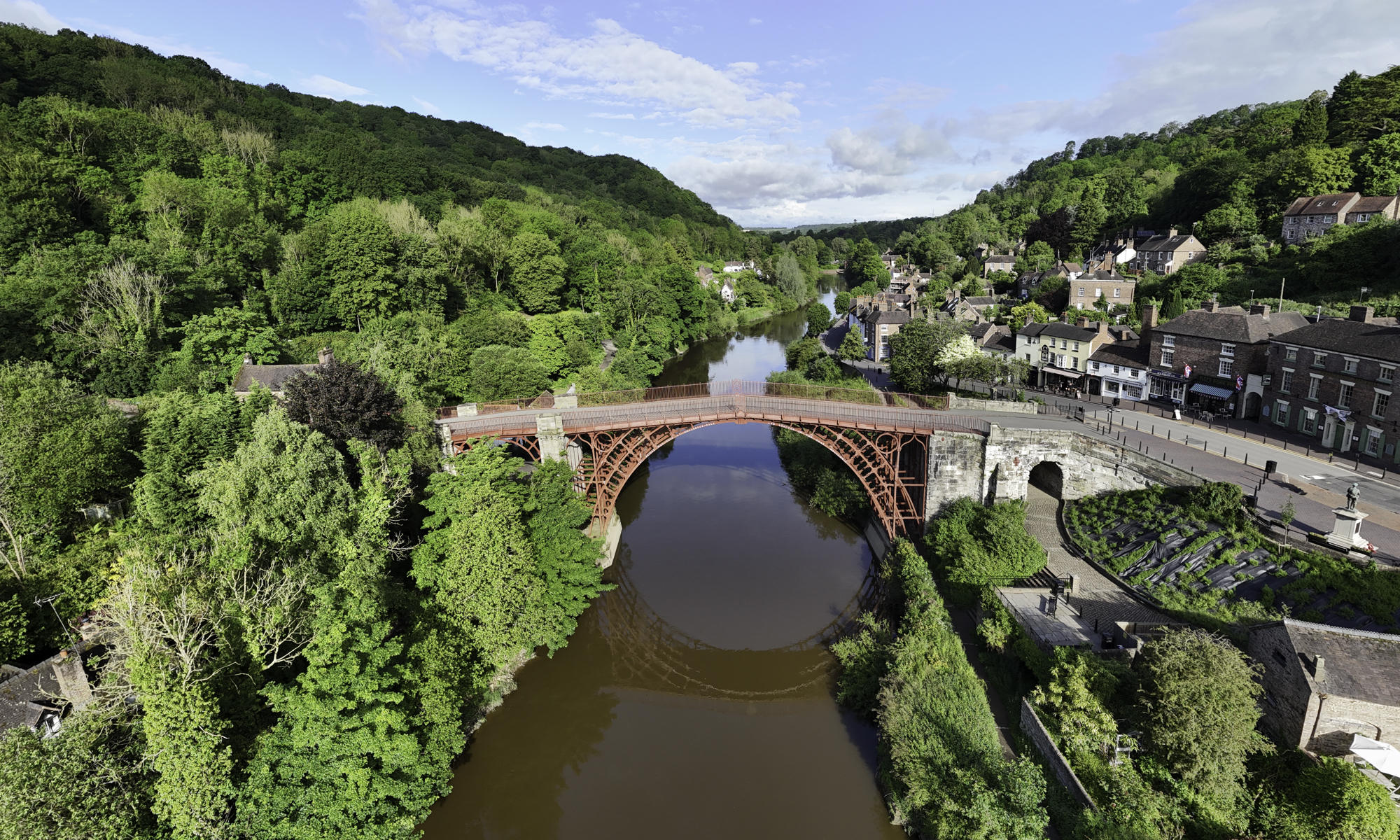
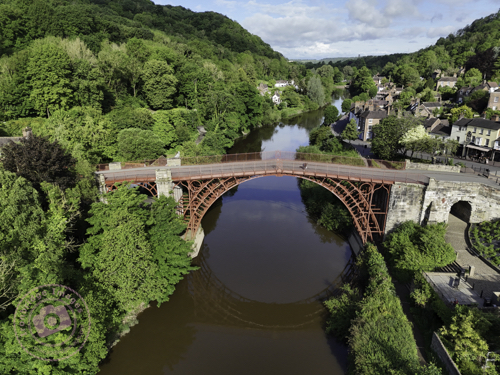
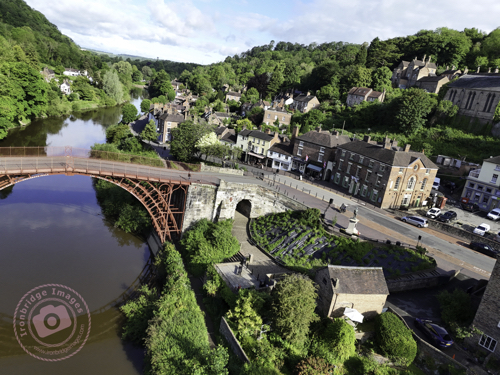
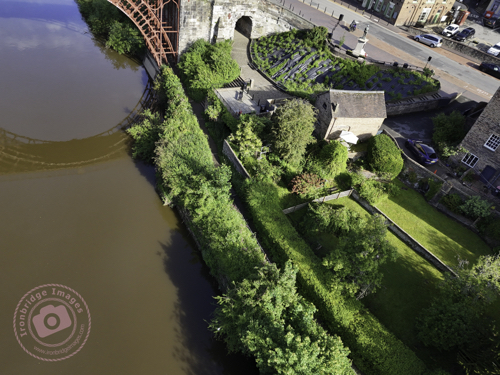
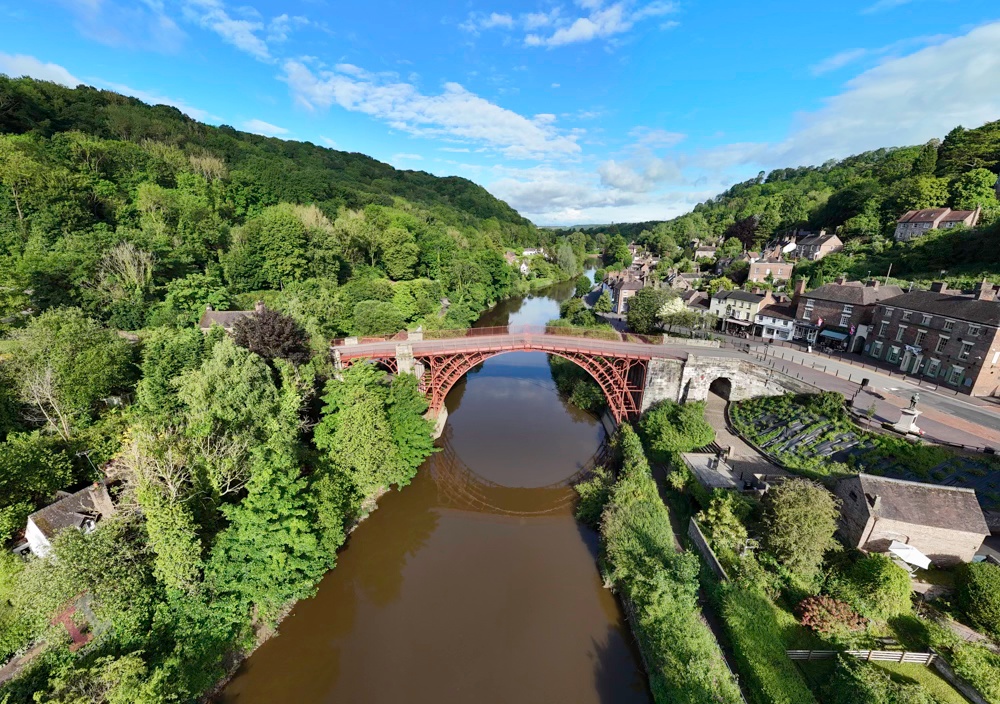
I wanted an aerial shot of the Iron Bridge, and so this either meant taking it from a long way off (and then losing detail) or using the panorama function of my DJI Mini 4 Pro drone – the latter turning out to be the ideal choice.
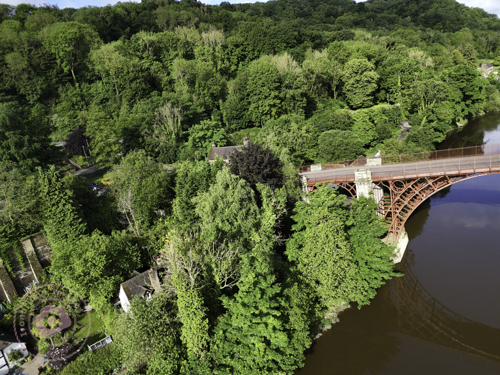
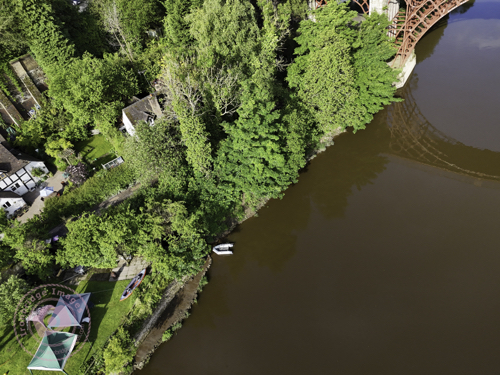
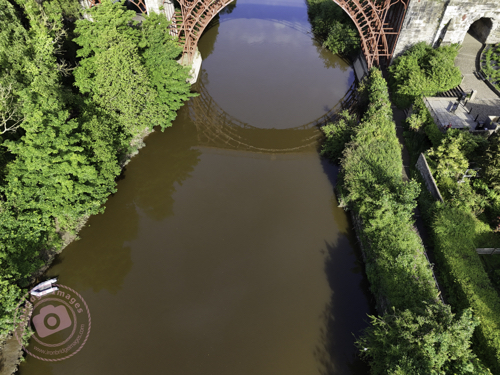
Even though it was 8.30am on a Bank Holiday, it was surprisingly quiet and deserted, and therefore ideal to fly the drone from a seating area directly in front of the bridge. There are four panorama options on the drone; Sphere, 180o, wide-angle, and vertical, but my preferred one, that produces a more natural image without too much stretching of perspective, is the wide-angle – which takes 9 shots in succession and seamlessly stitches them together (within the drones software) to create one large image. You can then output not only the large panorama image, but also the 9 individual shots.
And here is the complete panorama, which I later cropped to produce the headers for my website and Facebook page:
Iron Bridge Panorama
Please don’t forget to visit my new Facebook page and give it a ‘like’. Thanks
This shot was taken during our Honeymoon in Northumberland back in 2008. After the ‘big day’ we retired to a rented cottage near Amble – our first time in this beautiful county – and I planned photoshoot days with a new camera (a Pentax K200D) that Mrs H had bought me as a wedding gift.
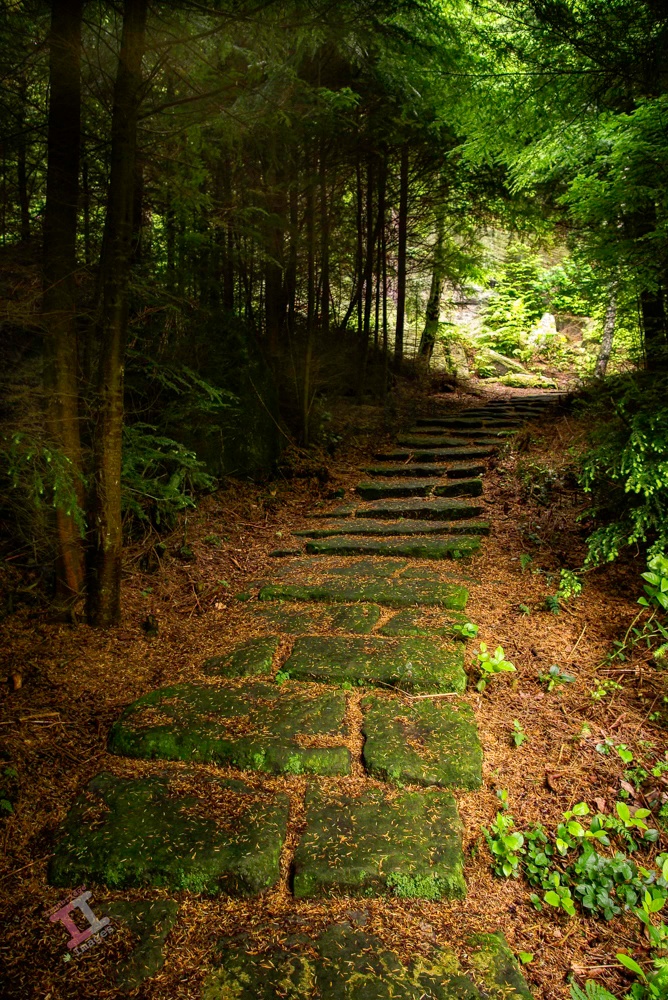
One such shoot was at at Cragside (National Trust) located at Rothbury, near Morpeth – the house and gardens of which were created by an inventor, Lord Armstrong. Within the estate is a Pinetum, a collection of the tallest pine trees in the country, and as we walked down a paved path between the trees, I happened to look back to see the image that I captured below – which looked rather like a tunnel, with sunlight showing in the distance.
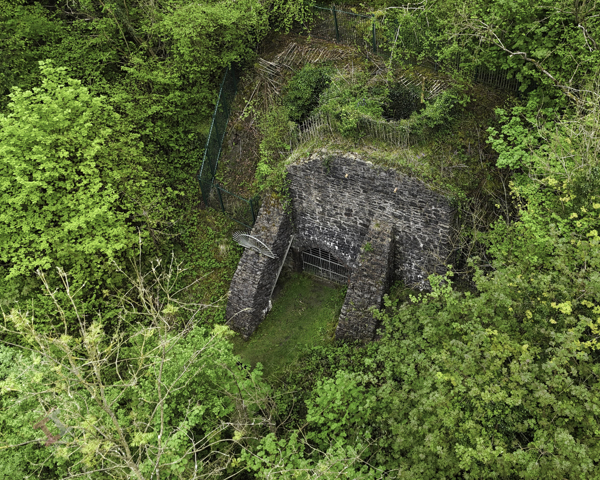
Despite being a lesser-known area of Ironbridge, Bower Yard had quite a significant importance: in its history it was the location of a brick & tile works, a ship yard and also substantial lime kilns, some remains of which can still be seen today.
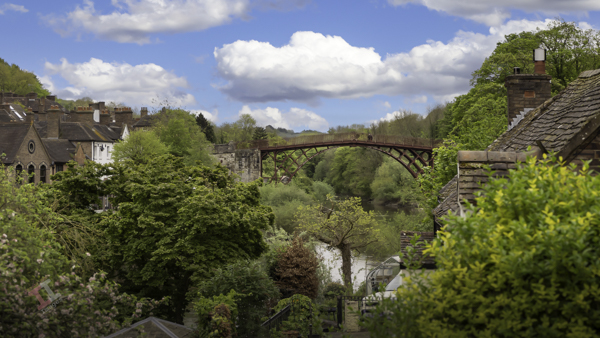
The Iron Bridge from Bower Yard
Note: I have used the modern name Bower Yard, although old maps ofter refer to it as Bowers Yard or even Bowersyard.
Bricks and tiles
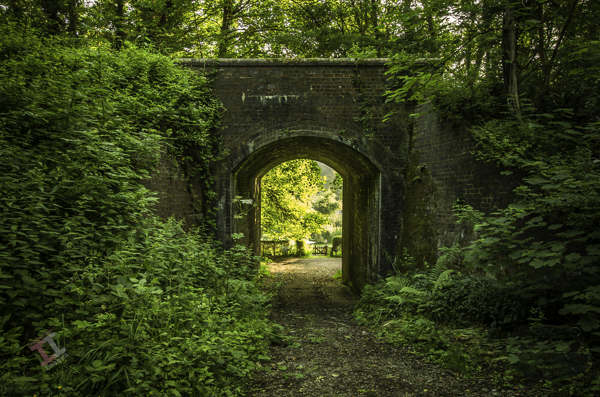
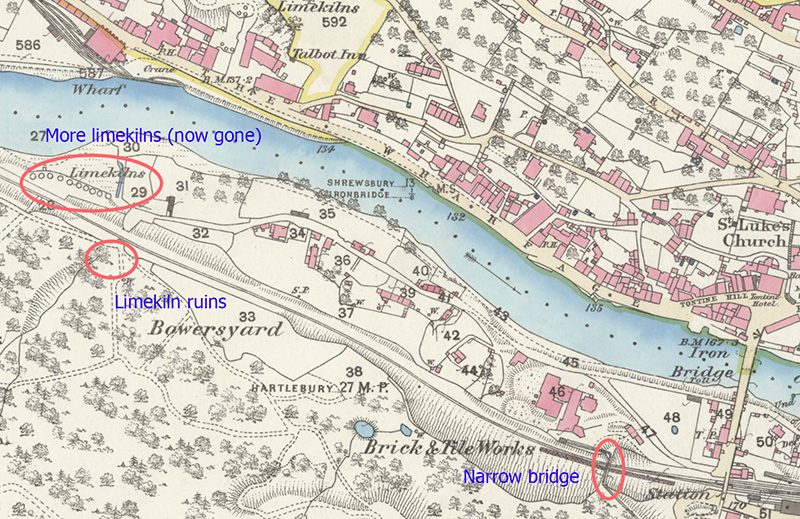
Slightly west of the site of Broseley and Iron Bridge Station, and the famous Iron Bridge itself, the Great Western Railway passed under another brick bridge – unusual in that, despite it being a substantial construction, it is very narrow. Analysis of a map from 1883 shows the reason why – it was built solely to carry a small tramway carrying clay from Benthall Edge to the Bower Yard White Brickworks, which lay between the railway line and the river. During its 120 year life, there were several name changes as the site migrated into manufacturing sanitary pipes and stoneware, but it finally closed in 1955.
Ship building
Little is known about the ship building yard, although it must have been a fair size given that there are records of a boat named ‘Sisters’ built at the yard in 1819 which had two masts, weighed 33 tons and was 54 feet (17m) in length, and another named ‘William’, built in 1809, which weighed 70 tons and was 66 feet (20M) in length. Both were subsequently registered at Chepstow, much further down the River Severn, at its estuary with the Bristol Channel.
Lime kilns
The Pattens Rock limestone quarries at nearby Benthall Edge supplied flux for use in the iron smelting industries in the Ironbridge Gorge. This flux was used to remove impurities from the iron stone during the smelting process and required the use of the higher quality limestone. The lower quality limestone was sent to kilns at Bower Yard, which processed it into quicklime, used in construction for mortar, plaster and lime wash, but also in agriculture to reduce the acidity of soil (lime is very alkaline). The kilns purpose was to burn the limestone (calcium carbonate) at about 900 degrees Centigrade to produce calcium oxide (quicklime). This took about 3 days, plus the time to cool the kiln down to extract the lime. The burning of lime gave off particularly noxious fumes which would have made the area a particularly unattractive place.
Lime kiln ruins
The kilns were built during the mid 1800s but their use quickly declined and they ceased to be used by about 1880. Strangely, there was a revival in the 1920s as the demand for limestone increased and they sprung back into life, with significant improvements to their structure, until they closed again in the 1940s. The Great Western Railway played a big part in the success of the lime kilns, bringing coal to them for fuel and lime out of them for sale. There are numerous claims that a railway siding was built specifically for the lime kilns but I can find no evidence on any maps that this was the case.
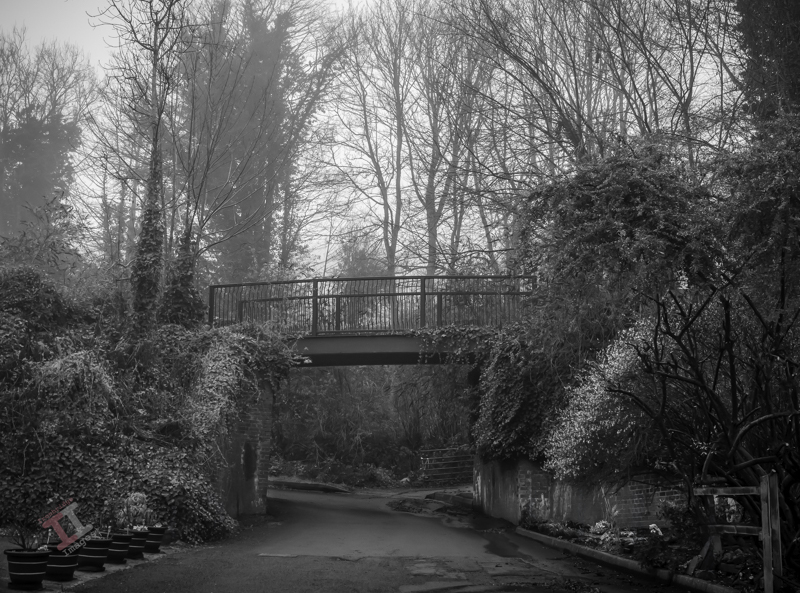
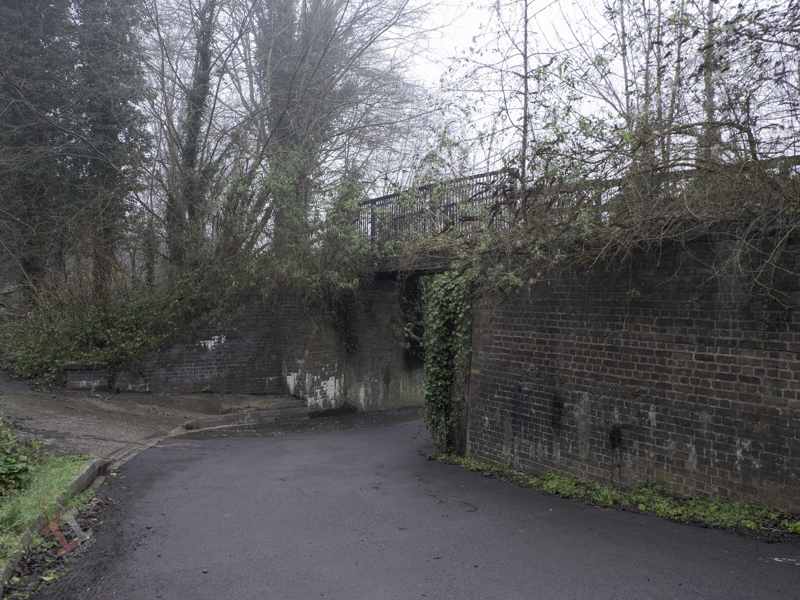
Also still surviving is the access bridge to the kilns under the Great Western Railway. It’s a narrow bridge, presumably just wide enough for a horse-drawn wagon but the northern flanks are impressively wide and high in order to retain the earth supporting the railway.
In 2011 there was conservation work carried out on the decayed ruins of lime kilns on the Benthall Edge side of the railway, although according to the 1882 OS map, a much more substantial set of lime kilns were located between the railway and the river, opposite the Severn Warehouse.
A little further on from the level crossing gates mentioned in Secret Ironbridge: Open Wide, and the Great Western Railway track-laying engineers must have thought that Christmas had come early when they came upon Chapel Lane at right-angles to the railways path.
All they needed to do was build some brick parapets and then drop a ready-made bridge on top, which was in contrast to most of the bridges in the Ironbridge Gorge that needed to be skew-bridges with complex brick-built abutments.
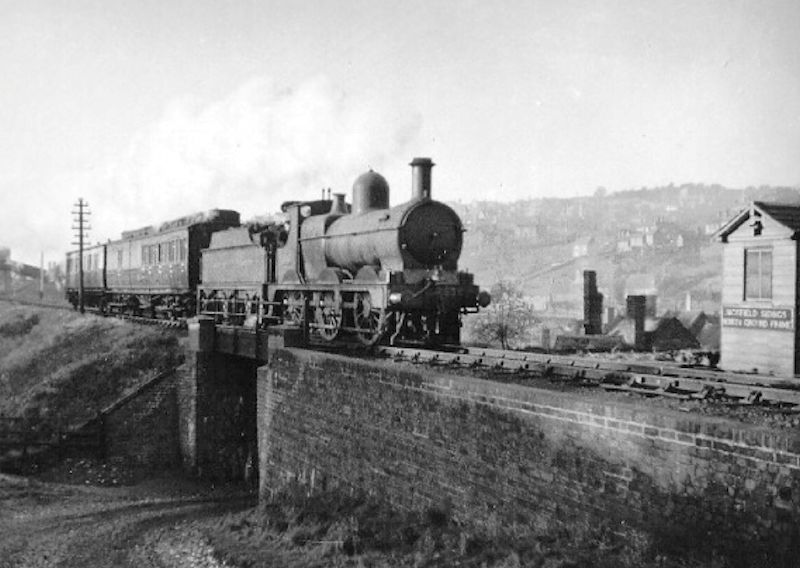
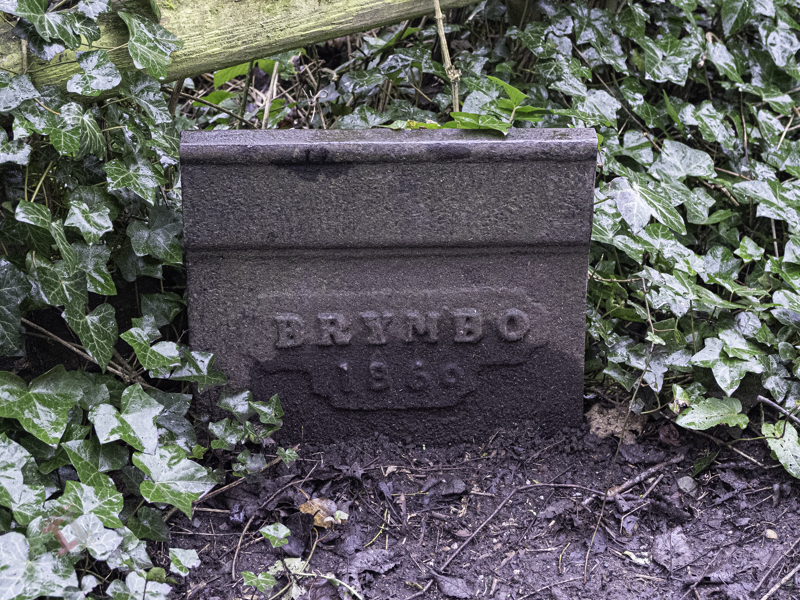
The ready-made bridge they chose was a Brymbo bridge, manufactured in the Denbighshire village of the same name. The Brymbo steel works operated from 1796 to 1991, and there are links with the Ironbridge Gorge because, in 1842, William Henry Darby and Charles Edward Darby (grandsons of Abraham Darby III who built the famous Iron Bridge here in the Ironbridge Gorge) were brought in to manage the works, and so would have been in charge when the little railway bridge was made.
The original Brymbo bridge – photographer unknown
Some years ago major repairs were carried out, and little, if any, of the original Brymbo construction remains. It is now much narrower that the original and has a slight arch to it.
After passing under the bridge, you come across the Coalford Wesleyan chapel, built in 1825, that gave the lane its name (Coalford is an area within the village of Jackfield). John Wesley (1703-1791) was an English cleric and evangelist who led a Methodist religious movement within the Church of England that had its own places of worship in most towns and villages.
In 1884, the Wesleyan Methodists split away from the Church of England to form a new Christian denomination, and later, in 1932, there was a unification with the Primitive Methodists and the United Methodists to create what is now known as The Methodist Church.
The Coalford chapel closed in 1980 and is now used by a local brass band as their practice room.
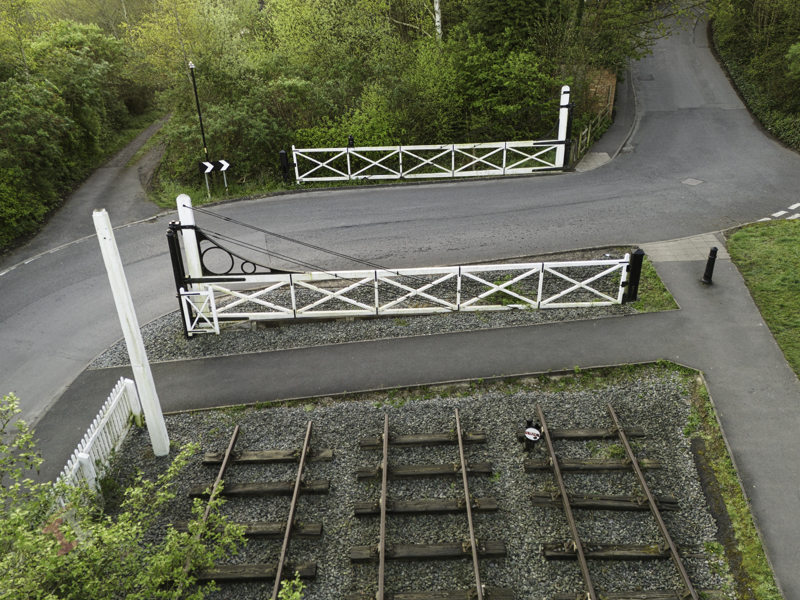
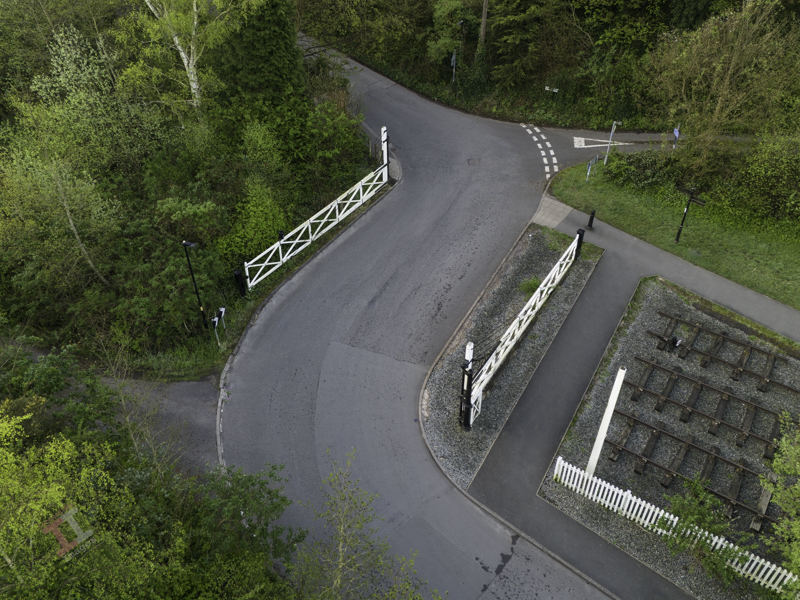
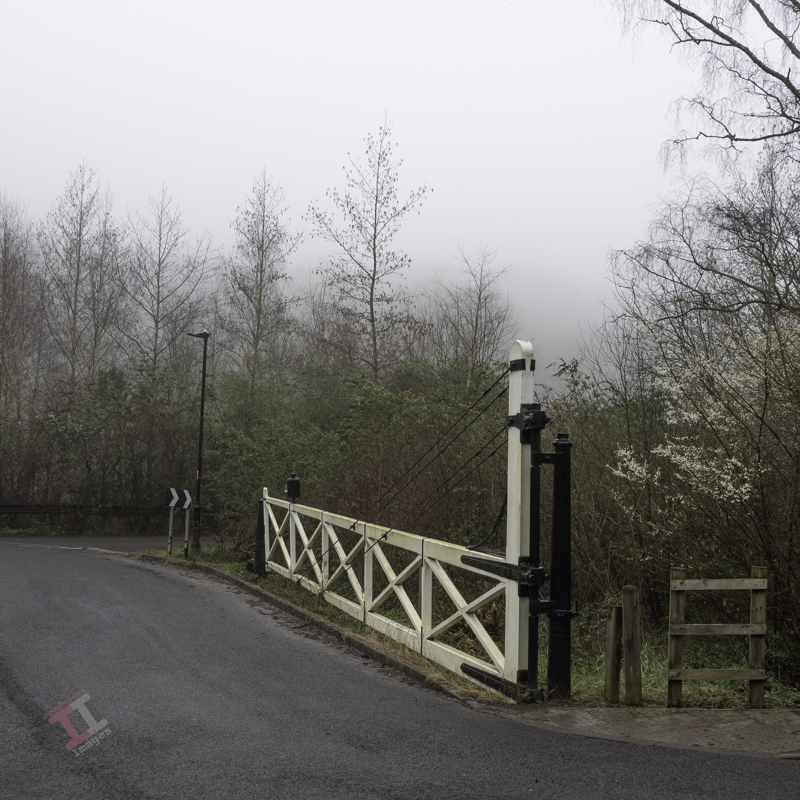
If you drive through the village of Jackfield, you will come to a dog-leg in the road as you cross, what was once, the Great Western Railway line.
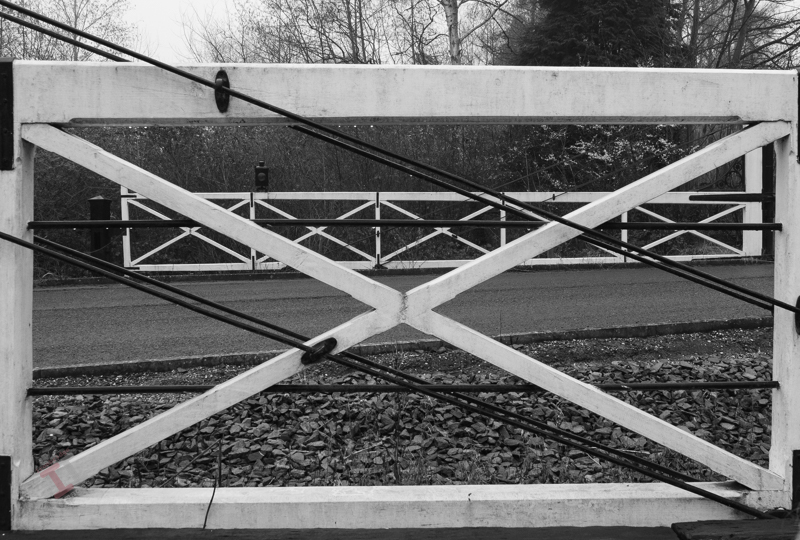
This level-crossing is claimed, at 38 feet (11.5 metres), to be the widest in Britain. Although the railway line opened in 1862, it is likely that the wide gates were added later, as industry in the area expanded.
The current gates remain as a feature but are not the originals. During the last restoration in 2019, it was found that little of the wood was either original, or in very good condition, so it was decided to recreate them using past photographs as a guide (the original blueprints are long-gone).
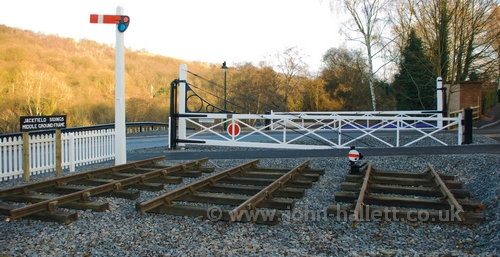
Unfortunately, after the latest renovation, the signal post was retained but the metal signal arm was not. I must admit that for many years I thought this was an original, but closer inspection showed that it was made out of tin plate. However, I still liked it.
The level crossing in 2009.
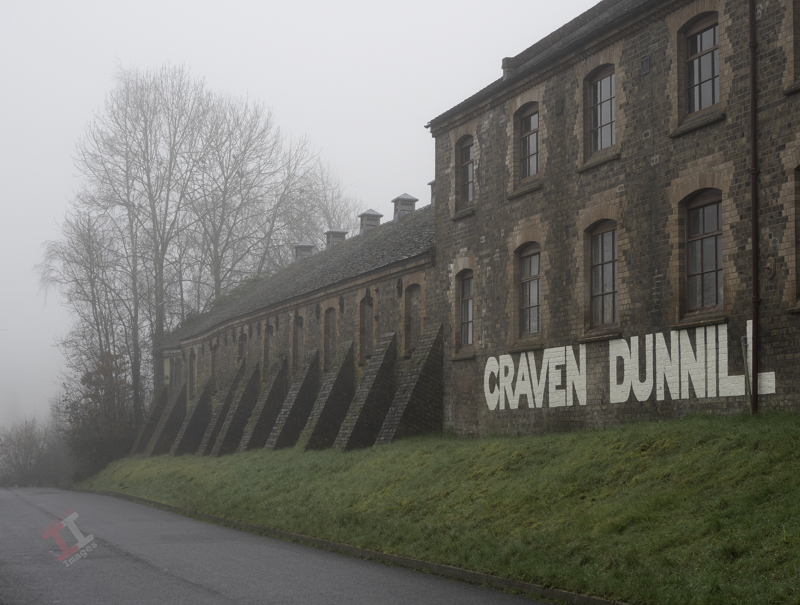
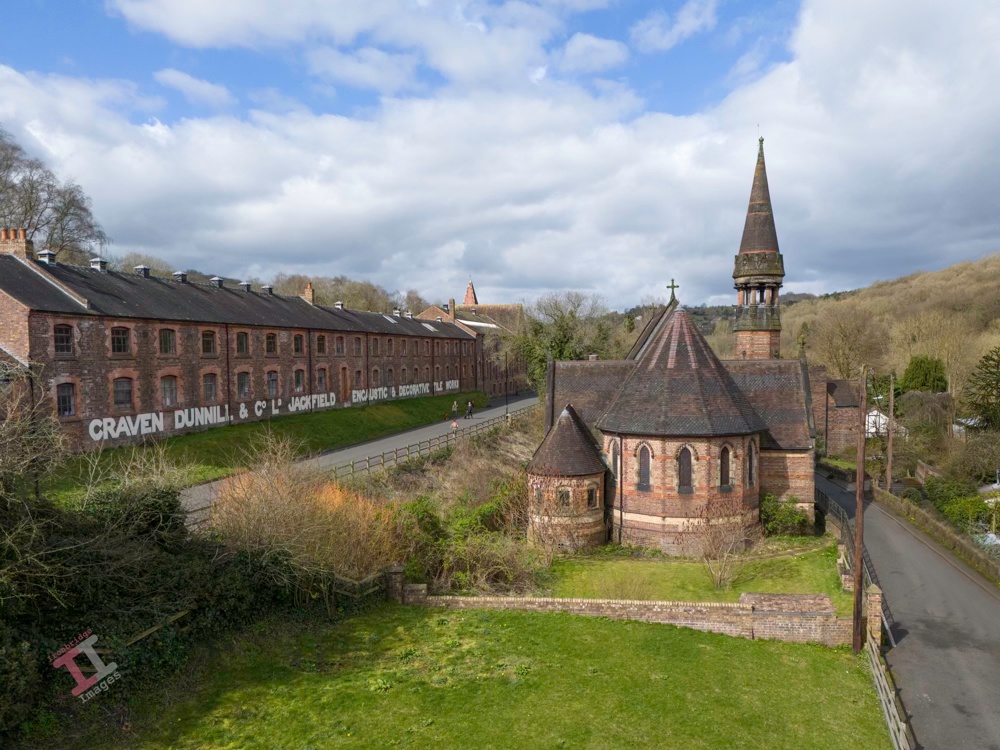
The main Great Western Railway line running from Bridgnorth through to Shrewsbury was only single-track. The reason for the wide level crossing was merely due to a complex set of sidings, which primarily served another tile manufacturer in the village: Craven Dunnill, who had the Jackfield Encaustic Tile Works purpose-built in 1872.
The Craven Dunnill factory opened some 12 years before the Maw family moved their tile works from Benthall to Jackfield (see Secret Ironbridge: Maw or less); a site also chosen due to its proximity to the railway, for easy transportation of raw materials in, and finished goods out.
The road now runs where the railway line used to be
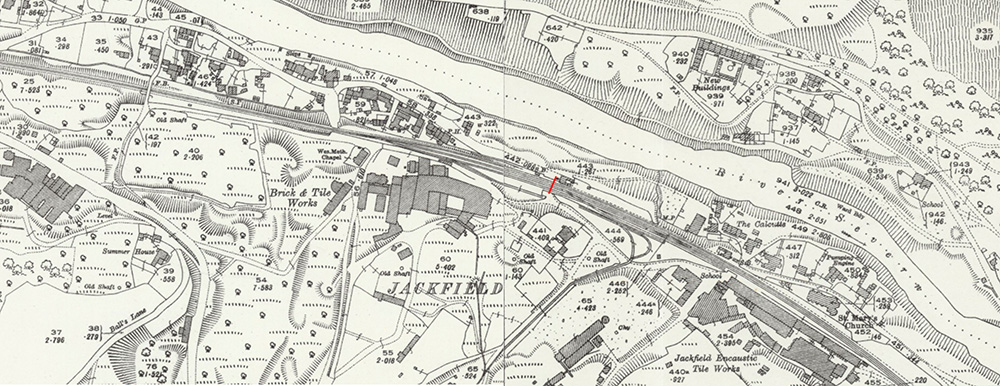
The red line shows the position of the level crossing, with the Craven Dunnill factory bottom-right (C.1925)
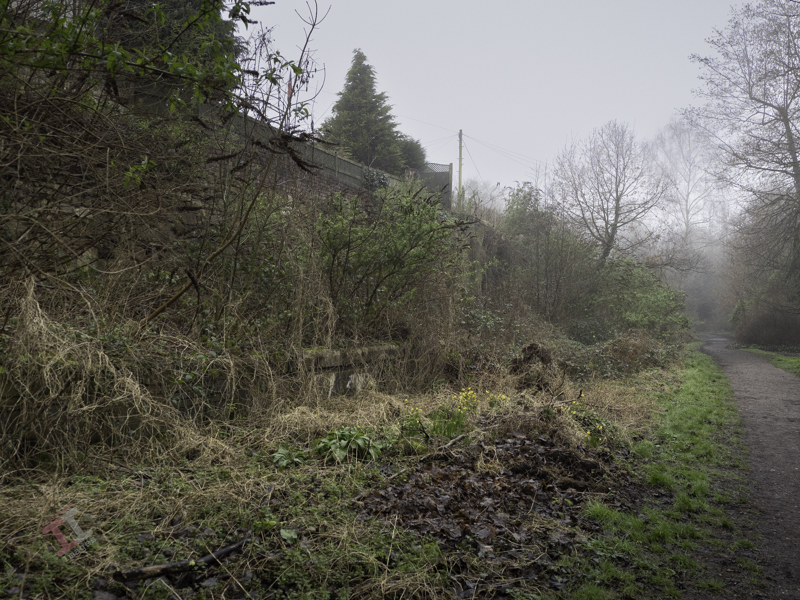
To the west of the level crossing was a small railway platform which served W.P. Jones, another long-gone brick and tile works (as seen in the centre of the above map). The remains of the platform can still be seen in the undergrowth.
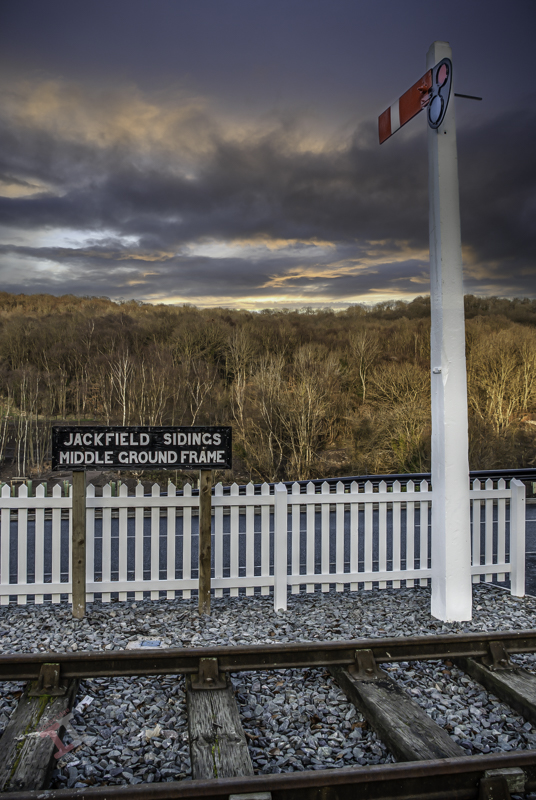
The sidings were controlled by sets of large levers on frames that opened and closed sets of points in the rails using interlinking rods or cables. These frames were mounted outside on the ground and were called, understandably, ‘ground frames’ (as opposed to those mounted inside signal boxes). There were three sets of ground frames at Jackfield, and the middle set were located by these level crossing gates.
Jackfield sidings
The South ground frame was located close to the entrance to the Craven Dunnill factory, adjacent to another level crossing with crossing gates. The North ground frame was located near a small railway bridge that is the subject of the next Secret Ironbridge instalment.
In an earlier blog post, Secret Ironbridge: Great Western Railway, we found that Coalport had two railway stations. Jackfield, another small village, had two churches, but why?
St Mary’s #1
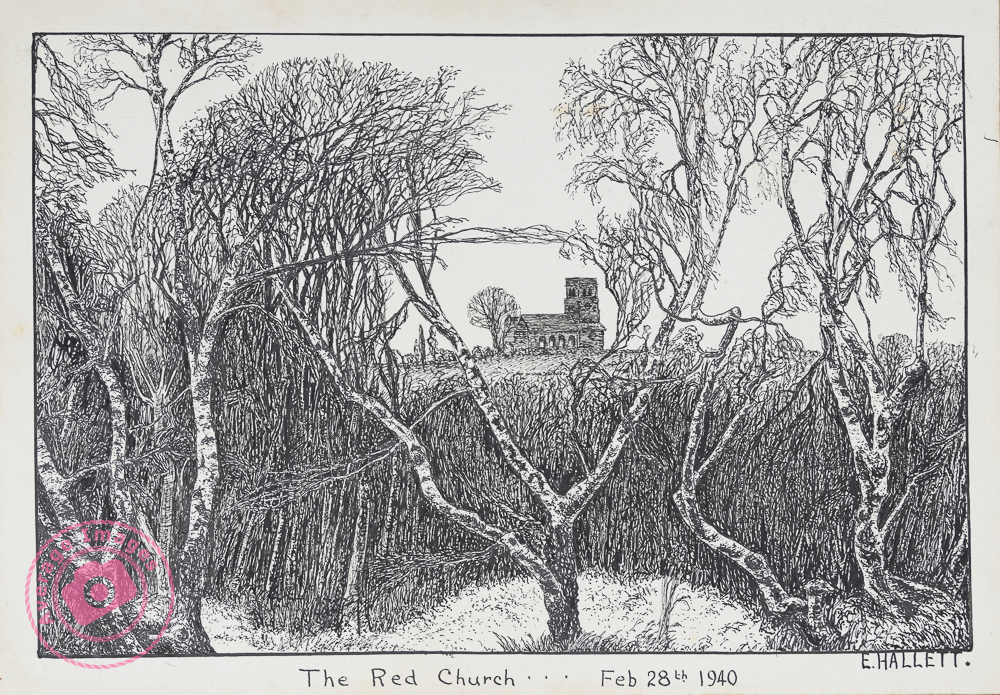
The ‘Red’ church had an official title of St Mary’s, but its colloquial name was coined from its construction (within an uncertain date range of 1759 to 1799) using local red brick.
The ‘Red’ church – as painted by my grandfather in 1940
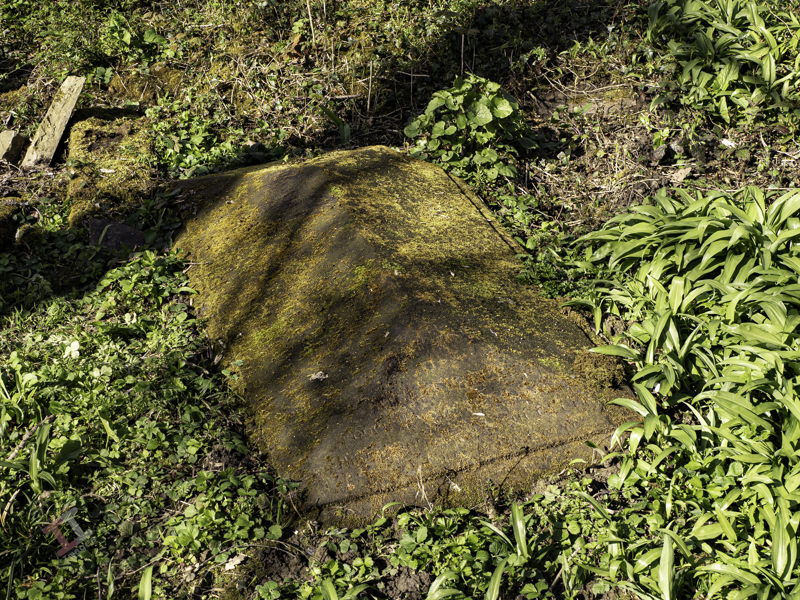
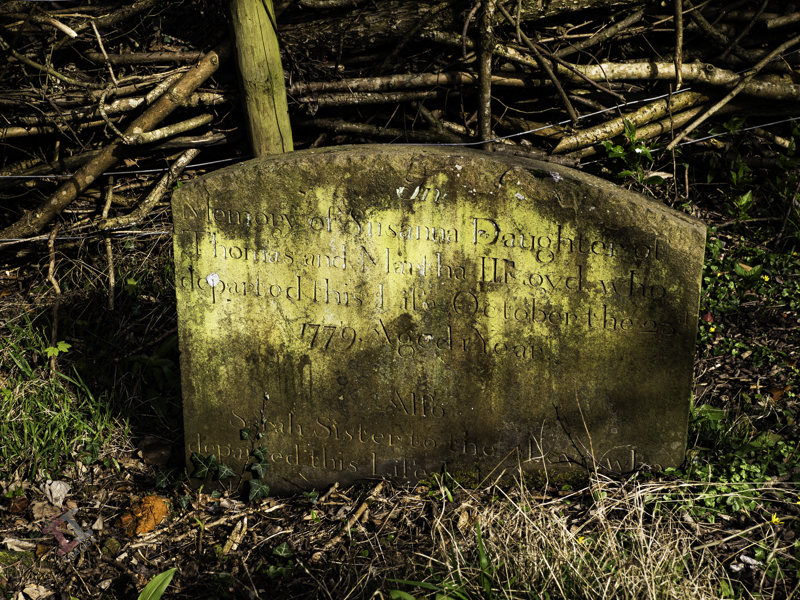
It was reputedly haunted, either by the lady who funded it and wanted it built in a specific alignment and/or by a young girl “wearing a bonnet, a flowing cape and carrying a lantern“. The latter possibly relates to a field fronting the church which holds a mass grave of victims of cholera pandemics in 1832 and 1848.
In 1850, the church’s morning attendance was recorded as 53 adults and 125 children, but services ceased just 10 years later. Some records report that it became unsafe due to ground movement, although it stayed standing (albeit as a ruin) for a further 100 years before being demolished in 1961.
There is a volunteer group ‘Friends of the Red Church‘, currently working to restore the neglected graveyard, uncovering and sharing its history and that of people and events that shaped their lives.
At about the same time that services ceased at the Red church, there was a movement to erect a new church in the memory of George Pritchard, the late High Sheriff of Shropshire, who was credited with being the driving force to bring clean drinking water to the area, following the above-mentioned cholera outbreaks.
St Mary’s #2
In the early 1800s, Jackfield had established itself as an important river port, taking coal and other products made in nearby Broseley onto wharves supplying hundreds of river trows (flat-bottomed boats) plying their trade (at that time the river Severn was navigable and was the equivalent of todays motorways). The area was noisy and dirty and, with many migrant boatmen coming-and-going, was reputed to be an unsavoury place.
However, by the mid-1800s, the new Great Western Railway had been carved through the village, leading to the demolition of many houses and the decline of river transportation. New industry, namely brick and tile works, had sprung up, and with it, piles of waste product tipped onto the riverside where the wharves had once been. It was here that the new St Mary’s church was built.
Jackfield Church
Local manufacturers donated much of the materials, and it possibly ended up as a competition to see who could be seen to be the most generous, judging by the ornate brick and tile work.
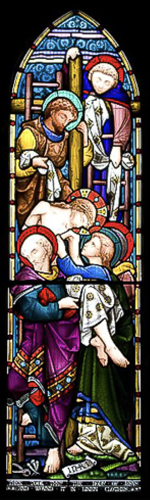
Windows at Jackfield church, Ironbridge Gorge.
The five windows depict: Agony in the Garden, Road to Golgotha, the Crucifixion, the Deposition, and the Resurrection.
You had one job…
How it is
An interesting fact is that the upper panel in one of the windows has been installed back-to-front.
How it should have been
In the next Secret Ironbridge blog post the Great Western Railway features again.
As I mentioned in a previous post; Secret Ironbridge – Great Western Railway, in 2003 I embarked on a project to photograph all 25 of the bridges in the Ironbridge Gorge. Only one of them is no longer standing, but the remains of its abutments can still just be seen, not far from the Maws tile works in Jackfield (see Secret Ironbridge – Maw or less).
The bridge itself was the victim of land slippage, which eventually led to significant stabilisation groundworks in 2015. At the time, the remains of the bridge were earmarked for removal, but they were saved at the last minute.
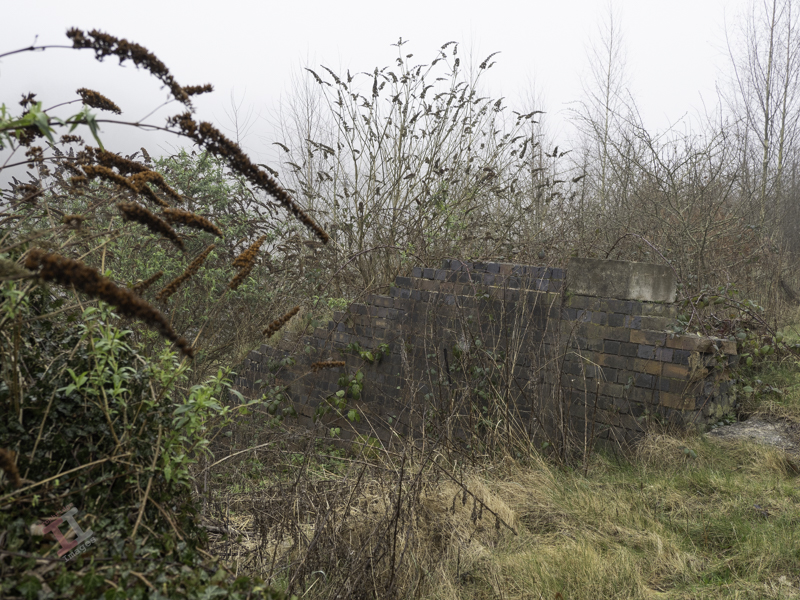
The bridge abutments can just be seen rising out of the undergrowth
Originally, the bridge only carried the single-track GWR through-line, but in about 1910, a siding was extended over the bridge, although it is not clear if it was widened to accommodate this.
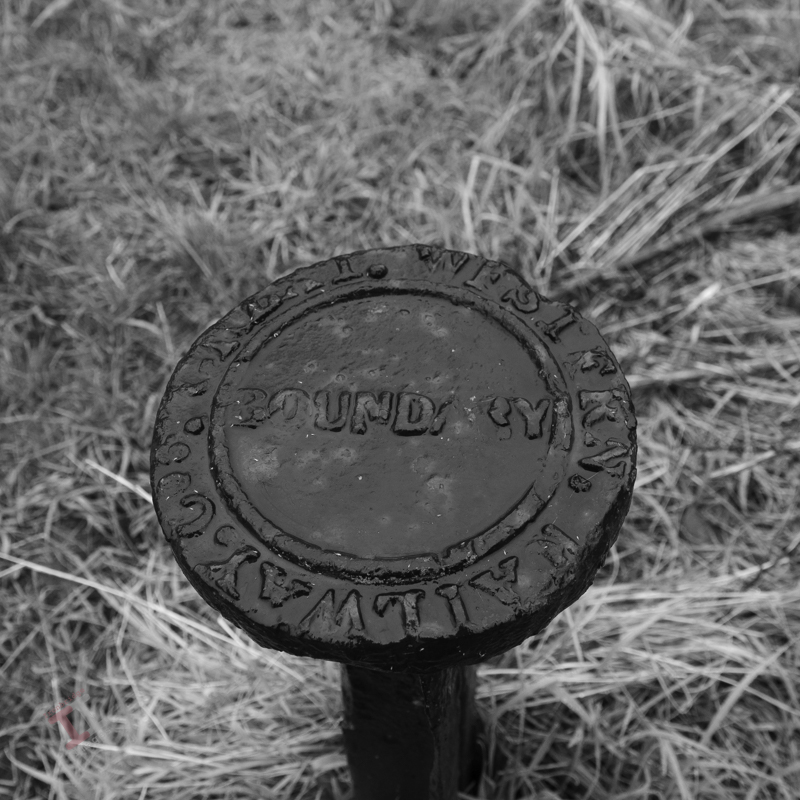
A GWR boundary post is situated nearby – although this is not its original position.
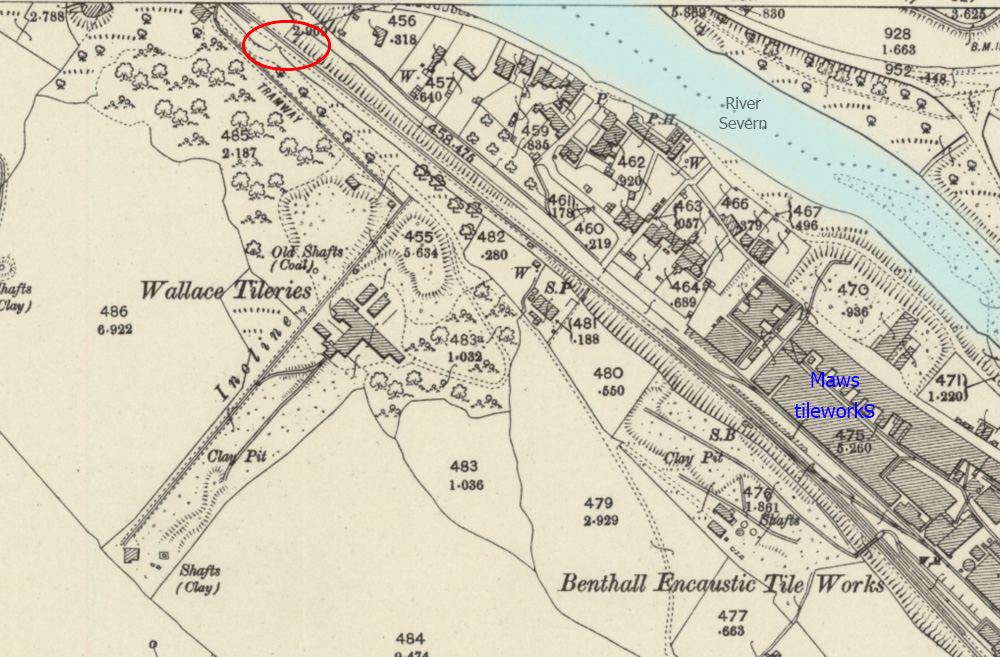
The bridge was built to cross a lane that provided access to Wallace Colliery, a very small coal mine that opened in the 1800s and is believed to include pits called ‘Bonny’ and ‘Jolly’. In the 1880s, attention turned to extracting clay, and Wallace Tileries was born on the same site, which quickly expanded, with a large building and even its own incline plane, tramway and railway siding linked to the GWR line. It was reputed to be the first roof tile works in the world with a tunnel kiln. It was short-lived; it had declined by 1920 and closed in the late 1930s, possibly due to the clay pits being exhausted.
Wallace Tileries in 1901. The bridge is circled in red.
There were some who believed that the closure, and subsequent cessation of pumping water from the pits, may have contributed to a significant landslide in 1952, when 27 dwellings were destroyed, as the ground on which they were built moved some 60 feet (18 metres) towards the river (the mines are directly above the area that was affected). There was, allegedly, an underground lake that could be seen down one of the pits. Perhaps unsurprisingly, official reports claim that this lack of pumping was unlikely to have caused the disaster.
Was the location of the tileries in relation to the landslide a coincidence? What do you think?
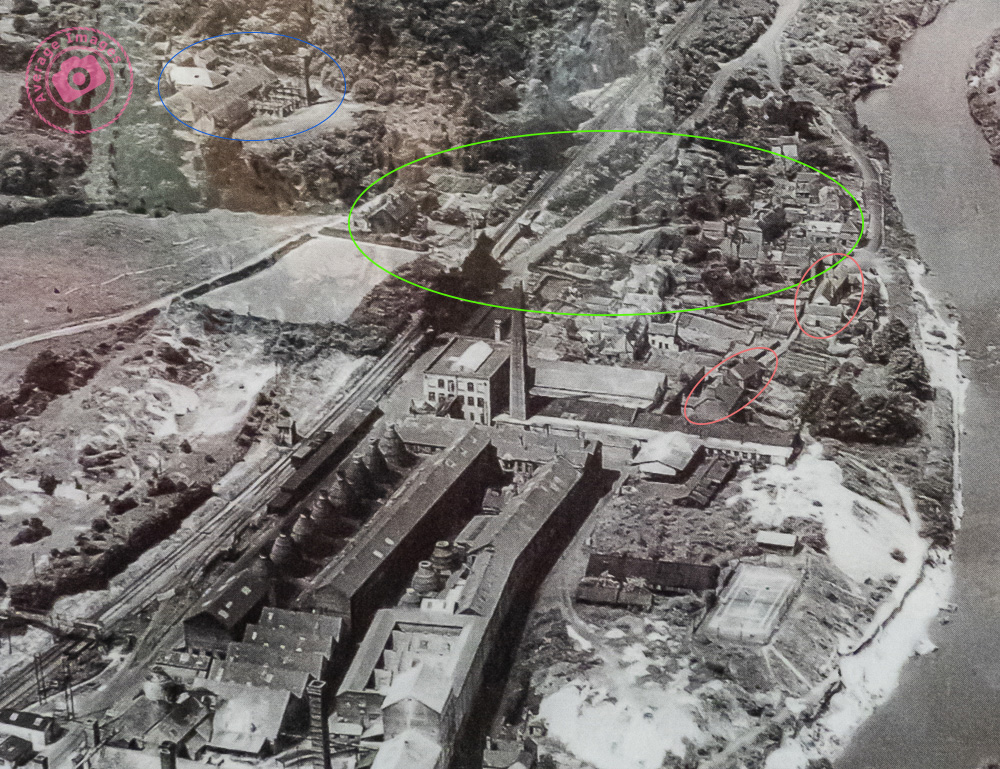
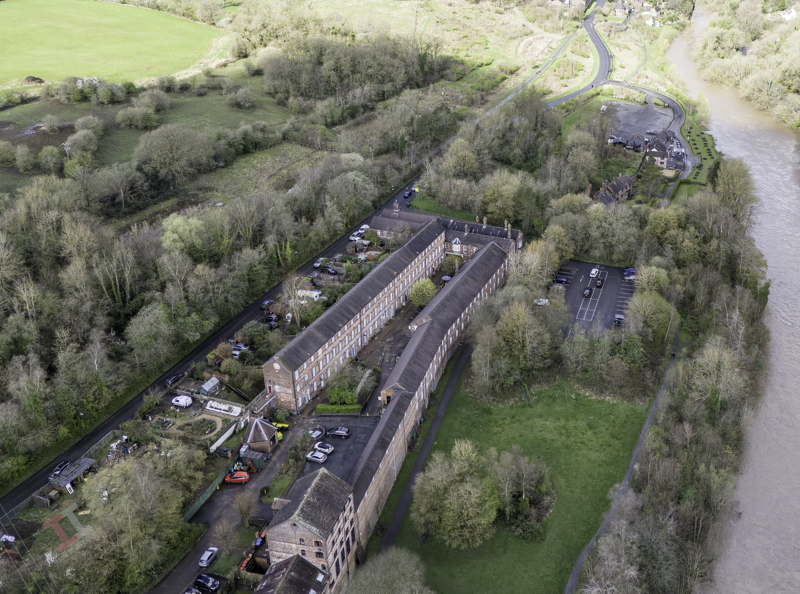
A 1942 aerial photograph, before the landslide. The Wallace Tileries are circled in blue, the houses affected in green. The houses circled in red still remain and can be seen in the image below.
A similar viewpoint today. See if you can spot the remaining buildings.
There is an interesting British Pathé news clip about the landslide on YouTube here, which also blames the cessation of pumping for the disaster.
The remains of the abutments are barely holding together
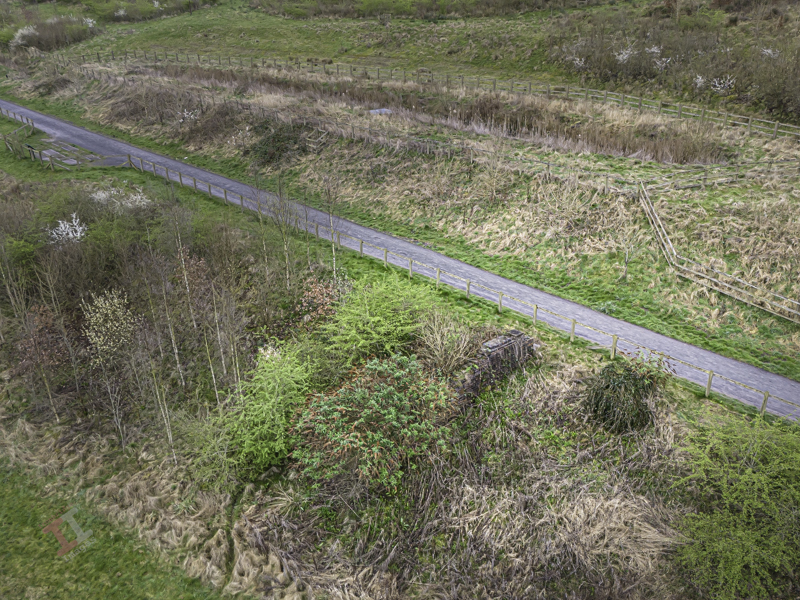
The abutments can just be seen. The footpath almost follows the line of the railway
Despite some considerable searching, I cannot find a photograph of the original bridge. It is very possible, given that the railway crossed the narrow lane at right angles, that it was a ready-made metal bridge laid on top of the brick abutments, similar to one that will be discussed in a later Secret Ironbridge blog post.
But that’s later; the next Secret Ironbridge blog post will be a little more ecclesiastical.
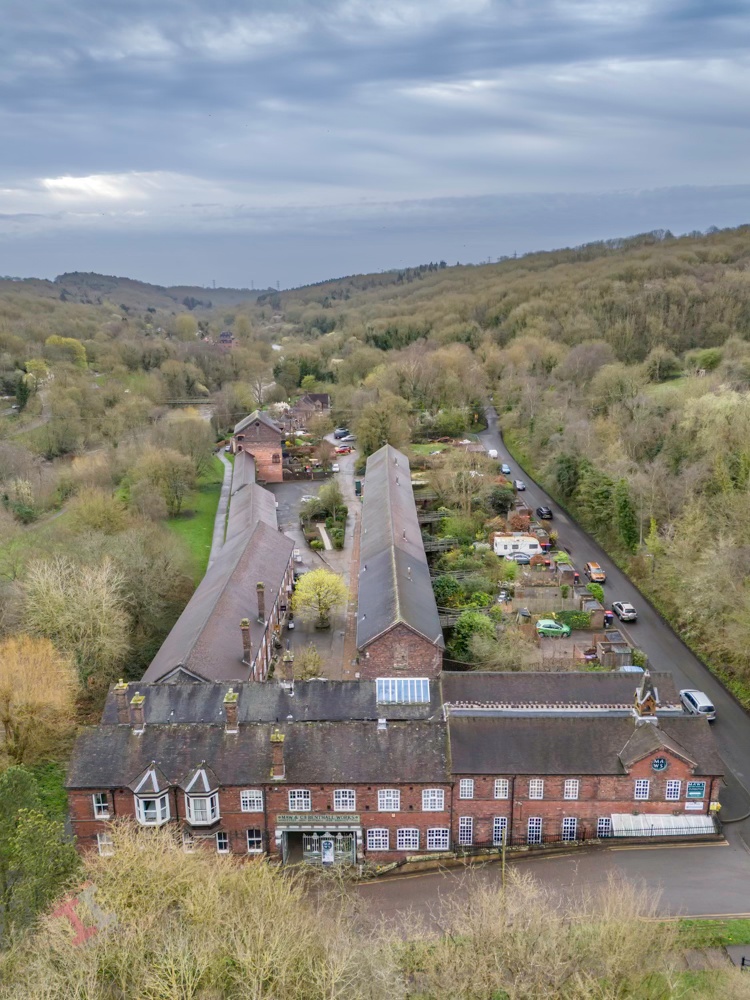
In Victorian times, the Ironbridge Gorge was home to numerous brick and tile works, due to the abundance of coal and, of course, clay. Most of these were small concerns, but occasionally a business would expand exponentially and become a major part of the community. An example of this is Maws and Co. in Jackfield.
Maw or less
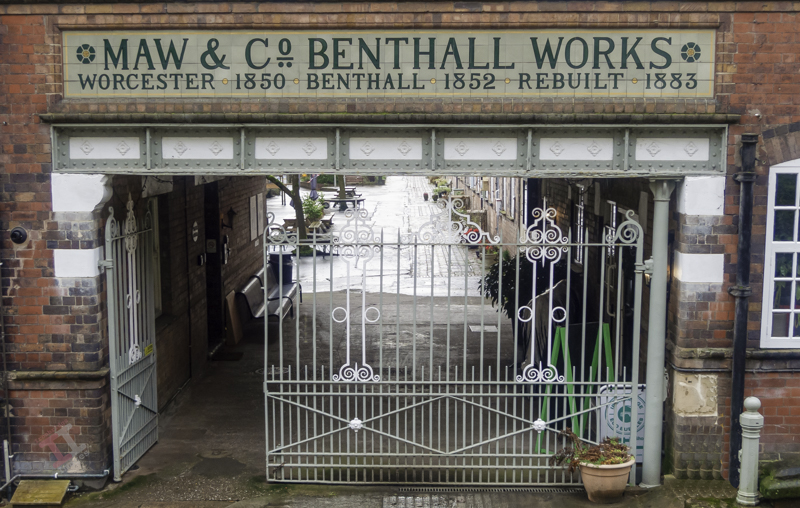
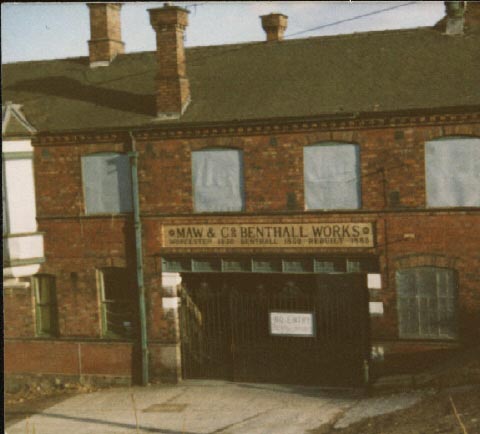
The company was founded in Worcester in 1850 by John Hornby Maw and his two sons, George and Arthur, but the shortage of good quality clay in that area meant that they shifted the entire operation (including the employees) to Benthall, near Broseley, in 1852. To take advantage of the transportation opportunities of the new Great Western Railway line, the site relocated again in 1883 to the site of an existing brickworks at Jackfield (this explains the somewhat confusing name “Benthall Works” above the entrance).
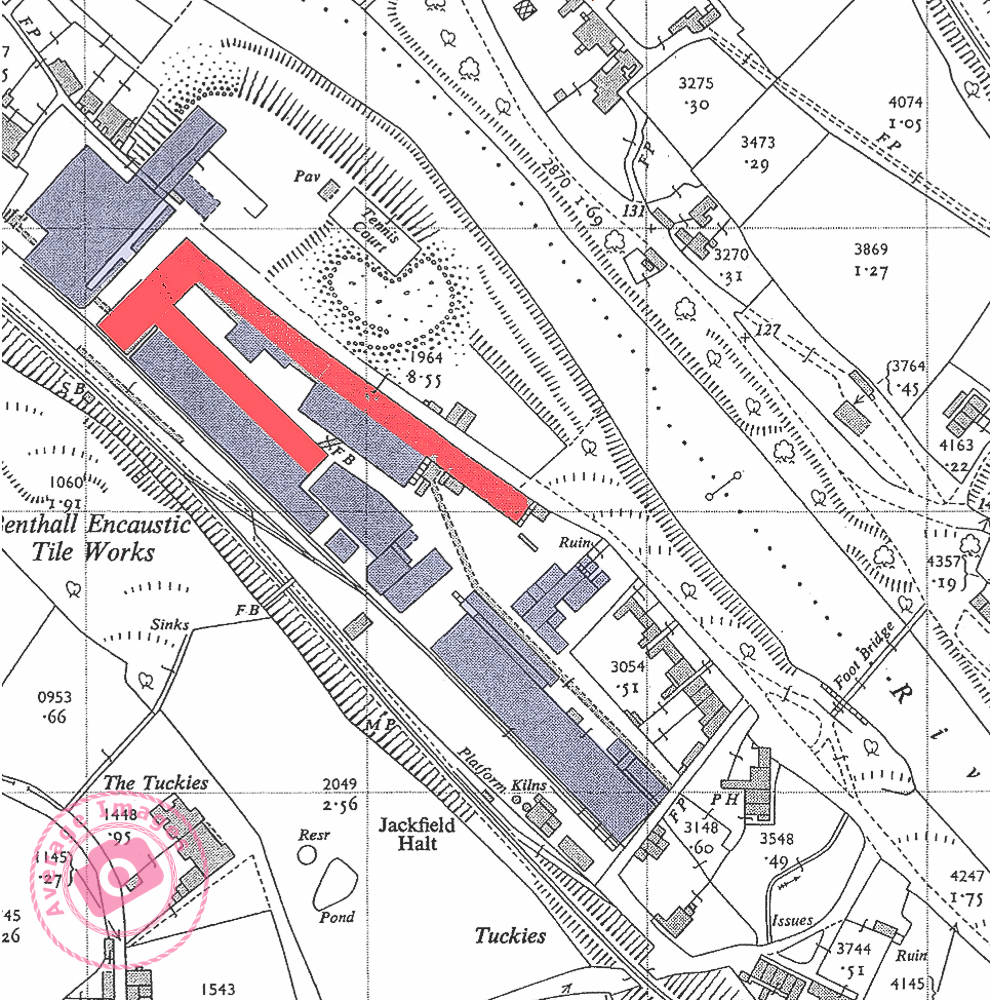
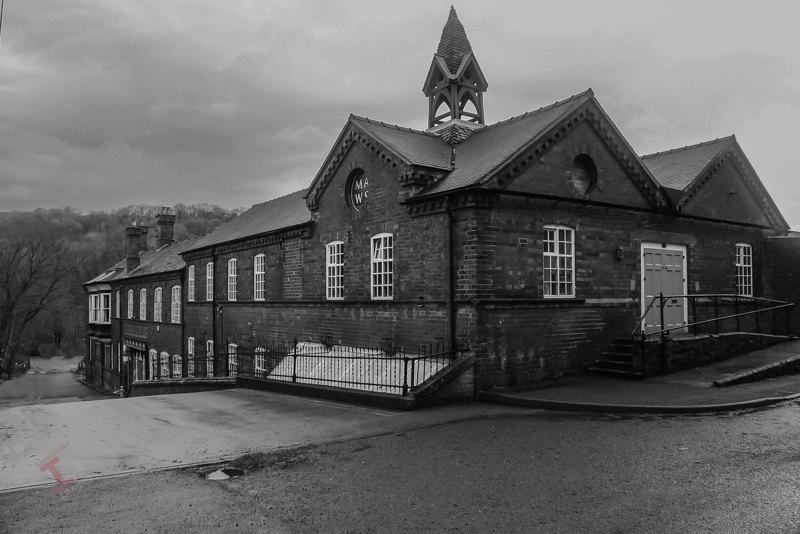
Today, you will find the works if you follow the signs to the Maws Craft Centre – its courtyard now taken up by artisan craft shops. As you walk down the courtyard you may be impressed by the size of the buildings – but in reality this is just one third of the size of the original works – the majority demolished in the 1970s. The map below shows the remaining buildings in red – with the rest of the (now demolished) works in blue. You will also notice that it had its own railway platform and sidings from the GWR line (see Secret Ironbridge: Great Western Railway) – the current road didn’t exist at that time. In its heyday, it was the largest encaustic tileworks in the world and employed 400 people.
A 1955 map showing the Maws works at the time. Only the buildings in red exist today.
Sadly, after the First World War, the ceramic tile industry went into a slow decline and after a merger, and then a take-over, the works finally closed in January 1970.
The Works all boarded up in the 1970’s
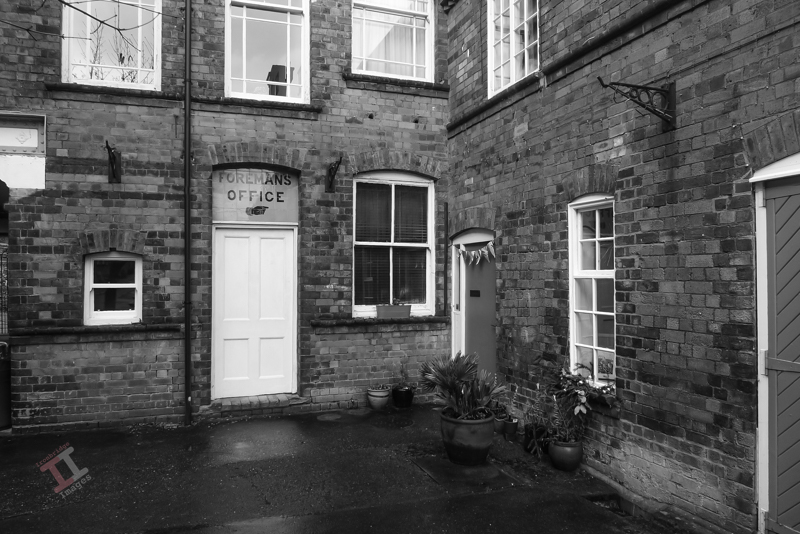
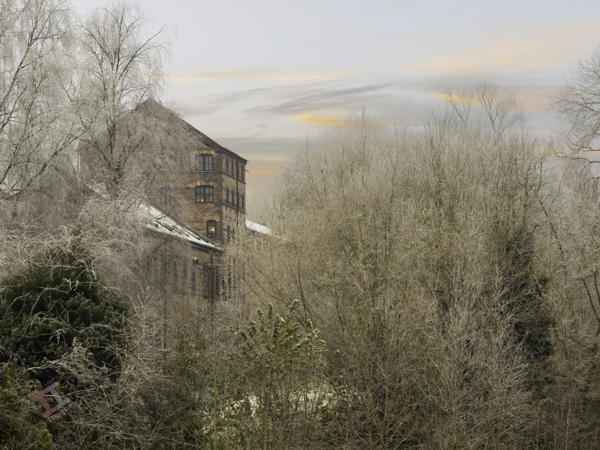
After years of dereliction the courtyard was converted into small workshop units and the upper storeys into apartments. The buildings live again!
Frosty morning at Maws
Coal chute on Ferry Road
The Great Western Railway played a big part in the evolution of Jackfield, from a fairly squalid river port to a hive of industry. In the next Secret Ironbridge blog post we will visit a lost railway bridge, and its link to another tile works – one that may have helped to destroy part of the village!
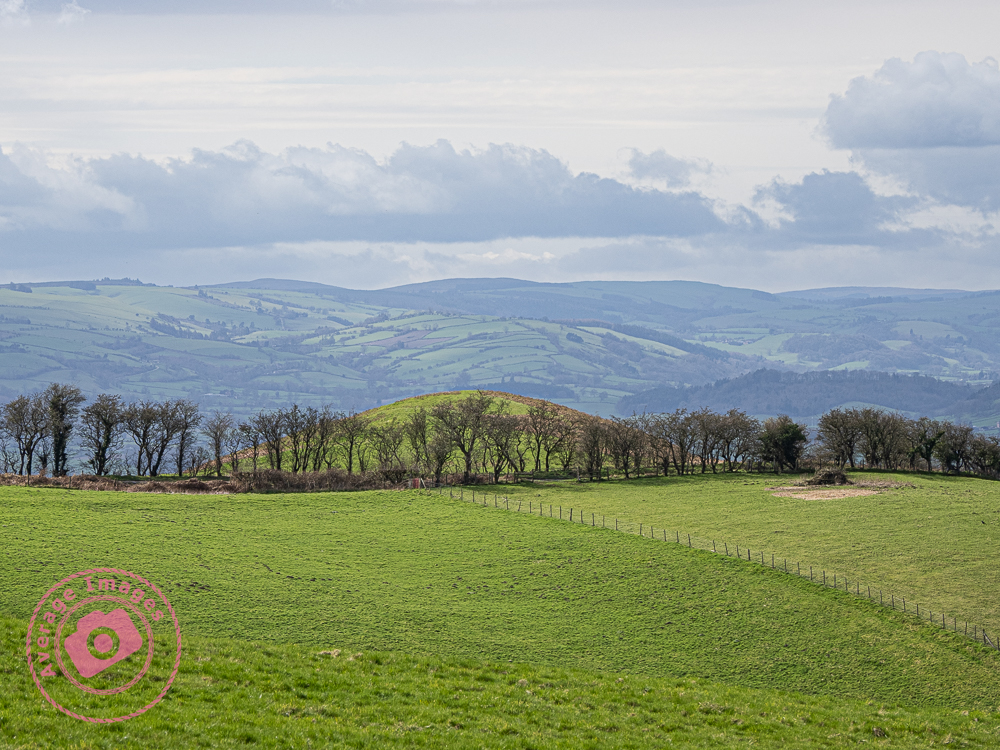
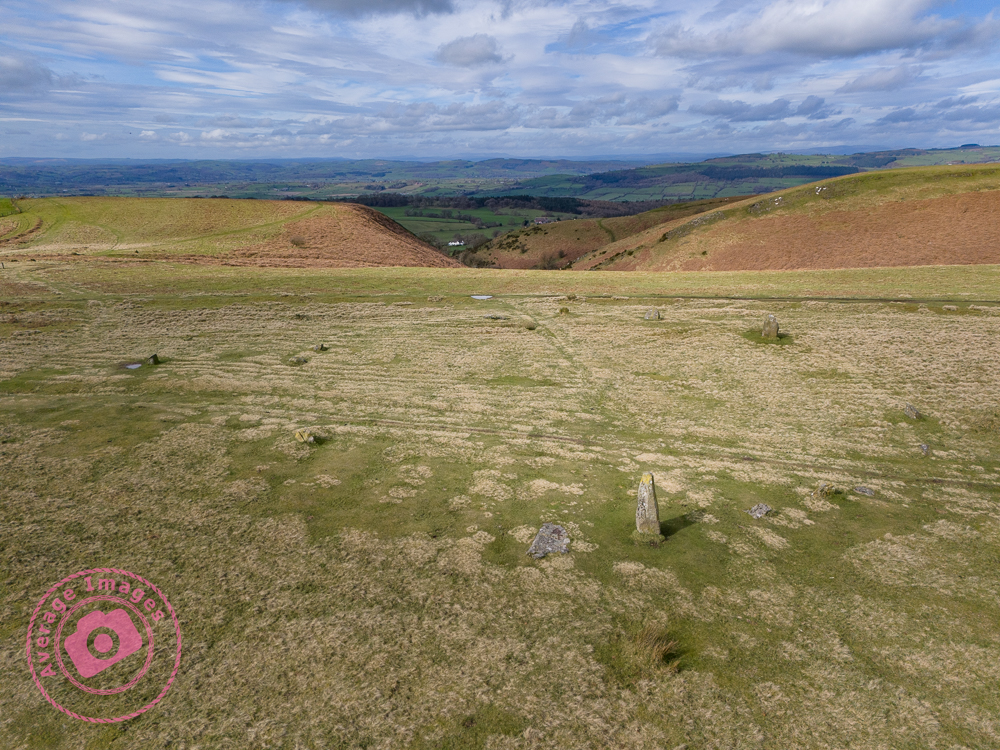
Today is Mrs H’s birthday and so we celebrated by taking the dogs for a walk in the Spring sunshine. We opted to visit the the Mitchell’s Fold stone circle at Stapeley Hill, just over the Welsh border, close to Montgomery. It was a good trek across the moorland, very muddy in places (following the long, wet, Winter) and quite breezy at the top of the hill, but otherwise very pleasant in the warm sunlight.
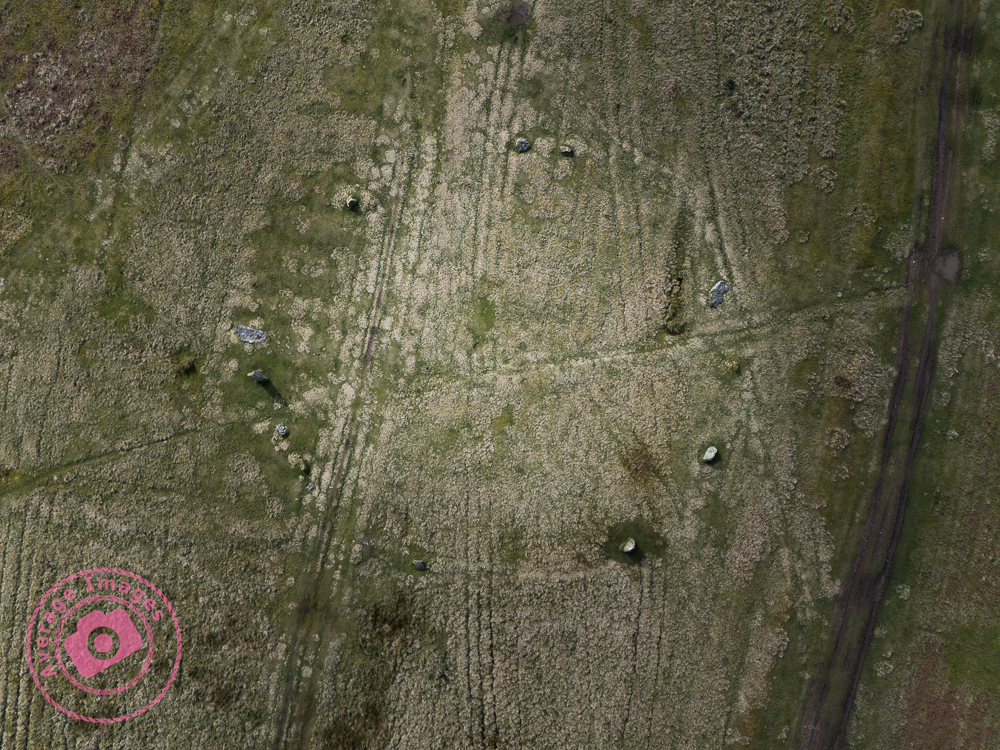
The stone circle was built in the Bronze Age, about 3,000 years ago. There are fifteen stones (although it is thought that originally there were thirty) but it is unknown exactly why they were built – some think it was for religious reasons, others that it acted as a form of calendar. As stone circles go, the stones themselves are not very big – the largest is about 2 metres high, although the circle itself is 26 metres (about 85 feet) in diameter.
Overhead shot of the stone circle
After a good few hours walking, and a diversion due to an excessively muddy track, we headed home for impromptu washing of our boots – and the car!
The river Severn obviously causes a bit of a disruption to free travel, and so crossing it is of interest to many. These crossing points generally choose themselves; points in the river with a flat riverbed, leading to a calmer current of water where ferries can be positioned, and/or those that are narrower, which suit a bridge.
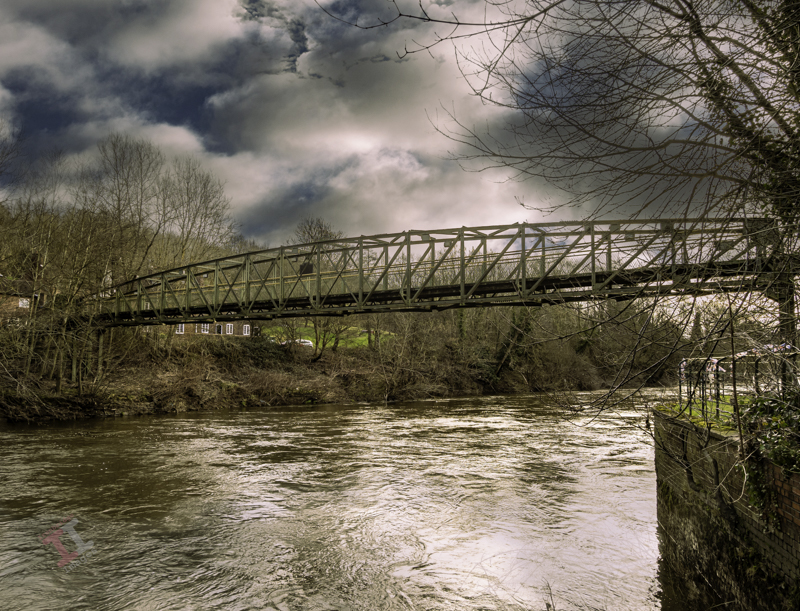
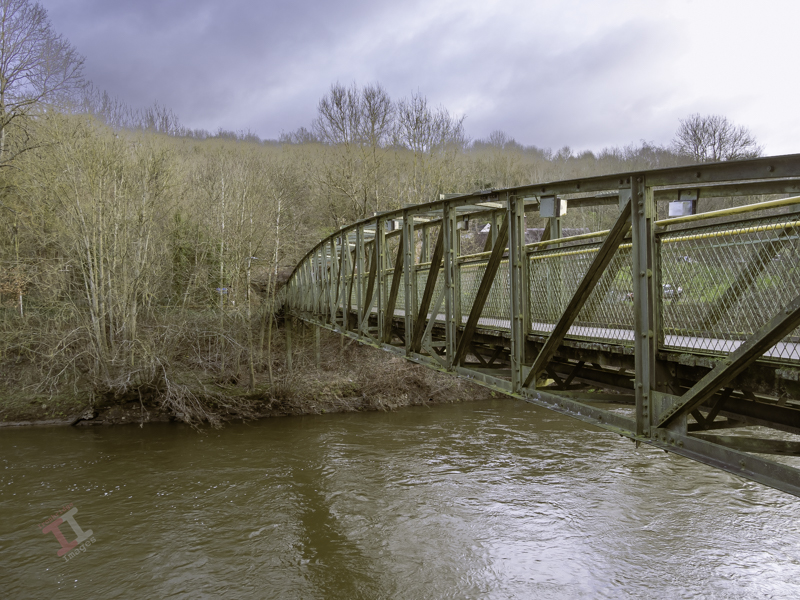
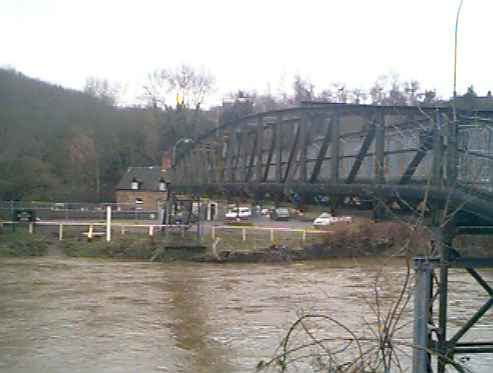
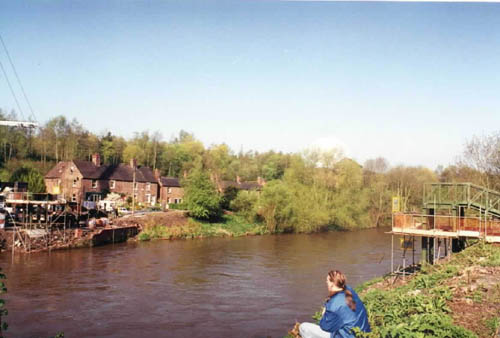
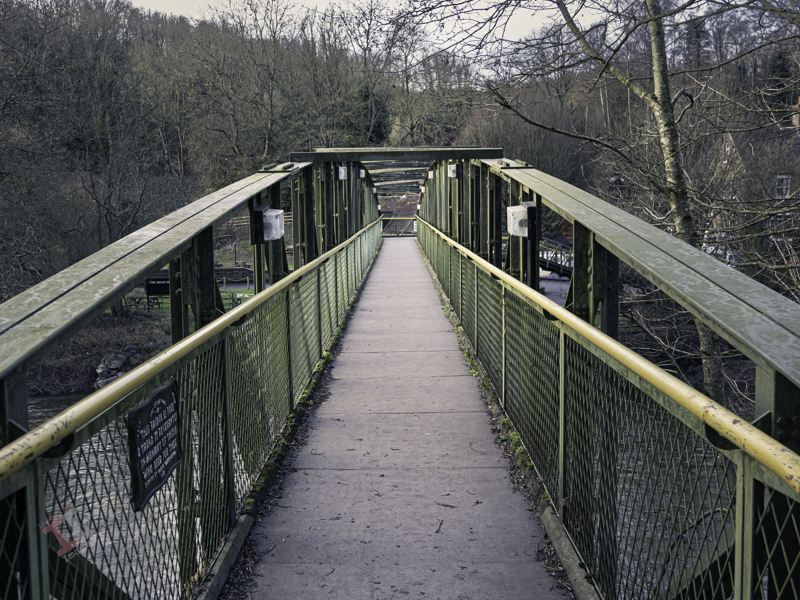
The memorial footbridge at Jackfield
One such area is at a point between Jackfield and Coalport, immediately adjacent to the Hay incline plane. Initially, a ferry provided transport for people crossing from one side to the other, which was useful with industries expanding in the area, particularly John Rose & Company, who had closed their china works in Caughley and Broseley and relocated to Coalport – but leaving the workers now having to cross the river to attend their place of work.
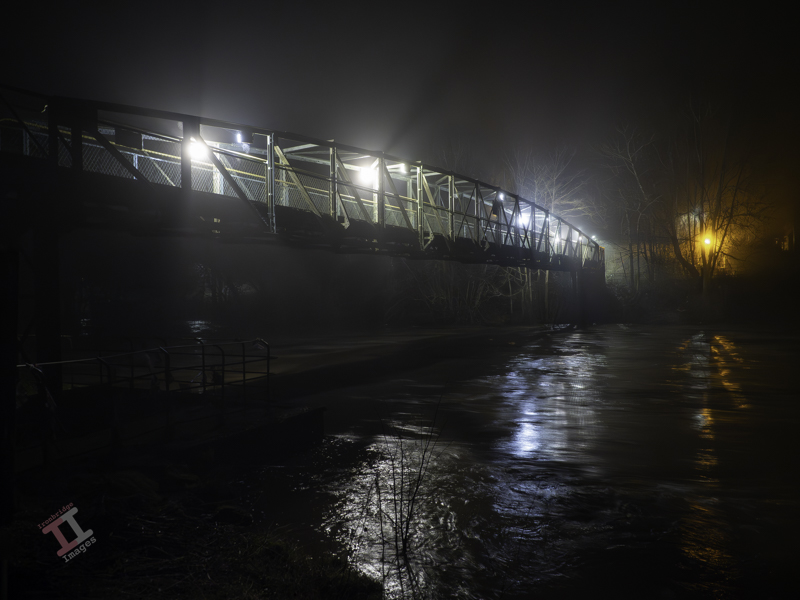
These ferries were usually run by owner/operators with little regulation and so accidents were quite common. On a foggy evening of 23rd October 1799, the ferry set off from Coalport towards Jackfield in the dark. Halfway across the river it capsized and, of the 43 people on board, 28 died, including women and children who had just finished their shift in the china works. There are several theories about what happened on that day to cause the ferry to sink, but the true reason remains unknown.
The river can be an unforgiving place – particularly at night.
Despite this tragedy, the ferry continued to operate in the same area and, 100 years later, claimed another life when the ferryman, John Harrison, fell overboard in a swollen January river, and was swept to his doom. He was 72 years old and still happy to work, but had slipped whilst lighting a lantern after a long day on the ferry.
Sir, The letter that appeared in your last weeks issue re the dangerous ferry at Coalport only serves to show the great necessity there is for a footbridge across the Severn at some convenient point. Unfortunately, it is not the landings that are dangerous, but the ferry-boats themselves, especially in flood time and it is fortunate that there are not more accidents than there are.
R.F. Ayre, Mayor of Wenlock. 9th February 1907
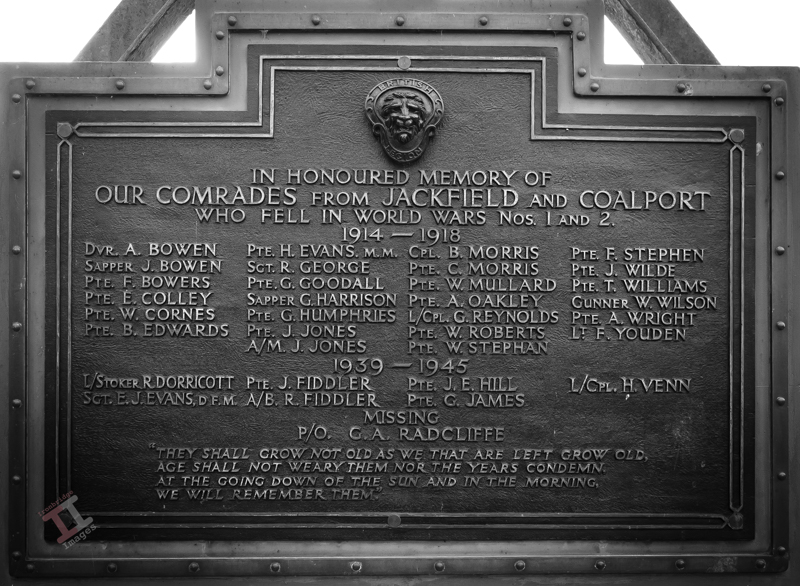
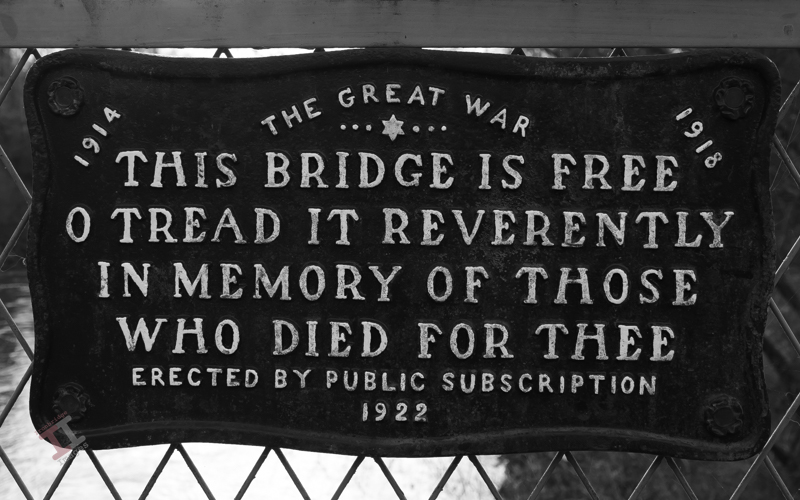
It is perhaps due to this latter tragedy that thoughts of a footbridge were mooted and, in 1922, one was built from public subscription to commemorate the 26 servicemen from the villages of Jackfield and Coalport who lost their lives in the Great War (the First World War).
The bridge was known locally as the ‘shaky bridge’, for the obvious reason that you could feel it physically ‘bouncing’ if you walked across it with heavy feet. The bridge had a ramp at the Coalport side and a steep set of steps on the Jackfield side.
The original bridge – photograph taken by me in 1999
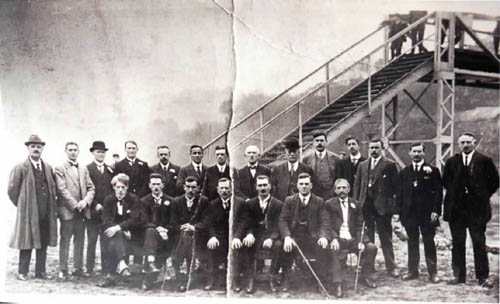
I was loaned this photograph taken of the committee shortly after the bridge was built.
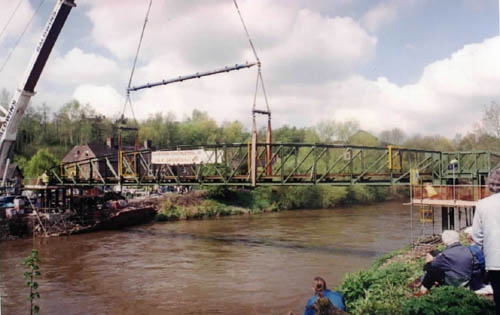
Eventually it got to a point that it was judged dangerous and so, in year 2000, it was replaced.
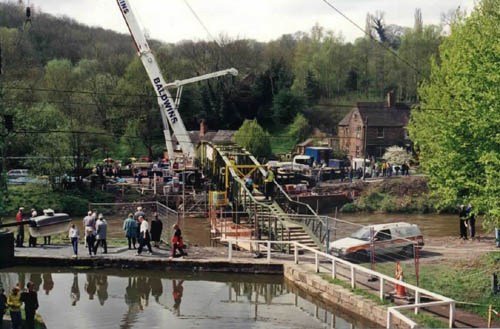
The replacement bridge was swung into position on Friday 28th April 2000 – and I was there to capture these shots. It was formally opened on 15th July by Lord & Lady Forester.
The replacement bridge is a tasteful improvement of the original, with gentler steps on either side, although it still bounces a bit when those of a larger disposition walk across it.
The ferry and bridge may have benefited workers at the Coalport china works in the early days, but in 1883, a large employer opened up on the Jackfield side, and so workers were now crossing in the opposite direction as well. More of that in the next Secret Ironbridge blog post.
In 1898 the local newspaper carried a report of a nasty accident that occurred to a young girl on a bicycle in Jackfield:
On Saturday Miss Milly Pritchard of Ellsmere met with a serious accident. It appears that Miss Pritchard (who was on a visit at Mrs Doughty’s, Tuckies House) went for a bicycle ride with Miss Doughty, proceeding from the Tuckies House down the road leading from the Dingle to the Severn. From some cause or another Miss Pritchard lost control of the machine, which travelled at great speed, passing under the railway arch, and then swerved around and with great force came in contact with Mr Charles Perks’s garden wall. The unfortunate rider sustained a compound fracture of the jaw, also a compound fracture of the left knee, and the machine was smashed. Mr and Mrs Perks carried Miss Pritchard into their house and placed her upon the sofa, after which Miss Thompson (district nurse) and Mr George Bunnager (member of St. John Ambulance Association) rendered first aid. Dr. Collins of Broseley was sent for, and under his care Miss Pritchard is progressing as favourably as can be expected.
Wellington Journal, 30th April 1898
It doesn’t say how old the girl was, or what the after-effects of the accident were – although with compound fractures of both the jaw and the knee it can be assumed that it was a lengthy recovery. This was 50 years before the founding of the National Health Service in the UK which perhaps explains why the poor girl wasn’t taken to a hospital – because they were only available to the wealthy.
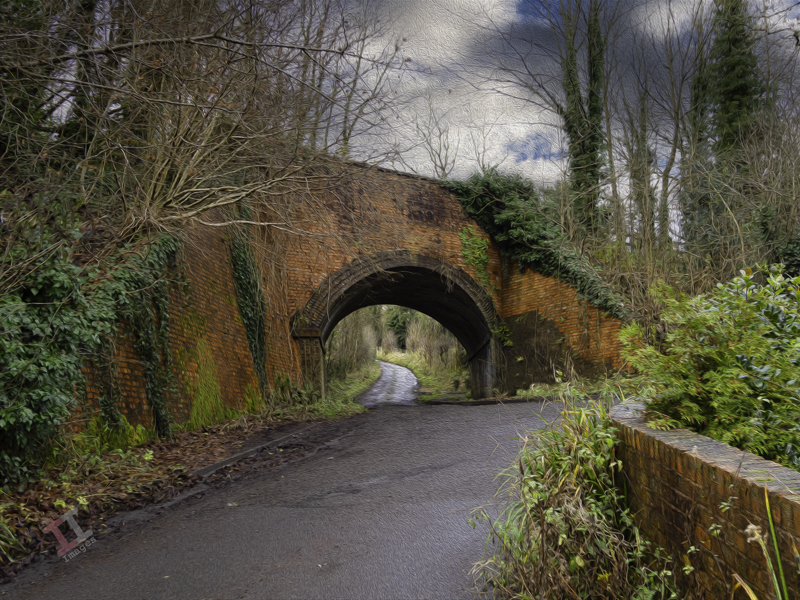
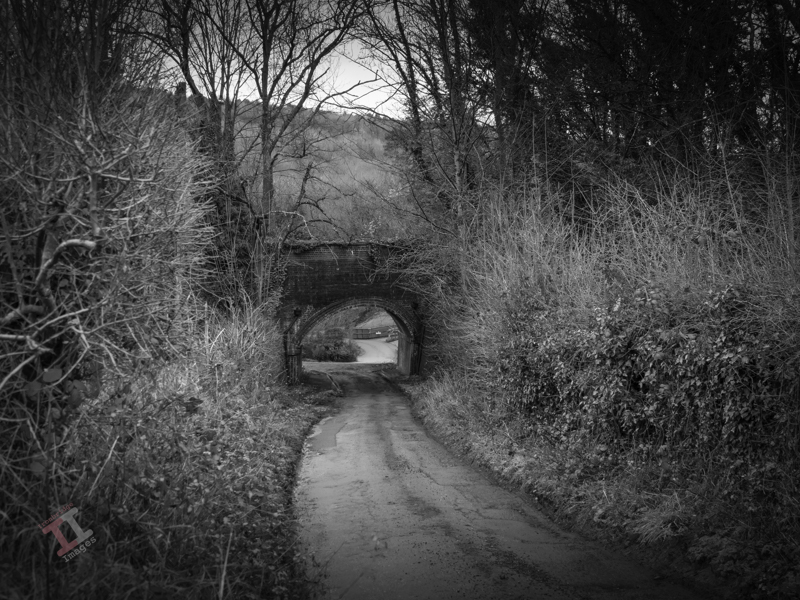
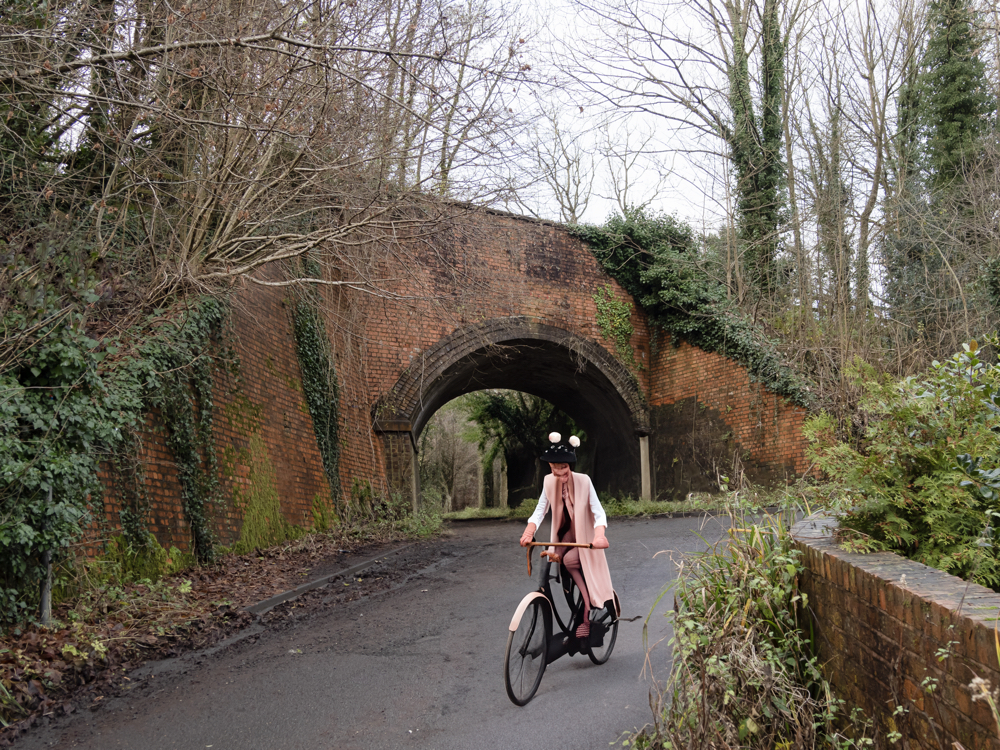
Here is the view that Milly must have seen as she careered down the lane, under the railway bridge carrying the Great Western Railway, and onwards into the wall beyond:
In reality the scene is littered with street furniture: height restriction signs, a salt bin, various random signposts and some plastic bollards leaning at odd angles. I removed them all in post-processing to recreate the picture as it would have looked at the time.
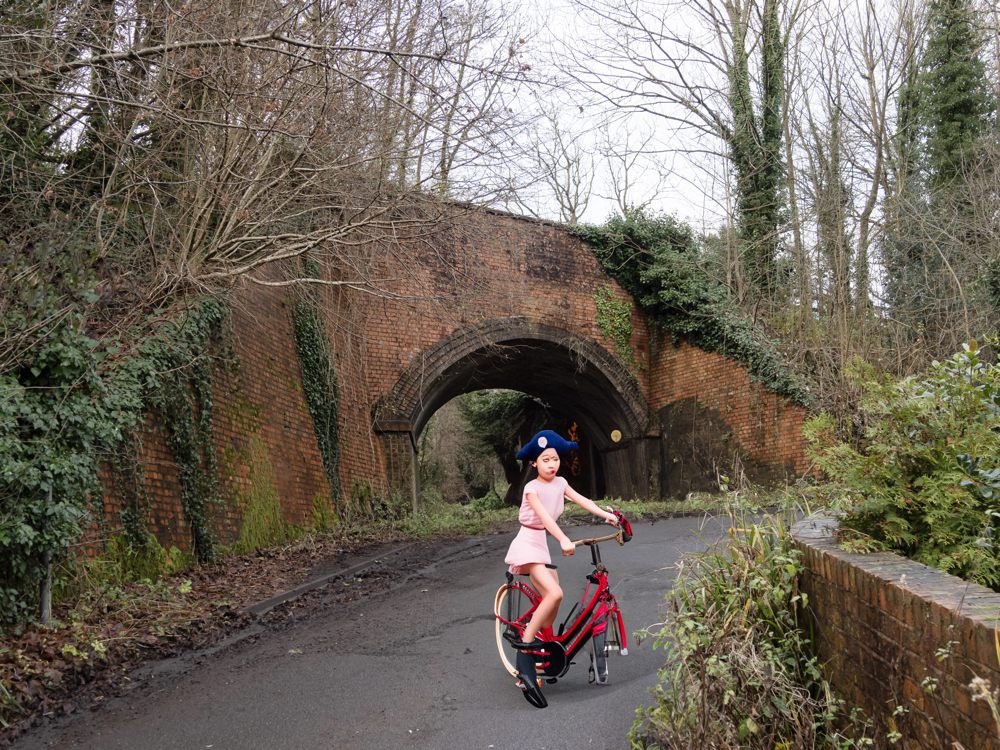
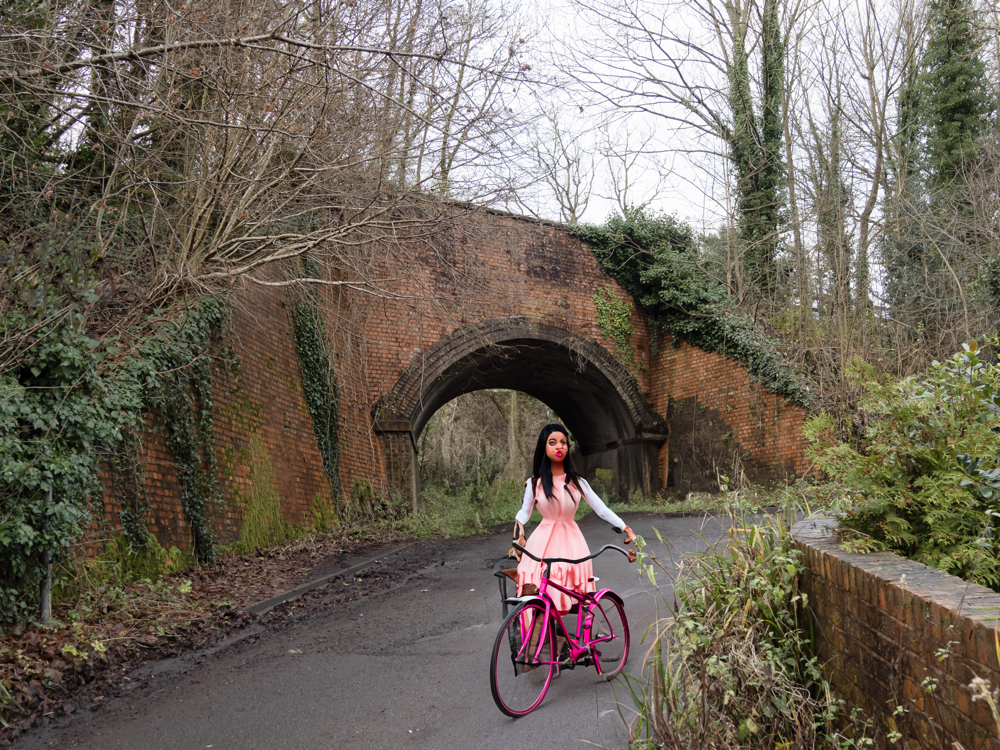
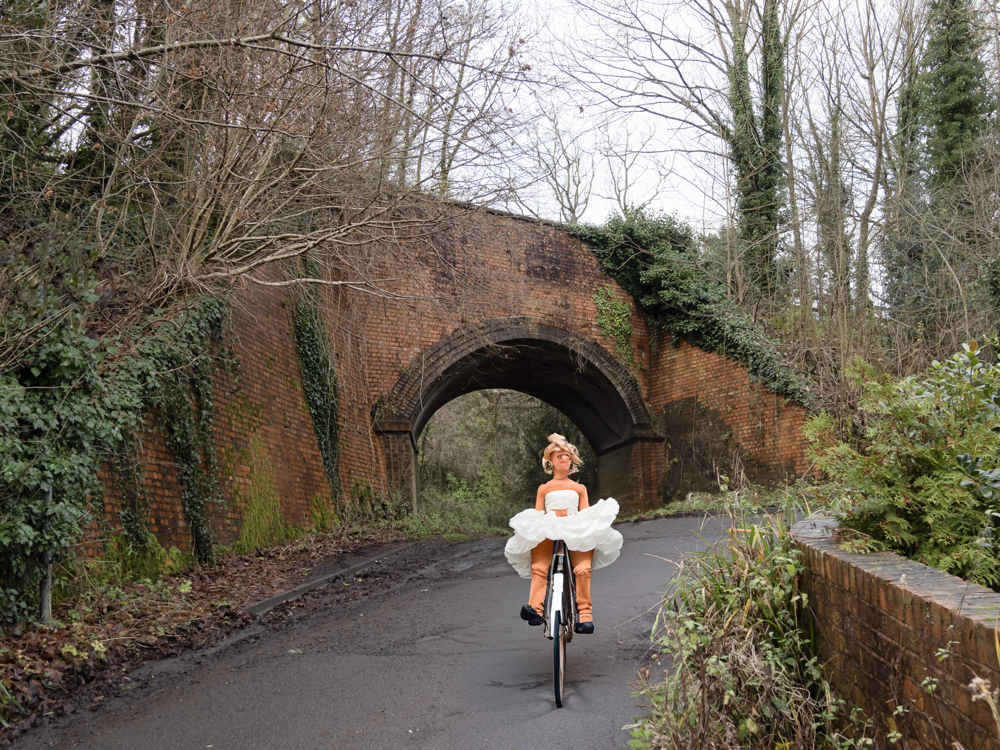
I had an idea to add “a Victorian girl on a bicycle” to one of the images using the ‘Generative Fill’ function of Photoshop, which uses Artificial Intelligence (AI) in order to create elements within an existing image. Here are the suggestions it gave me:
I don’t remember asking for her to be a pirate. And where’s the front wheel?
Nice lips. In fact, I’m pretty sure I’ve seen her in Telford Town Centre!
Miss Piggy in a tutu.
Return of the swamp monster.
Those of you who think that photography is dead because of artificial intelligence, clearly don’t need to worry just yet!
Milly may have survived the accident, but there was worst to come. Just 16 years later, the Great War (World War One) broke out which, as we know, was a brutal period in our history. Many died, including those from this small community, and a unique memorial was created in their honour. More of this in the next Secret Ironbridge blog post.
Some claim it to have been a village, others that it was just a suburb of the village of Jackfield, but either way The Werps now ceases to exist.
The Werps lay on the southern side of the River Severn, immediately opposite the Coalport china works.
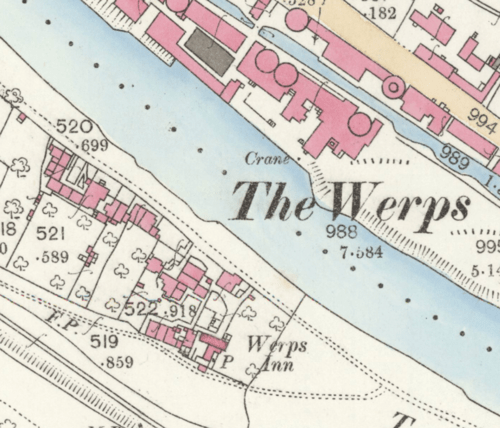
A map from 1883 show at least 22 separate dwellings, some quite large with substantial gardens. A later 1925 map shows that it was largely unchanged, albeit by that time the Werps Inn had changed its name to the General Gordon.
It is variously reported that two tragedies occurred here, 34 years apart:
On Friday night a sad accident, terminating fatally, happened to one of the twin sons of Mr George Stephan, at the Werps. The children were put to bed by the servant, a small fire having been previously lighted in the room. Shortly afterwards a scream was heard and the father rushed to the apartment. One of the children, Eustace, was in flames. These were quickly extinguished by the energetic and agonised parent. The injuries sustained were not sufficient of themselves to account for death, but the shock given to the nervous system was too severe to be resisted, and death followed in consequence.
THE IRONBRIDGE WEEKLY JOURNAL 31st December 1870
On Thursday an inquest was held by Mr Coroner Potts on the body of a little girl named Stephan, the daughter of Mr G. Stephan, landlord of the General Gordon Inn, who had died form the effects of burns. On Monday morning, during the momentary absence of the mother, the child’s clothing caught fire, and although medical aid was obtained, she died from the effects of the burns and shock. The verdict of the Jury was one of “Accidental death”.
The Wellington Journal 1904
Note: Further checking shows that the little girls name was Beatrice Stephanand her father was the twin of Eustace, who died in similar circumstances 30 years prior.
After reading the Journals from the early 20th century, it does seem that child fatality rates for burns was quite high, probably due to the use of open fires and candles. However, for two related children to die in the same manner 30 years apart is very, very sad.
The buildings at The Werps still show on a map from 1957, although it is not clear if they were still inhabited at that time.
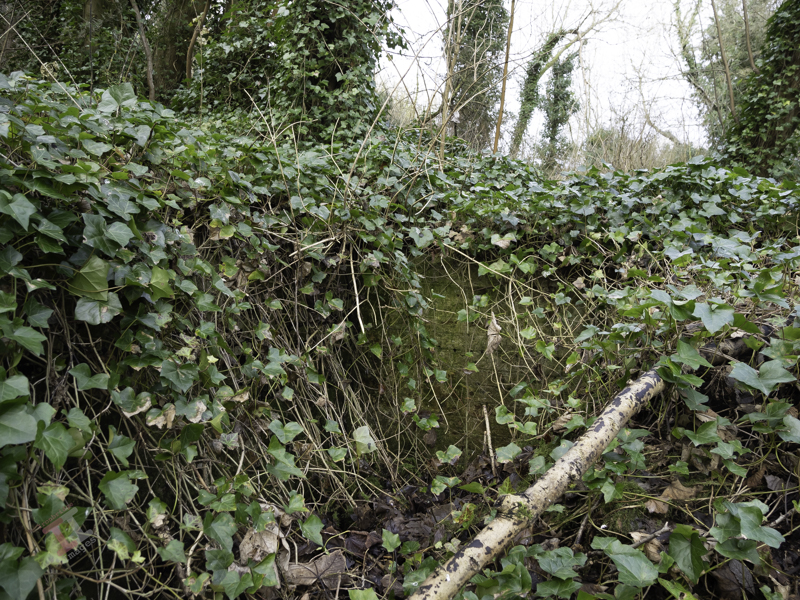
I spent some time looking through the undergrowth and trees to see if I could identify any remains of the Werps, but all I could find was one small corner of brickwork. It seems that some concerted effort was made to raze the community to the ground.
The riverside path that runs in front of the Werps has a post blocking vehicles that, for some unknown reason, is in the form of a missile. It is an ironic marker post for a village that has been wiped from the face of the Earth.
The missile is also ironic in that it is very close to a unique war memorial, which we will visit in a later Secret Ironbridge blog post, after we visit the scene of a nasty accident.
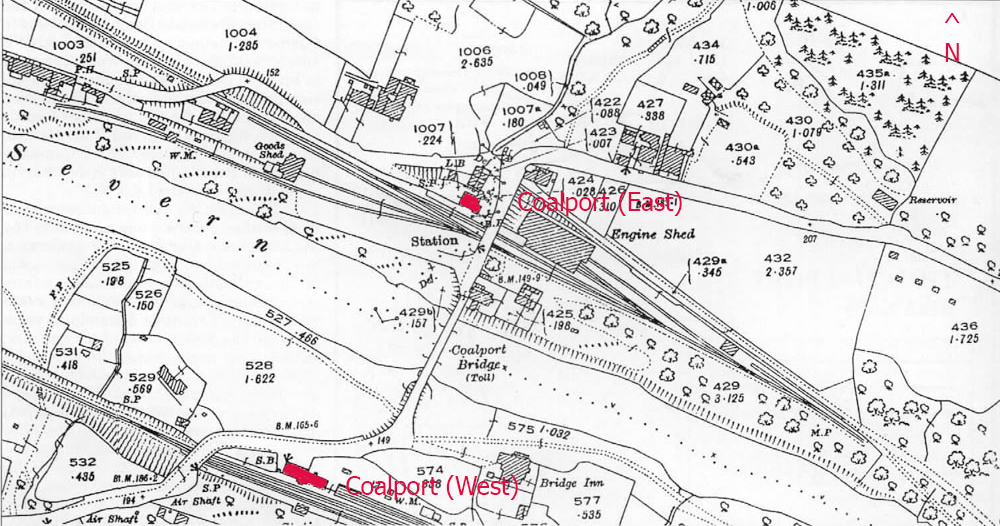
Considering that Coalport is only a small village, you may find it surprising that it had two railway stations.
I have already mentioned Coalport (East) in my post Secret Ironbridge: London & North Western Railway – but directly on the opposite side of the river (in the Coalport hamlet of Preens Eddy) was another station – Coalport (West) – which served the Great Western Railway (GWR) that ran from Kidderminster & Bridgnorth, and onwards to Ironbridge & Shrewsbury.
“Confused? – you will be“. If you look at the map (above)from 1925 you will see that Coalport (East) is only slightly in a more easterly direction than its counterpart. If I had been in charge of station names I would have been tempted to call them Coalport (North) and Coalport (South) – not least to eliminate the confusion that the line from Coalport (East) only takes you West! Maybe there is a station-naming protocol that I am unaware of. If so, please let me know.
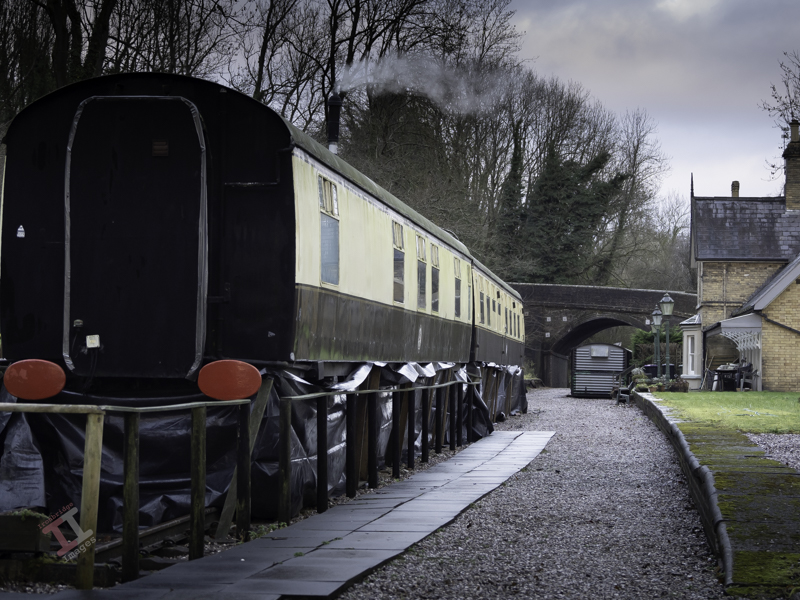
The old GWR railway track has long been removed, although the original course of the line can be clearly seen, and most of it is now a footpath called the Severn Valley Way. The station, however, still stands and has been tastefully converted into a house. In addition, two Mark1 railway carriages stand on tracks near the platform and are let out as self-catering holiday accommodation.
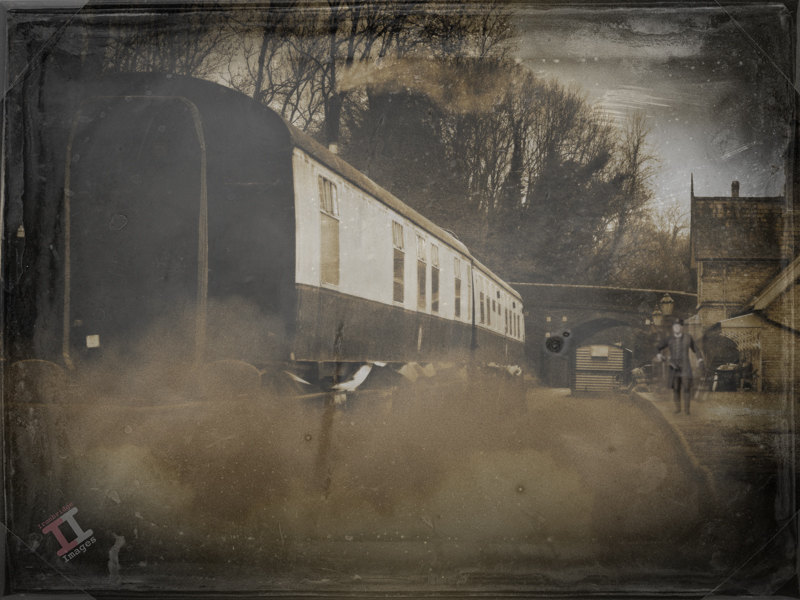
Coalport (West) station in its heyday, circa 1900.
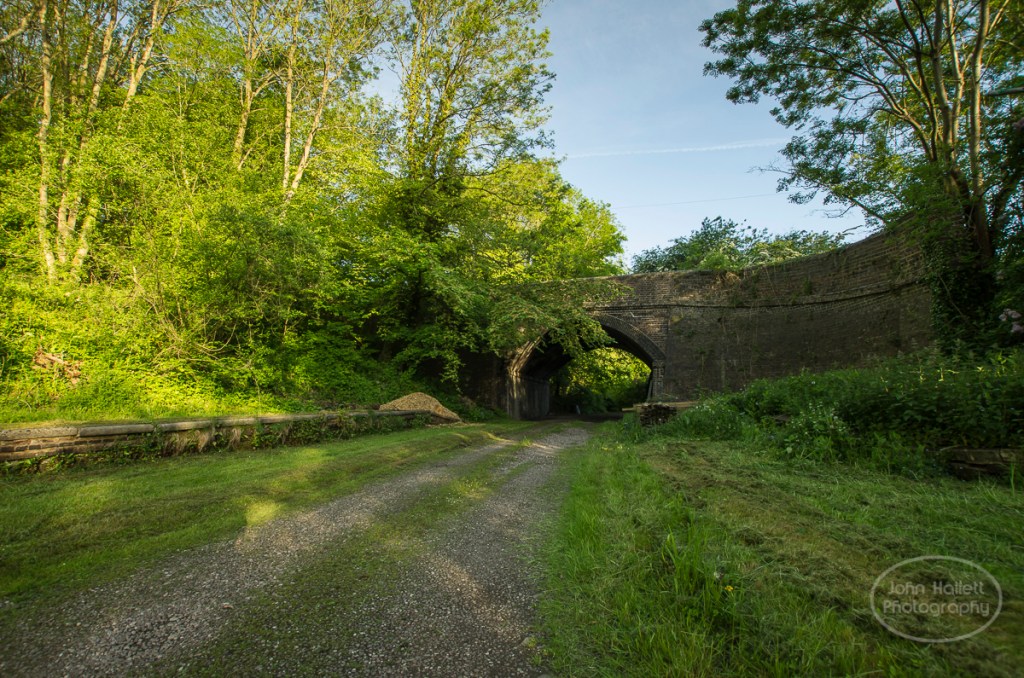
Just west of the station is Sweyney bridge, which carries the road from the Coalport to Broseley, and is still an important route to the river crossing mentioned in Secret Ironbridge: Another bridge of iron.
Back in 2003, I conducted a small project called “Bridges of the Ironbridge Gorge”, when I photographed all 25 of them, ranging from the iconic Iron Bridge over the river Severn to a much smaller footbridge that crosses the Shropshire canal. The (then) owners of Coalport (West) Station kindly allowed me onto their land to capture the shot below to help complete the project:
Sweyney Bridge in 2003. Note the complex curvature of the abutment to allow the road to sweep over it.
And now – an admission. The ‘old’ photograph above is not “Coalport (West) station in its heyday”, it is actually a photograph I took a couple of weeks ago (from public land) and manipulated in Photoshop for a bit of fun.The lack of any railway tracks and the AI station master may be a bit of a clue.
We’ll be seeing more of the GWR line as we follow it up the Ironbridge Gorge to uncover some more Secret Ironbridge, including a lost village and the site of a nasty accident.
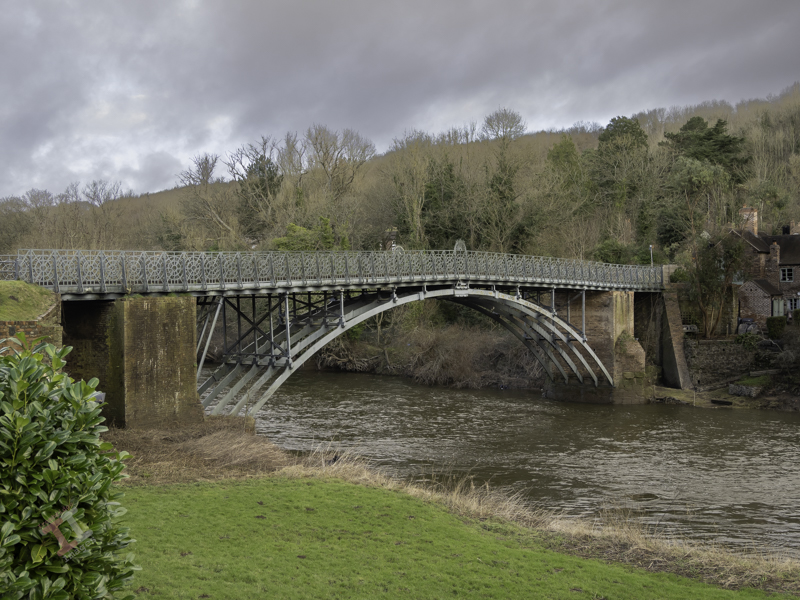
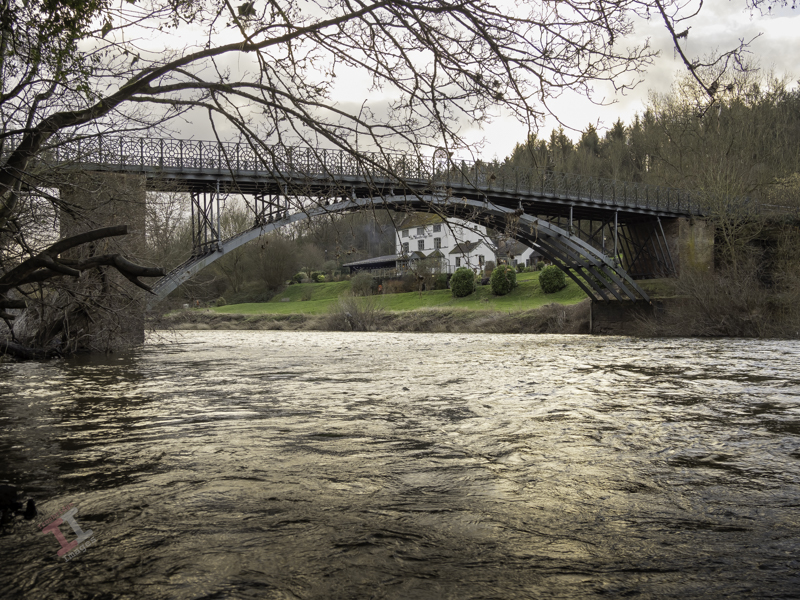
There has been a bridge over the river Severn at the eastern end of Coalport for many, many years. The original bridge was made of wood and was erected in 1780 and hence explains the name of the Woodbridge Inn adjacent to it (although it was originally called the “Bridge Inn’ until the late 1920’s).
At that time the bridge was more commonly known as Preens Eddy bridge (Preens Eddy being the name of this hamlet of Coalport) and was erected by Robert Palmer, a Madeley timber merchant. This original bridge had two spans with a central stone pillar.
In 1795 the bridge was severely damaged by floods (which were so high that the river washed over into the canal at the transhipment interchange) and, during its restoration, the central stone pillar was removed and the existing wooden superstructure was then supported by three arches of cast iron which spanned the full width of the river. There is no record of where these arches were cast.
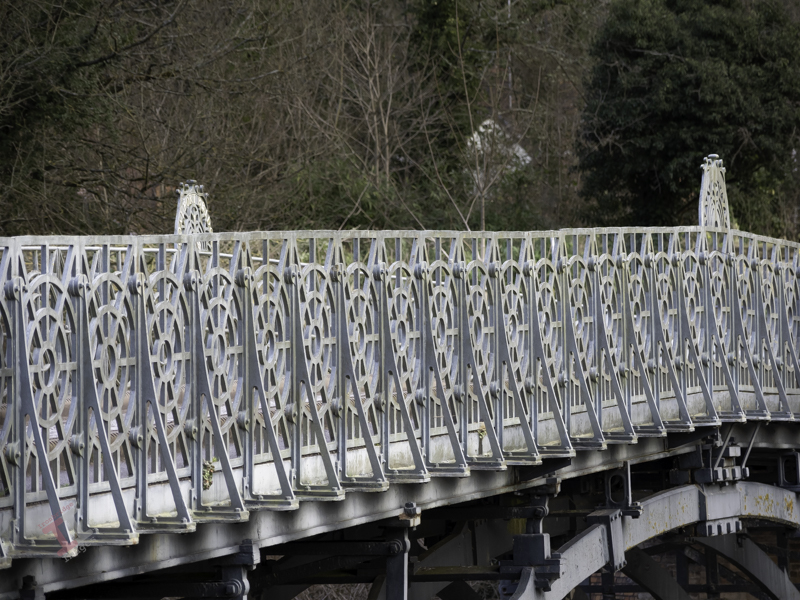
In 1817, one of the arches of the bridge cracked in two places and the following year it was replaced, two more arches were added, and the wooden deck was replaced by iron plates. This was done by the firm of John Onions, whose initials, together with the date 1818, are recorded on the parapet – which belies the fact that the bridge existed some 38 years earlier.
The showpiece bridge at Ironbridge has meant that this cast iron bridge at Coalport is often overlooked. But it shouldn’t; unlike its nemesis, Coalport Bridge still carries vehicular traffic and acts as an important functional river crossing to this day. It is much more conservative with its use of metal, with every piece designed for a function, and so is actually more of a technological marvel than its upstream cousin.
Like many river crossings of time, there was a toll charged to use the bridge. The payment window of the toll house is still clearly visible today.
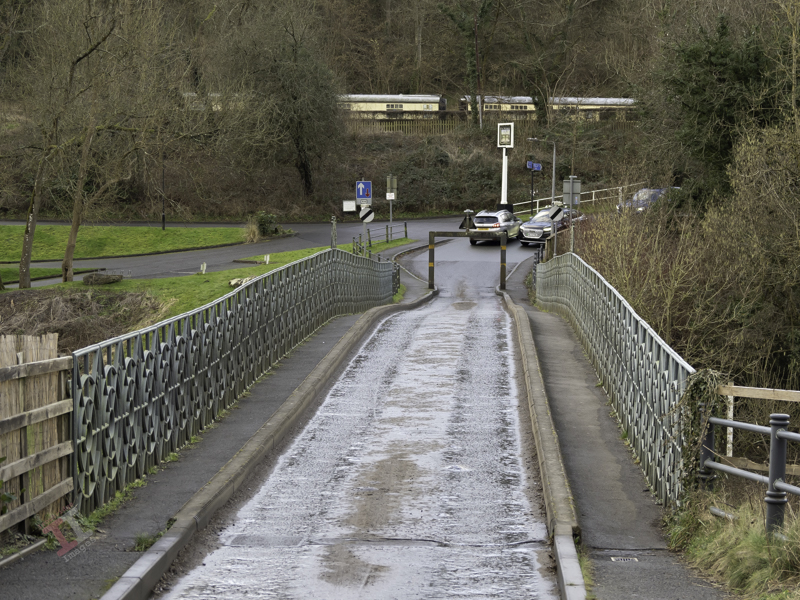
To try and preserve the bridge, it is single-file traffic only, with height restrictors to prevent vans and lorries from overloading it. This often causes some congestion, especially at peak times in the morning and evening.
In the background you can see railway carriages at Coalport (West) station, the subject of the next Secret Ironbridge blog post.
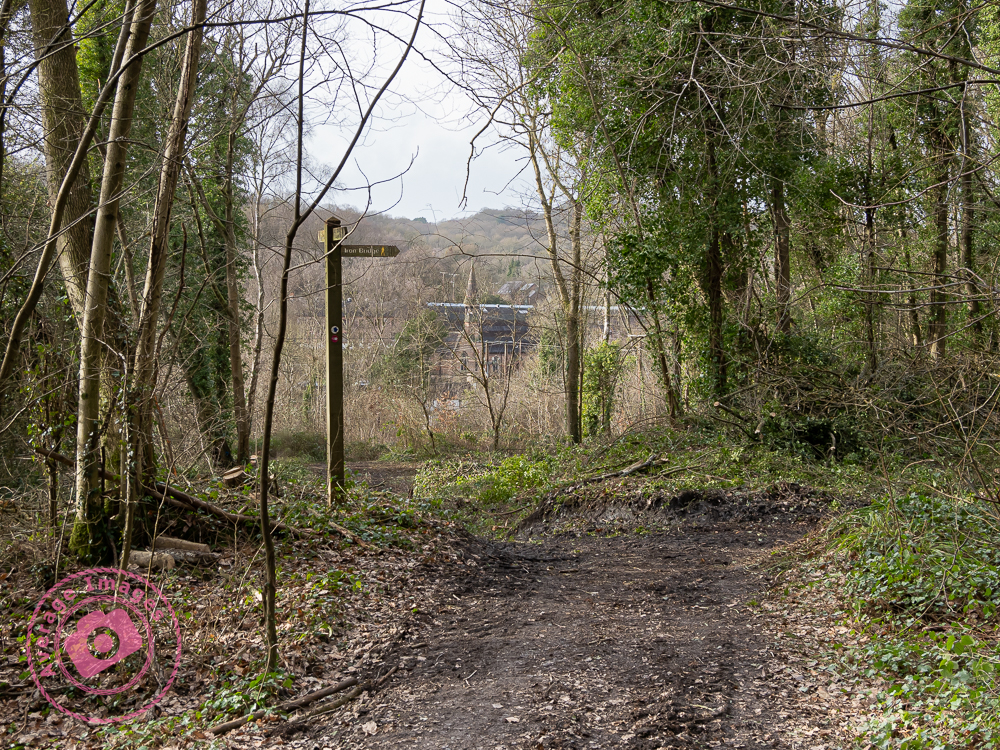
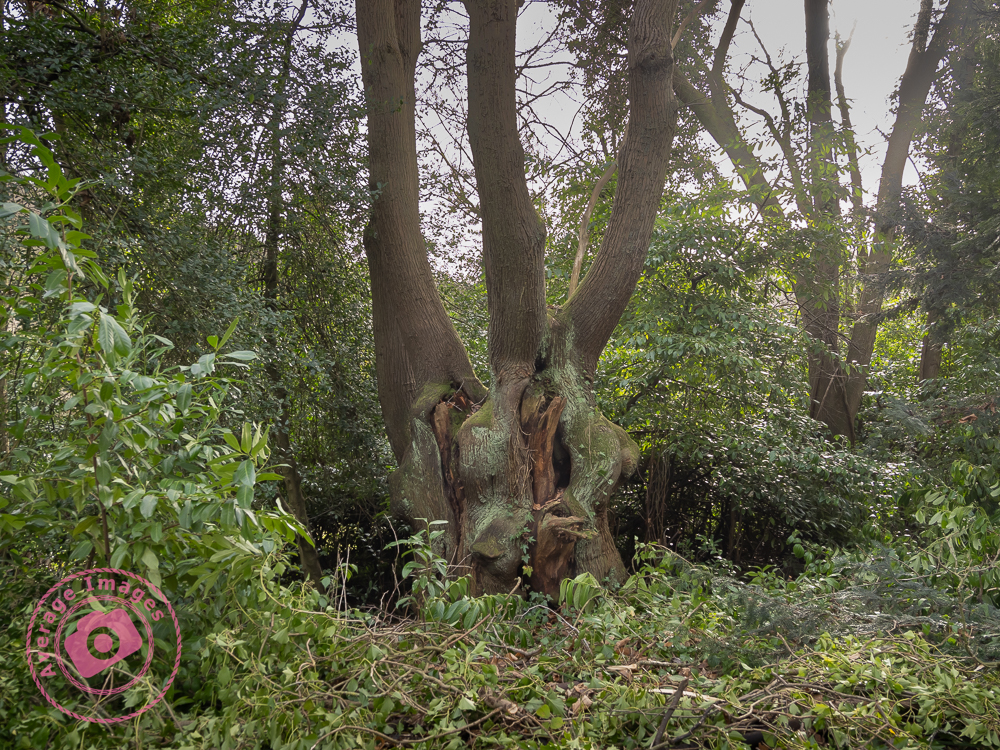
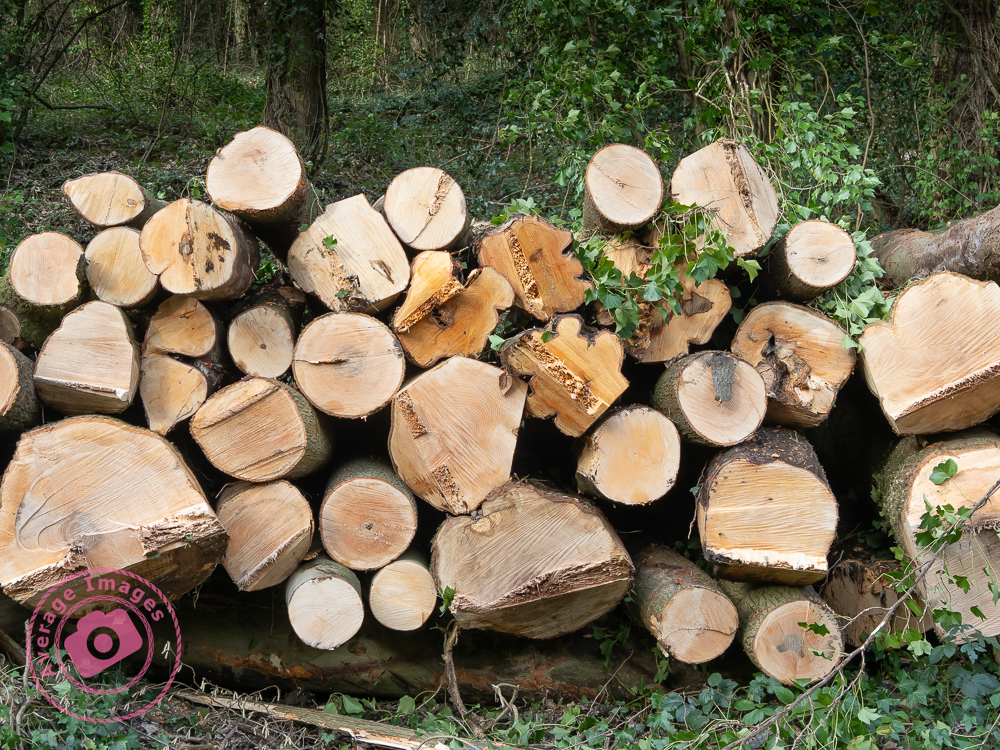
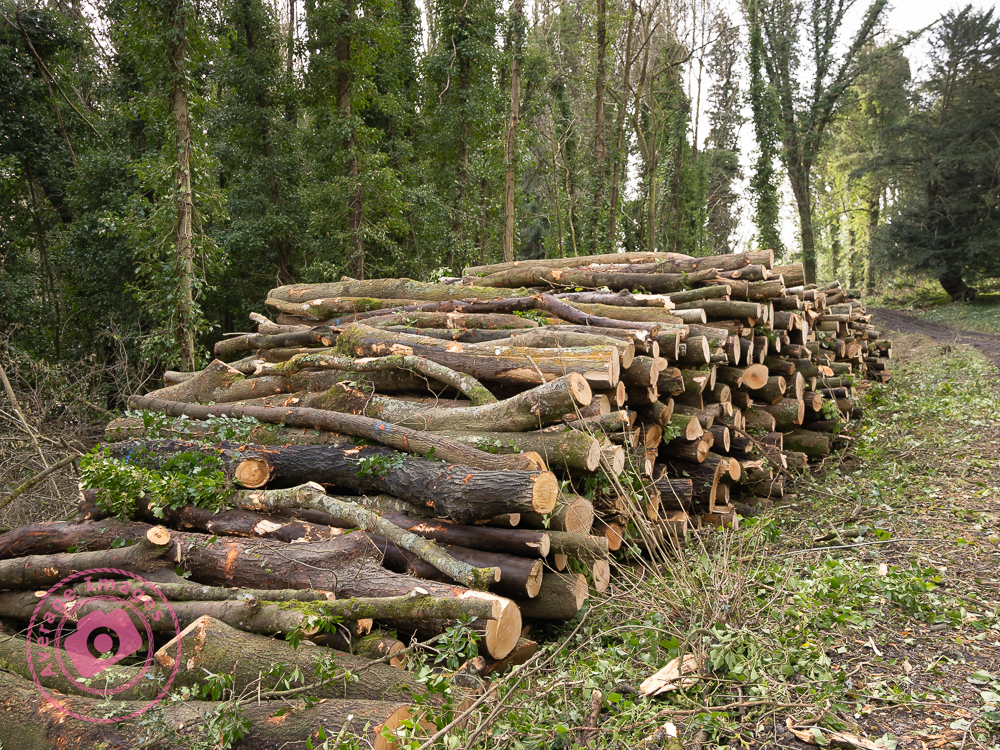
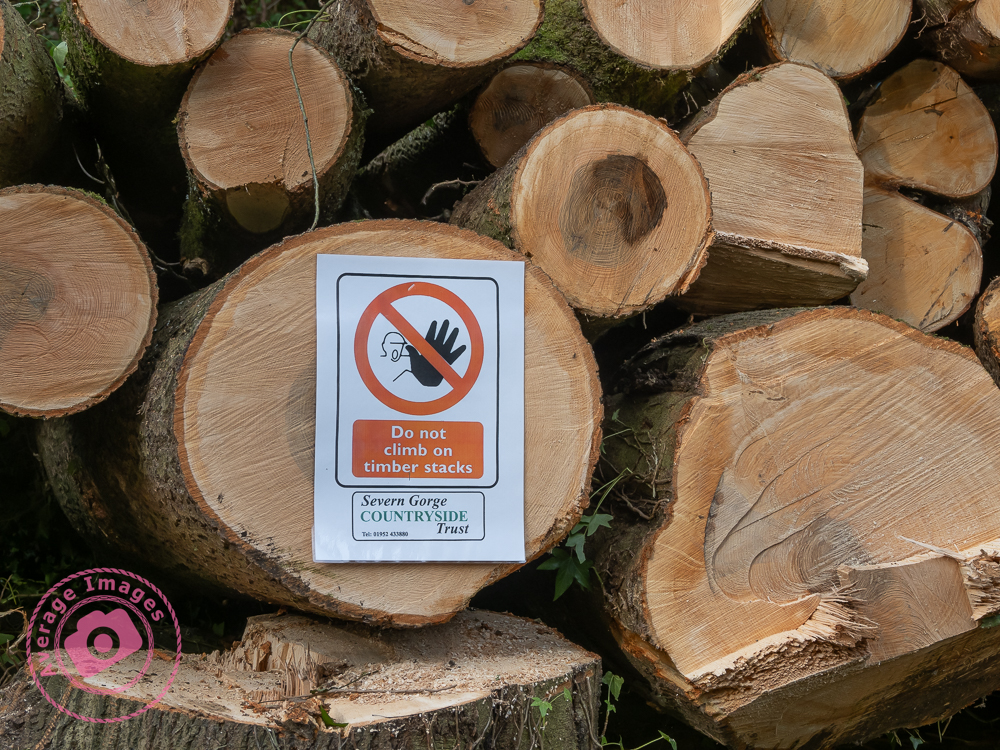
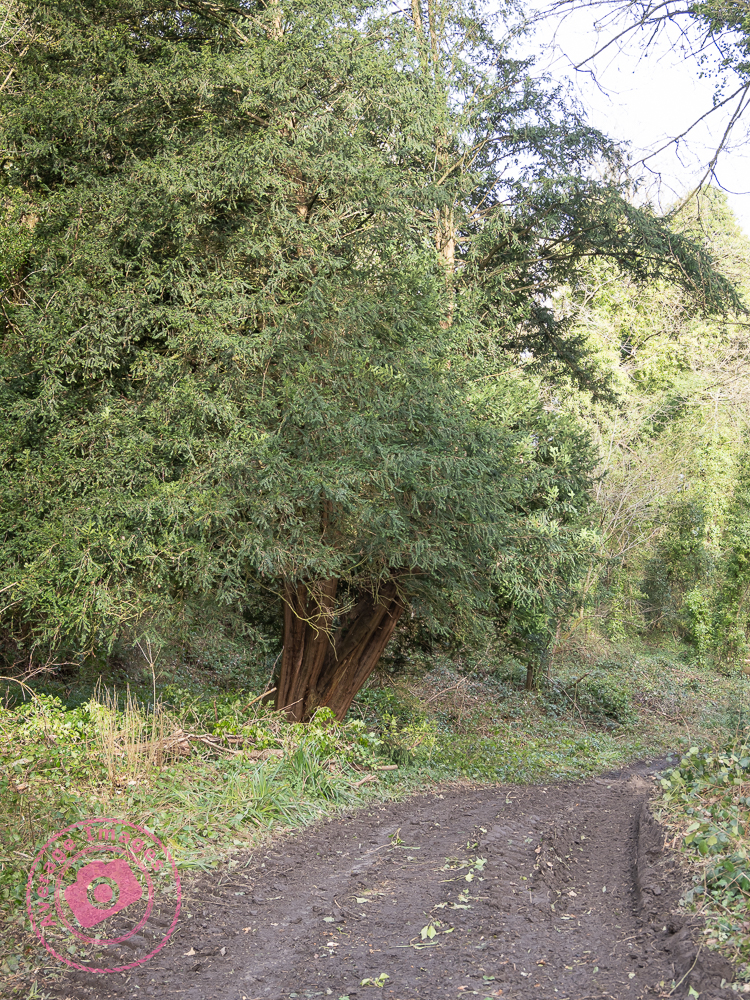
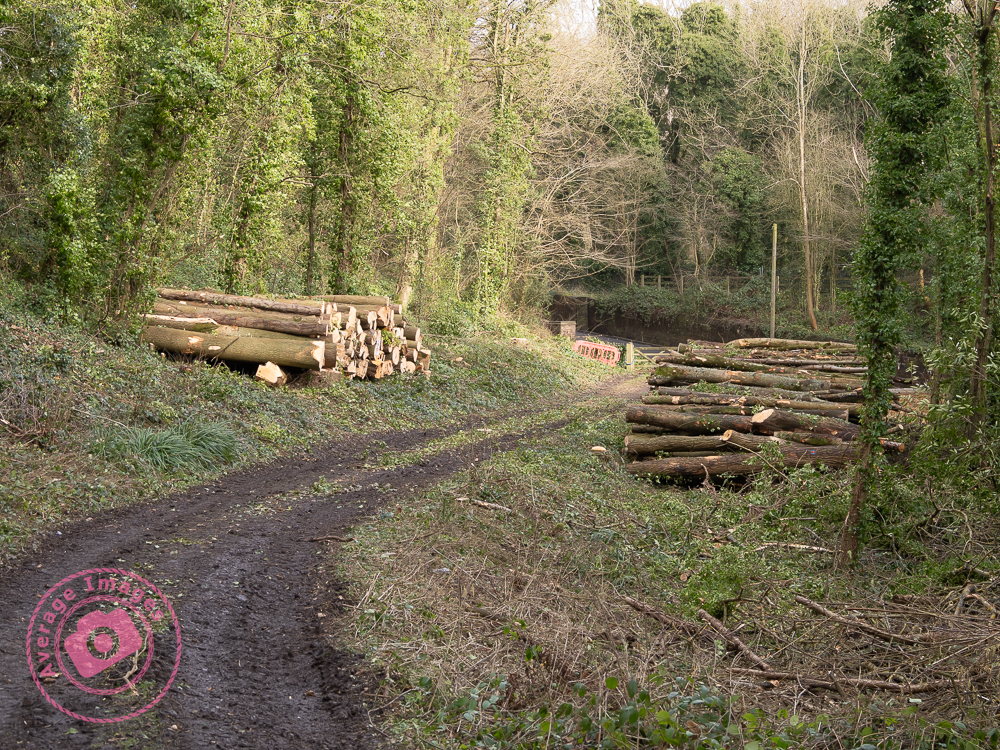
… you are in for a bit of a shock. Or you will be if the particular woods you are going to are located at The Lloyds Coppice near Ironbridge in Shropshire, England – because there is a lot of tree-felling going on. It is being carried out in order to manage the woodland, in particular, felling any ash trees due to the widespread problem of ‘ash dieback’ (also known as Chalara dieback of ash), a disease that has spread across Europe.
Ash dieback is caused by a fungus, Hymenoscyphus fraxineus, which causes lesions where older branches meet the trunk and eventually envelops the tree and kills it. During the infection stage, branches can fall off, causing danger when trees are close to public footpaths, which explains the localised felling of the trees in the woods here. Fortunately, ash trees grow like weeds in the Ironbridge Gorge and so it won’t be long before they are naturally replenished.
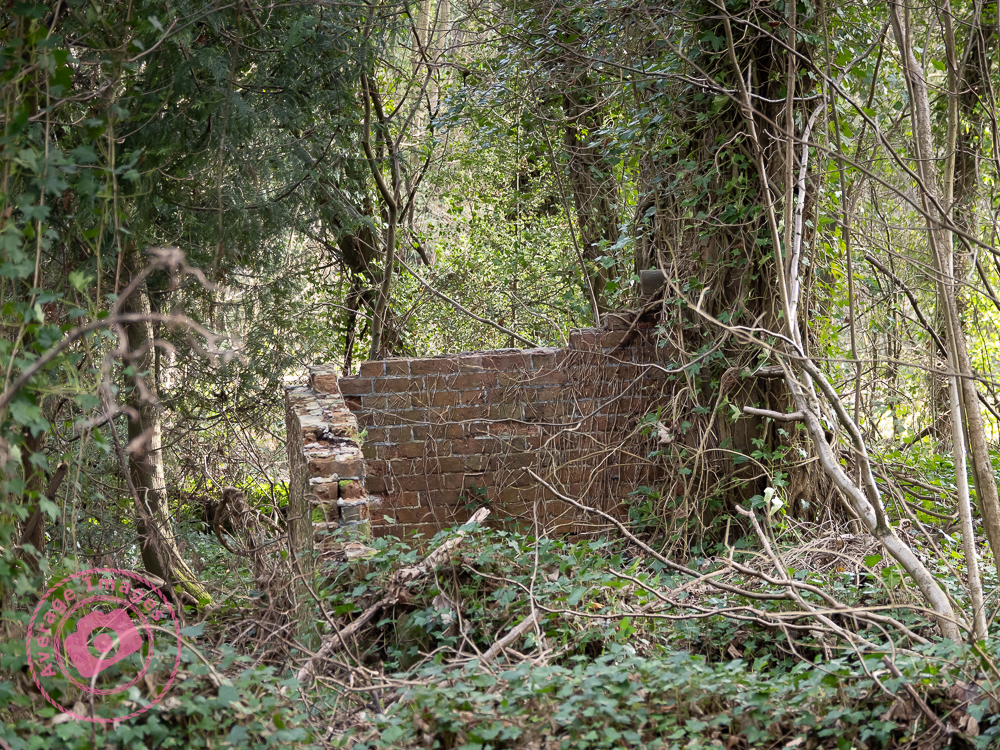
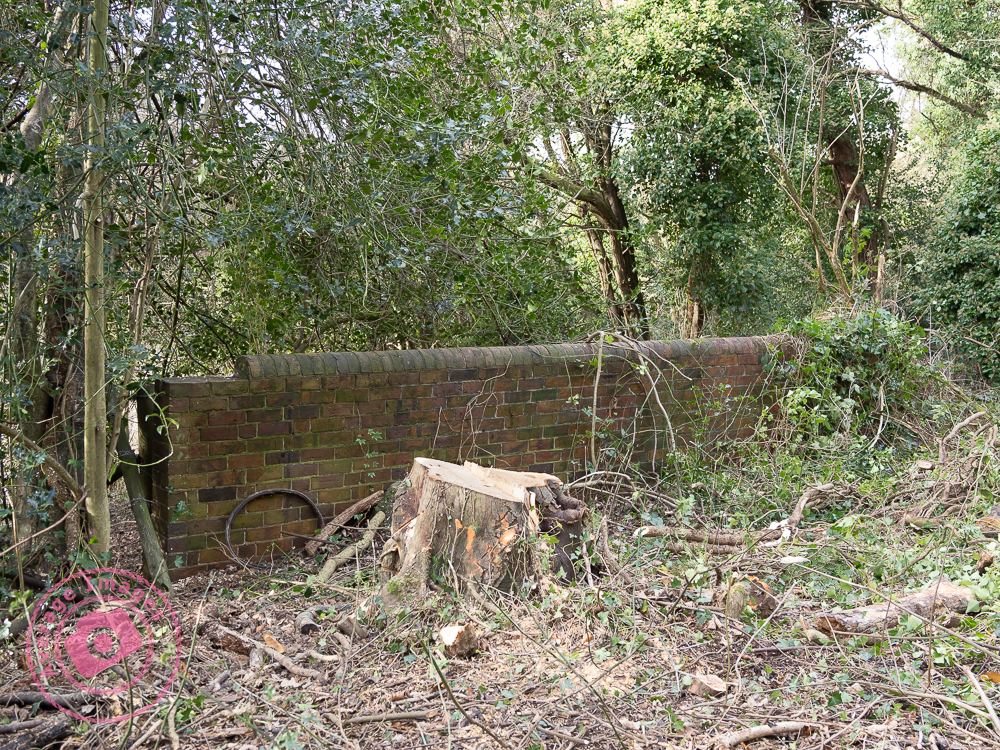
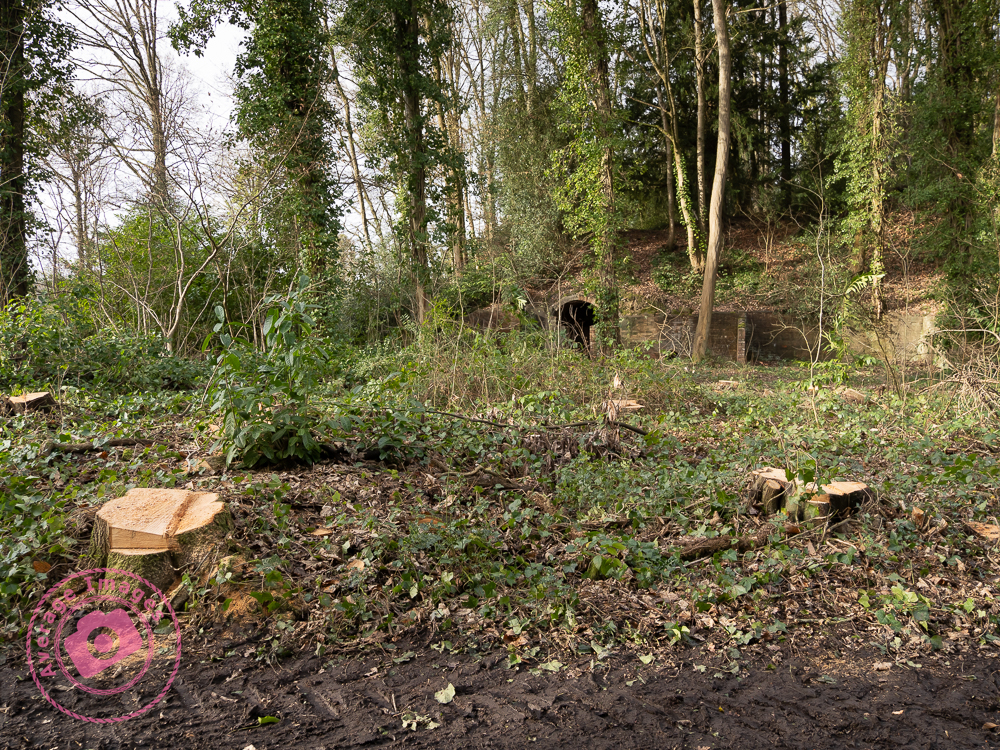
Thinning out the trees has uncovered more evidence of the buildings that surrounded the old Madeley Wood Hall, as mentioned in my post Secret Ironbridge: Ice House. The ice house itself is now more visible from the path:
If you decide to visit the coppice please be mindful of the works going on and that the path is quite muddy, and covered in tree debris. Take care.



















 Ironbridge Images