Landscape and seascape photographs taken within the British Isles. Often centered around the home town of the author; Ironbridge in Shropshire, England.
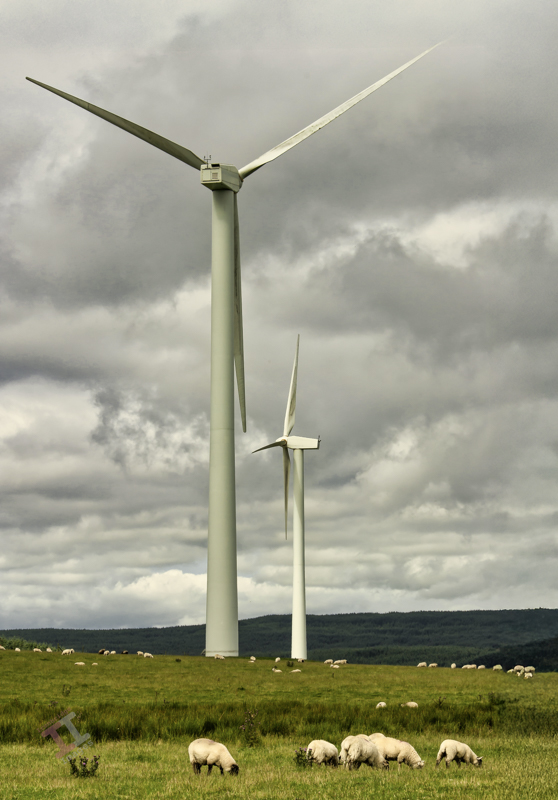
The year was 2010 and I was in North Wales on a short photoshoot break. On the way to a location, we passed these large wind turbines with a flock of sheep grazing below, apparently unaware of the giant structure above. We stopped and I took a number of shots, originally intended as stock photographs, although they never got much further than my hard drive!
It’s not for me to debate whether or not the manufacture and erection of these giant metal structures is more, or less, environmentally friendly than traditional methods of electricity generation, or whether the blot on the landscape is more or less intrusive than rows of electricity pylons strung together with miles of cables. Either way, the sheep seem to have got used to them.
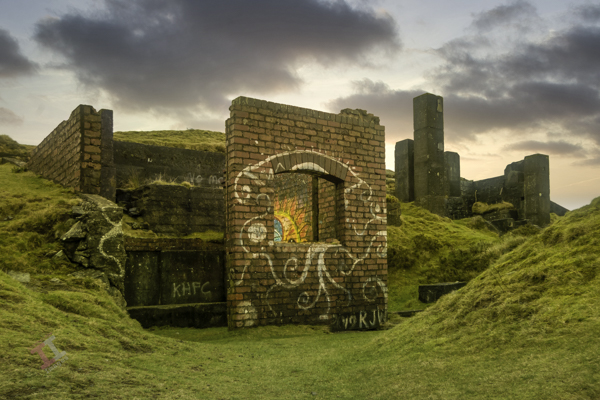
During my Christmas break I have been looking though my archive of photographs and found this shot taken on Titterstone Clee hill, near Ludlow in Shropshire, the urban art providing an interesting contrast with the lush grass.
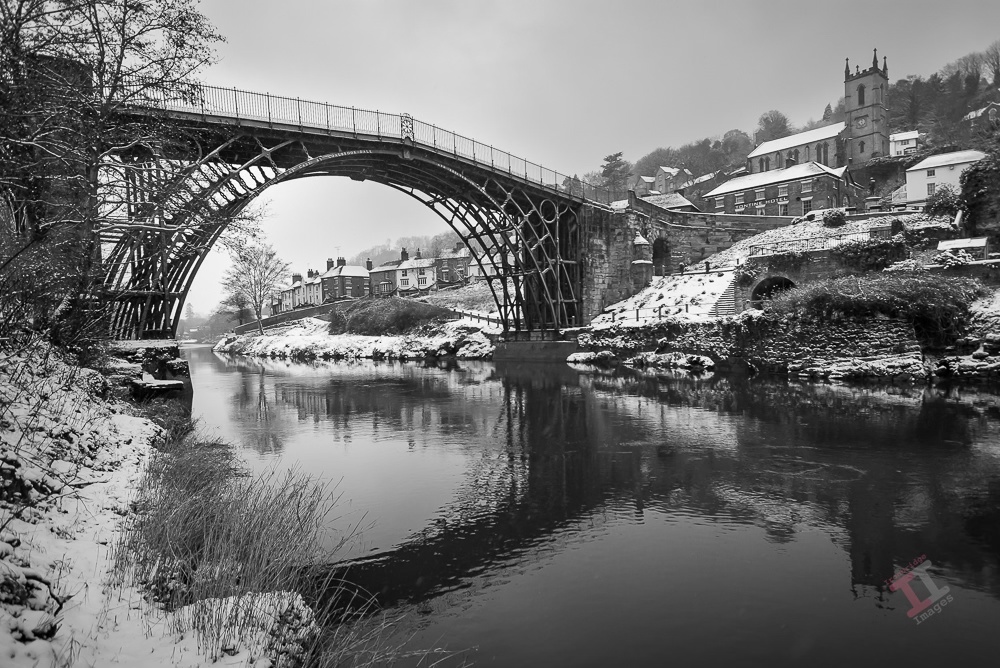
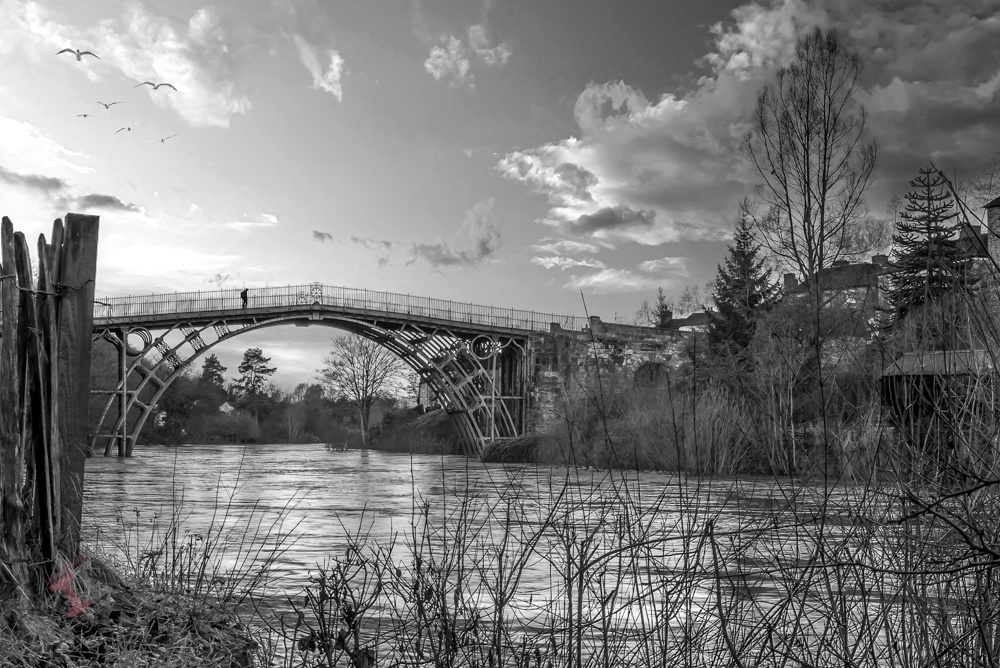
This was taken back in 2010, long before the bridge was painted red. I’m not going to add to the debate of whether or not this ‘rusty’ red colour was the intended top-coat hue, or just the red-lead primer used as a base coat, but what I can say is that the act of painting the bridge relegated thousands of photographs, from photographers worldwide, into their archive folder, as they were now judged to be out-of-date. There is one way around this, though, and that is to convert the image into monochrome, which fortunately works particularly well with snow scenes, such as this.
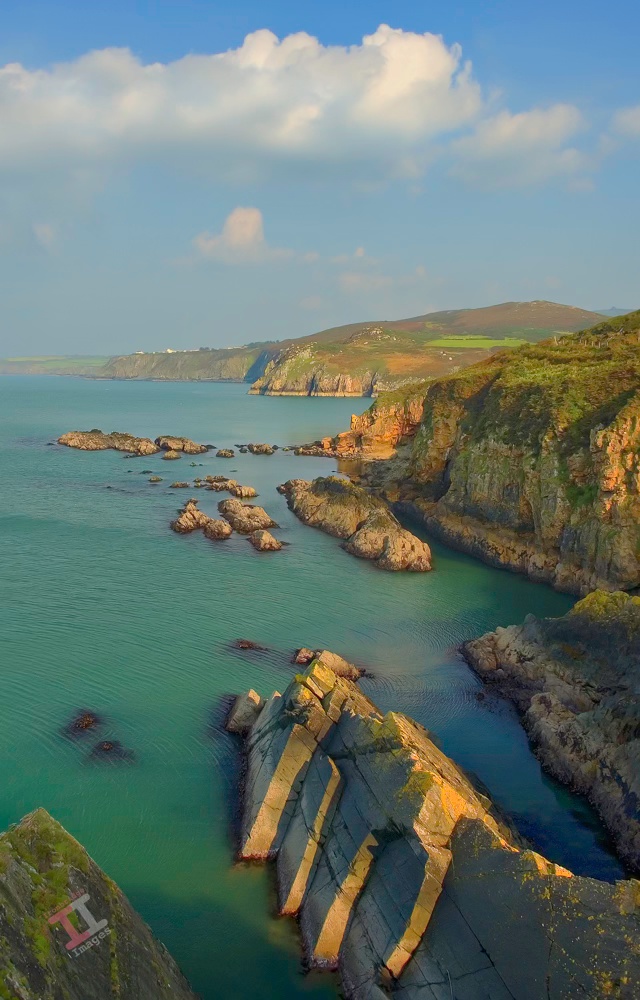
I’m not sure of the exact date that this was taken, but I can see from my archives that it featured in a gallery on my website in 2008, so it must have been over 16 years ago. I can recall that we were leaving Fishguard on the last day of a holiday and we stopped at the top of the steep hill from Lower Fishguard at a spot called Fishguard Fort.
The fort was built in 1781, following an attempt by an American pirate ship ‘Black Prince’ to demand a ransom from the town of Fishguard (which, at the time, was a prosperous sea port). A few years later it saw its only action when it repelled a French invasion force, who retreated and landed further down the coast, saving the town.
The morning sun was rising and just catching the rocks beneath me. I set my tripod up next to a wire fence and took a few shots before heading back to the car – and home.
In this Secret Ironbridge blog post, we’ll venture down on to the River Severn.
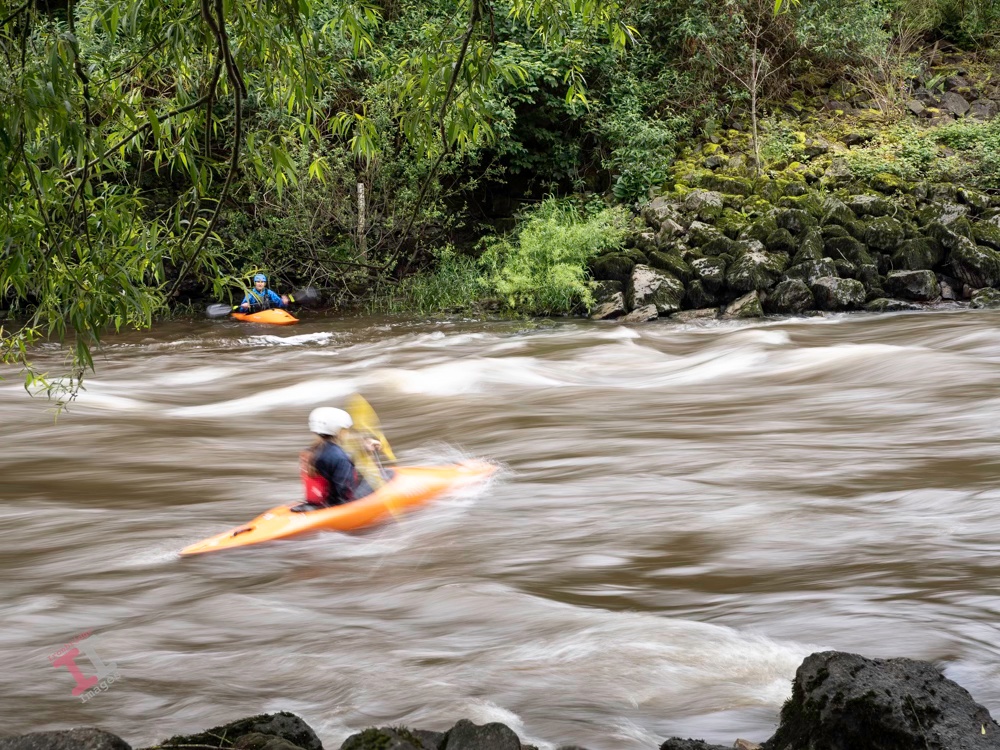
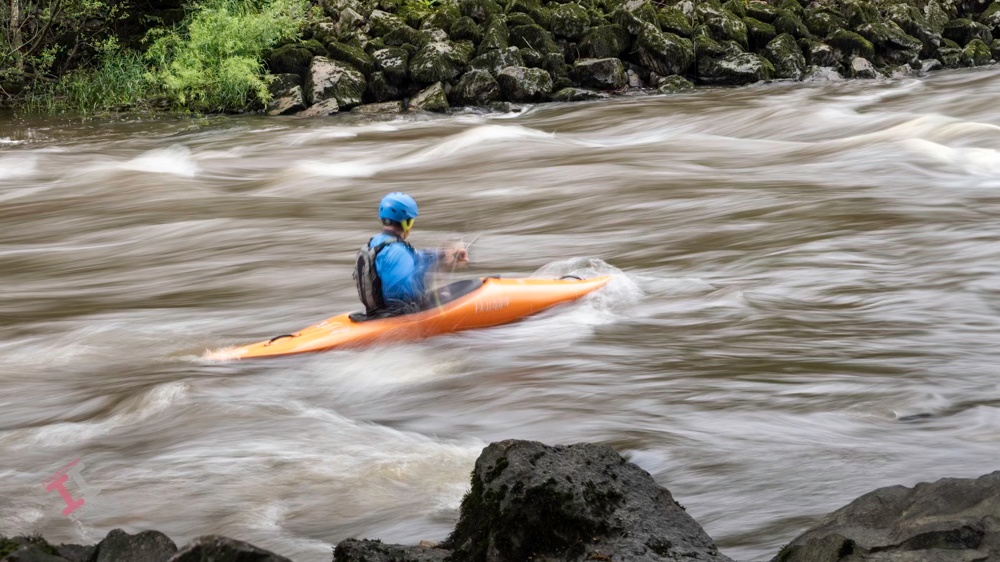
The river Severn is the longest river in Britain, and it has flowed down the Ironbridge Gorge since it was formed during the last ice age. Within the Ironbridge Gorge is a stretch of river, well-known and popular with kayakers: Jackfield Rapids.
The rapids are reported to have eroded over the years and are not as severe as they were. The difficulty changes depending on the river level, with it getting harder at higher levels (presumably because the flow of water is greater).
Although these rapids are a natural phenomenon due to ground movement, there is anecdotal evidence that they have been enhanced over the years to make them more challenging to canoeists and kayakers.
This was taken with an internal neutral Density (ND) filter in my Olympus camera, negating the need for filters added to the lens to achieve the silky flowing water.
Which leads to a question; at what point did the term ‘kayak’ replace ‘canoe’ in the UK? When I was a mere lad, these small, usually one-man, self-powered boats were always called ‘canoes’. Apparently, there is a difference: a ‘canoe’ usually has an open deck, can be used seated or kneeling, and has a single-ended paddle. A ‘kayak’ has a closed deck, a seated position and a two-ended paddle. Now I know!
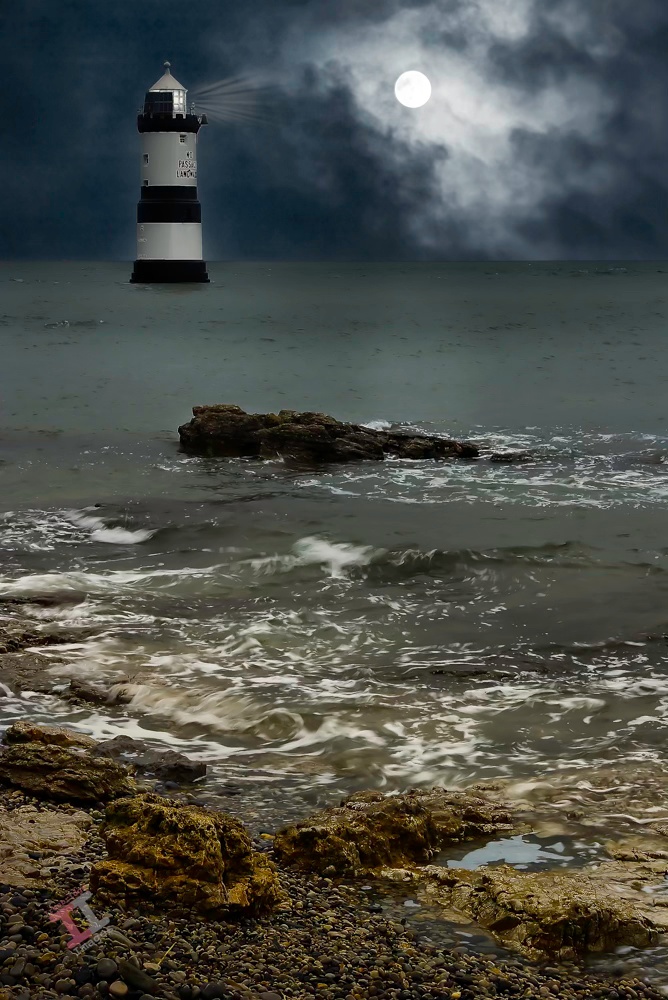
The Trwyn Du Lighthouse is located just off Penmon Point on the north-east coast of Anglesey, and marks the safe passage between it and Puffin Island. It was built in 1838 following a disaster when the Rothsay Castle steamer ran aground at the cost of 130 lives.
This shot was taken in 2010 on an overcast, but bright, July day, which led to a rather flat, uninspiring image. I decided, therefore, to replace the sky and to convert it to a night scene, using a combination of Lightroom and Photoshop.
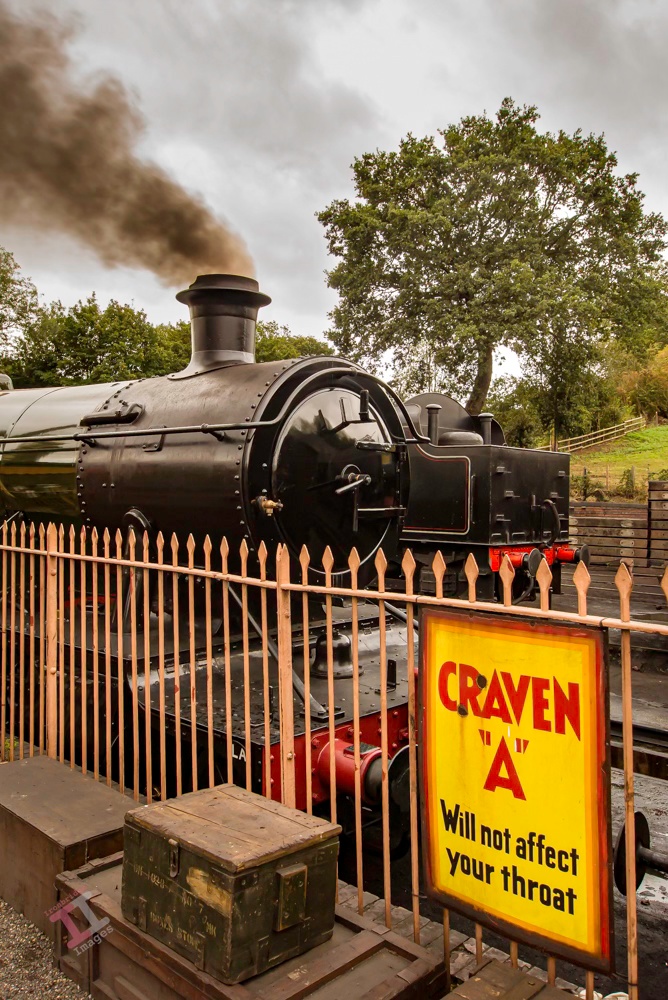
This photograph was taken 13 years ago during a visit to the Severn Valley Railway (SVR) station at Bridgnorth in Shropshire. It is a fascinating place, and an ideal venue for a photoshoot if you want a nostalgic theme.
I’m not certain that I appreciated the irony of this shot at the time, with the enamel sign advertising the benefits of the cigarettes contrasting with the dirty smoke emitted from the chimney of the steam train. It takes you back to a time when smoking was popular, accepted everywhere, and seen to be a little ‘cool’. And when advertisers could bend the truth a little more than they can do now.
Craven ‘A’ was named after the third Earl of Craven because this particular blend of tobacco was created especially for him in the 1860s, and it is still produced to this day by British American Tobacco. It was the first cigarette to be mass-produced with a cork tip, hence the tagline “Will not affect your throat”.
My blog posts have been a bit sparse over the last few weeks, namely because I have been busy post-processing images to upload to my Photo4Me gallery. I had set myself the task of displaying in excess of 200 images (which I have now managed) for no other reason than I wanted to, but I have also had a few sales from the site recently, which has spurred me on even more.
Solitary crossing
Some images lend themselves well to a monochrome conversion – it’s as if the colour just gets in the way and diverts your attention away from the ‘story’ that the image is trying to tell. Conversely, taking the colour away from others leaves a flat, meaningless picture that begs for more information. However, the decision ‘colour or not’ isn’t (excuse the pun) black and white, and often you need to try both before you know which works best. Some photographers never convert to monochrome, and others use that medium exclusively. Personally I use whatever I think works best for the image I’m working on at the time, much in the same way that I alter the image ratio depending on the composition.
I’ve also been busy creating some advertisements for the gallery site (I’ve already posted a couple over the past week or so) and have a number of others to post as we lead up to the Christmas period. It’s all with the aim of drumming up a few more sales – let’s see if all the effort pays off!
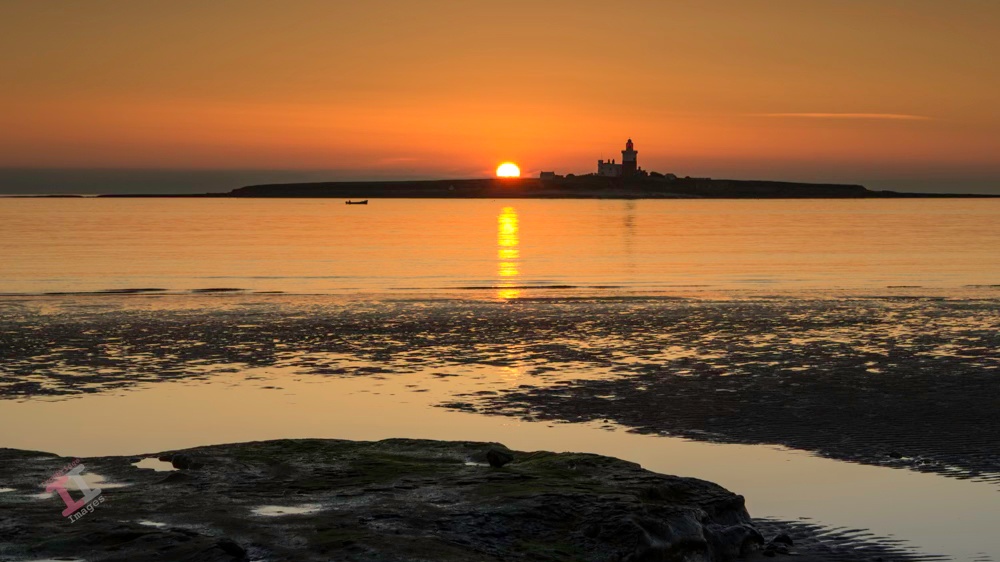
Another memory from our time in Northumberland; we had rented a small cottage near the town of Amble, and it was just a short walk through the back gate and down a field onto the beach. Just out to sea was Coquet Island, a small, uninhabited island that is a Royal Society for the Protection of Birds (RSPB) nature reserve and a safe haven for puffins, terns and seals. The lighthouse was built in 1841 but was automated in 1990.
We started out early to get to the beach before sunrise. I set my tripod up on the sand and waited. As the sun started to peek above the horizon, I could hear the distant sound of a small fishing boat, and when it came into view, I could see that it would pass in front of the island. All I could hope for was it would make the distance before the sun had fully risen and started blowing the highlights.
We have already seen the London & North Western Railway running into Coalport (East) station and the Great Western Railway running through Coalport (West) station to Ironbridge and Broseley Station.
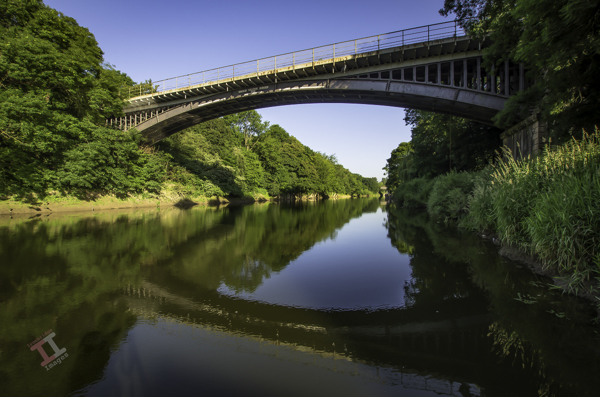
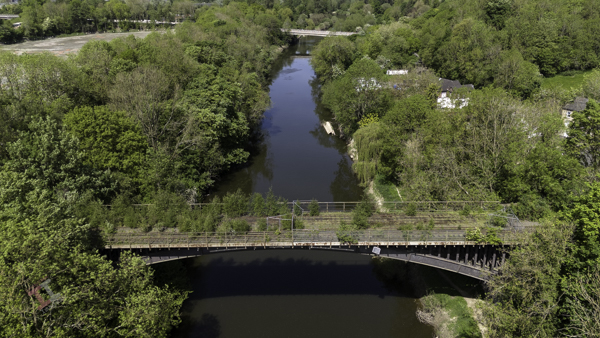
Here, we come across the Severn Valley Railway, which formed part of the line between Wellington and Craven Arms and was built (in stages) between 1857 and 1863. It had to cross the River Severn and did so via the Albert Edward bridge.
Albert Edward bridge (taken in 2013)
The bridge is named after Queen Victoria’s eldest son (who later became Edward VII). It was designed by Sir John Fowler and cast at the Coalbrookdale Foundries in 1863. It is considered one of the last major cast iron railway bridges built. Unlike the other two railway lines in the Gorge, this one continued to operate until 2015 – carrying coal wagons to the Ironbridge Power Station.
The bridge today – being reclaimed by nature
The centre of the span of the bridge denotes the boundary between Telford & Wrekin Council and Shropshire Council, and it is designated a Grade II Listed building, each Council claiming half.
Building bridges:
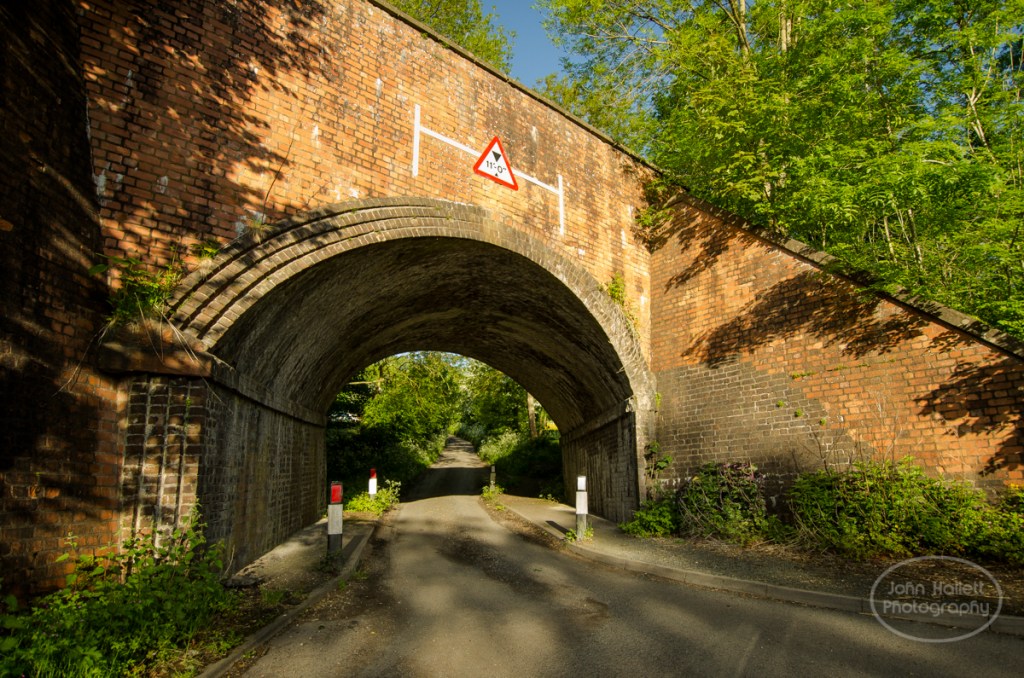
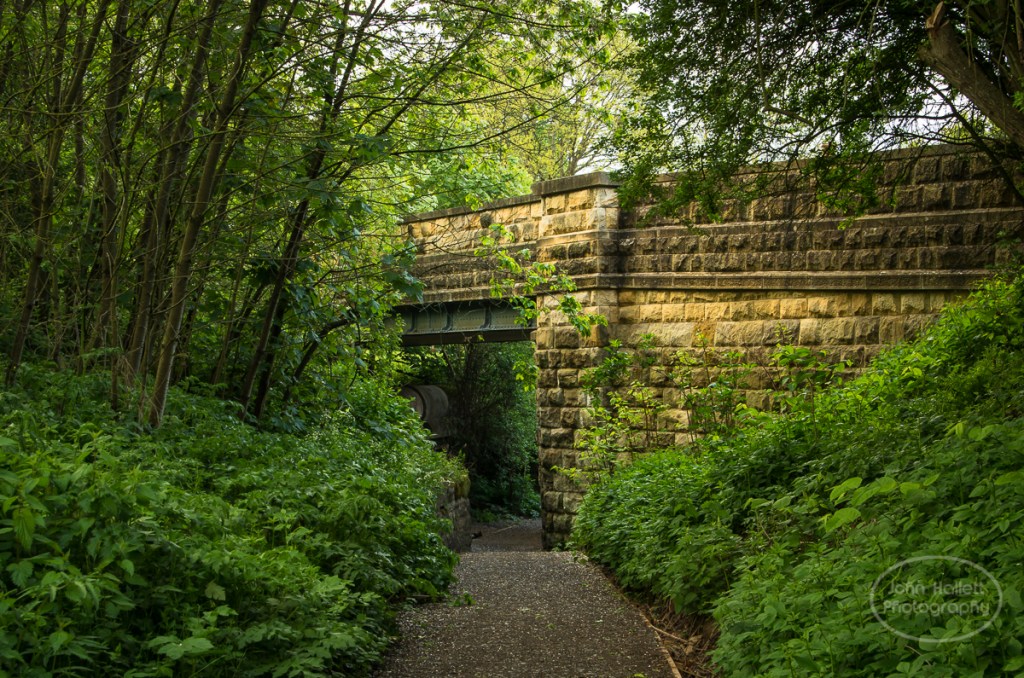
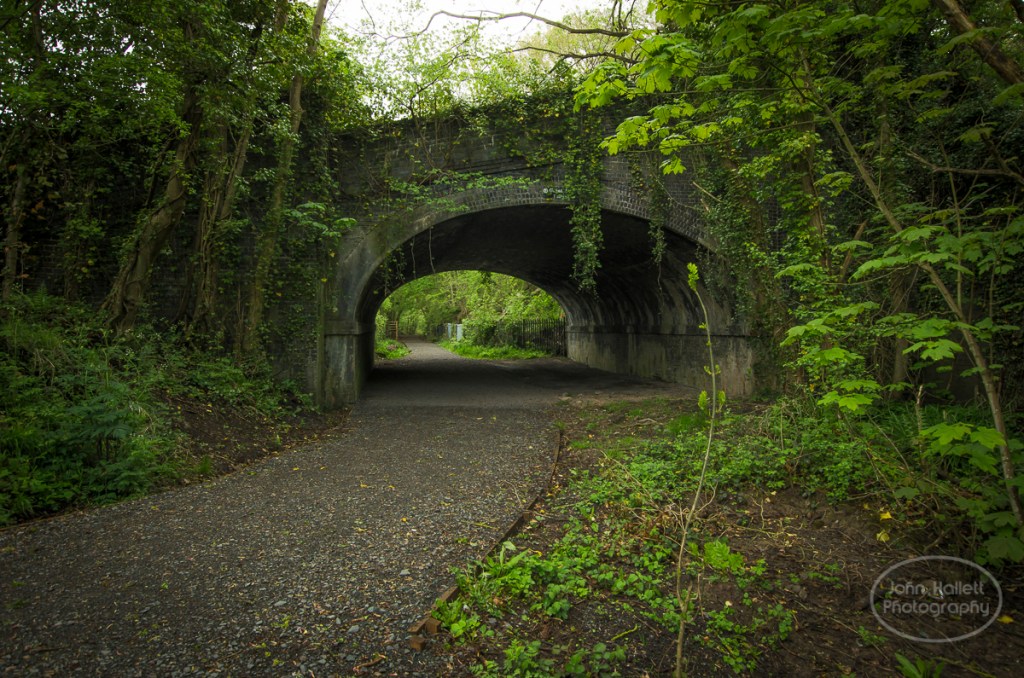
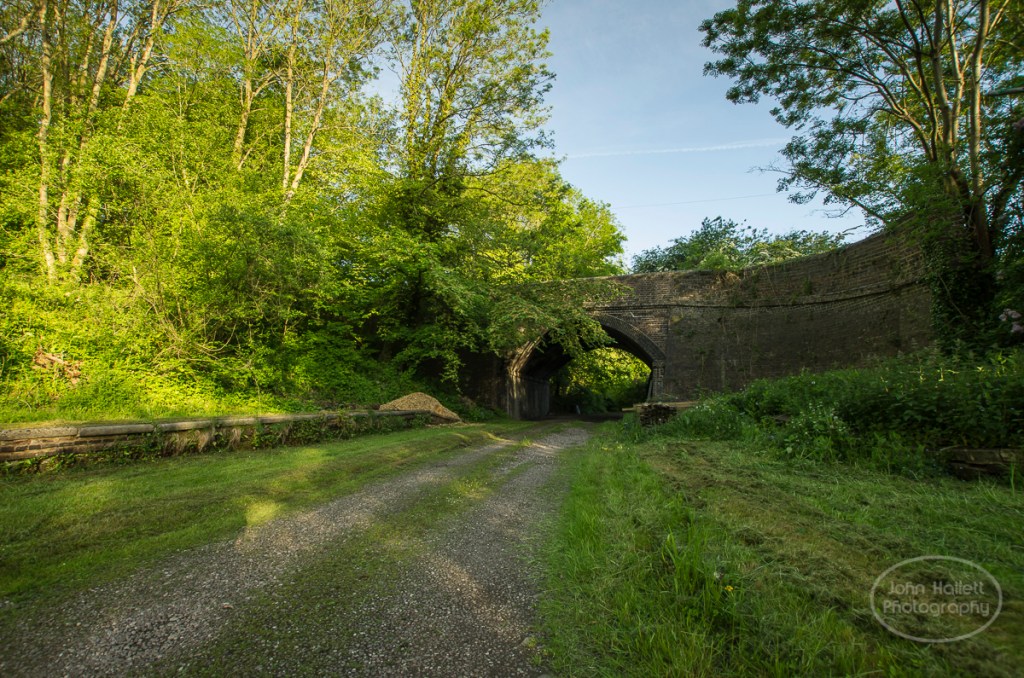
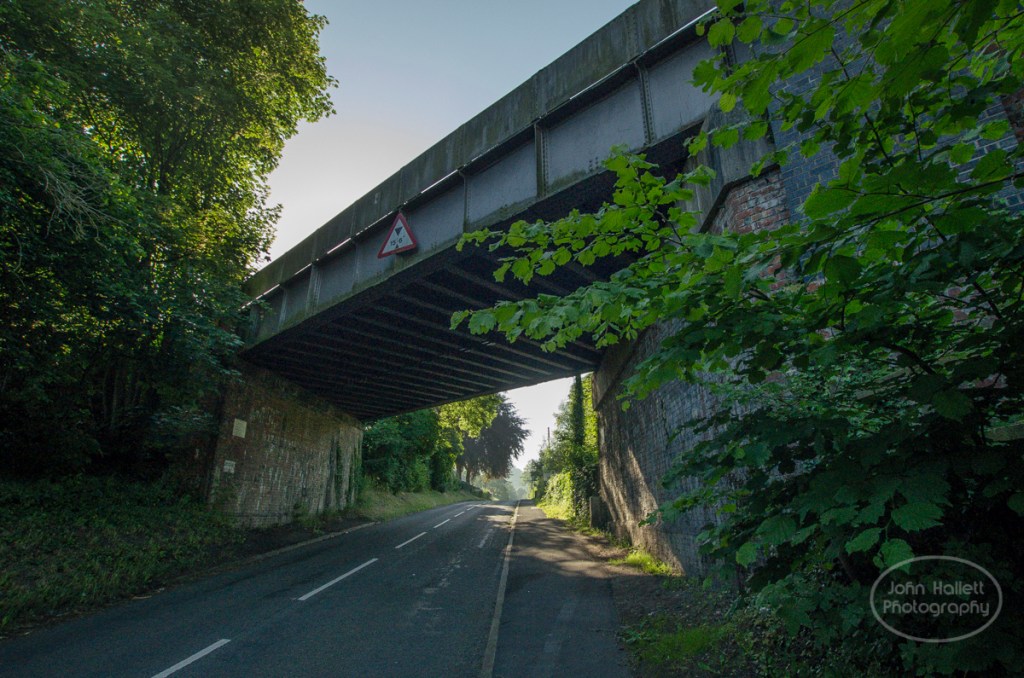
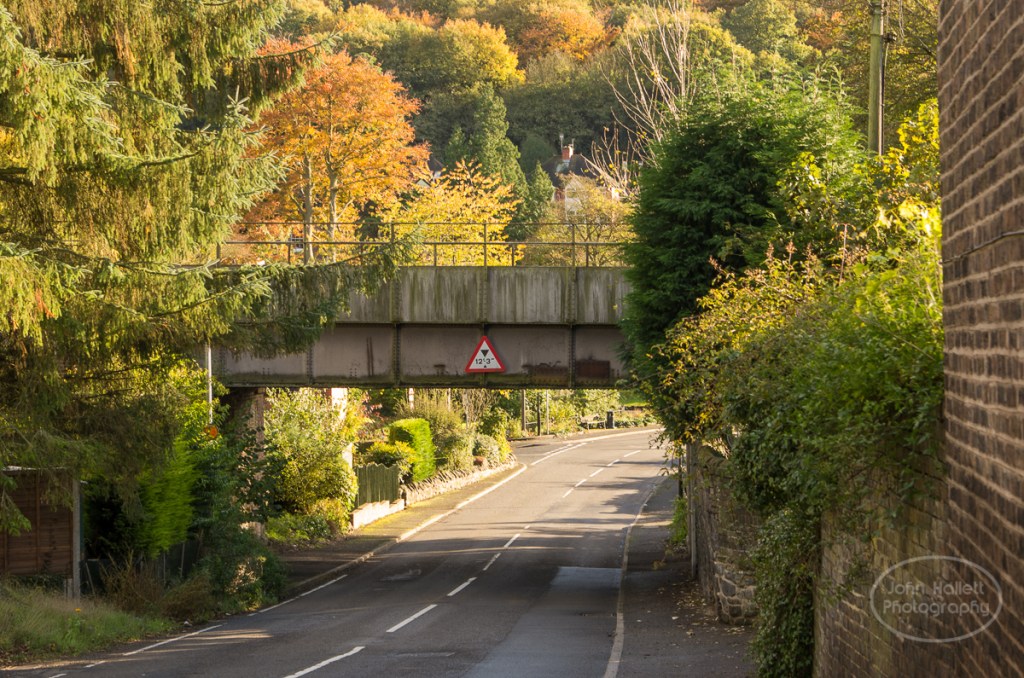
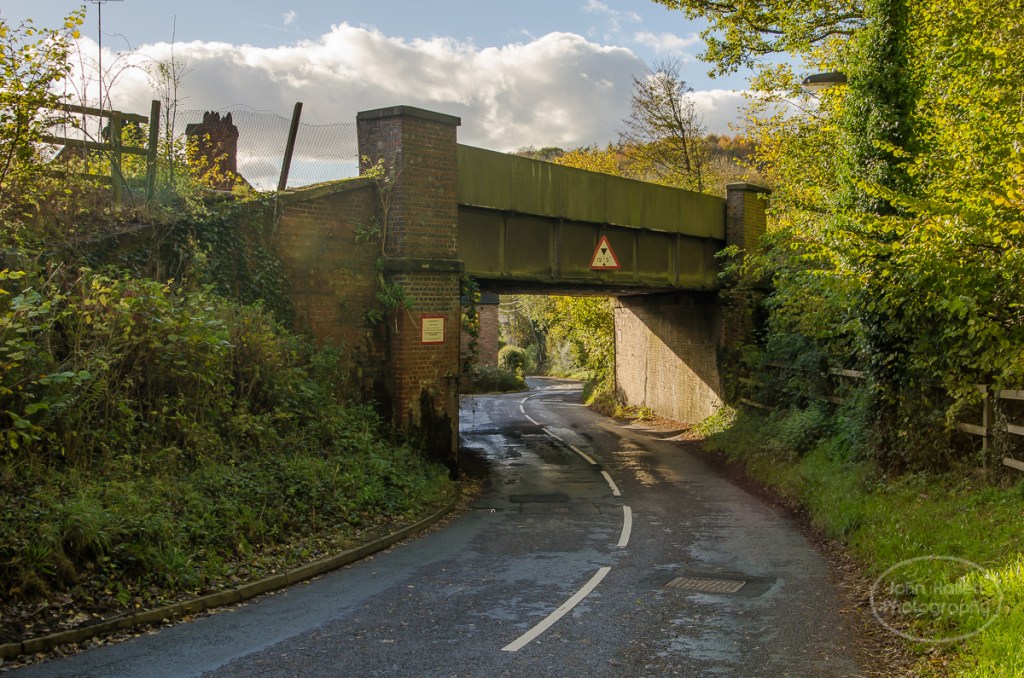
You may ask why the railway bridges in the south and east of the Ironbridge Gorge were built out of attractive brick and stone, whilst the railway bridges in the west are generally utilitarian metal girders. The answer is quite simple: building the section of the railway line between Horsehay and Coalbrookdale was a costly exercise, and metal bridges were cheaper and better advertisements for the Coalbrookdale Company than masonry ones.
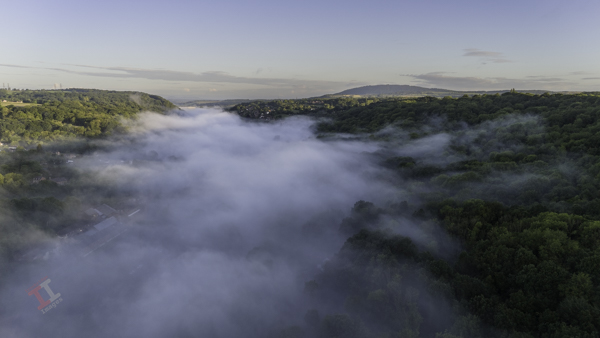
Visibility was limited when I opened the blinds in the kitchen window this morning – a thick blanket of mist had descended into the valley. I took the opportunity to fly the drone above the cloud to capture this image over the Severn Valley.
Ironbridge Gorge Cloud Inversion
Within 30 minutes the mist had cleared and we were ready for another day of summer sun rain.
This type of phenomena is called a ‘cloud inversion’ and is caused when temperatures near the ground are lower than those higher up in the air. It is more common during Autumn and Winter, typically just after sunrise.
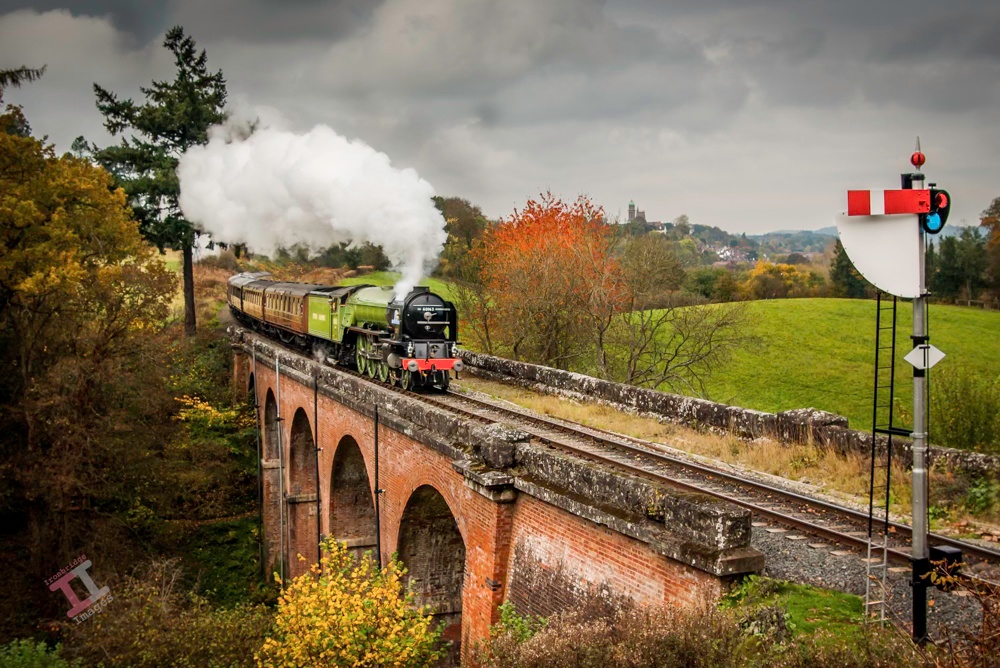
The ‘Tornado’ (No 60163) is a London & North Eastern Railway (LNER) 4-6-2 Peppercorn Class A1 steam locomotive built in 2008 to an original design by Arthur Peppercorn.
Tornado hits Shropshire – as captured in 2018
It was the first newly-built British mainline steam locomotive since 1960 and the only Peppercorn Class A1 in existence after the original batch were scrapped. To commemorate this fact, it embarked on a tour of the UK in 2018, including the Severn Valley Railway between Kidderminster and Bridgnorth.
I decided to capture the event and, after consulting a map, decided on a spot just outside Bridgnorth at Oldbury, overlooking an arched viaduct. When I arrived, I found a number of others already assembled, most of whom seemed to be train enthusiasts rather than photographers. However, when the train finally made an appearance it was facing ‘the wrong way’ and was pulling the carriages in reverse – hardly an inspiring photograph.
There was much muttering amongst the assembled throng, and it became apparent from those ‘in the know’ that the engine would change ends at Bridgnorth station and would return ‘the right way around’. The problem was that the view would be rather poor at the current vantage point because we would now be looking at it in the opposite direction away from the viaduct.
Fortunately, some of the enthusiasts had the necessary authority to allow them to walk on the track and cross over the viaduct – and they kindly allowed me to join them. So I ended up in, what turned out to be, a better spot, with a signal post in the foreground and the viaduct beneath. It was a good hour wait before the train returned but, as predicted, it was in the correct orientation and emitting copious amounts of steam into the sky as it built up speed for the return journey.
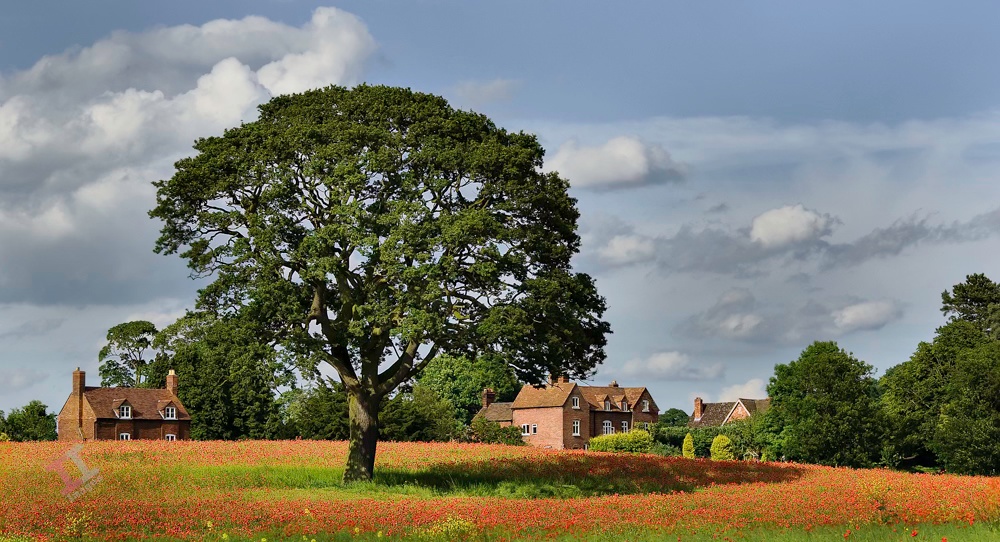
This was taken back in 2009 at a small village called Donnington, near Wroxeter, between Telford and Shrewsbury (and not to be confused with the much larger town of the same name in Telford itself). I can’t remember now whether I knew that this poppy field existed beforehand, or if I came across it by accident, but I can remember trudging around the perimeter of the field with my tripod, trying to find the best composition.
I actually thought at the time that this had naturally occurred, but over the years since, I have never seen another poppy in this field, and so I assume that they had been grown commercially. This explains the poppy-free circle around the tree – presumably they didn’t sow any seeds near the tree because it would take all the nutrients and water from the soil?
Anyway, the red, green and blue are strong primary colours, and so for this reason the photograph stays in my long-term gallery.
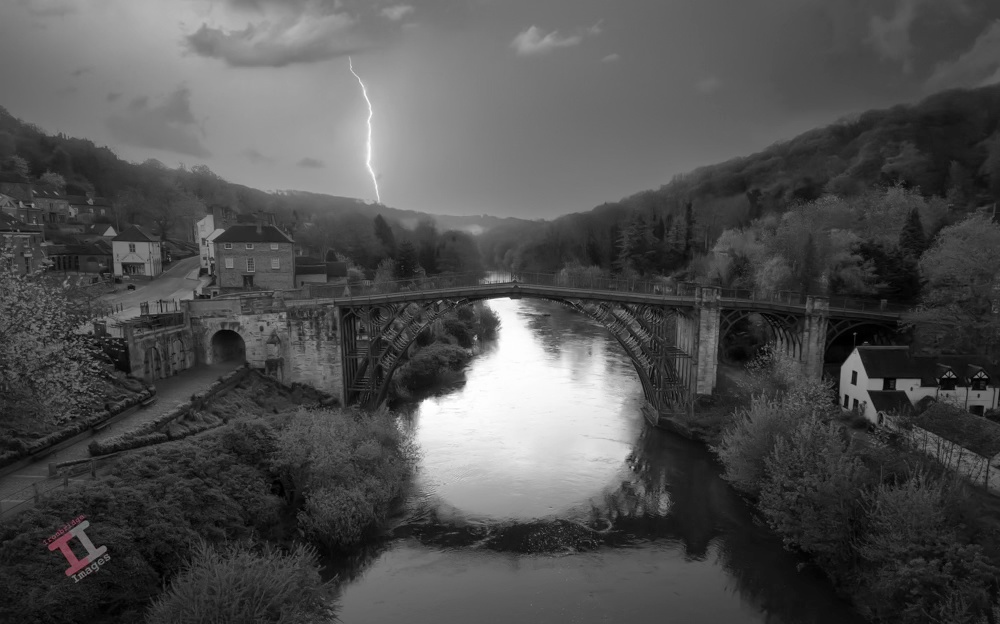
This image encompasses two of my current projects: it is a day-to-night conversion (including a sky replacement) and a black-and-white conversion. It was taken with my drone, early one morning before the town had started to come to life and post-processed with Adobe Lightroom and Photoshop.
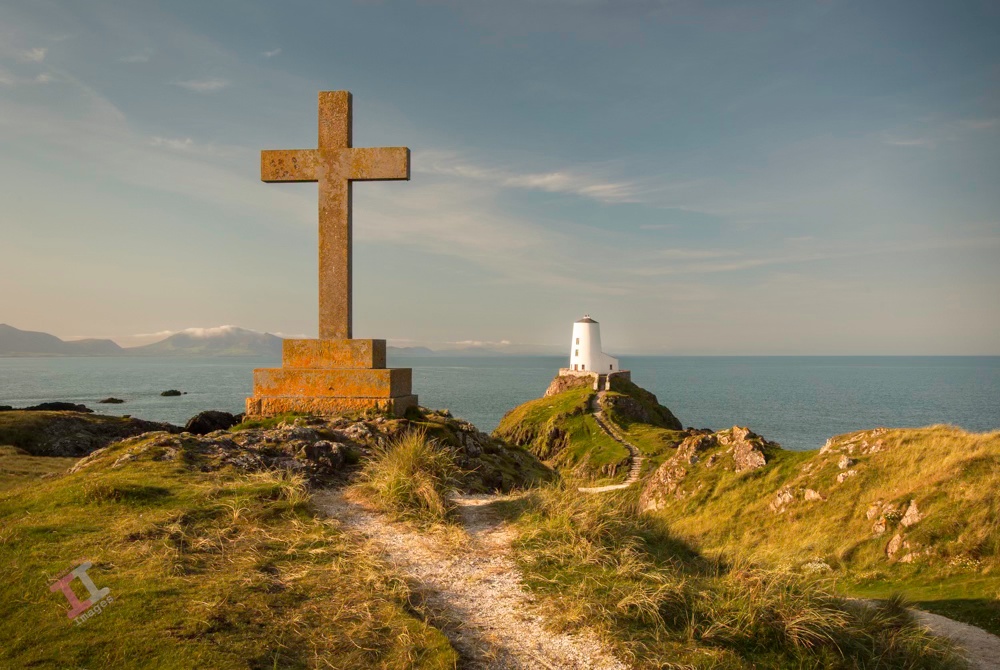
This shot was taken during a 2012 photoshoot tour of Anglesey, in Wales, with good friend & fellow photographer Adrian Evans. We had crossed the Menai suspension bridge and started a clockwise tour of the coastline, and Llanddwyn island (although technically not an island because it is attached to the mainland) is not far, just past Newborough. Access to the ‘island’ is tidal but we had timed our arrival to be able to walk straight across, and we spent a good hour making the most of the light from the early morning sun.
This image above is a bit of a cliche shot, and has been done many times by other photographers – but it remains one of my favourites.


 Ironbridge Images