The Swan is an 18th century malthouse on the Wharfage at Ironbridge in Shropshire. At that time the River Severn was busy with many flat-bottomed boats (called Trows) plying their trade carrying goods from the industrial midlands down to the sea port at Bristol. For the boatmen, it was a hard life, with long hours and little comfort, and so to stay overnight at a town such as Ironbridge would have been a rare treat, with its numerous pubs and brothels, and the opportunity to meet up with fellow river navigators to share tales over an ale (or two).
This is another day-to-night conversion, helped by the plethora of lanterns that adorn the outside of the building and the rope lights over the outside seating area.
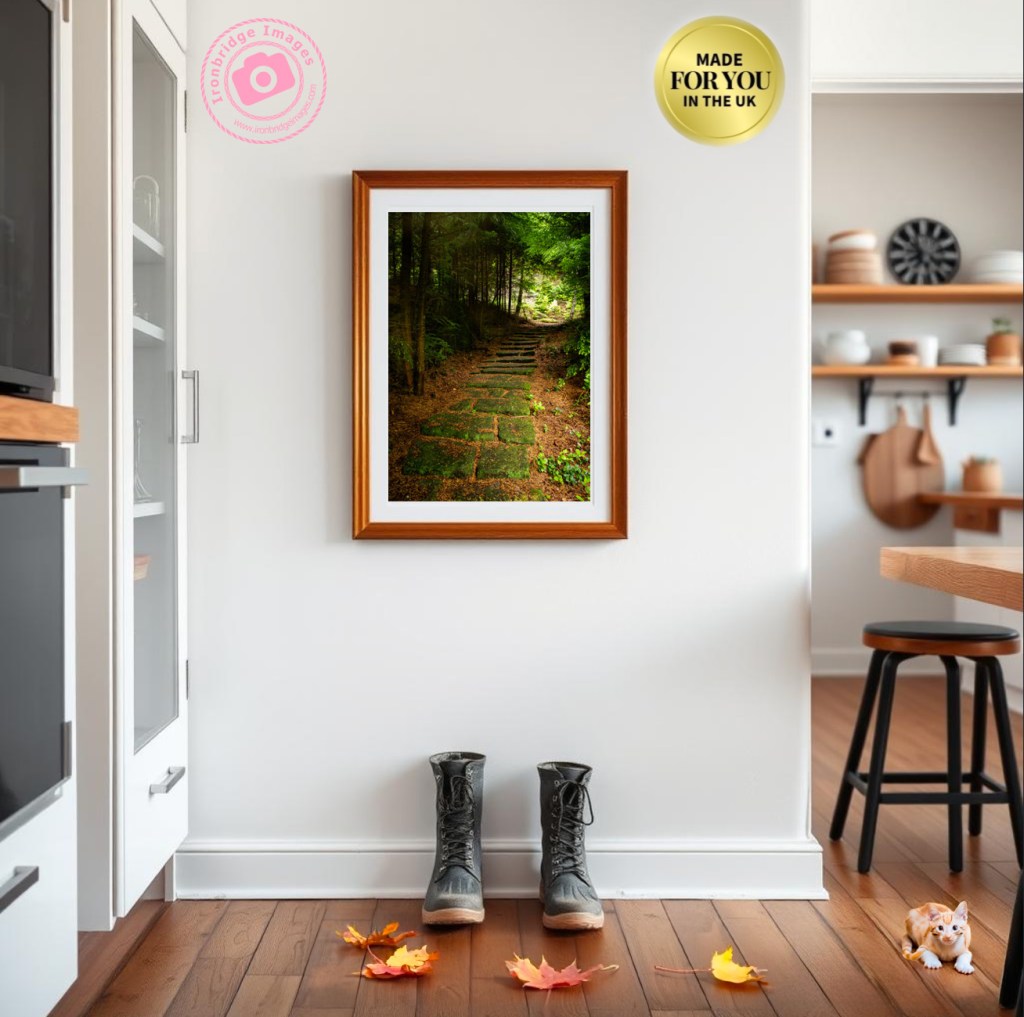
The temperature is dropping, the nights are drawing in, and the leaves are falling. It is a sure sign that Summer is over (what little we had of one) and Autumn is with us. What better time to inject a bit of life into a drab corner by adding a piece of photographic art.
This image “Footpath through the trees” can be found in my online store:
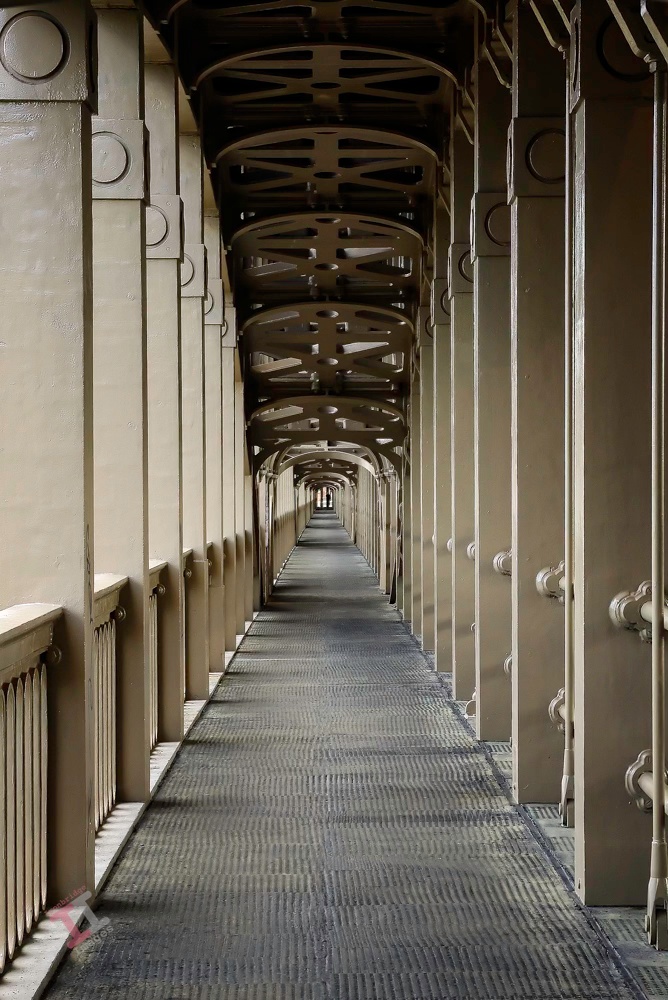
The High Level Bridge over the river Tyne at Newcastle taken during our honeymoon week back in 2008. It was our first visit to the city and my brother-in-law took us for a whistle-stop tour, which included crossing the river on this iconic bridge. I happened to look back and took this shot which highlights the perspective, with the repeating arches and columns receding down the passageway. I can’t remember now whether the lone figure at the end was a lucky coincidence or the result of patience and timing.
Here in the UK, property and land is sold through professionals called ‘Estate Agents’, which dates back to when large swathes of land (an estate) were owned by individual families (the landed gentry), usually living in a grand hall in the centre. They employed an agent to manage the rent from the paupers who lived on the land, and the buying and selling of land to improve the estate portfolio.
Over in America, these professionals are called ‘Real Estate’ Agents (or Brokers). The term ‘real’ derives from Latin, meaning actual or genuine, and it simply refers to the actual, physical land and property that belongs to an estate.
If you want to rent out or sell your property (or estate), then you need to market it to get the best reward, and this usually requires the use of high-quality photographs to present the property in the best possible way. This involves ‘property photographers’ or, in the USA, the slightly more glamorous-sounding ‘real estate photographers’ (of course, to save costs, estate agents often just take the photographs themselves using a camera phone, but, like everything, you get what you pay for).
There are several reasons that you may wish to use a professional photographer rather than taking your own (or allowing the estate agent to):
The camera:
Actually, it’s not the camera that matters most; it’s the lens. The standard lens on most cameras and phones is in the focal range of 35-55mm because this most accurately represents the field of vision of the human eye. Unfortunately, this is often not wide enough to encompass an entire room and can also make a room look long and narrow. You really need a wide-angle lens, closer to a focal length of 10mm, to capture everything in one shot. People need to see this to get a good representation of a room.
A wide angle lens also has an effect that estate agents love; it makes a room look much larger than it actually is!
The software:
The drawback of using a wide-angle lens when you are close to a subject (as you are in a room) is that the sides of the image adopt strange angles due to the nature of the lens. Tall pieces of furniture, or doorways, can then appear as if they are leaning backwards. It’s a term known in photography as ‘barrel distortion’. Good post-processing software can straighten out the sides of the image to give a far more natural look.
Before
After
Taking the image as a RAW (unprocessed) file, and then processing it in post-processing software can also bring out details in the shadows and preserve detail in the highlights (see ‘The light‘, below).
The ‘eye’:
Professional photographers have something called “the photographer’s eye“. What that means is the ability to be able to scan the image, usually before actually pressing the shutter, to see things that are out-of-place or that capture the attention unnecessarily (I’m sure that you have seen humorous photographs on social media of people’s bedrooms with ‘personal items’ left unintentionally on the side!). Moving a coffee cup, magazine or family photograph, for example, can have a huge impact on making a room look more attractive. It is important to take as much personality out of a room as possible (without making it too sterile) because the seller’s style may not match the purchaser’s desire.
The light:
When you photograph outdoors, you get directional light from the sun, which creates shadows. However, these shadows are then ‘diluted’ by the brightness of the rest of the sky, which acts like a giant diffuser. When you take a photograph indoors using ambient light, the light from the windows gives directional light, but there is no light from any other source. This can create deep, hard, shadows and, at the same time, the windows look completely white, as all of the highlights get blown out. Some photographers choose to use flash lighting instead, but this is quite harsh, and the windows then become very dark, almost as if it were taken at night.
There is a method called ‘flambient light‘, which entails taking shots of a scene with flash and shots taken of the same scene in ambient light and then merging them together in post-processing. Care has to be taken; otherwise, the scenes can look false. There is also the added problem of matching the different colour temperatures of the two types of light.
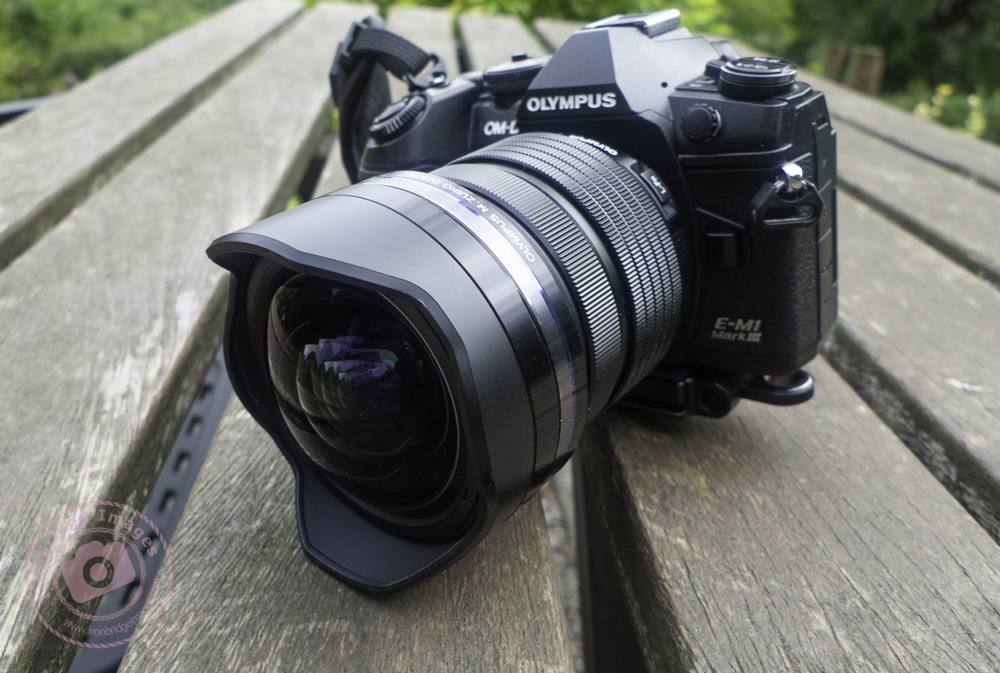
Another method (and the one I prefer) is to use High Dynamic Range (HDR), which involves taking multiple (3 or more) shots of the scene in ambient light at different exposure levels and then merging them together, retaining detail from the shadows and highlights. Some cameras (such as my Olympus OM-D E-M1 Mark III) can do this automatically in-camera. To minimise noise in the shot, a low ISO is required, but this then creates longer exposure times. There is also the need to keep the camera in exactly the same position – so mounting the camera on a tripod is necessary.
The temperature:
We are not talking about the room temperature here, but rather about the temperature of the light (also know, in photography terms, as white balance). This can have a huge impact on the perceived ambience of a room; a bedroom needs to look warm and inviting, whilst a bathroom needs to look cool, clinical and clean.
Slightly cool and uninviting (white balance 5200K)
Warmer and cosier (white balance 5800K)
The aspect:
The ‘aspect’ of the photograph concerns the height and angle that the photograph is taken. It is important not to take the photograph from too low down, or too high. This may change dependant on the size of the room, and the type of room. The direction that you point the lens can also have a big effect, as can the position that you take the photograph from.
In most cases you will want to take the main shot from the doorway, so that you see the room as you would when you entered it. However, for some feature shots, you may want to take the photograph ‘head-on’.
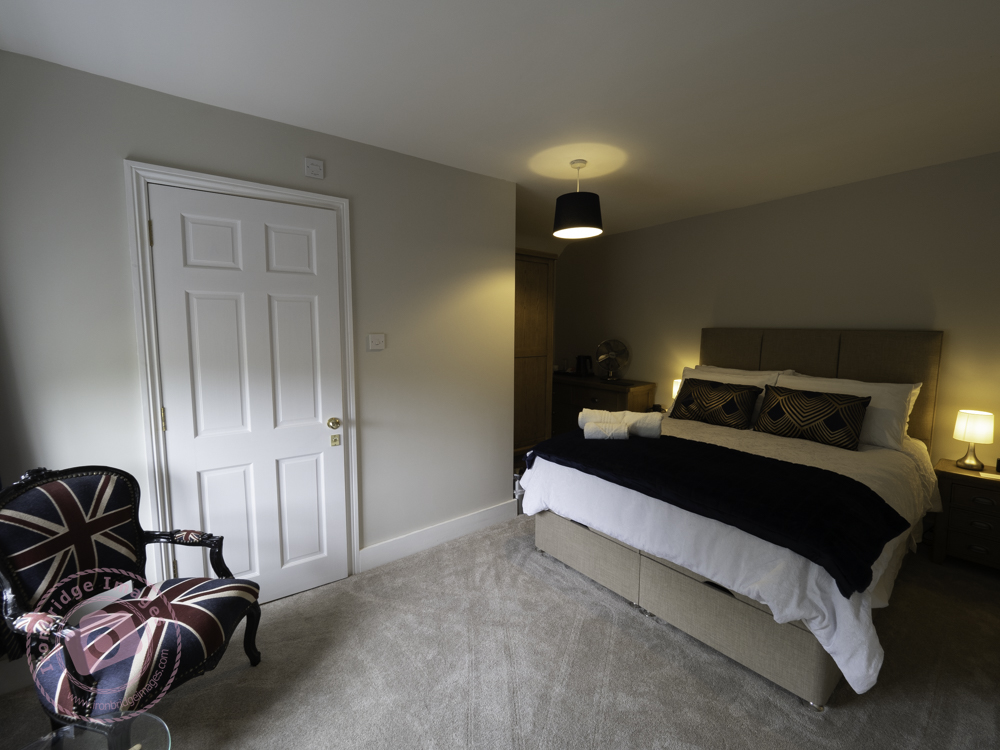
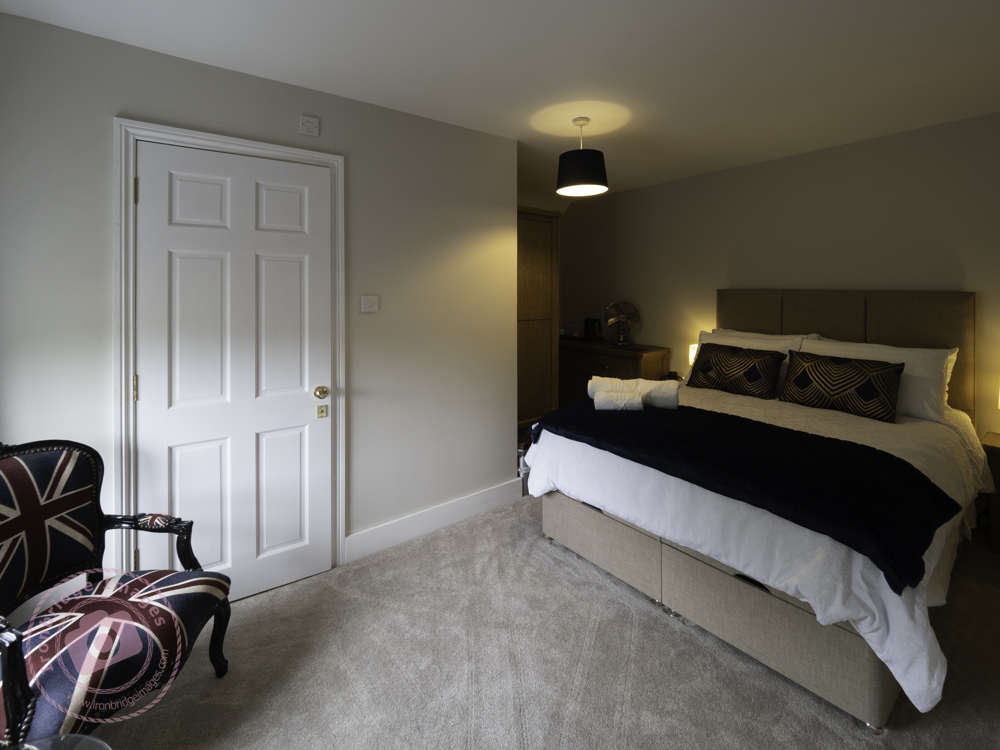
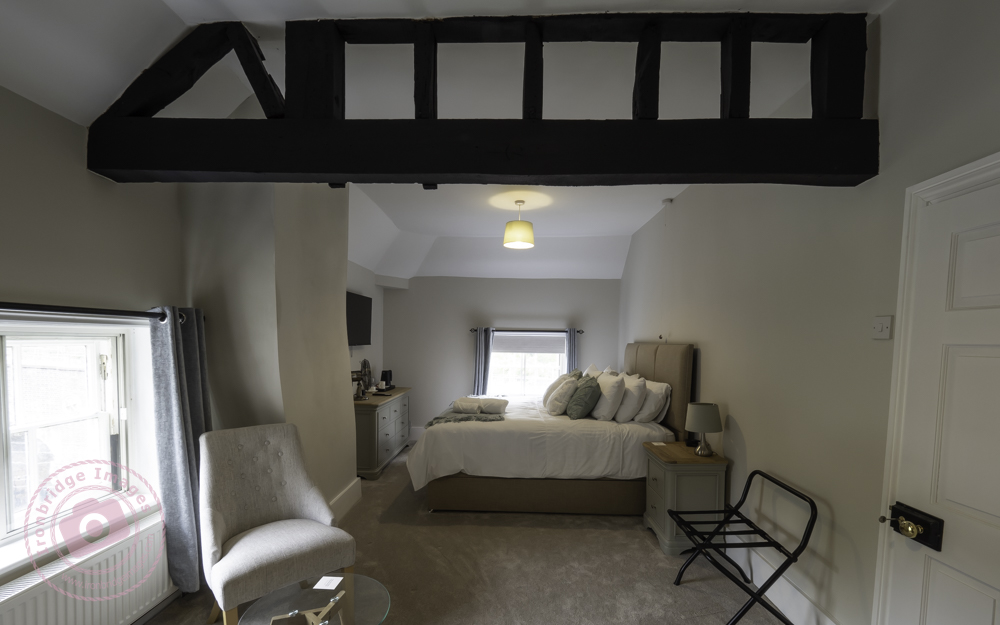
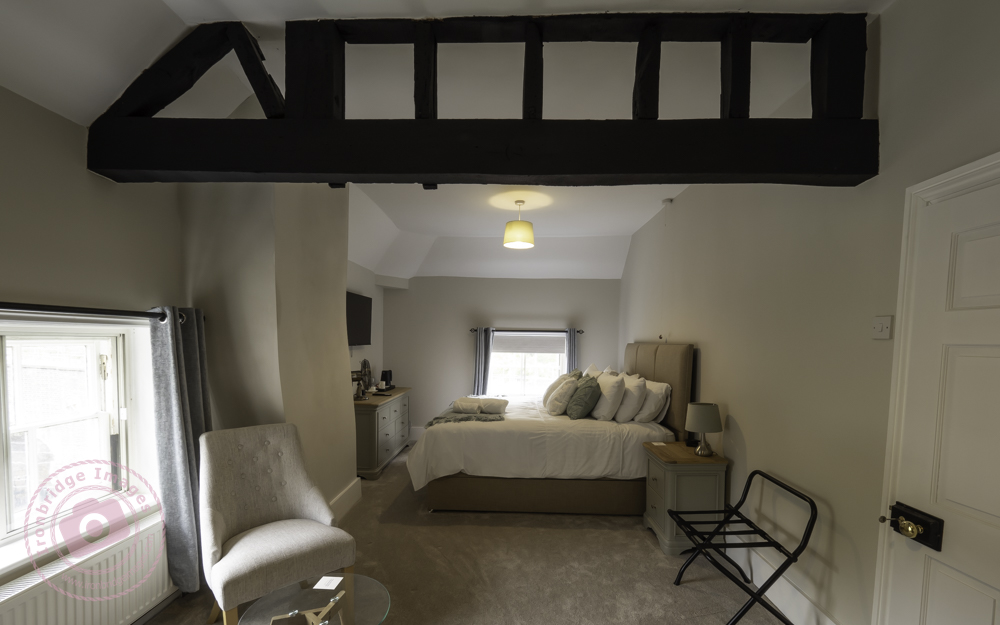
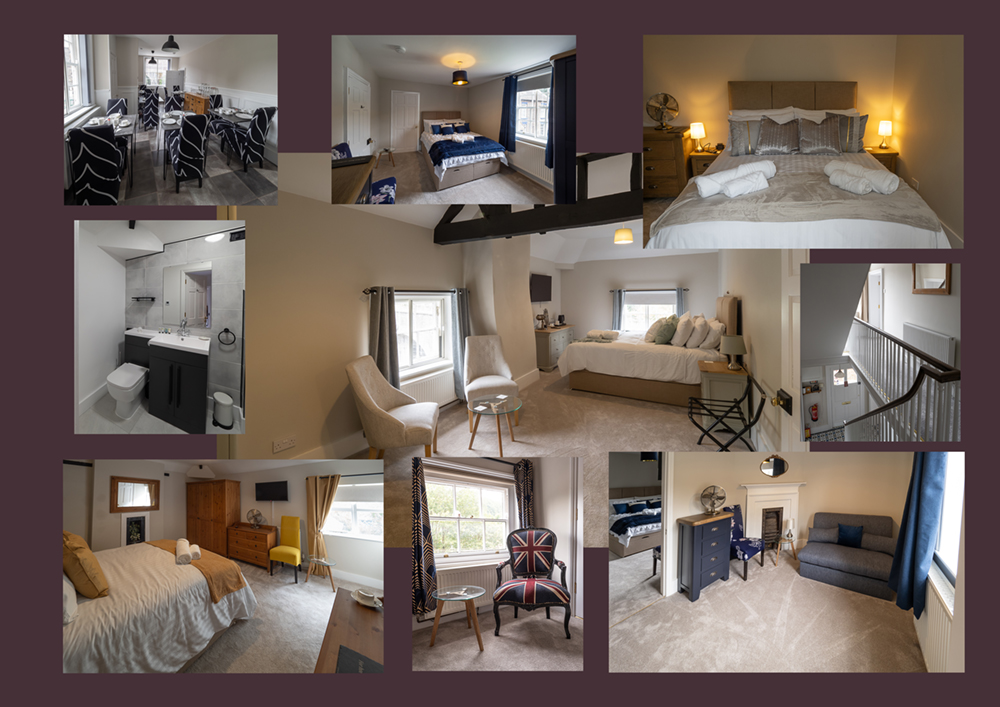
After that rather long preamble, we now come to the subject of this blog post:- that I have been taking some photographs of the interior of a property that will shortly be used for bed-and-breakfast accommodation. After a brief tour I was pretty-much left to my own devices (always the best option) and, over 2 hours, took 80+ images. These were then whittled down during post-processing to 40, and were supplied as both full-size images (preferred by publishers and printers) and also as smaller, lower-resolution versions (for website and social media use).
Hi John, Thank you so much for these, they look great. Really appreciate it
viaduct guesthouse
The Viaduct Guesthouse, Coalbrookdale, in the Ironbridge Gorge, will be opening in Autumn 2024. Best of luck to Kay & Paul on their new venture.
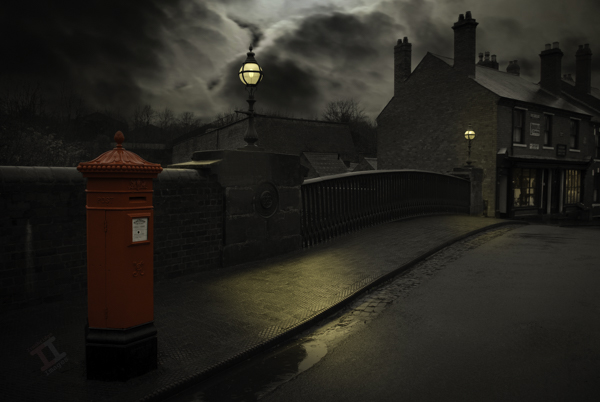
I still use the term ‘postbox’, even though many now use the more Americanised ‘mailbox’ (and very few use the older term ‘pillar box’). This particular type of postbox dates from 1866 and is called the ‘Penfold’ design, named after its designed, John Penfold (if you are a fan of cartoons, Dangermouse’s sidekick, Penfold, was named after this type of postbox). It was very expensive to produce and they were phased out in 1879.
To highlight the postbox in this shot, I’ve slightly desaturated the rest of the image, before darkening it and adding illumination to the lights and shops.
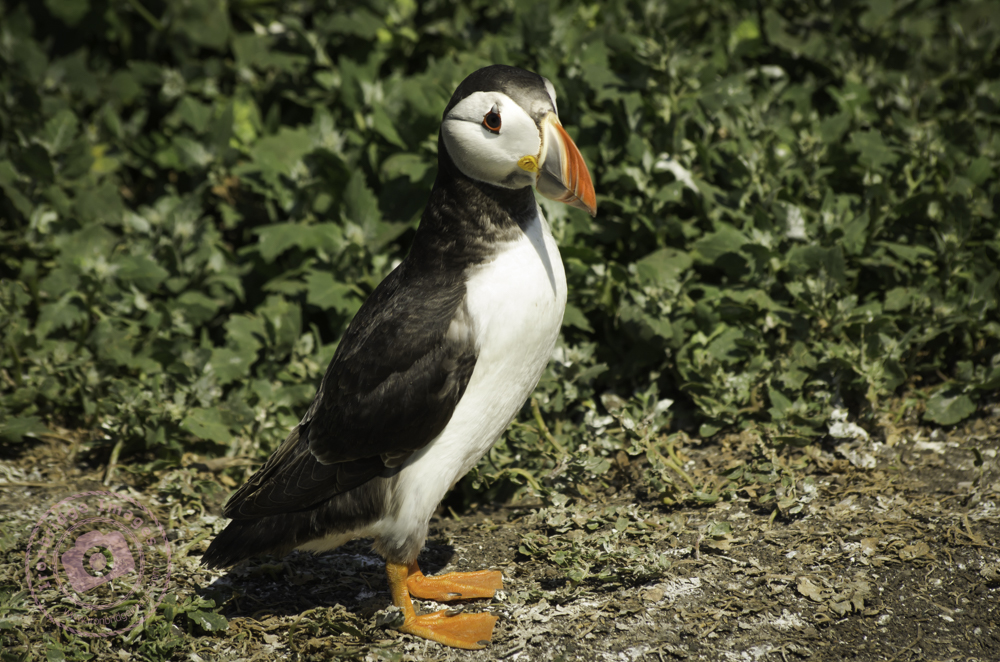
During one of our trips to Northumberland, I took a boat trip with my brother-in-law, Maurice, to the Farne Islands, the purpose of which was to get some shots of the puffins. It was a fantastic trip, and well worth it if you are ever in the area.
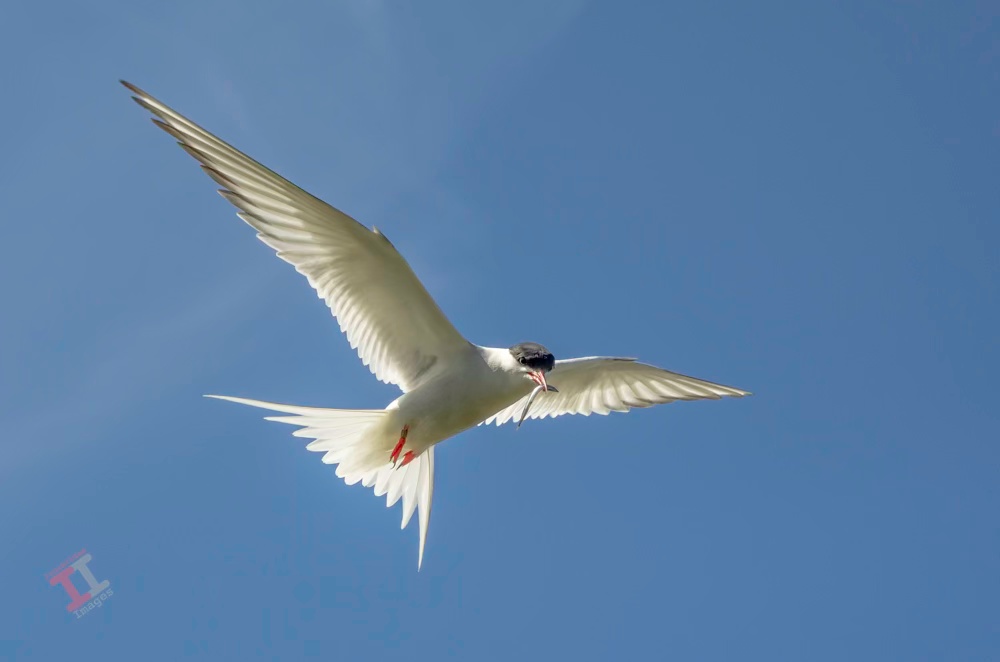
Although I took many, many, pictures of puffins, my favourite shot of the day was of an Arctic Tern returning from the sea with a small sprat, presumably to feed its chicks.
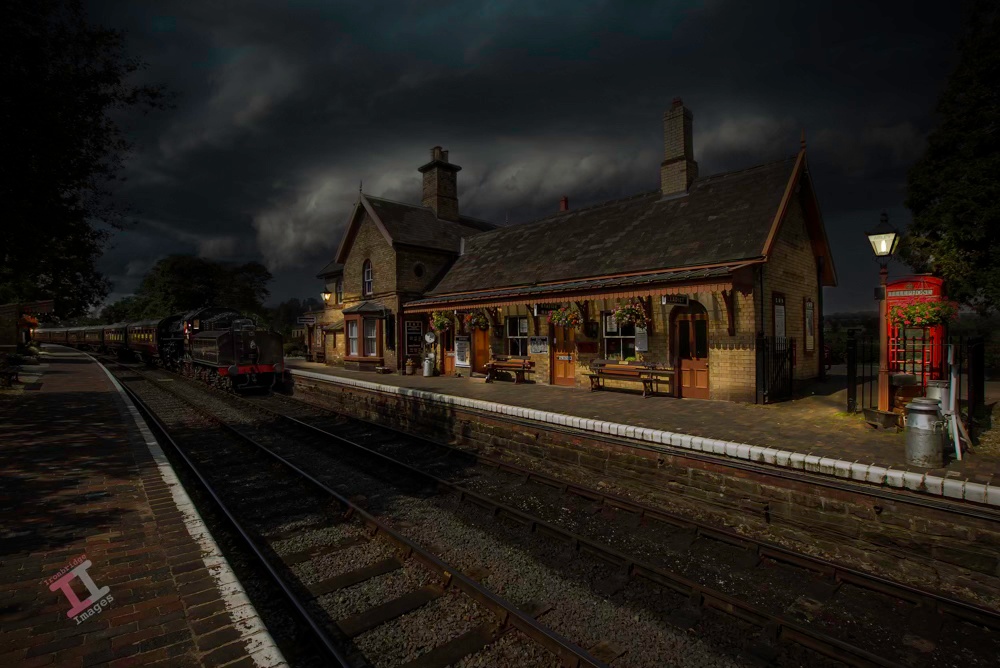
Arley station, built in 1862, lies on the Severn Valley Railway, 8 miles south of Bridgnorth, and its original look and features has meant that it has starred in many films and television productions. It closed as a passenger line in the 1960’s and the buildings became overgrown, but in the 1970’s restoration works started and it is now maintained by a group of volunteers.
Here, the LMS IVATT CLASS 4, 43106, built in 1951, pulls passenger carriages into the station ‘tender-first’, in other words; the locomotive is running in reverse.
This image was taken in the daytime, and then converted into a twilight scene using the power of post-processing, utilising both Adobe Lightroom and Photoshop.
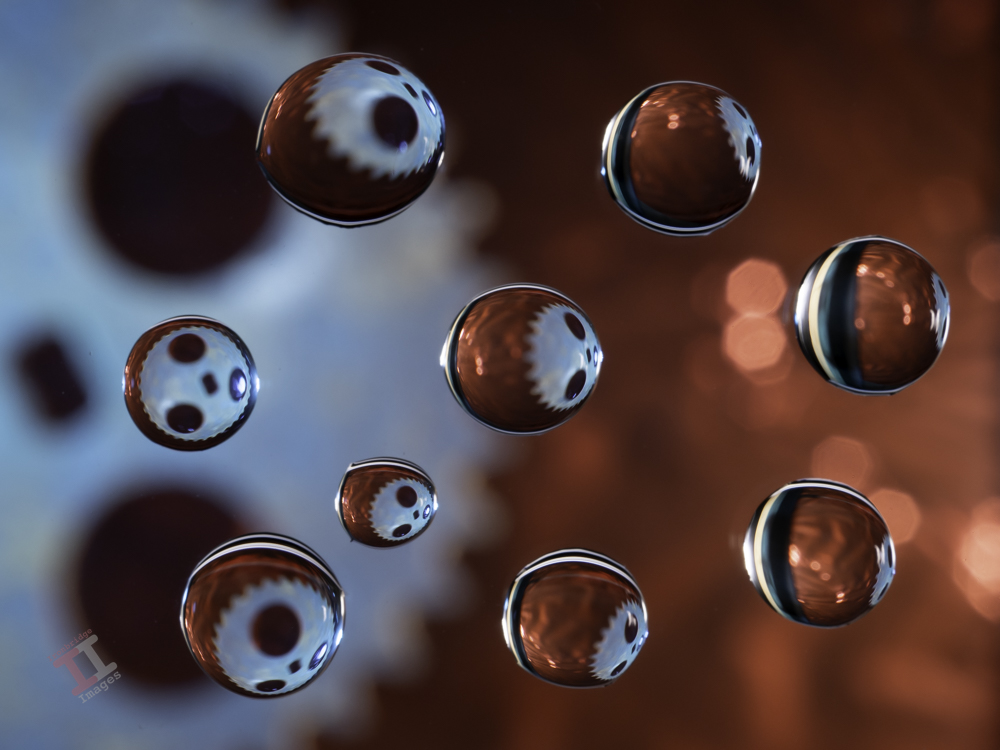
The basic premise of Hydro Droplets photography is that a droplet (or sphere) of water will refract an extremely wide-angle view of its surroundings (similar to a fisheye lens). By controlling the position of multiple droplets, fascinating patterns can be created, both by the droplets themselves and by the view that they refract.
This is the first of a series of 24 Hydro Droplet images, each of which will be titled with a letter of the Greek alphabet.
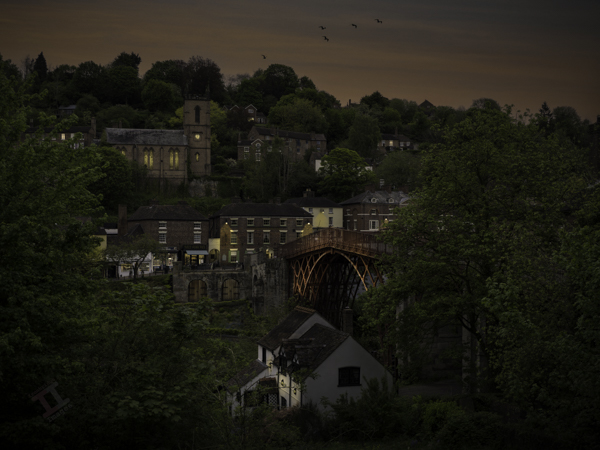
A ‘murder’ is the name given for a group of crows, and here, a number of them are leaving their nesting spot on the top of St Lukes church tower, which stands proudly over Ironbridge town and its famous bridge. The church was built in 1837 on a tight budget, which is why it is relatively plain. Unusually, the tower is the the east and the chancel to the west, probably due to the bedrock on which it is built.
Day-to-night images are, by definition, dark, and some people find it difficult to distinguish the details within them. It is important to check the brightness and contrast of your monitor in order to maximise your viewing enjoyment. You should be able to see 26 distinct bars on the contrast scale below. If not, check your settings and adjust accordingly.
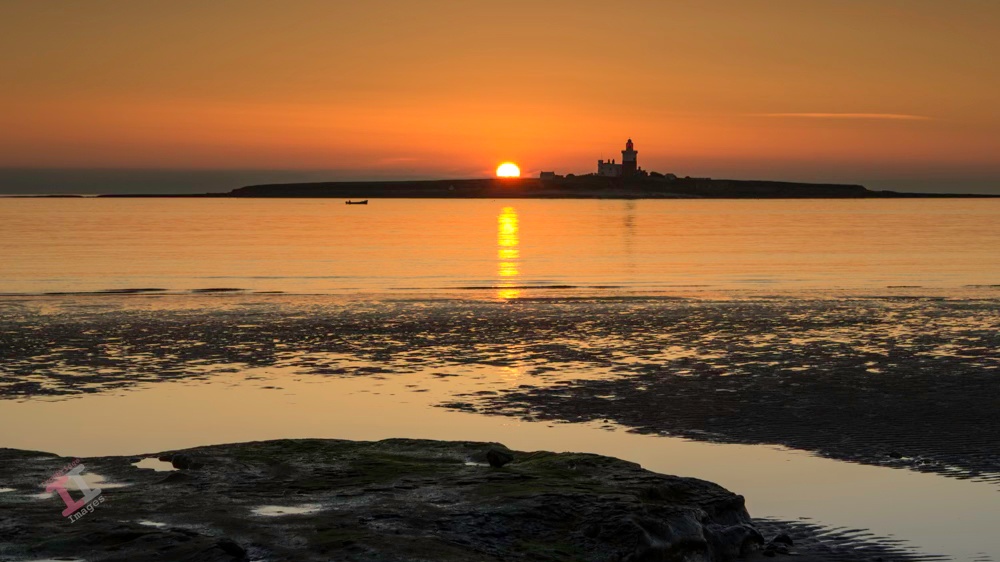
Another memory from our time in Northumberland; we had rented a small cottage near the town of Amble, and it was just a short walk through the back gate and down a field onto the beach. Just out to sea was Coquet Island, a small, uninhabited island that is a Royal Society for the Protection of Birds (RSPB) nature reserve and a safe haven for puffins, terns and seals. The lighthouse was built in 1841 but was automated in 1990.
We started out early to get to the beach before sunrise. I set my tripod up on the sand and waited. As the sun started to peek above the horizon, I could hear the distant sound of a small fishing boat, and when it came into view, I could see that it would pass in front of the island. All I could hope for was it would make the distance before the sun had fully risen and started blowing the highlights.
We have already seen the London & North Western Railway running into Coalport (East) station and the Great Western Railway running through Coalport (West) station to Ironbridge and Broseley Station.
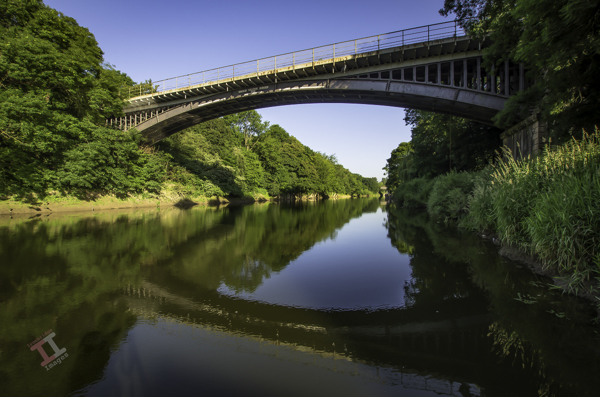
Here, we come across the Severn Valley Railway, which formed part of the line between Wellington and Craven Arms and was built (in stages) between 1857 and 1863. It had to cross the River Severn and did so via the Albert Edward bridge.
Albert Edward bridge (taken in 2013)
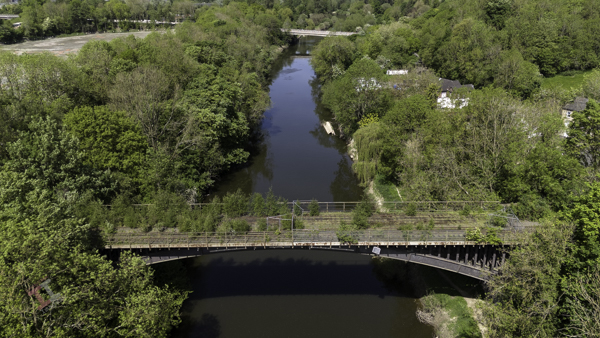
The bridge is named after Queen Victoria’s eldest son (who later became Edward VII). It was designed by Sir John Fowler and cast at the Coalbrookdale Foundries in 1863. It is considered one of the last major cast iron railway bridges built. Unlike the other two railway lines in the Gorge, this one continued to operate until 2015 – carrying coal wagons to the Ironbridge Power Station.
The bridge today – being reclaimed by nature
The centre of the span of the bridge denotes the boundary between Telford & Wrekin Council and Shropshire Council, and it is designated a Grade II Listed building, each Council claiming half.
Building bridges:
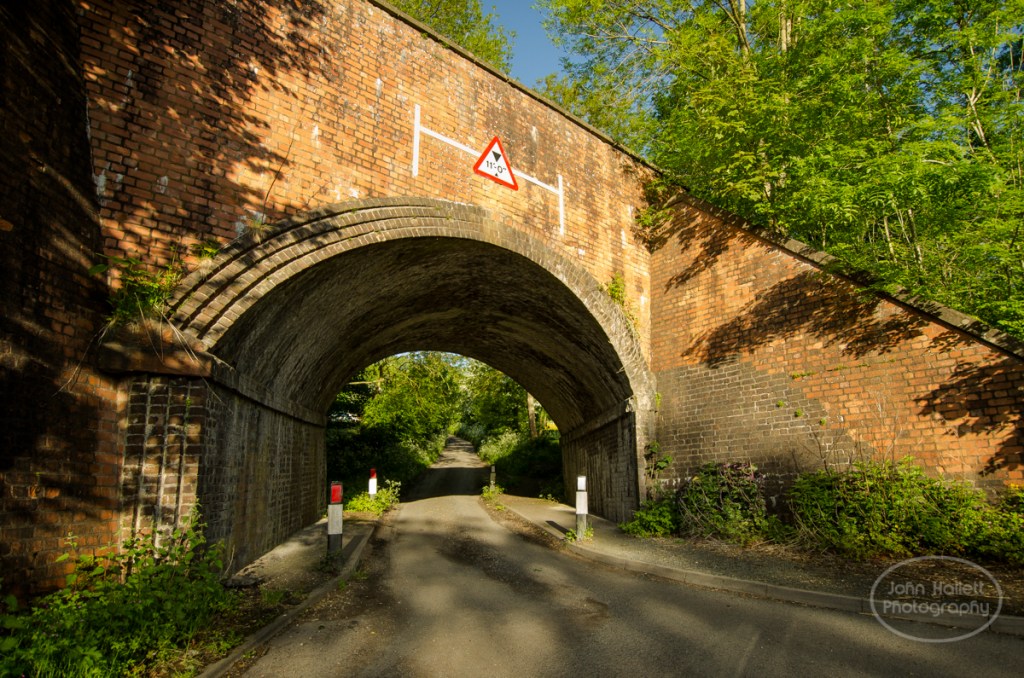
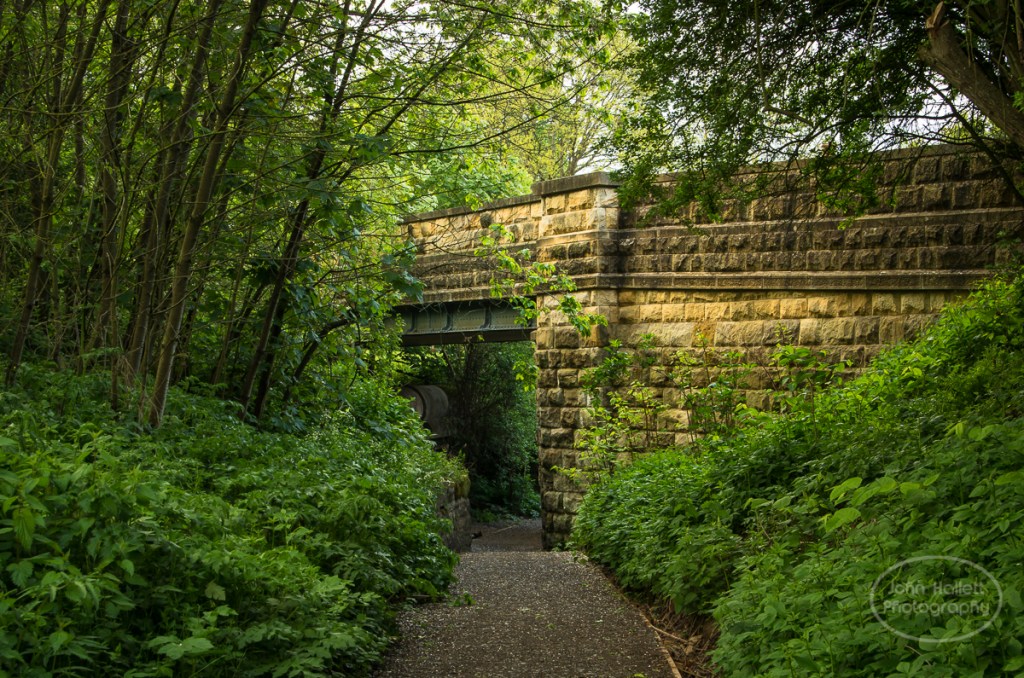
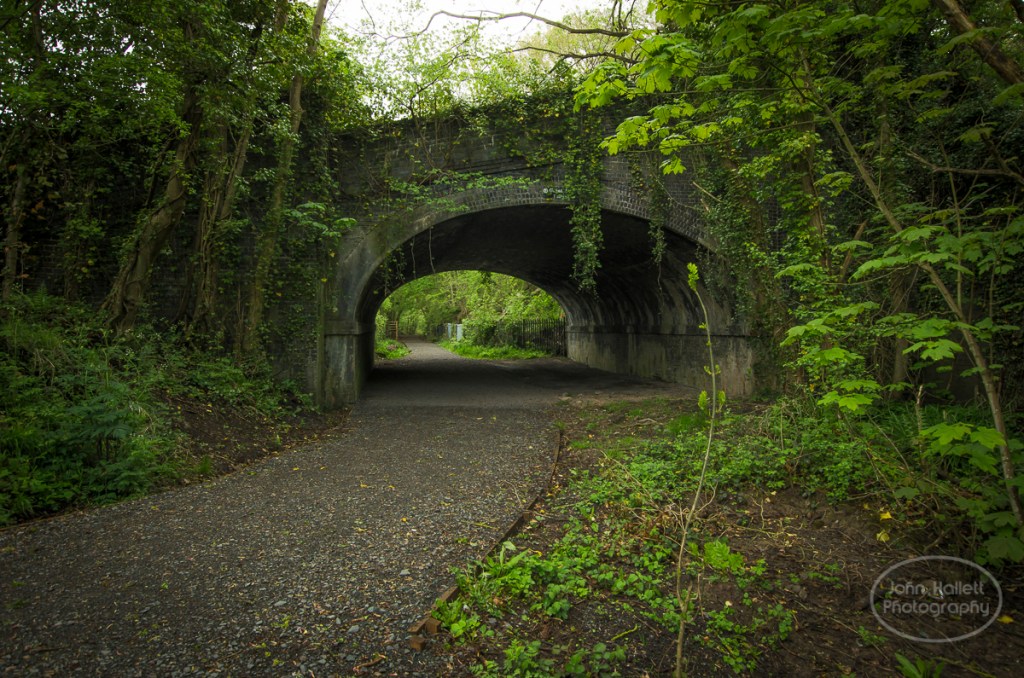
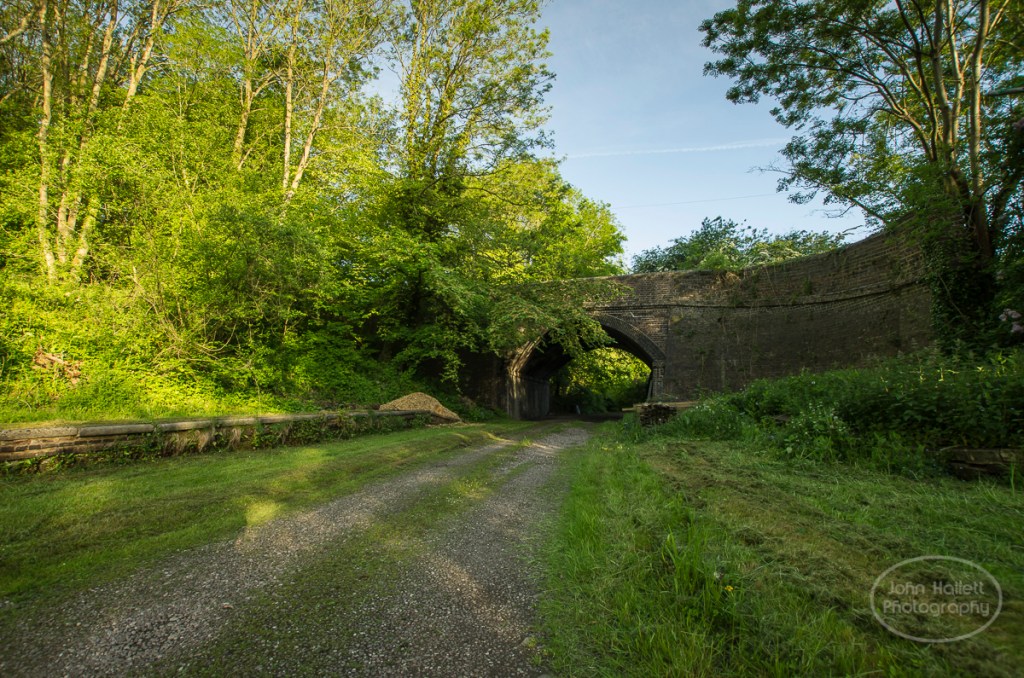
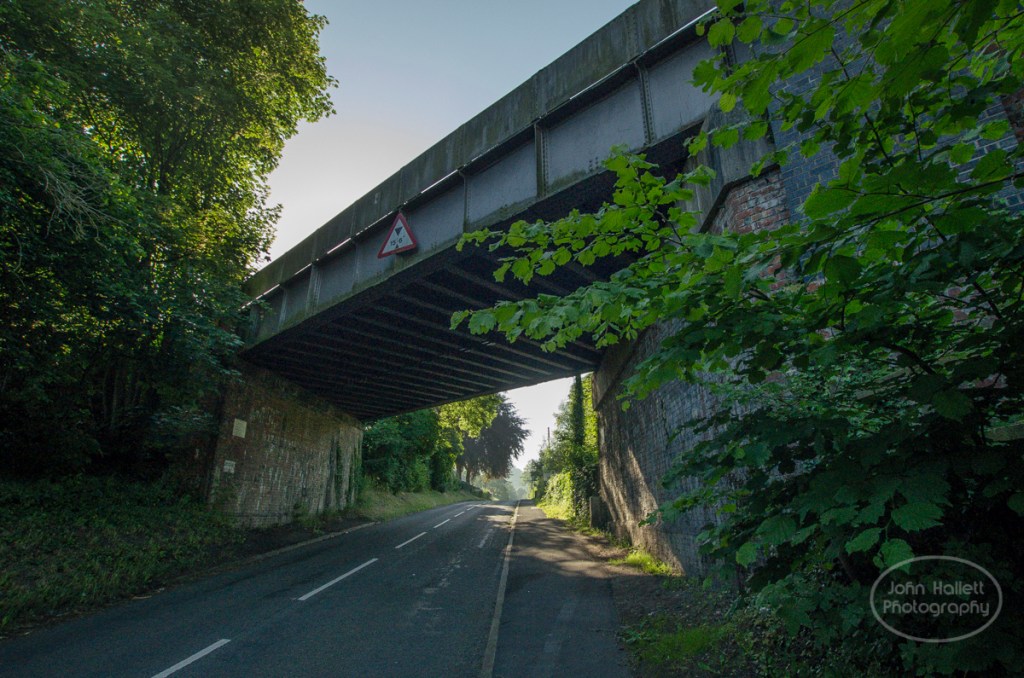
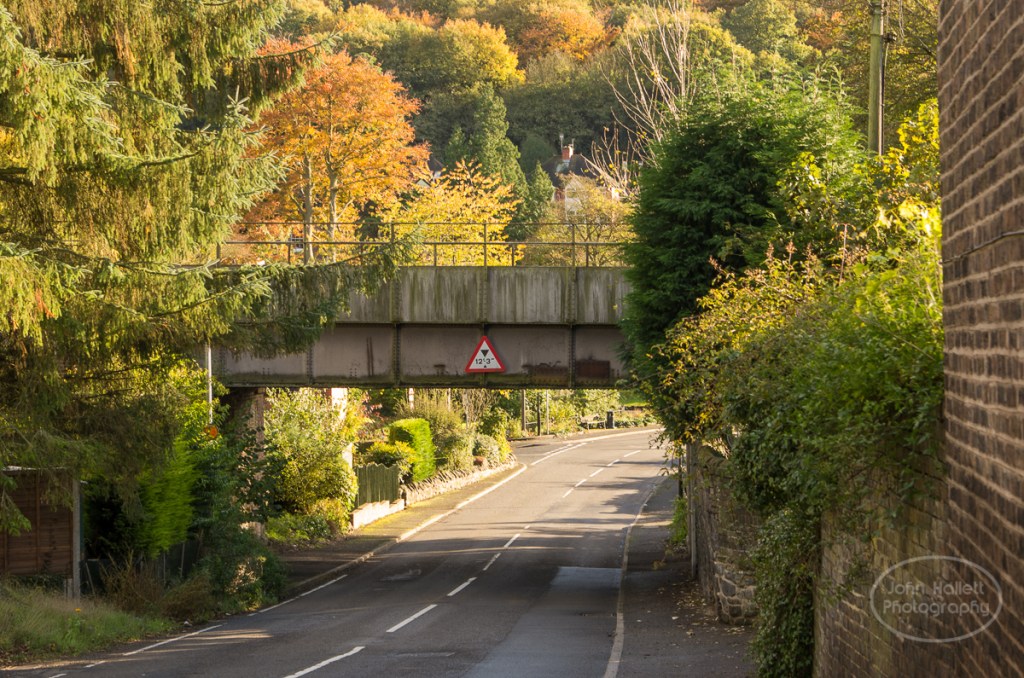
You may ask why the railway bridges in the south and east of the Ironbridge Gorge were built out of attractive brick and stone, whilst the railway bridges in the west are generally utilitarian metal girders. The answer is quite simple: building the section of the railway line between Horsehay and Coalbrookdale was a costly exercise, and metal bridges were cheaper and better advertisements for the Coalbrookdale Company than masonry ones.
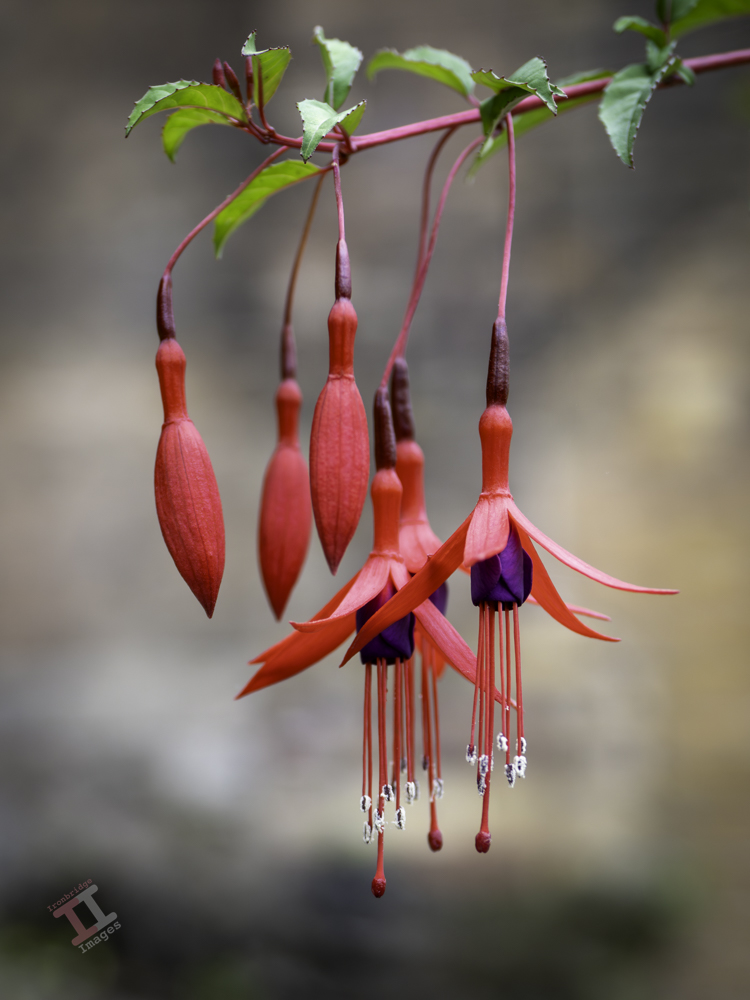
I haven’t done much flower photography recently – and certainly not since I changed cameras to the Micro-Four-Thirds Olympus OM-D E-M1 Mark III, with its M Zuiko 12-100mm f4 IS PRO lens. However, as I passed by a flowering fuchsia in one of our garden planters the other morning, I felt that is was really worth a photograph and so tried the above combo to see how it turned out.
Hand-held at 1/100s and ISO250, I am very pleased with the result. It is quite sharp with minimal noise and at f/4 it has made the background brick wall nicely out-of-focus.
I really should do more of these flora shots, particularly whilst the garden is in full bloom.
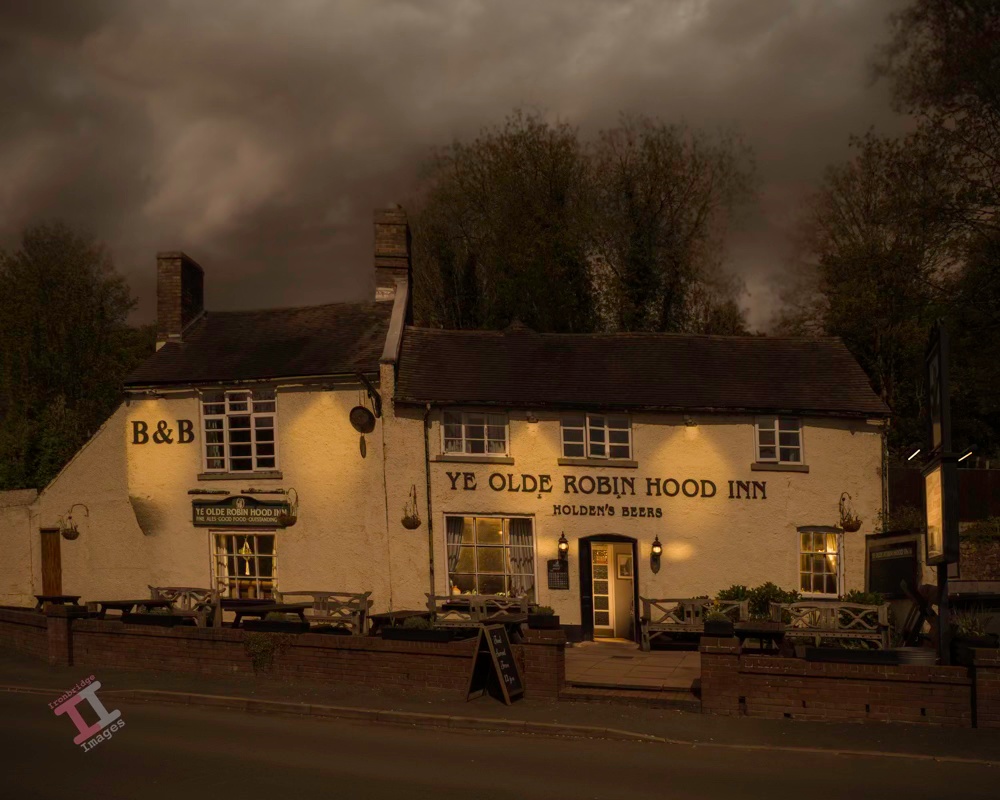
This public house is located between Ironbridge town and an area called The Lloyds; immediately adjacent to the Free Bridge, which crosses the River Severn. Although it is a detached building now, it was once part of a long terrace and was then just ‘The Robin Hood’. I’m not sure exactly when it was built, but it is marked as a public house in the Ordnance Survey map of the area created in 1883.
What seems to be unsure is whether it has always been called this name, because there is no obvious reason why it should. Robin Hood, the folk hero, was first mentioned in written ballads in the 1300s, but was then just depicted as a violent criminal who lived with his gang in Sherwood Forest. It wasn’t until much later that Maid Marion and Friar Tuck entered the legend and Robin Hood became a rebel, fighting injustice from the infamous Sheriff of Nottingham.I can’t recall any connection to Ironbridge or the pub trade.
At some point in the early 1970s the Robin Hood ceased being a licensed premises and became an antiques shop, but later in the same decade it reverted back to being a hostelry.
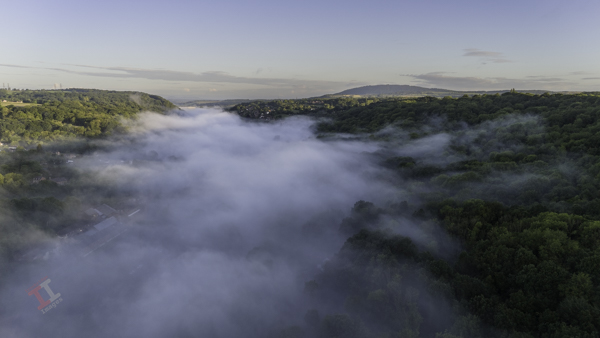
Visibility was limited when I opened the blinds in the kitchen window this morning – a thick blanket of mist had descended into the valley. I took the opportunity to fly the drone above the cloud to capture this image over the Severn Valley.
Ironbridge Gorge Cloud Inversion
Within 30 minutes the mist had cleared and we were ready for another day of summer sun rain.
This type of phenomena is called a ‘cloud inversion’ and is caused when temperatures near the ground are lower than those higher up in the air. It is more common during Autumn and Winter, typically just after sunrise.
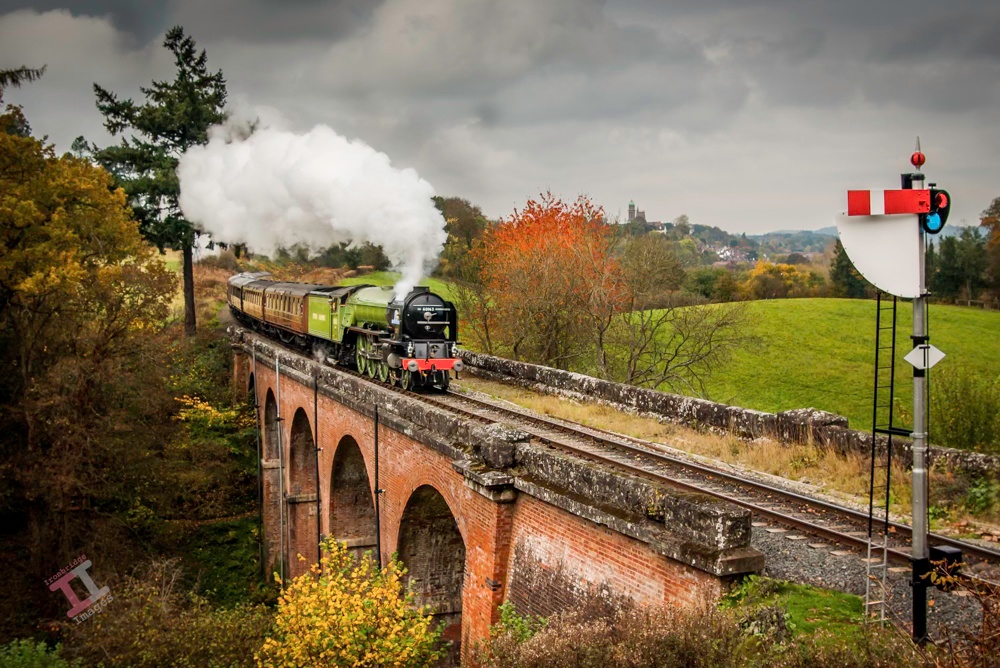
The ‘Tornado’ (No 60163) is a London & North Eastern Railway (LNER) 4-6-2 Peppercorn Class A1 steam locomotive built in 2008 to an original design by Arthur Peppercorn.
Tornado hits Shropshire – as captured in 2018
It was the first newly-built British mainline steam locomotive since 1960 and the only Peppercorn Class A1 in existence after the original batch were scrapped. To commemorate this fact, it embarked on a tour of the UK in 2018, including the Severn Valley Railway between Kidderminster and Bridgnorth.
I decided to capture the event and, after consulting a map, decided on a spot just outside Bridgnorth at Oldbury, overlooking an arched viaduct. When I arrived, I found a number of others already assembled, most of whom seemed to be train enthusiasts rather than photographers. However, when the train finally made an appearance it was facing ‘the wrong way’ and was pulling the carriages in reverse – hardly an inspiring photograph.
There was much muttering amongst the assembled throng, and it became apparent from those ‘in the know’ that the engine would change ends at Bridgnorth station and would return ‘the right way around’. The problem was that the view would be rather poor at the current vantage point because we would now be looking at it in the opposite direction away from the viaduct.
Fortunately, some of the enthusiasts had the necessary authority to allow them to walk on the track and cross over the viaduct – and they kindly allowed me to join them. So I ended up in, what turned out to be, a better spot, with a signal post in the foreground and the viaduct beneath. It was a good hour wait before the train returned but, as predicted, it was in the correct orientation and emitting copious amounts of steam into the sky as it built up speed for the return journey.





 Ironbridge Images