
Blast from the past: Wind turbines and sheep

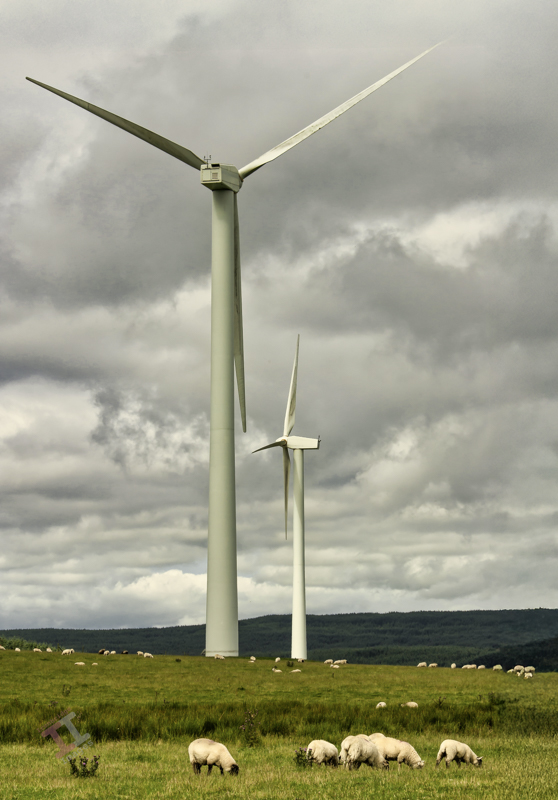
Wind Turbines and Sheep

The year was 2010 and I was in North Wales on a short photoshoot break. On the way to a location, we passed these large wind turbines with a flock of sheep grazing below, apparently unaware of the giant structure above. We stopped and I took a number of shots, originally intended as stock photographs, although they never got much further than my hard drive!

It’s not for me to debate whether or not the manufacture and erection of these giant metal structures is more, or less, environmentally friendly than traditional methods of electricity generation, or whether the blot on the landscape is more or less intrusive than rows of electricity pylons strung together with miles of cables. Either way, the sheep seem to have got used to them.

Secret Ironbridge: The impostor

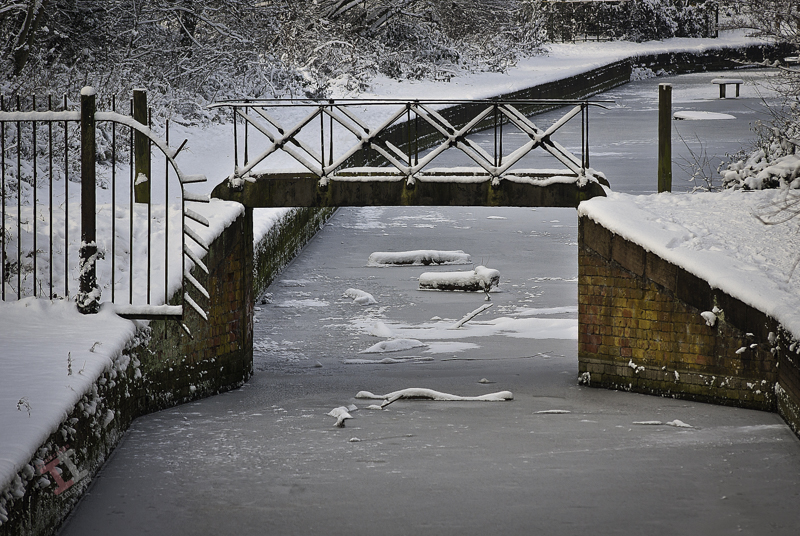
This narrow cast-iron footbridge crosses the Shropshire Canal close to the Coalport China Works.

Although it looks original, it is actually an impostor, and was brought in from the Shrewsbury Canal at Long Lane near Wellington when this section of the Shropshire Canal was restored in the 1970’s. When you think about it, this canal was built for an industrial purpose – to transfer tub boats of coal on the Transhipment Interchange from the canal, to the river – and the last thing that the barge haulers would need would be another bridge crossing over the canal, limiting the height of the load on the tub boat and snagging the rope used to pull it. There was a bridge, but this was at the entrance to the Coalport China Works.

A small cast-iron footbridge over the Shropshire Canal at Coalport
A little bridge

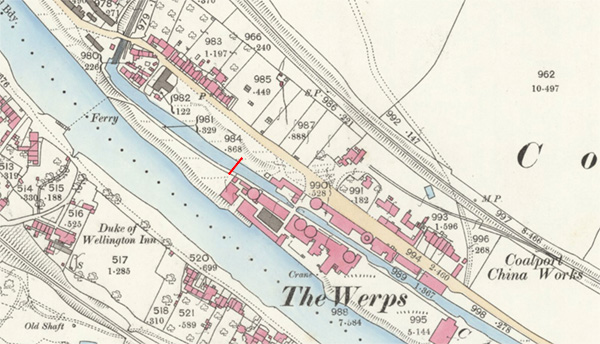
Here is an Ordnance Survey map from 1881 and I have placed a red line in the approximate position of this impostor bridge. As a point of interest, prior to the 1890s the buildings on Ordnance Survey maps were coloured; carmine (pink) for buildings of brick or stone, and grey for buildings of wood or metal. The colour was applied by hand, either by boys or women, paid on a piece-work basis.

Jackfield on a frosty morning

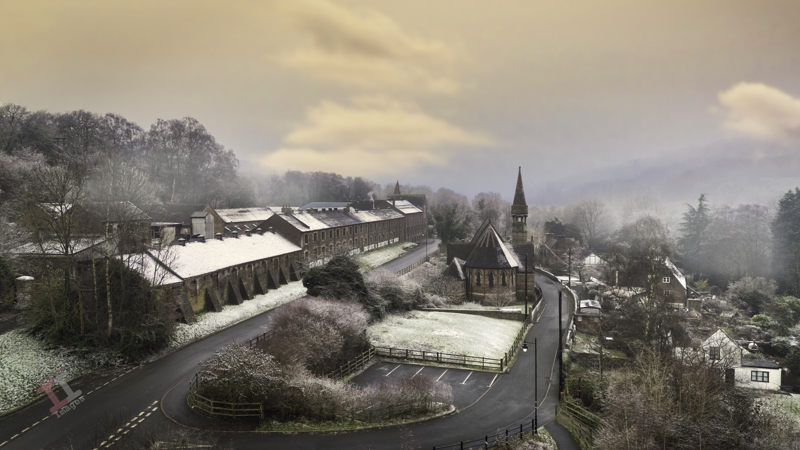
A frosty morning in Jackfield, following a particularly cold spell in January. The sun tried to make an appearance and raised the temperatures sufficiently for me to take my drone for a short flight and I captured his image of the spire of St Marys church, contrasting the stark, Victorian architecture of the Craven Dunnill tile factory.

St Marys church in Jackfield on a frosty morning (aerial shot)
Jackfield on a frosty morning

Secret Ironbridge: Bridge over the Hay Incline Plane

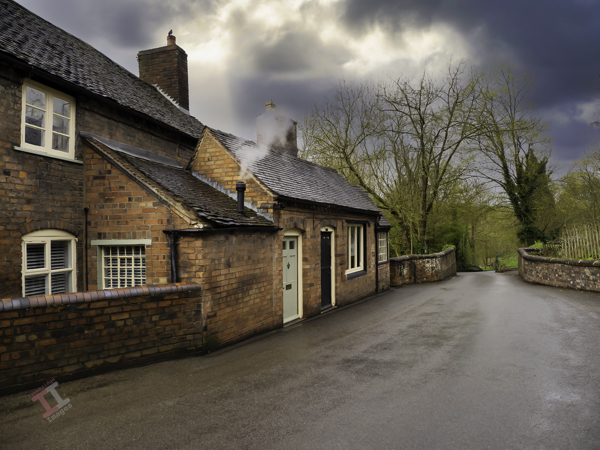
This narrow road bridge crosses the Hay Inline Plane at Coalport. Most people probably don’t even give it a thought, apart from when they have to give way to oncoming traffic, but the bridge dates from around 1792, the same time that the Hay Incline Plane was built, due to the bridge crossing it, at the point that it meets the Shropshire Canal at its low level, adjacent to the river Severn.

The bridge is a Grade II Listed Building and the small building to the left must, judging by its orientation and layout, have originally been a toll house. For many years it was the village shop but more recently has been a barbers, and now a hair-dressing salon.

The bridge over the Hay Incline Plane at Coalport with the old toll house to the left
Bridge over the Hay Incline Plane
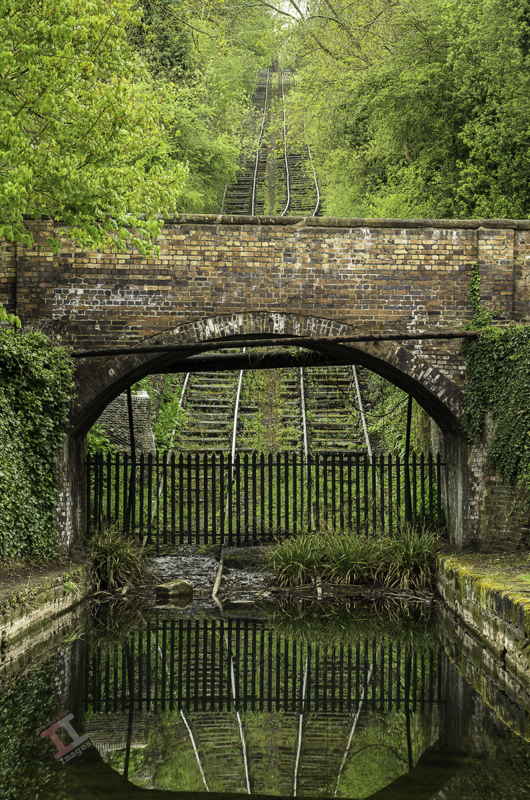
View of the Hay Incline Plane from the lower section of the Shropshire Canal

In 1801, the chain pulling an empty tub boat and cradle up the incline snapped, sending both hurtling into the canal just below the bridge, destroying another three tub boats in the canal. Shortly afterwards, wire ropes replaced the chains because these were less likely to become worn and snap.

The last recorded use of the incline plane was in 1894 and it formally closed in 1907. The original tracks were removed and the incline became overgrown – the tracks laid on the incline today are merely a re-creation of what they were – in reality, the centre of each track would have rollers to support the wire ropes pulling the tub boat and cradle up the incline.

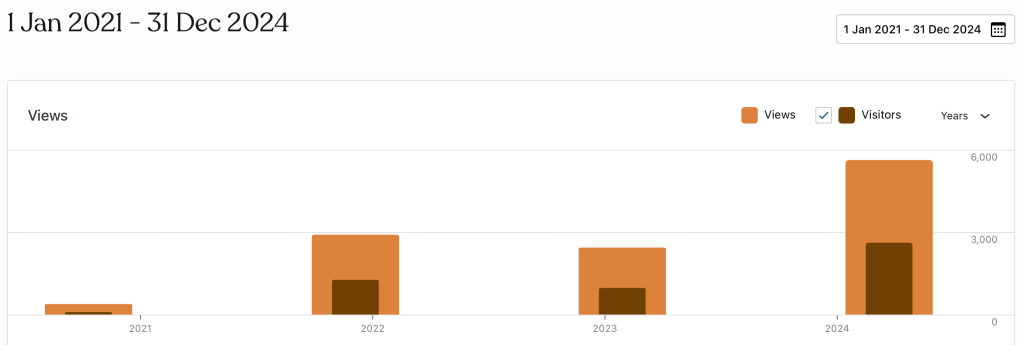
Blog statistics for 2024

I have looked at the statistics for my blog for 2024 to see what I can learn from them and how I can improve in 2025. Here are my findings:

Summary:

In 2024, I wrote 84 blog posts, totalling 20,000 words. This resulted in 2,600 visitors (up 170% from the previous year) and 5,600 page views (up 131%).

The yearly statistics are interesting for me, in that I ‘retired’ from motorsport photography at the end of 2022, and yet visitors and views now seem to be on the increase, contrary to what I was expecting when taking into account the sheer quantity of motorsport images that I used to take. I suppose it proves the old adage that “quality is better than quantity”.

Continue reading “Blog statistics for 2024”

Holy Trinity in the mist

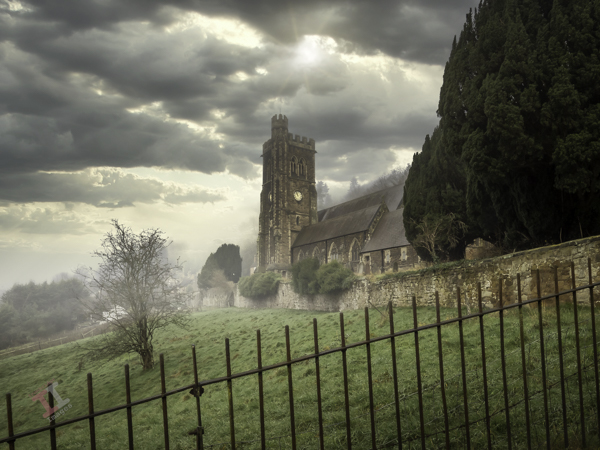
The day after Christmas, 2024, and the Ironbridge Gorge was covered in a layer of mist that lasted from morning to night.

Here is Holy Trinity church at Coalbrookdale, built in 1854 at the behest of Abraham Darby IV, one of the Coalbrookdale ironmasters, who’s grave lies in the churchyard.

Holy Trinity in the mist

St Luke’s in Ironbridge

St Luke’s church tower can be seen behind a silver birch in this view from St Luke’s road in Ironbridge. There are many gems to be found in the back streets of the town if you care to look for them.

St Luke’s in Ironbridge

Secret Ironbridge: Lime kilns on the Wharfage

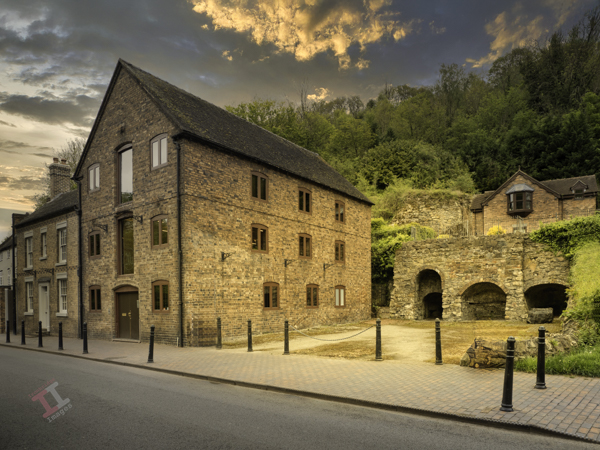
Set back from the road, on the Wharfage at Ironbridge, are these three arches which, from studying a map from 1882, are most likely to be lime kilns.

Limestone was commonly used in iron smelting as a flux to remove impurities. However, only the highest quality limestone was used for this purpose and the lower quality was burned in kilns, such as these, to produce quicklime which was used in building mortar and lime wash. The kilns operated at 900 degrees Centigrade and would have filled the air with noxious fumes that would have hung over the river, making it an unpleasant place to be.

Lime kilns on the Wharfage

One-man-band

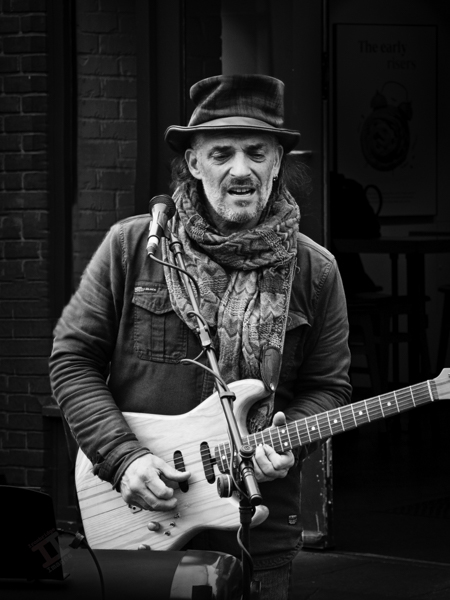
A few weeks ago we paid a visit to the Stratford-upon-Avon Christmas market. I can’t remember the last time that I saw so many people in the same place, and entertaining the crowd was this one-man-band (and very good he was too). Taking this type of street photography put me very much outside of my comfort zone, but I persevered and managed to get a shot before a throng of people obliterated the view. I converted the shot into monochrome which I think suits the ‘grungy’ look.

One-man-band

St Marys church, Jackfield

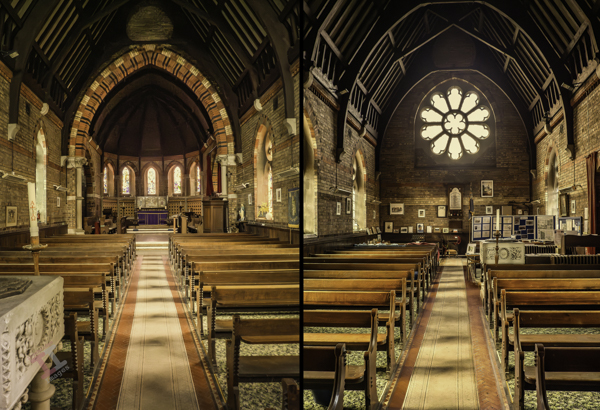
St Marys church in Jackfield, near Ironbridge; a hidden masterpiece of ornate brick and tile. As a bit of a change I have created this diptych (artwork consisting of two panels) showing the view both ways from the nave.

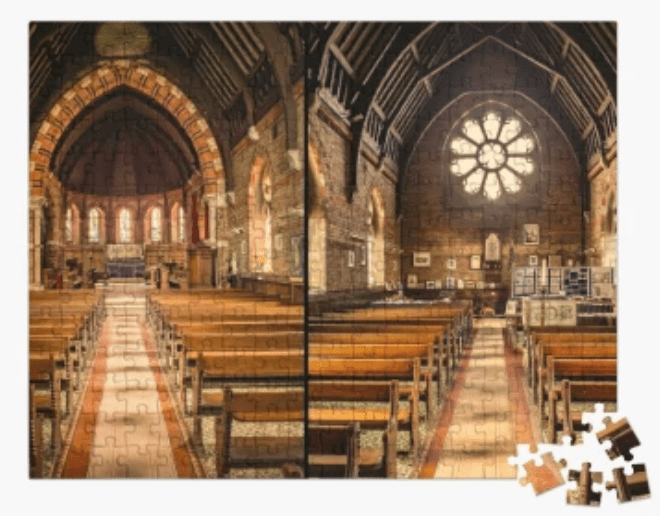
This image is available as a 1000 piece jigsaw at my ‘Average Images’ Redbubble site, and should be sufficiently complicated for die-hard dissectologists.

St Marys church, Jackfield

Titterstone Clee graffiti

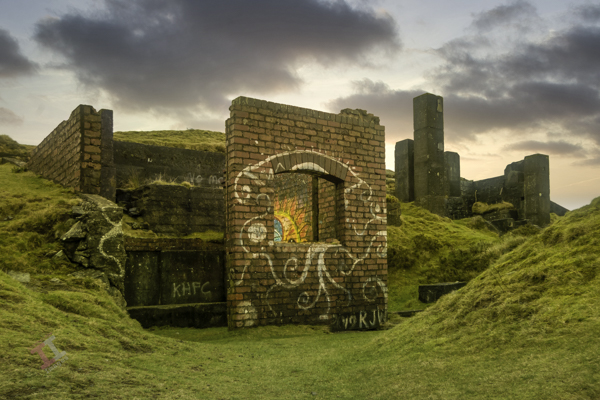
During my Christmas break I have been looking though my archive of photographs and found this shot taken on Titterstone Clee hill, near Ludlow in Shropshire, the urban art providing an interesting contrast with the lush grass.

Titterstone Clee graffiti

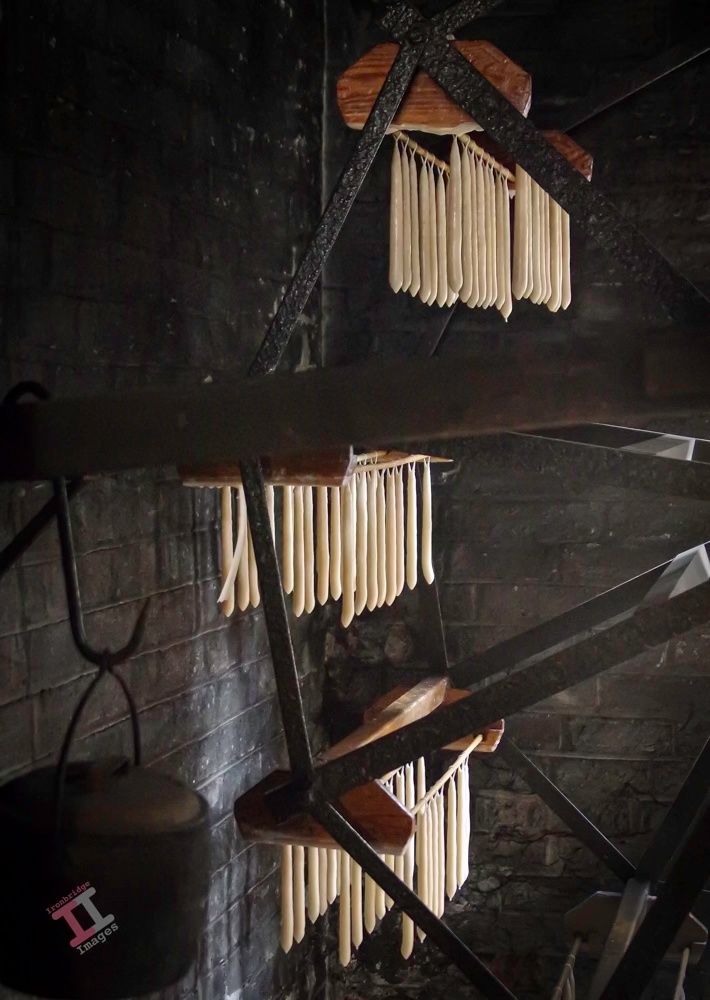
Featured Image: Candle-dipping carousel

Here is a shot from a visit to the nearby Victorian Town museum a few years ago – wax candles being manufactured and hung to dry. Basically lengths of wick are hung onto a wooden frame and then dipped into a bath of molten wax. The frame is then hung onto the rotating carousel to allow them to dry and another frame is dipped. This dipping cycle continues until enough wax has deposited onto the wick to form a usable candle – which could be up to 100 times. This would have been a prosperous cottage industry in the Victorian times when the majority of indoor lighting would have been provided by candle but the invention of the electric light bulb in 1879 started the decline.

This was a hand-held shot at 1/80 second. Even with the lens opened up to f/2 the ISO was still 8000 – but fortunately there is little noise in the image.

Candle-dipping carousel