I’ve been immersed in photography for many years, exploring a variety of genres along the way. From capturing diverse landscapes to delving into the intricacies of still-life scenes, my lens has always been drawn to subjects with historical significance. It was inevitable that my work would feature the area where I grew up: the Ironbridge Gorge, which supplies almost limitless subjects on which to focus.
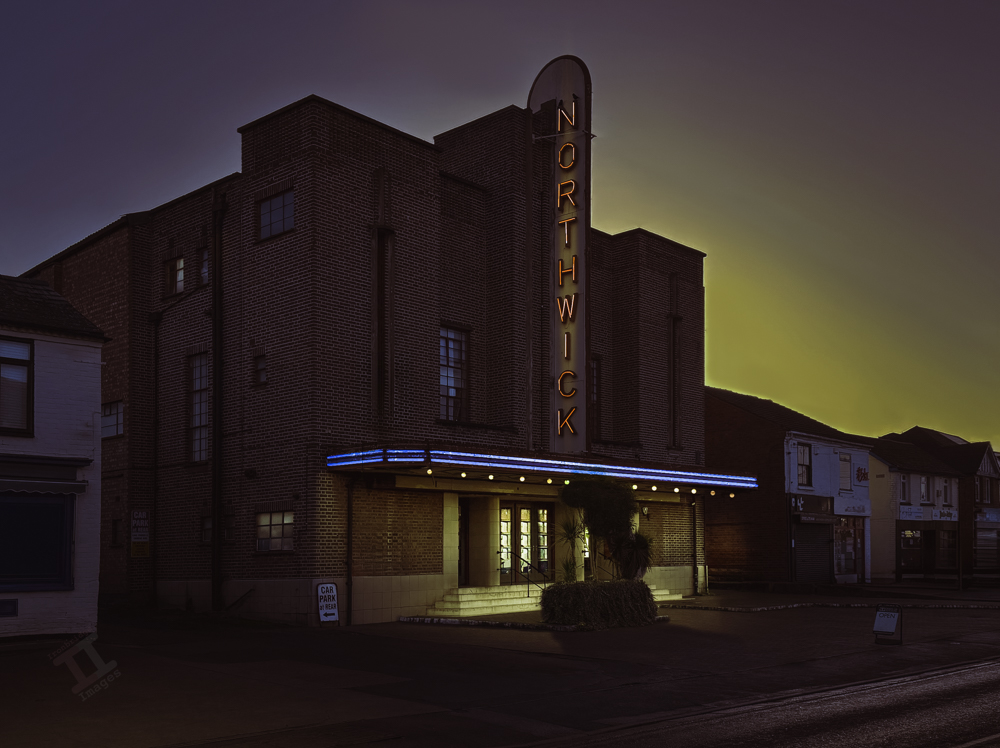
The Northwick cinema in Worcester was opened in 1938. A privately-owned cinema, it had 800 seats in the stalls and a further 300 in the upper circle, and it has classic art-deco styling throughout.
Sadly it closed as a cinema in 1966 and, like many others, became bingo hall until 1982. It had a brief resurgence as a live music venue, and is now an antique furniture shop, although its future is uncertain as they are currently trying to find smaller premises. It is on sale for a cool £1.3 million.
This is another of my day-to-night projects. Unfortunately, online image reproduction routinely ruins the overall contrast in these type of images and so they never look as good as they do on my monitor.
Yesterday we spent the morning in the city of Worcester and I made a considered effort to take some photographs with my phone camera, on the basis that my mission for the New Year is to (a) use it more often, and (b) learn how to use its various functions.
There is clearly much to be done. Apart from the fact that I was clumsily touching the screen and randomly turning the camera off whilst I was trying to use it, I was also struggling to come to grips with the new ‘camera control’ button, that I didn’t have on my previous iPhone, which, apart from activating the shutter, also has various functions that I didn’t know about and (again) my stubby fingers were changing settings without me realising.
Back at home, I also found that the default HEIC image format isn’t fully compatible with Photoshop and so that has now been changed so that I can easily choose between JPEG and RAW. I have also downloaded a book onto Kindle called “iPhone 17 User Guide” which I will now actually read so that I don’t get so frustrated the next time.
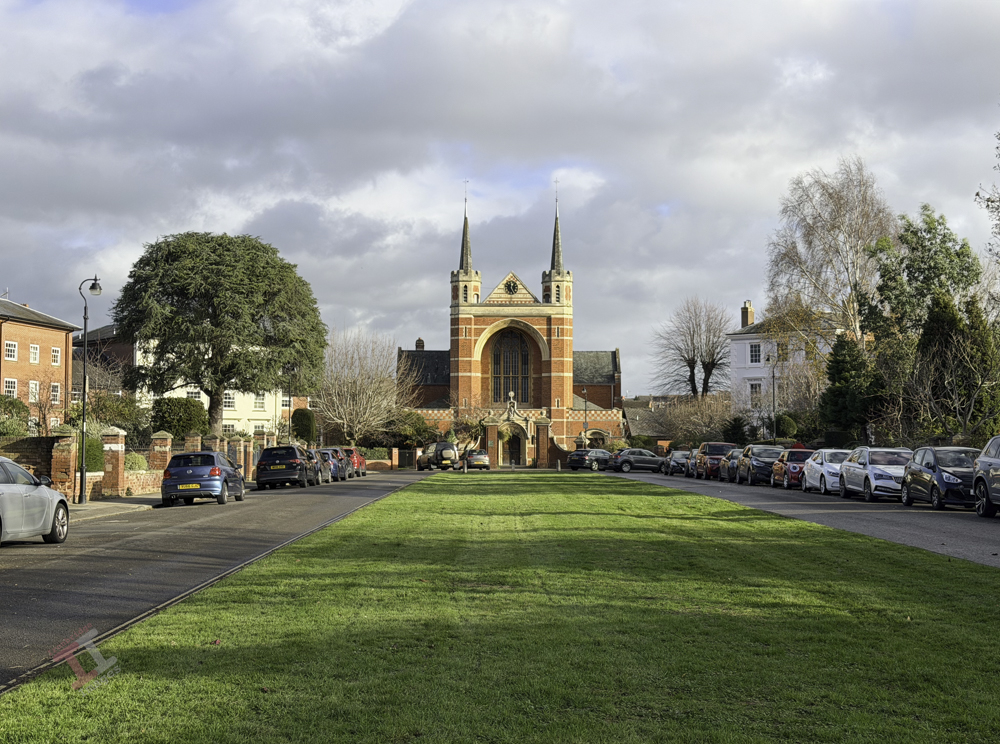
Anyway, here is a shot of St Georges Square, Worcester, with St Georges Church in the background – which was built in an Arts and Crafts style in 1895. I may convert this into a day-to-night image later on.
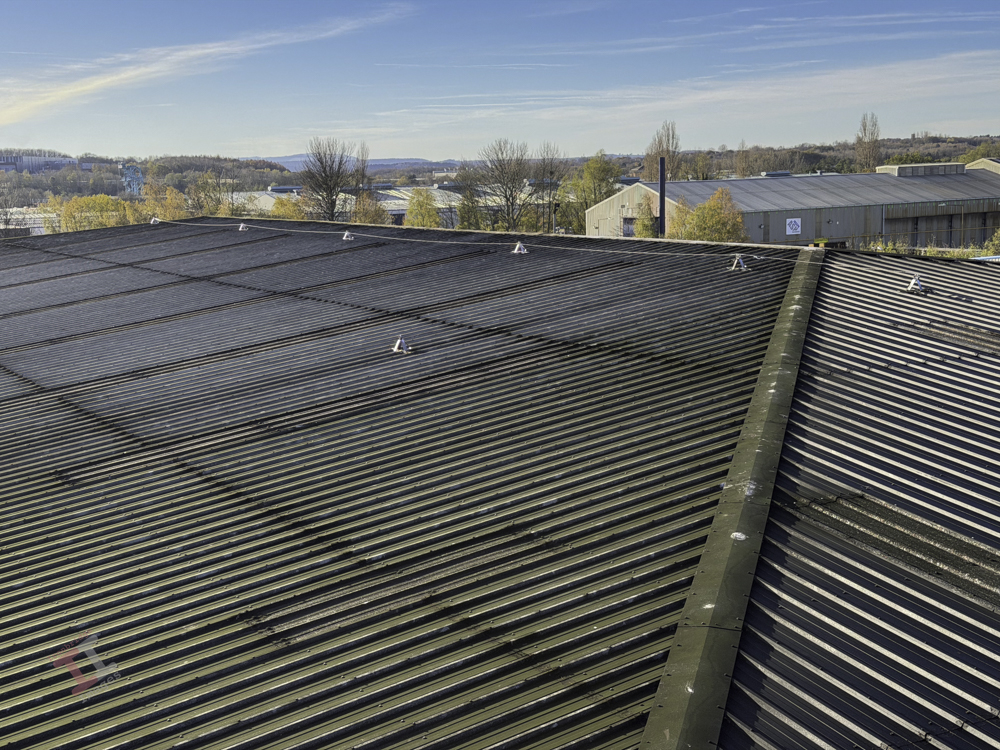
Yesterday I was viewing the factory roof at TCL Packaging from a rather large scissor-lift, some 15 metres in the air, whilst contractors explained some work they are going to be doing next week. I took some record shots with my iPhone 17 Pro Max and, when viewing them later, couldn’t help noticing the superb image quality, particularly of the distant Shropshire countryside.
It makes me think that I really should use my phone camera more often (since it is nearly always with me) now that the results are arguably as good as from a dedicated camera.
Of course, you have to deal with camera snobbery; “a phone camera isn’t as good as a dedicated camera”, “a micro four-thirds isn’t as good as an APS-C”, “an APS-C isn’t as good as a full-frame”, “a full-frame isn’t as good as a medium format”, etc, etc. I have been lucky enough to have had most of these types of camera (albeit I leap-frogged from APS-C to medium format and never owned a full-frame) and can honestly say that it never made any appreciable difference to the quality of my images (or course, I haven’t printed out any billboard-sized ones recently!).
So, my intention is to take more photographs with ‘the camera in my pocket’ – although I seem to remember saying the same thing the last time I upgraded my phone!
Black bryony is a poisonous, climbing perennial plant with heart-shaped, glossy leaves and red berries in autumn. It can be found in British woodlands and hedgerows, and all parts of the plant, especially the berries and tubers, are toxic and can cause severe skin irritation, so consumption and contact should be avoided.
In English folklore, Black Bryony was seen as a plant of entanglement and deceit. It was sometimes called the “Devil’s Vine”, believing that its climbing stems could snare the careless, or lure children into danger with its tempting, jewel-like berries.
I decided to use some in this shot, adding a poison bottle and glass to create a scene. I was going to take more, but Mrs H seemed to be getting restless about me having it in the house!
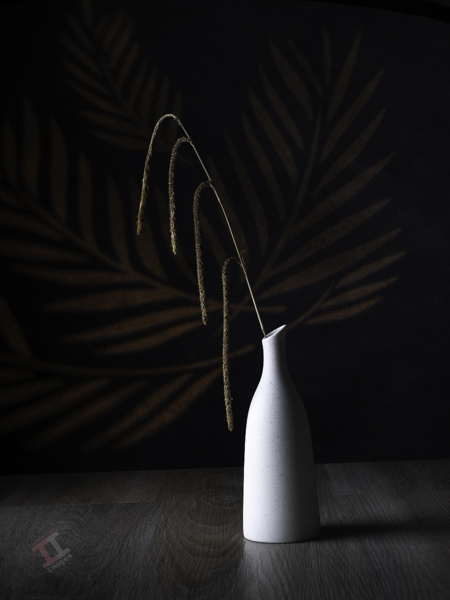
Another studio lighting trial, this time with a simple cross light from a soft box, together with a back-lit projection. In hindsight, maybe the projected image is a bit too much – perhaps I should have toned it down a bit (or omitted it altogether).
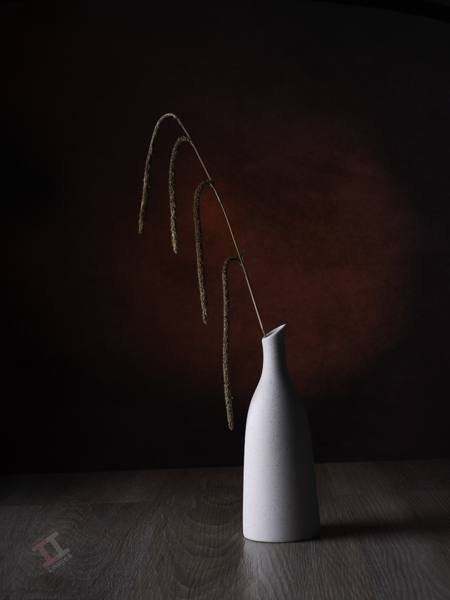
So here is another version, this time with just a red backlight from a snoot:
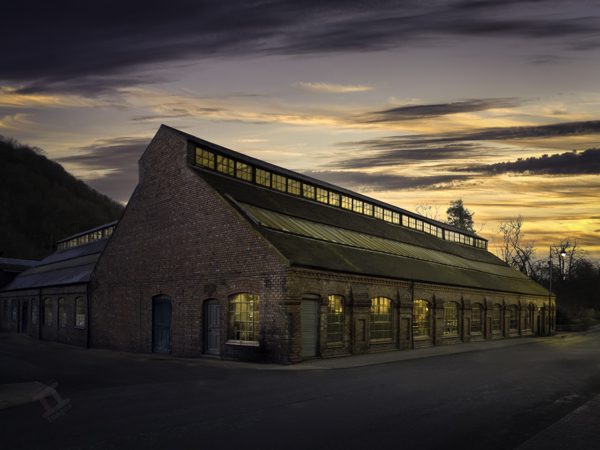
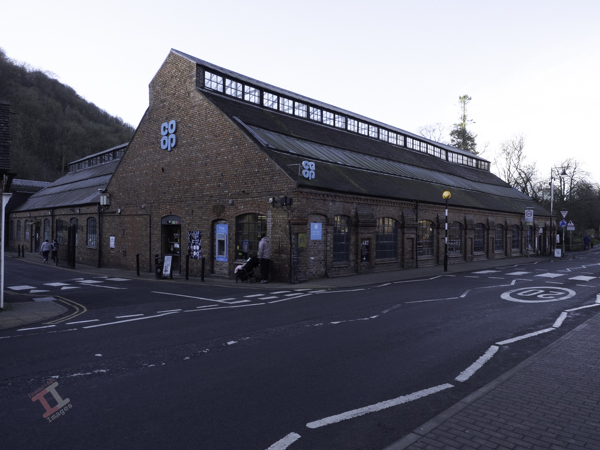
I make no excuses when I state that this is a heavily-edited image of the Merrythought teddy-bear factory in Dale End, Ironbridge – now more commonly known as the Co-Op.
Taking a memorable photograph of this building now is virtually impossible due to the multitude of signs and road markings that adorn the exterior. I started my post-processing by removing some of the signage and people, but as I progressed, it seemed that the final image was going to work far better if it became more of a re-creation of the building in its heyday.
This took some more careful editing, including replacing some of the doors that were originally there. Finally, I replaced the boring, plain Winter sky with a golden sunset and made a day-to-night conversion, which included lighting the interior of the building.
Some may say that this is taking editing too far – but I think that it makes a nice image of an industrial building that is otherwise uninspiring. What do you think?
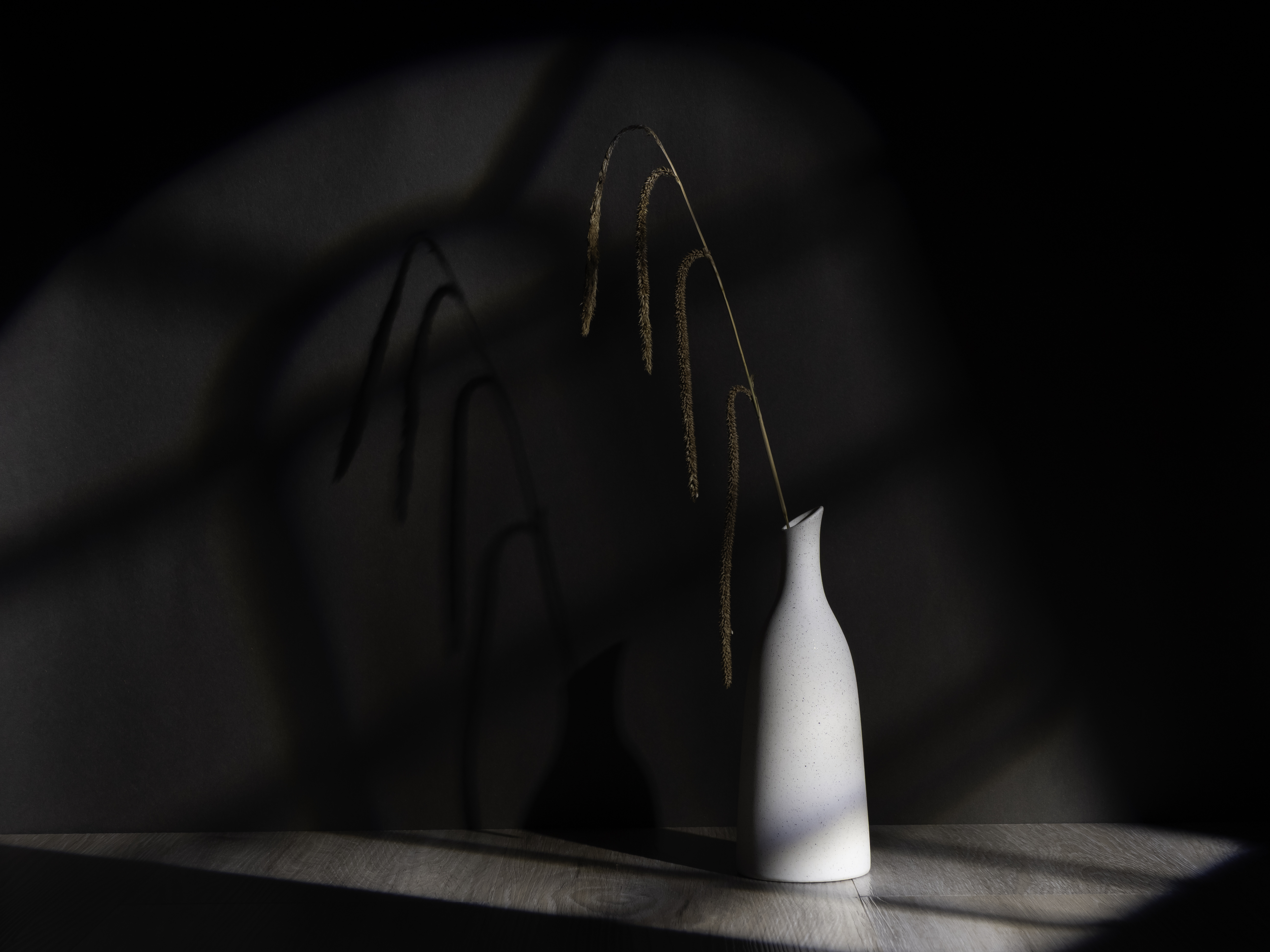
With a new studio and and an additional projector lens for one of my strobe lights, I have changed direction back to still life photography, which should keep me occupied throughout the winter months. Here is one of my initial trial shots using the afore-mentioned projector lens, which I think will provide a multitude of ideas moving forward.
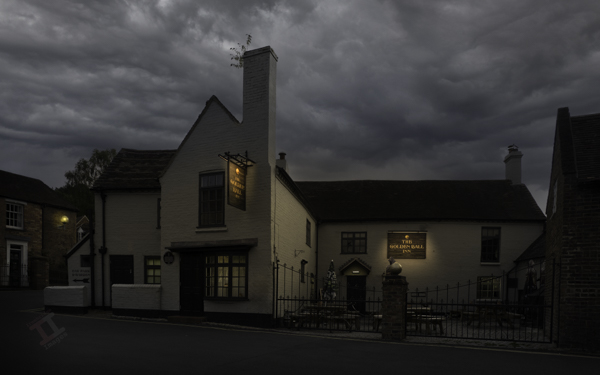
Situated right opposite my best friends house, I spent many teenage evenings in this hostelry. Banks’ mild was 70p a pint and a beef burger in a bun was 50p – so you could have a decent night out for less than a fiver! As you can guess, this was a fair few years ago.
I haven’t set foot inside for decades now, but the outside looks much the same as I remember it. I had been past a few times to get the shot but there had always been a delivery van or car parked in front, however on this occasion I was pleasantly surprised to find it it was clear and quiet.
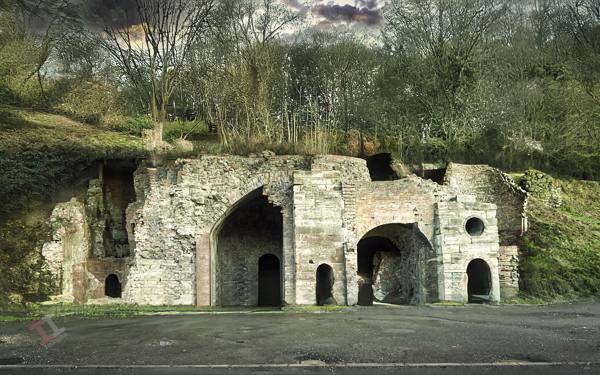
The Bedlam Furnaces are situated a short distance from Ironbridge Town, downstream of the Iron Bridge. The furnace ruins have been disfigured by a large metal canopy installed by Historic England to protect it, and so I have ‘recreated’ how it used to look in the image below.
It is believed that these furnaces were given the name by a couple of artists in the early 1800’s who thought that the site resembled a lunatic asylum (presumably because it appeared so chaotic and dangerous). The furnaces were built in 1756 and some believe that parts of the Iron Bridge were cast here, due to their close proximity to the river crossing site compared to the furnaces at Coalbrookdale.
The term “bedlam” originates from the name of a hospital in London, “Saint Mary of Bethlehem,” which was devoted to treating the mentally ill in the 1400s. Over time, the pronunciation of “Bethlehem” morphed into “bedlam” and the term came to be applied to any situation where pandemonium prevails.
Behind the furnaces is an area which some (older) locals will recall used to be the site of a large natural gas tank that supplied the town with its gas, for lighting, cooking and heating, before the days of ‘mains’ gas. It was later landscaped into ‘Galleon park’, so called because it had a giant wooden ship as a play area. Sadly, this has now rotted away and the park is barely maintained.
Bedlam Furnaces, Ironbridge Gorge
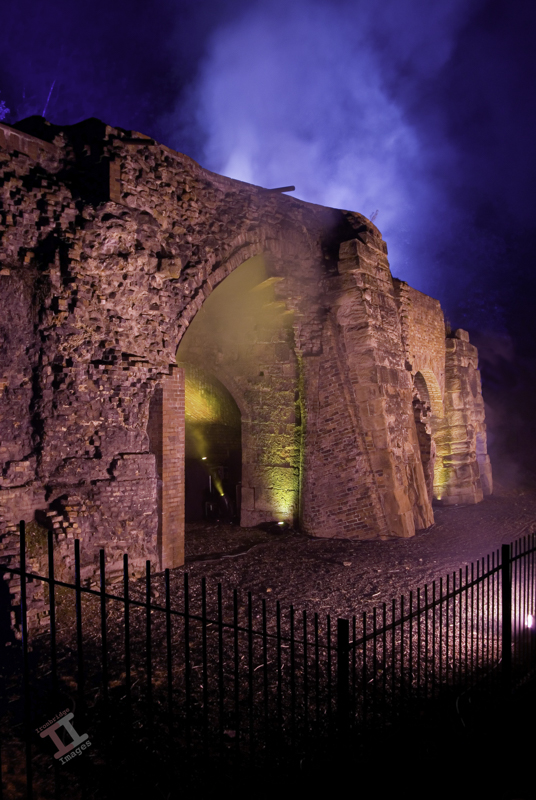
Back in September 2008, there was a ‘festival of light’ at Ironbridge, where various landmarks were illuminated with a light show – including Bedlam Furnaces.
Here is one of my shots from the evening – it created an ethereal glow over the ruins.
It has been some time since I started this project of photographing water droplets on glass – and thus far I have only managed one image. Until now. Here is the second image and, with an upgraded photography studio, I now have much more control over the process which will hopefully produce some interesting results.
beta β (AKA: Tears of Love)
Subscribe now to keep up-to-date with my Hydro Droplet journey. Later in the series I’ll describe how I achieve these images.
There are 24 letters in the Greek alphabet, and it is considered to be the root of most modern European alphabets used today (even the word ‘alphabet’ is derived from the first letter). It has been in use since the 8th Century BC. It is still used today, albeit usually as technical symbols.Each image in the Hydro Droplet project will take the title of one of these letters.
In the early 1800’s there was no mains water supply in Ironbridge and so many just used the water from the river Severn for drinking and cooking.
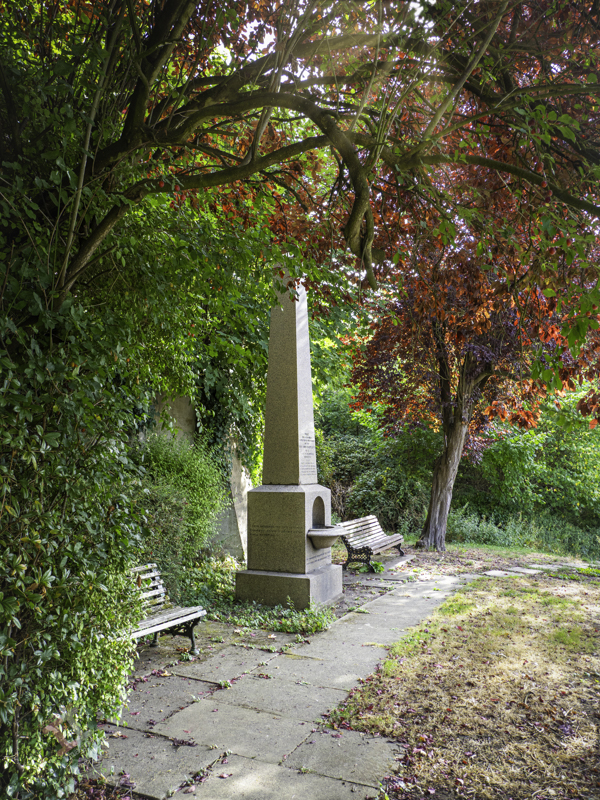
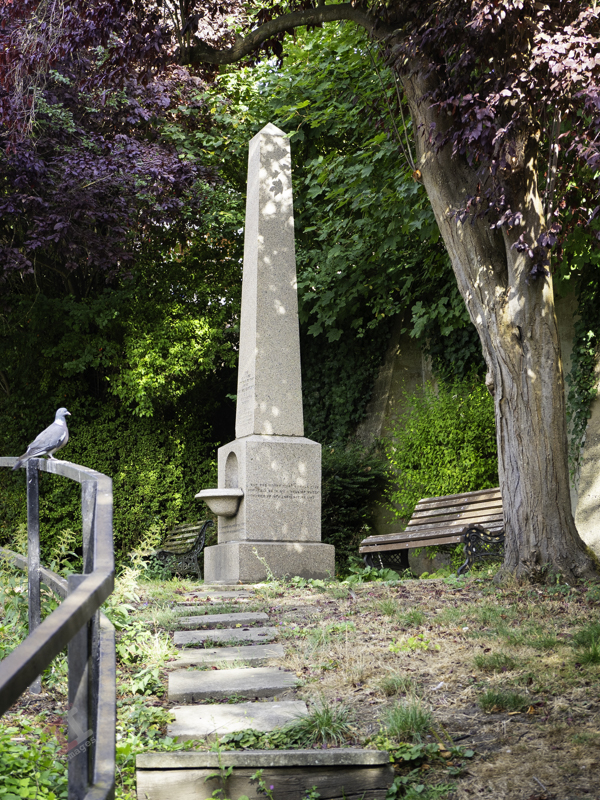
Bartlett Fountain, Ironbridge
Profit from sales of this image will go to the ‘Return Bartlett Fountain to Ironbridge square’ GoFundMe page
Unfortunately, there was no sewage system either – and that just flowed straight into the same river. Unsurprisingly, this led to deaths from cholera and other diseases, so widespread that a mass grave was created for the victims (see Secret Ironbridge: A tale of two churches).
In 1823, the Reverend John Bartlett became the vicar in nearby Buildwas, and the estate in which he lived had its own drinking well. Concerned about the deaths in Ironbridge he persuaded industrialist Abraham Darby IV to install pipes to bring fresh water into the town from this well.
After his death in 1861, his widow had a 15 foot high red granite drinking fountain erected the Ironbridge Square in his memory.
Unfortunately, in the 1960’s, the Telford Development Corporation decided that a bus stop was more important and relegated the fountain to the back of a small car park, where it remains today.
The Ironbridge and Coalbrookdale Civic Society are actively trying to get the fountain rightfully replaced in the Square, and are attempting to raise funds to go towards the estimate £40,000 required by Telford & Wrekin Council to do so. You can donate towards this cause on their Go Fund Me page.
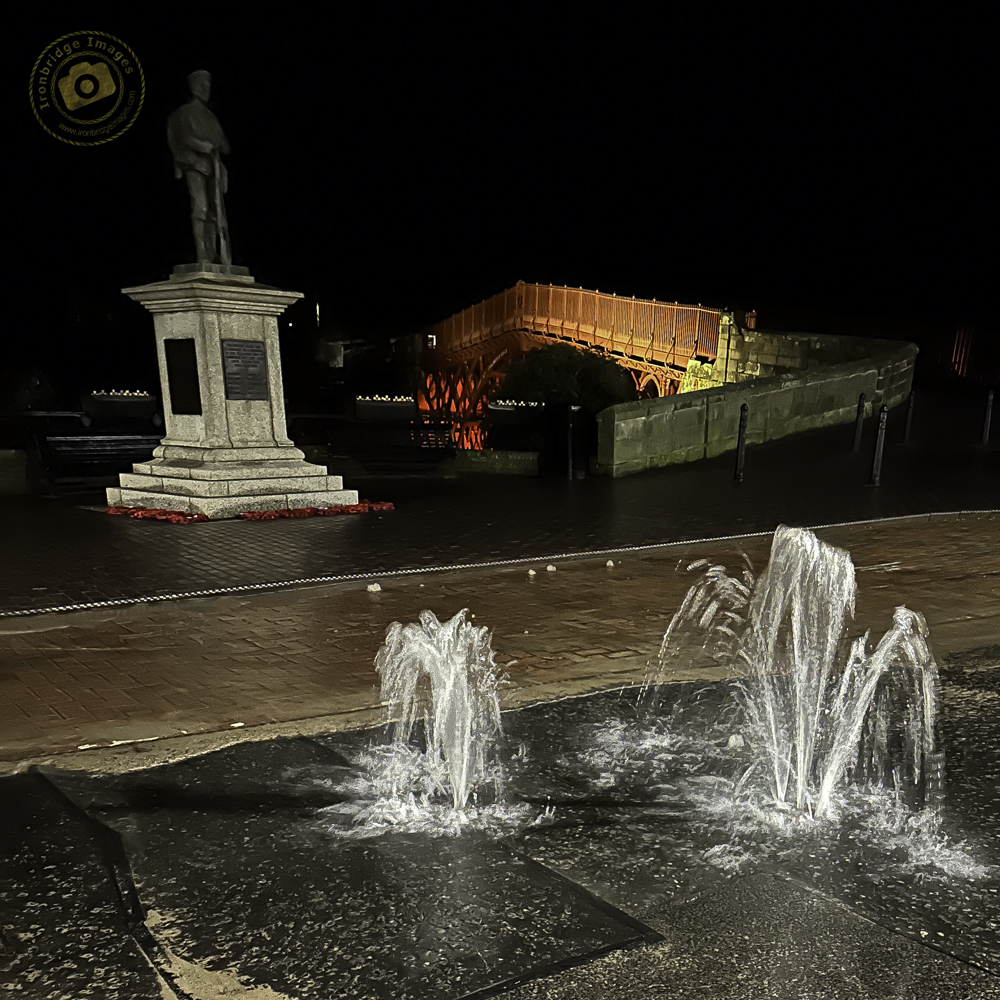
Not the Bartlett fountain – just a water leak in the road in February 2024
After a 5 month respite whilst I concentrated on some non-photography projects, I’m back & ready to dust the cobwebs off my camera and to update this blog on a more regular basis. So what’s happened in the photography world whilst I’ve been away?
Cameras: There have been numerous new, or face-lifted, cameras launched, but only one that really intrigued me; the Sigma BF – a superbly minimalistic camera, so unusual that at first I thought that it was an April Fools joke. But no, it’s a full-frame, mirrorless, 24.6mp camera that takes interchangeable lenses. Is it any good? I’ve got no idea , but it looks….. different.
Digital birthday: The digital camera had its 50th birthday (the prototype launched in 1975). Some thought that it was a fad that would never take on. How wrong they were, there is now only a handful of film cameras that you can buy new.
Software: Adobe increased the monthly subscription of their Photography Plan by a whopping 50%, although by paying annually in a lump sum, you can retain the old price….. for now.
Magazines: Yet another photography magazine bit the dust: Digital Photographer’s last issue saw the end of 23 years of publishing. There are only a few photography magazines left now, but how long will they last? And how do young up-and-coming photographers hone their skill – can they really get factual, unbiased information from social media and YouTube?
AI: Artificial intelligence (AI) is getting more and more sophisticated, rendering the creative production of photographic scenes largely redundant; why spend hours painstakingly positioning props and lights when you can just conjure the scene up in seconds using AI programs such as DaVinci (even if most of them still look fake)? I can only hope that the AI bubble will burst and ‘real’ photography will reign once again, sometime soon.
What do you think about changes in the photography world over the past 5 months?
Ironbridge Images is having a break. Other projects in my life are taking priority, and so, for the time being, photography is taking a back seat. I have plans, though, and later in the year, I hope that you will join me on a new photography journey.
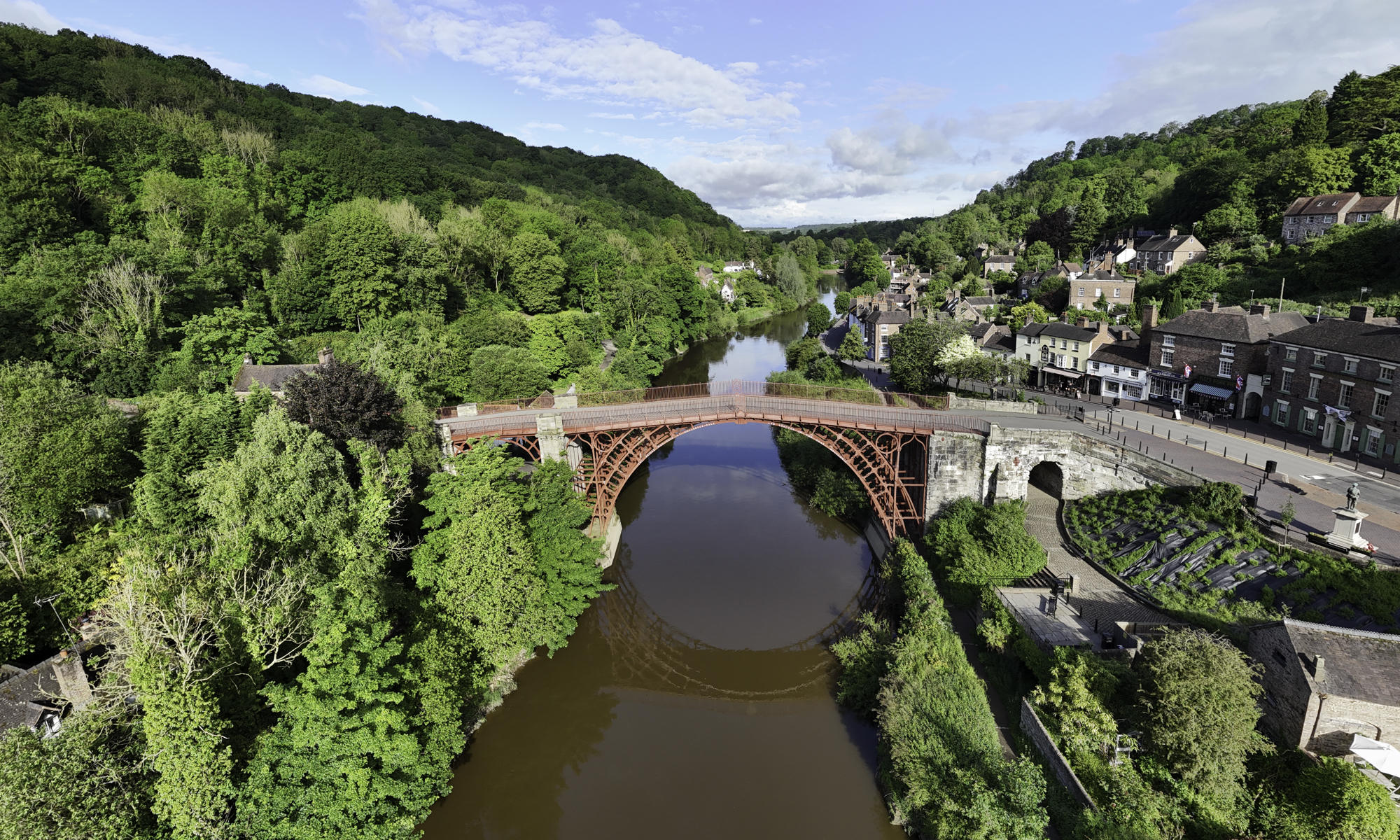
I have recently read a book called “Dynasty of the Iron Founders: The Darbys and Coalbrookdale“, written by Arthur Raistrick and published in 1953. It’s a heavy-going tome and a difficult read, charting the early days of iron founding from the early 18th century through to more modern times (well, the 1950s anyway). The whole story is spread over many more years than I had been led to believe from my school days and involved a lot more people. The famous bridge (pictured above) was just a small part of the tale and was built (primarily) by Abraham Darby III (the story is complicated by the fact that each generation of the Darby family called a son ‘Abraham’, and the book makes it more complicated still by often forgetting to define which one it is referring to.
You can buy a used copy of the book from Amazon for just £5. It’s worth battling your way through it if you are interested in the history of the Ironbridge Gorge and those who shaped it.
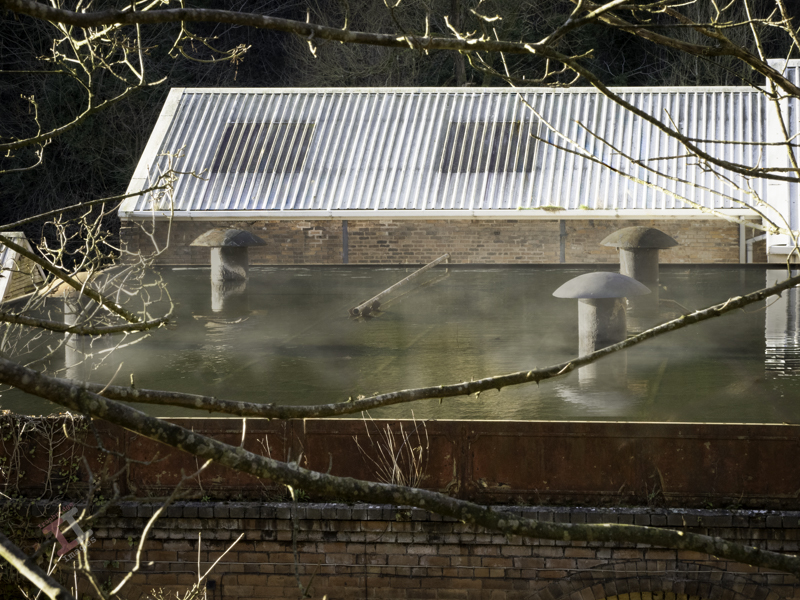
If you walk down Wellington Road in Coalbrookdale, just past the Coalbrookdale Inn and the junction with Church Hill, you can see an industrial building with a flat roof and (what appears to be) four metal mushrooms growing out of the top.
This building was the compressor house for the Coalbrookdale Works. The compressors were water-cooled (compressing air generates a huge amount of heat) and the heated water was pumped through the mushroom domes onto the flat roof to allow it to naturally cool, before draining back down to the compressors below to repeat the cycle. I can vividly remember as a child, when visiting my Aunty who lived nearby, passing by this building and seeing the hot water gushing from the domes, with plumes of steam rising from the rooftop as it cooled.
The compressor house is included with the Erecting Shop and Assembly Shop as a listed building. These buildings date from 1879, although it is likely that the compressor house was a later addition. Recently, there was a planning application to modify the building for residential use (as part of a much larger plan to redevelop the Coalbrookdale Works site) which would have meant the loss of the rooftop water tank, and hence any indication of its past function. Fortunately, on appeal, the Secretary of State’s inspectorate made it quite clear that this was not acceptable and so, for the time being, the compressor house remains.
It may be coincidental, but Heras security fencing and unmanaged undergrowth now mask the view of the compressor house from the road. I managed to get this shot through the fencing and, with a bit of post-processing, cleared the view. I have also added a bit of steam in a nod towards my childhood memory.






 Ironbridge Images
Leave a comment