
Here in the UK, property and land is sold through professionals called ‘Estate Agents’, which dates back to when large swathes of land (an estate) were owned by individual families (the landed gentry), usually living in a grand hall in the centre. They employed an agent to manage the rent from the paupers who lived on the land, and the buying and selling of land to improve the estate portfolio.
Over in America, these professionals are called ‘Real Estate’ Agents (or Brokers). The term ‘real’ derives from Latin, meaning actual or genuine, and it simply refers to the actual, physical land and property that belongs to an estate.
If you want to rent out or sell your property (or estate), then you need to market it to get the best reward, and this usually requires the use of high-quality photographs to present the property in the best possible way. This involves ‘property photographers’ or, in the USA, the slightly more glamorous-sounding ‘real estate photographers’ (of course, to save costs, estate agents often just take the photographs themselves using a camera phone, but, like everything, you get what you pay for).
There are several reasons that you may wish to use a professional photographer rather than taking your own (or allowing the estate agent to):
The camera:
Actually, it’s not the camera that matters most; it’s the lens. The standard lens on most cameras and phones is in the focal range of 35-55mm because this most accurately represents the field of vision of the human eye. Unfortunately, this is often not wide enough to encompass an entire room and can also make a room look long and narrow. You really need a wide-angle lens, closer to a focal length of 10mm, to capture everything in one shot. People need to see this to get a good representation of a room.
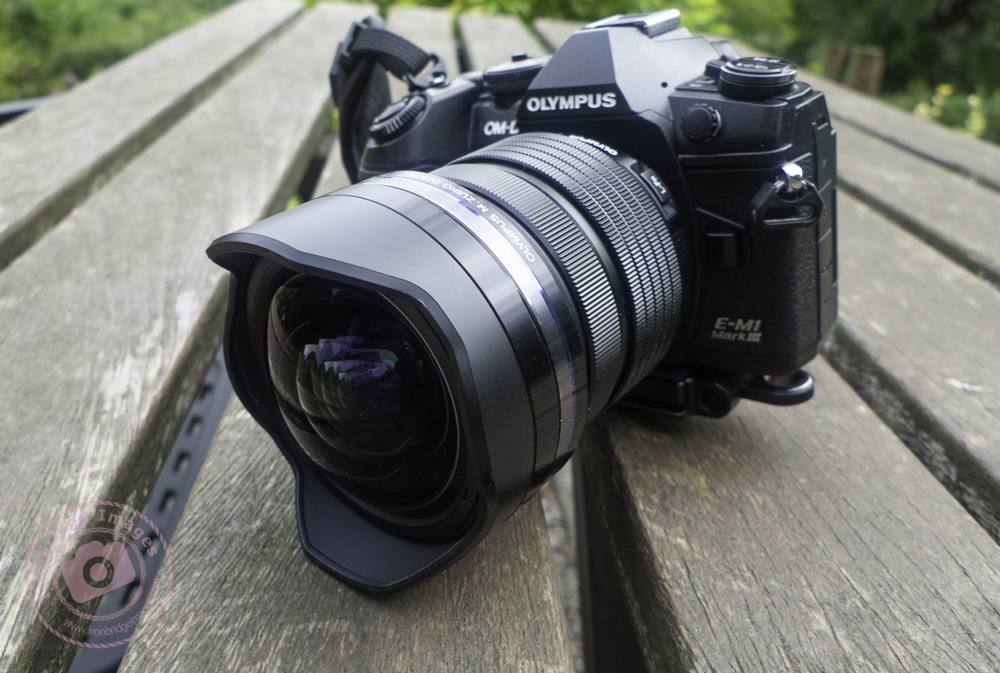
A wide angle lens also has an effect that estate agents love; it makes a room look much larger than it actually is!
The software:
The drawback of using a wide-angle lens when you are close to a subject (as you are in a room) is that the sides of the image adopt strange angles due to the nature of the lens. Tall pieces of furniture, or doorways, can then appear as if they are leaning backwards. It’s a term known in photography as ‘barrel distortion’. Good post-processing software can straighten out the sides of the image to give a far more natural look.
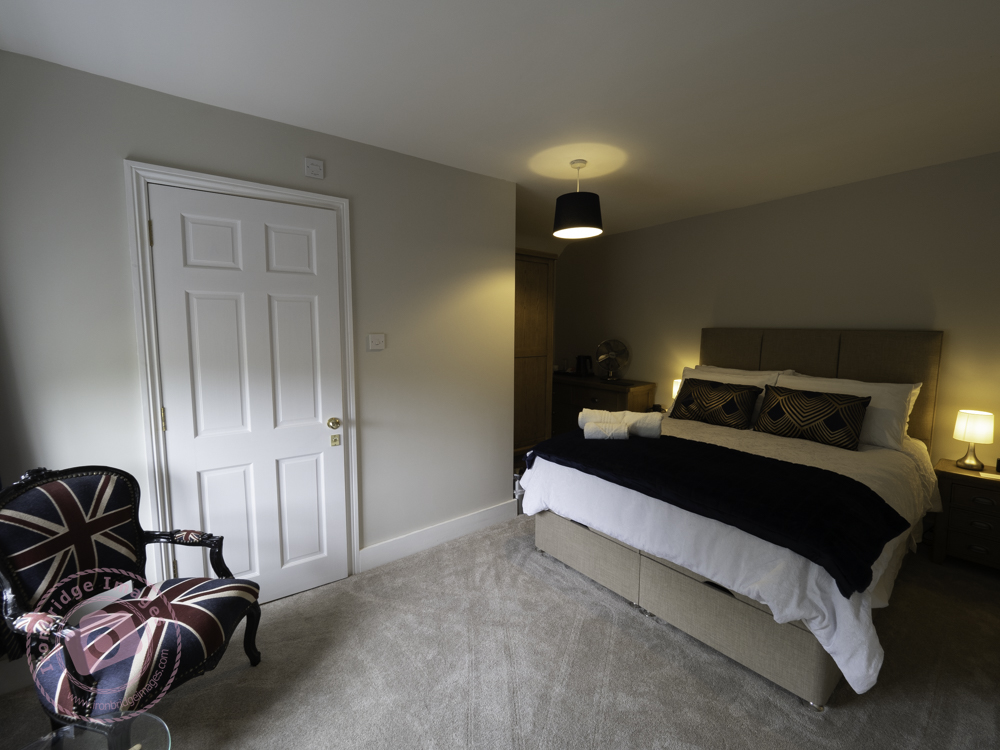
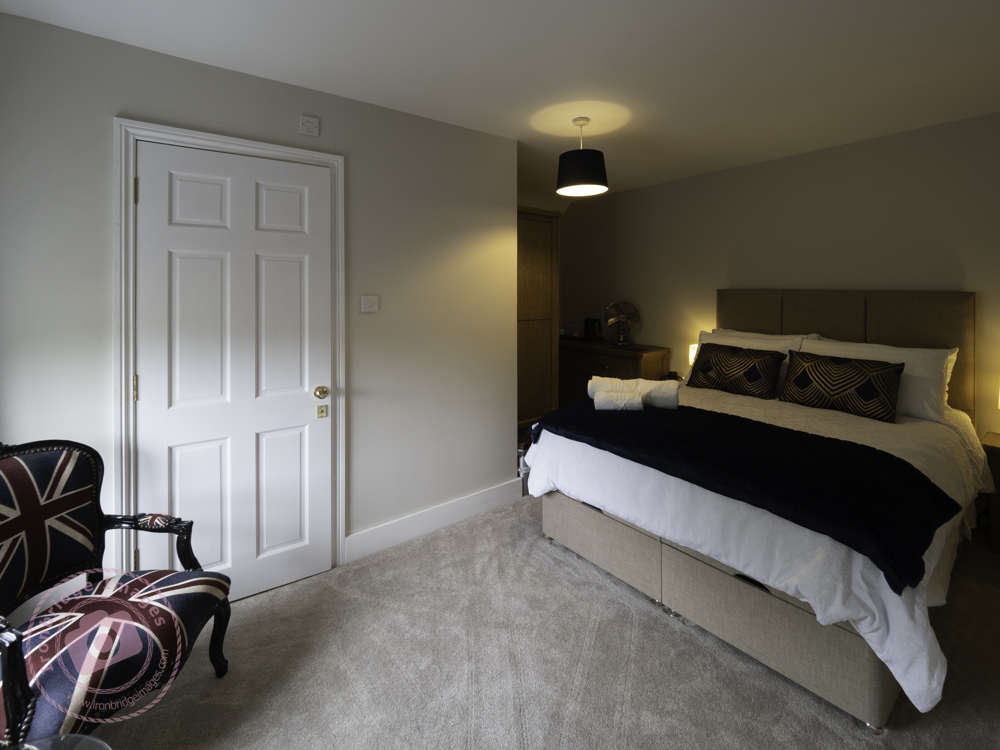
Taking the image as a RAW (unprocessed) file, and then processing it in post-processing software can also bring out details in the shadows and preserve detail in the highlights (see ‘The light‘, below).
The ‘eye’:
Professional photographers have something called “the photographer’s eye“. What that means is the ability to be able to scan the image, usually before actually pressing the shutter, to see things that are out-of-place or that capture the attention unnecessarily (I’m sure that you have seen humorous photographs on social media of people’s bedrooms with ‘personal items’ left unintentionally on the side!). Moving a coffee cup, magazine or family photograph, for example, can have a huge impact on making a room look more attractive. It is important to take as much personality out of a room as possible (without making it too sterile) because the seller’s style may not match the purchaser’s desire.
The light:
When you photograph outdoors, you get directional light from the sun, which creates shadows. However, these shadows are then ‘diluted’ by the brightness of the rest of the sky, which acts like a giant diffuser. When you take a photograph indoors using ambient light, the light from the windows gives directional light, but there is no light from any other source. This can create deep, hard, shadows and, at the same time, the windows look completely white, as all of the highlights get blown out. Some photographers choose to use flash lighting instead, but this is quite harsh, and the windows then become very dark, almost as if it were taken at night.
There is a method called ‘flambient light‘, which entails taking shots of a scene with flash and shots taken of the same scene in ambient light and then merging them together in post-processing. Care has to be taken; otherwise, the scenes can look false. There is also the added problem of matching the different colour temperatures of the two types of light.
Another method (and the one I prefer) is to use High Dynamic Range (HDR), which involves taking multiple (3 or more) shots of the scene in ambient light at different exposure levels and then merging them together, retaining detail from the shadows and highlights. Some cameras (such as my Olympus OM-D E-M1 Mark III) can do this automatically in-camera. To minimise noise in the shot, a low ISO is required, but this then creates longer exposure times. There is also the need to keep the camera in exactly the same position – so mounting the camera on a tripod is necessary.
The temperature:
We are not talking about the room temperature here, but rather about the temperature of the light (also know, in photography terms, as white balance). This can have a huge impact on the perceived ambience of a room; a bedroom needs to look warm and inviting, whilst a bathroom needs to look cool, clinical and clean.
The aspect:
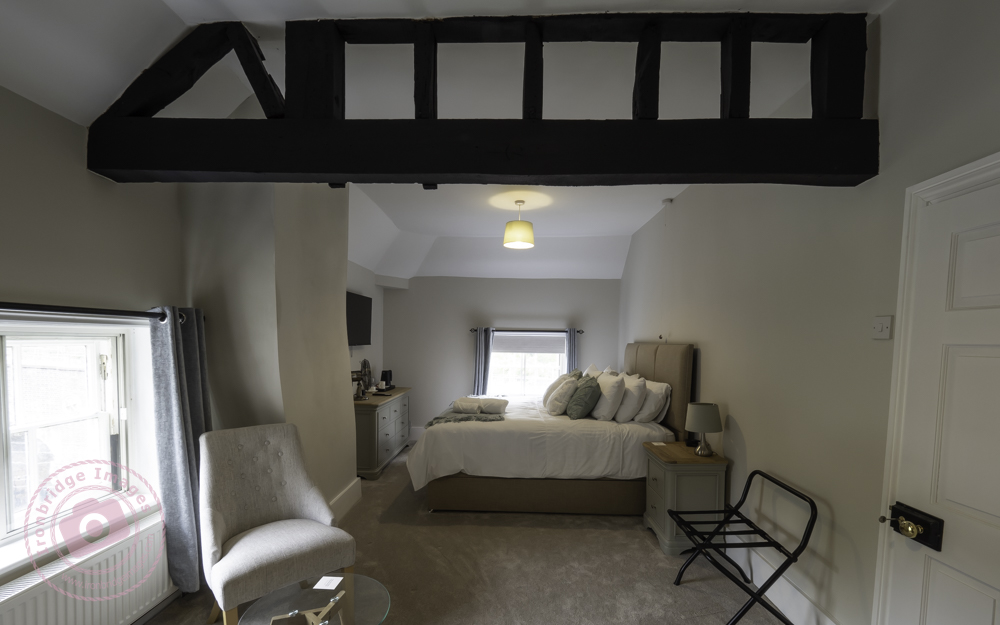
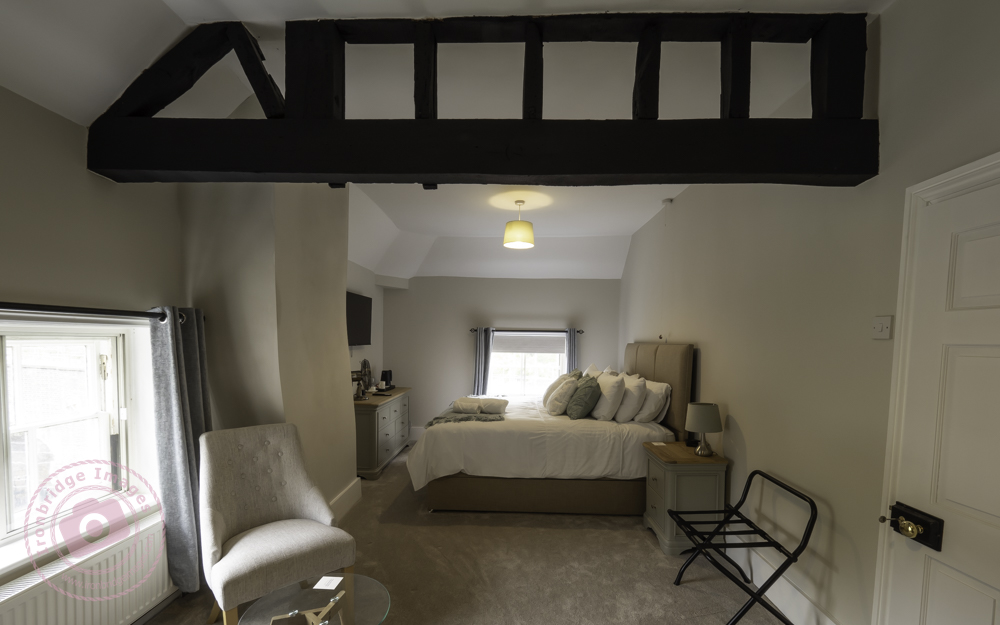
The ‘aspect’ of the photograph concerns the height and angle that the photograph is taken. It is important not to take the photograph from too low down, or too high. This may change dependant on the size of the room, and the type of room. The direction that you point the lens can also have a big effect, as can the position that you take the photograph from.
In most cases you will want to take the main shot from the doorway, so that you see the room as you would when you entered it. However, for some feature shots, you may want to take the photograph ‘head-on’.
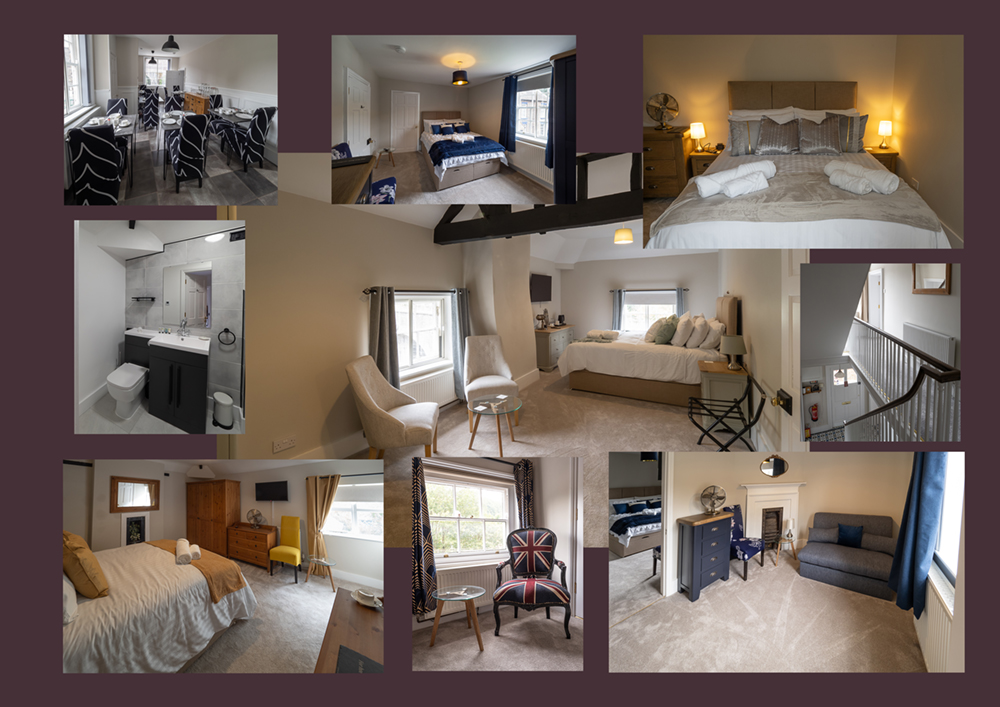
After that rather long preamble, we now come to the subject of this blog post:- that I have been taking some photographs of the interior of a property that will shortly be used for bed-and-breakfast accommodation. After a brief tour I was pretty-much left to my own devices (always the best option) and, over 2 hours, took 80+ images. These were then whittled down during post-processing to 40, and were supplied as both full-size images (preferred by publishers and printers) and also as smaller, lower-resolution versions (for website and social media use).
Hi John, Thank you so much for these, they look great. Really appreciate it
viaduct guesthouse
The Viaduct Guesthouse, Coalbrookdale, in the Ironbridge Gorge, will be opening in Autumn 2024. Best of luck to Kay & Paul on their new venture.
Discover more from Ironbridge Images
Subscribe to get the latest posts sent to your email.

 Ironbridge Images