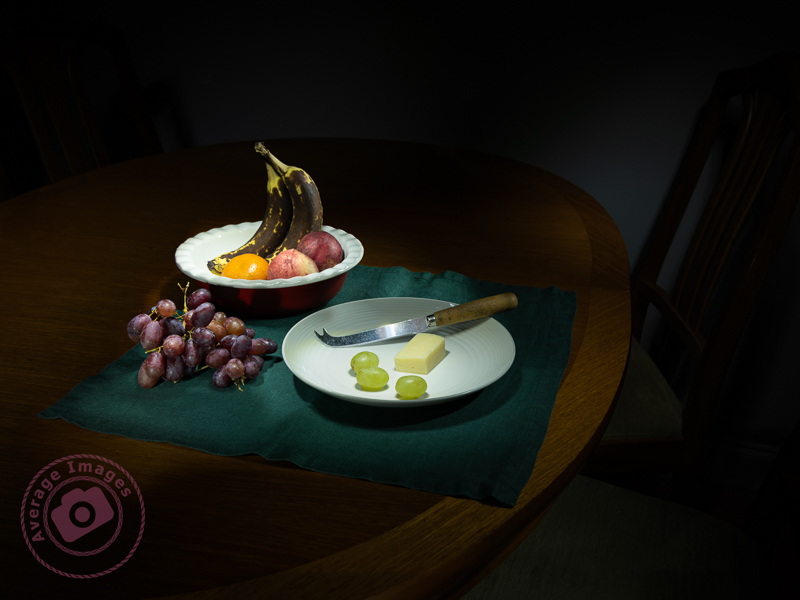
In my last Painting with light blog post, Interior Light, I discussed taking photographs indoors. Within this category is a sub-genre of indoor art called ‘Still Life‘.
A ‘still life’ is a picture (painting, drawing or photograph) of an arrangement of inanimate objects, the purpose of which is to show a new way of looking at the ordinary things around us. Traditionally they tend to be composed of flowers, food or (dead) animals.
Still lifes are not new:
- Egyptian burial sites dating from the 15th century BC contained paintings of crops and food.
- The ancient Greeks and Romans created still life mosaics and frescoes.
- Artists in the Middle Ages used still life to depict religious and Biblical scenes.
- During the Renaissance period (15th-16th century) floral paintings became popular, as did the desire to depict everyday objects as realistically as possible.
- The Modern Art movement often had table-top scenes with vases, wine bottles and fruit.
In photography, still life became popular from the early 19th century. One of the reasons for its popularity is that it is relatively easy to set up, without having to worry about the vagaries of people or the weather. However, much like any genre of photography, taking the photograph is the easy part and it is the setting of the scene which differentiates a great still life from a good one. This means careful positioning of the components with regards to general composition, leading lines, complementary colours and sometimes including a hidden meaning (for example, decaying subjects are often used to symbolise the fragility of life). It needs to be a piece of art rather than just a record shot.

Remember, you can keep up-to-date with all of the Painting with light blog posts by subscribing:
Discover more from Ironbridge Images
Subscribe to get the latest posts sent to your email.

 Ironbridge Images