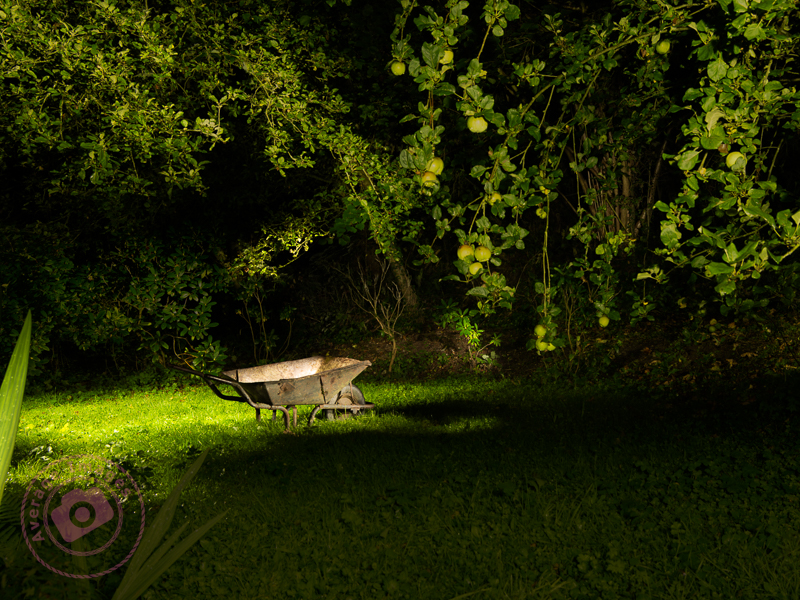

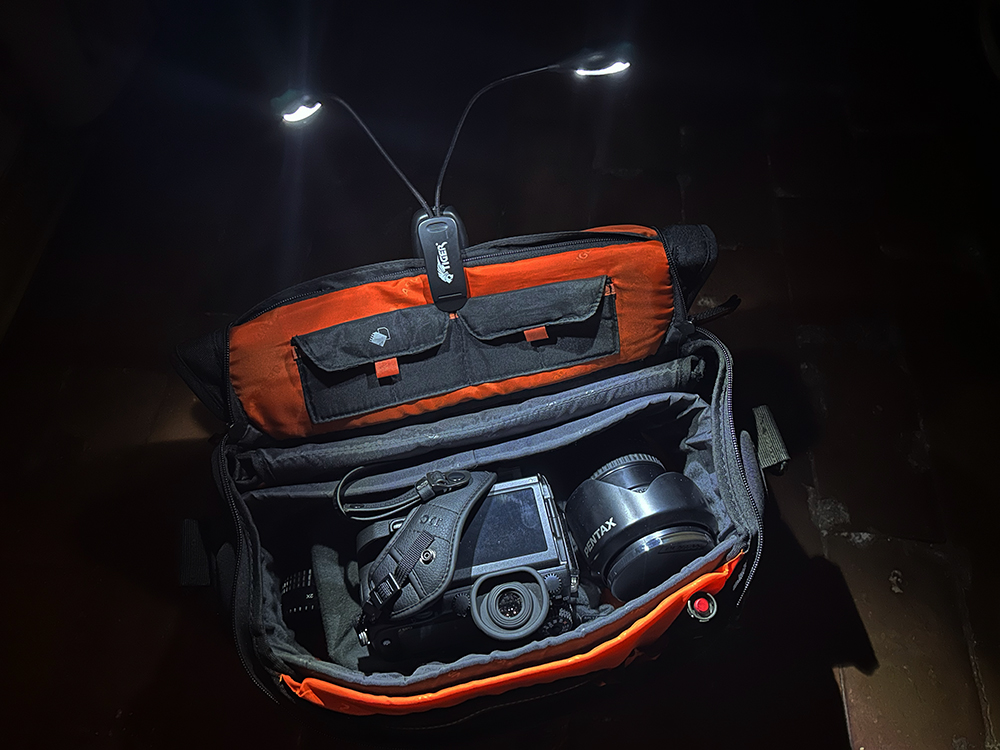
Fortunately, Painting with light doesn’t require a lot of expensive gear. In fact, you may have most of it already. However, to be successful there are some basic requirements and so here are the essentials for your kit bag:
First on the list is a camera suitable for taking long exposures. You don’t need a high-end, expensive camera; it could be a DSLR, mirrorless, compact or even a camera phone. It may seem pretty obvious, but the important thing is that it needs to be able to attach to a tripod (see below) and to be able to take long exposures, sometimes of several minutes (most cameras have 30 seconds as their maximum automatic exposure time). The best solution is a camera with a ‘bulb’ setting (sometimes abbreviated to ‘B’ setting), allowing the shutter to stay open for as long as you press the shutter release.
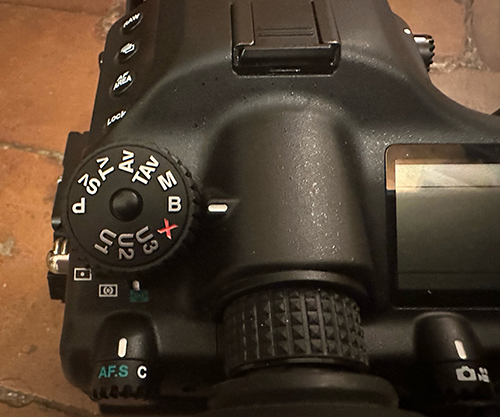
‘Bulb’ setting is so-called because in very early cameras, the shutter was activated by a pneumatic rubber bulb which, when pressed, activated the shutter.
Even better is one with the option to attach a remote shutter release (see below), which helps reduce the risk of camera shake because you don’t need to touch the camera for every shot.
Second, on the list of requirements is a sturdy tripod. As you will see from later blog posts, I am taking numerous exposures and blending them together in layers during post-processing. This means I need every shot to be in exactly the same place each time. I do appreciate that there are auto-blending options in some post-processing software, but these are never exact, and it is far better to get it right in camera. It’s not only the tripod, though; you also need to ensure that the tripod head is equally sturdy. Ball-head types can sag slowly, especially with larger lenses. Personally, I use a geared tripod head.

Thirdly, it makes sense to use a remote shutter release so that you are less likely to knock the camera’s position as you activate the shutter. This still means that you have to go backwards and forward to your camera for each shot (in the dark!) so a wireless one is preferable. The only problem with wireless versions is that they are usually only designed to trigger the shutter, not to hold it open; my Pentax 645Z has the option (in ‘B’ mode) to open the shutter with one press and then close it with a second press. Check your camera’s manual to see if this is an option (you may have to activate it in the settings menu).

Fourthly, and perhaps obviously, some lights. Torches are more than adequate, and I use a powerful Ledlenser MH10 head torch for the larger areas (and to see when moving about), together with a smaller Scangrip Matchpen pen torch for detailed lighting. The head torch has a zoom function, which is handy for lighting the tops of trees, and the pen torch (which is actually designed for inspecting the paintwork of cars) has two different light temperature settings, which is something I will try out in a later blog post.
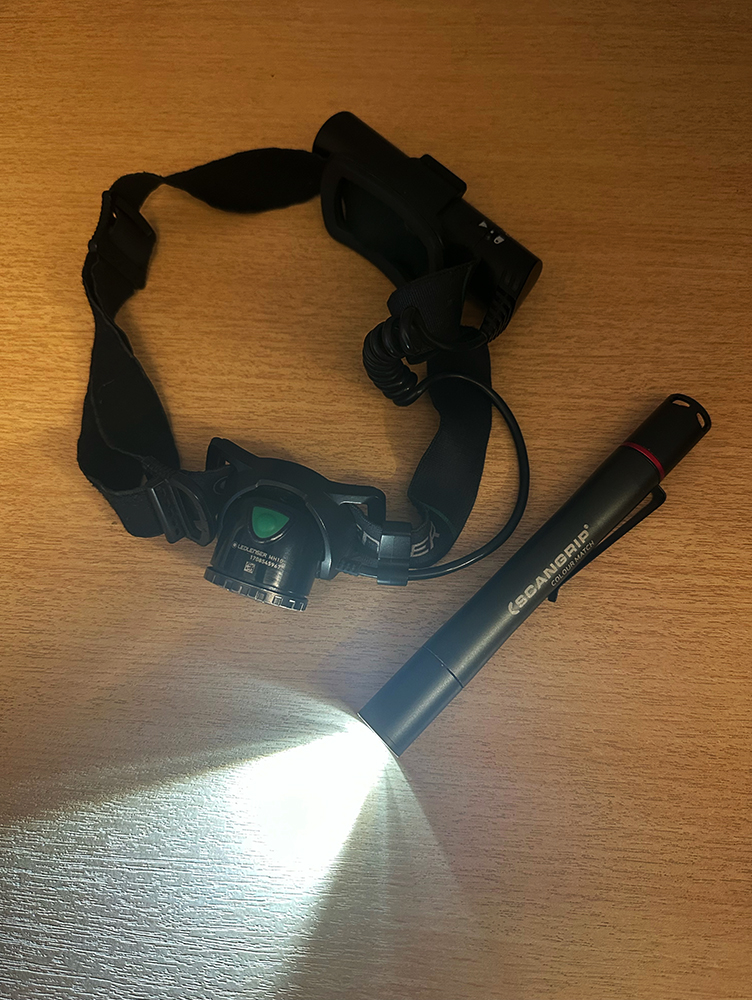
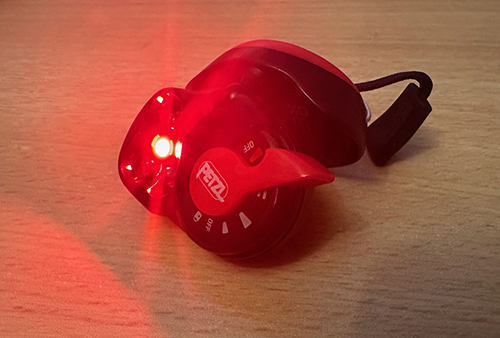
The pupils of your eyes will naturally open up wide in the dark, which can be somewhat of a shock if you turn on a torch to study your camera settings; some torches come with a ‘red light’ mode which is a bit kinder to your eyes when working close-up. This Petzl E+Lite head torch is small enough to fit into your kit bag (although a bit uncomfortable for long-term use).
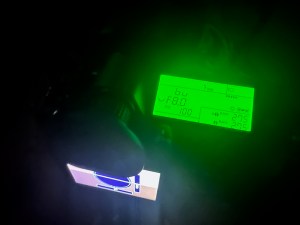
My Pentax 645Z has a handy built-in backlight for the top LED screen, negating the need to use a torch when adjusting camera settings. You just need to familiarise yourself with finding the button position in the dark.
Optional:
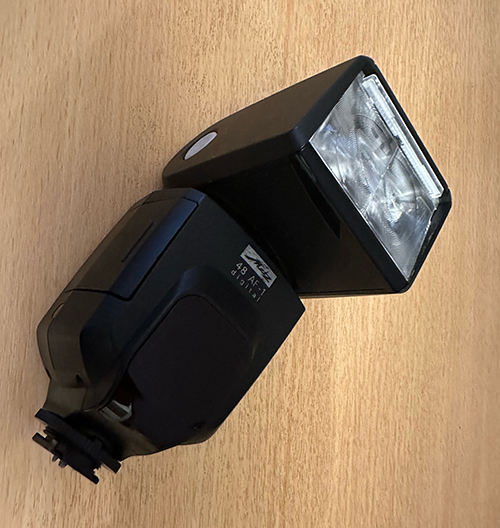
Although not a necessity, if you want to light up a large area quickly, or maybe light up the interior of a building, then a flashgun comes in very handy, provided that you can operate it manually.
And that is it, so at least my camera equipment isn’t heavy. Of course, when it’s dark, it also goes chilly, so you need to wrap up warm and, whilst you are at it, try and wear some dark clothing that isn’t going to reflect any light. Your camera battery won’t last as long either, so you may want to pack a spare one.
Discover more from Ironbridge Images
Subscribe to get the latest posts sent to your email.

 Ironbridge Images