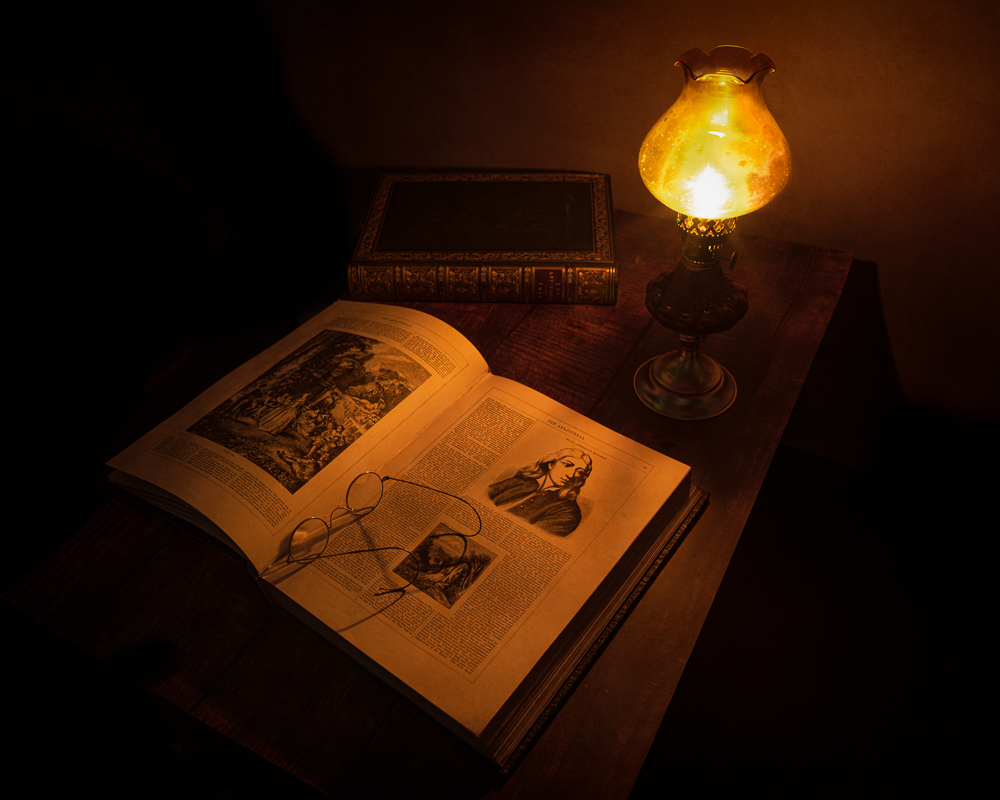
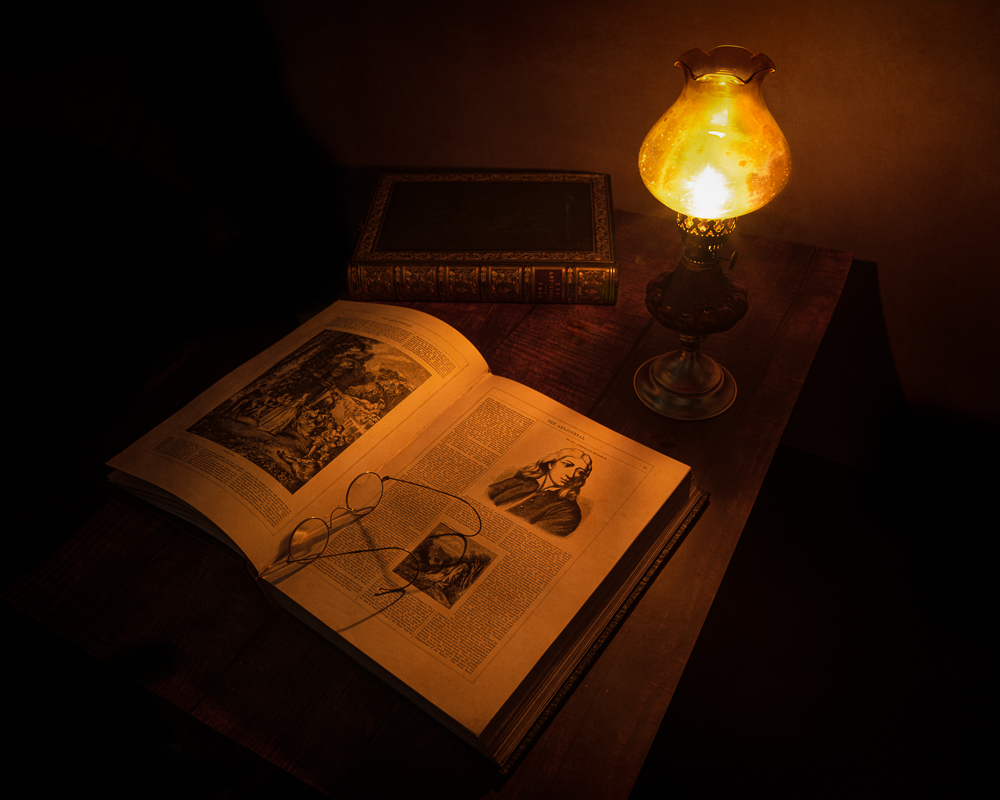
This is the story behind a studio shot of an old 1851 Art Journal compendium.
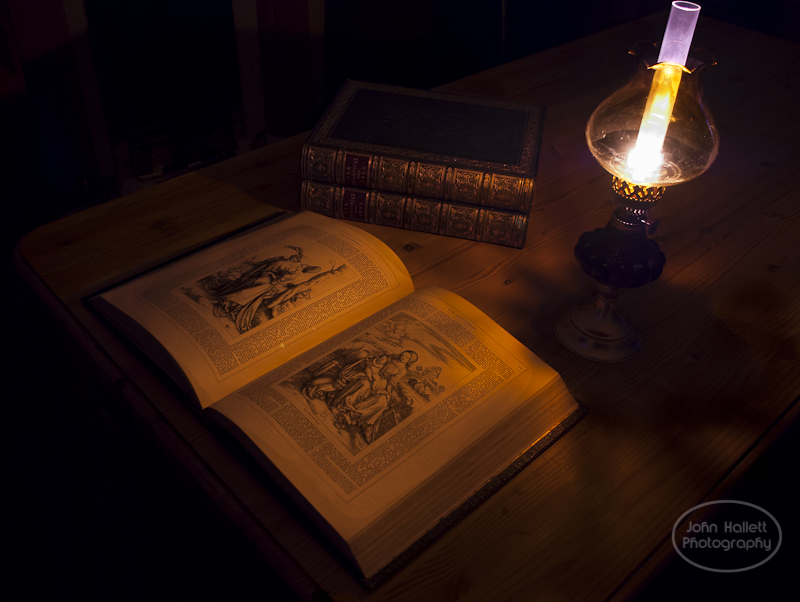
I have a small set of these compendiums from the years 1849-1862 that I purchased from my late Grandmothers estate and some time ago I took a photograph of one on a farmhouse table lit by an oil lamp. Unfortunately, the original RAW file of this shot was lost during ‘the catastrophic HDD failure of 2019‘ and the only copy I have left is a fairly small & low-resolution JPEG image from a previous version of my website.
So, my plan was to recreate the shot as a high-resolution RAW file in my studio. The first hurdle to overcome was that we no longer have the farmhouse table (and it wouldn’t have fitted into the studio anyway) and so I needed to create an illusion of a similar table. Also, because this shot was taken from a height looking down, I would have to use a lower platform than my usual product-shot table in the studio. Other than that I still have the books and also the oil lamp (it was the one I used in my blog post ‘Royal Daylight‘), although I thought that I might also incorporate an old pair of spectacles into the shot to give the impression of a disturbed reading session.
The first job was to set up the table. It surprised me how big the books were compared with my little low table and so I used a piece of sheet glass (which was handily available in the studio and larger than the table) and then placed a wood-effect sheet on top of it to mimic the rustic table-top of the original.
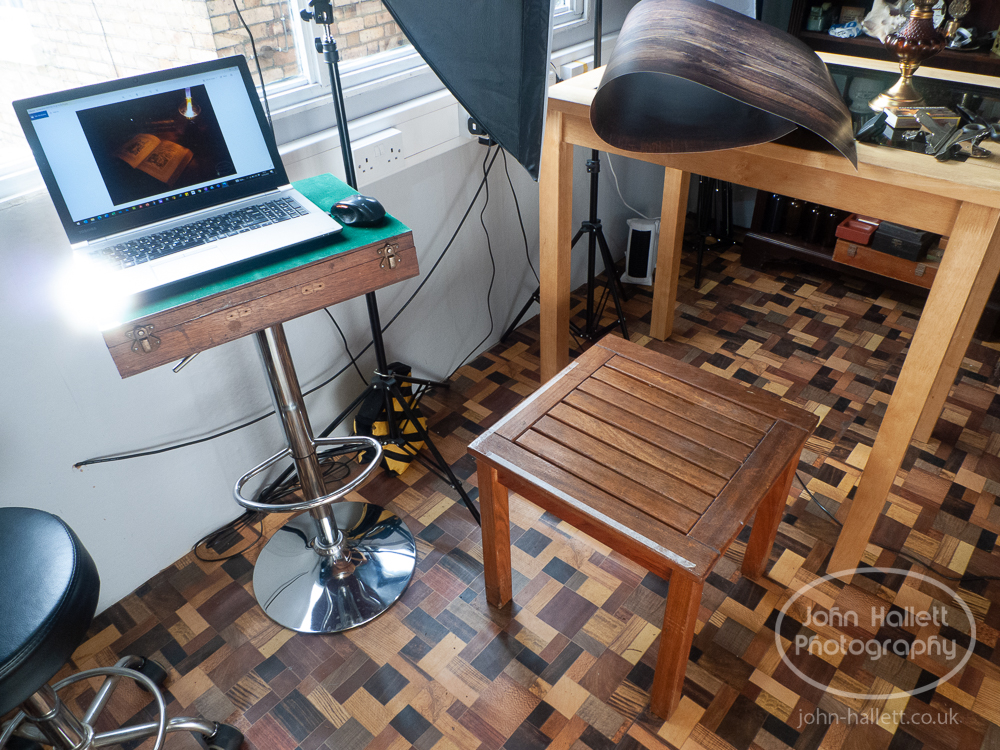
I then opened up the original picture on the laptop and started to position the books and lamp. Once they were roughly in the correct place I was able to hand-hold the camera to find the optimum place for it and then put the tripod in that position to hold it firm (knowing that the actual exposure would be many seconds because the only light would be from the oil lamp).
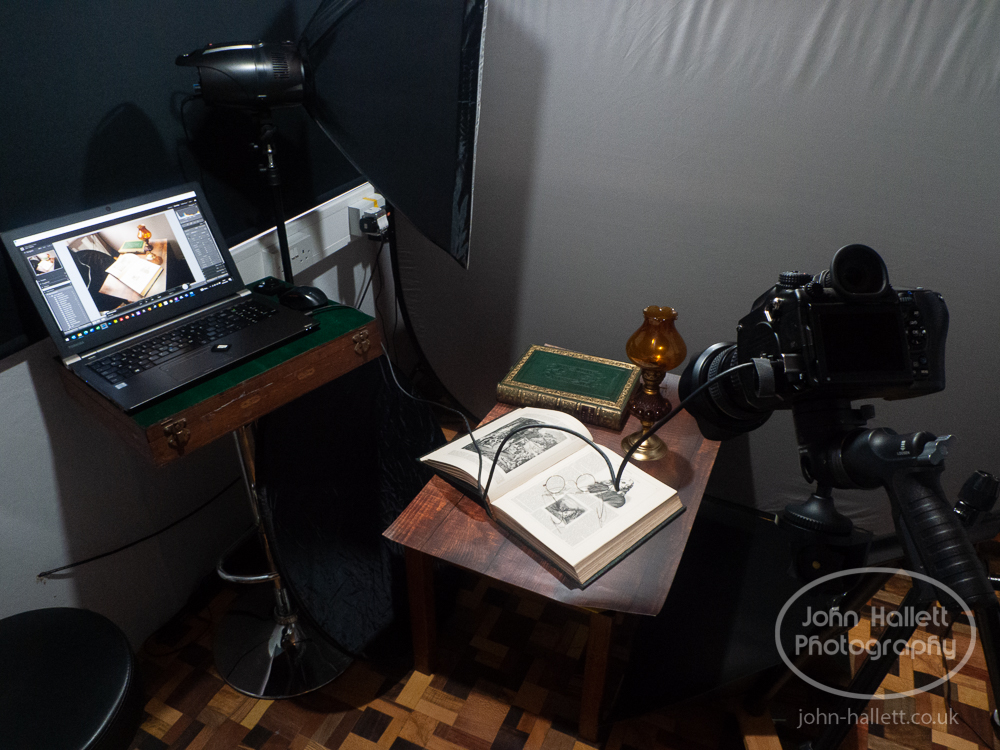
Once again the size of the scene surprised me and a lot of the surrounding studio paraphanalia and wood-block floor was showing. To reduce the amount of post-processing to hide it I used my neutral-grey background at the rear, a black ‘reflector’ to the left side and a black background on the floor to the right.
It was now time to shut the blackout blinds, light the oil lamp and turn off the lights. With the camera tethered to the laptop (see Tethered shooting) I could operate the shutter remotely rather than fumbling around with the camera in the dark and, after some trial-and-error, I eventually settled on a 15 second exposure using a chosen aperture of f/9.0 (to get the desired depth of field) and a sensitivity of ISO100 (to minimise noise in the shadows).
One of the benefits of shooting both digital and tethered is that you can use this trial-and-error approach and take a shot, change settings, take another shot, etc. until you are happy with the result rather than spending time with a light meter trying to predict the optimum exposure levels.
Once the exposure settings were decided I could then tweak the layout of the shot, moving the lamp. books and glasses to create a look that I was ultimately happy with.
The image was then imported into Lightroom and then Photoshop for post-processing – which only entailed some dodging to lighten areas of the lamp & book and burning of the shadow areas where legs of light stands and strobe cables were still visible. I finished off by adding a very subtle blended-in texture behind the whole image.
Discover more from Ironbridge Images
Subscribe to get the latest posts sent to your email.

 Ironbridge Images